presented by Vision Long Island and the Long Island Main Street Alliance
January 22nd, 2021


Quotes of the Day
 |
"In 2021, we must stand together for all other injustices and follow the plan [Dr. King] laid out for us in the Birmingham Jail. We must stand together and stand firm for a future that includes all of us… We need to erase racial disparities.” - Tracey Edwards, Long Island Regional Director of the NAACP |
 |
"As we embark on our post-COVID reconstruction, it's critical that we not only jump-start our economic recovery, but also ensure we find ways to support highly impacted small businesses that have been among the hardest hit throughout this pandemic. The Executive Budget was crafted to do just that. Through the creation and expansion of $130 million in tax credits, we are working to lessen the burden on critical sectors - restaurants, the arts, and so many others - so those funds can be redirected back to the businesses themselves and get them back up and running." - NYS Governor Andrew Cuomo |
 |
"Buoyed by President-elect Biden, incoming Senate Majority Leader Chuck Schumer and Speaker Nancy Pelosi, the MTA also has hope for $8 billion in additional pandemic relief and continued federal investment in mass transit in 2021 and beyond. For these reasons, the MTA has decided to postpone the planned fare increase for several months." - MTA Chairman and CEO Patrick Foye |
 Like us on Facebook



First Baptist Church of Riverhead Hosts Annual MLK Day Memorial Virtually

Every January 18th, Long Islanders honor the life and work of the Rev. Dr. Martin Luther King Jr. Traditionally, across Long Island, churches and community organizations host breakfast services, prayer vigils, marches and other community service events to commemorate this special day. Vision Long Island is always grateful to be part of these inspiring observances.
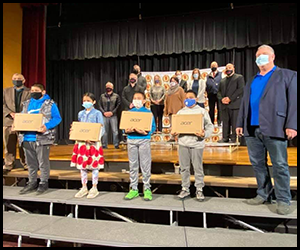
One service Vision annually participates in is sponsored by the First Baptist Church of Riverhead. In more normal times, between five to seven hundred people gather on this day for a prayerful breakfast. As this was not possible due to the pandemic, the First Baptist Church of Riverhead presented its 36th Annual Rev. Dr. Martin Luther King Jr. memorial as a virtual celebration.
The proceedings were hosted by Rev. Cynthia Liggon and the invocation performed by the Rev. Montez Johnson, both assistant pastors of the FBC of Riverhead.
Monday’s virtual celebration included a video message from New York State Lieutenant Governor Kathy Hochul, sharing the following message: “Never in our history has [Rev. Dr. Martin Luther King Jr.’s] words run truer, nor his message so necessary, to bring hope to a bitterly divided nation… A half a century later, Dr. King’s legacy endures.”
Suffolk County Executive Steve Bellone also participated in the celebration, noting, “Decades later, Dr. King’s mission to transform this country into a fairer, more just nation rings louder than ever as we strive to achieve these righteous goals. If we want to better ourselves and our communities, we must continue to celebrate Dr. King’s life and legacy of uniting people of all backgrounds.”
Rev. Charles Coverdale, Senior Pastor of the FBC of Riverhead, presented the Church’s 2021 Rev. Dr. Martin Luther King Jr. Meritorious Award recipients. These honorees included: Butterfly Effect Project; Open Arms Care Center; Pronto of Long Island; and Suffolk County Sheriff Errol Toulon. All were honored for their community assistance and leadership.
The celebration’s keynote speaker was Tracey Edwards, Long Island Regional Director of the NAACP and Commissioner of the New York State Public Service Commission. Ms. Edwards sorrowed the loss of the thousands of Long Islanders to COVID-19. “2020 was a taxing year; COVID-19, racial unrest, economic suffering,” Ms. Edwards recounted.
Reflecting on Dr. Martin Luther King Jr.’s legacy, Ms. Edwards impressed that this year, we must focus on the dream and the struggle. “Our challenge this year is to put the emphasis on his words from the Birmingham Jail where his focus was on non-violent campaigns and accountability.”
Ms. Edwards discussed racism, from the covenants that excluded black home-ownership in Levittown to the Tuskegee Study which left syphilis untreated in black American males in Tuskegee, Alabama, between 1932 and 1972. Ms. Edwards, directly linked the latter to the hesitancy of the black community in taking the COVID-19 vaccine. “Our skepticism still exists, and rightfully so, but we cannot let history repeat itself where a disproportionate amount of black people continue to die in 2021 because we are reluctant to take the vaccine,” Ms. Edward stated.
Ms. Edwards concluded, “In 2021, we must stand together for all other injustices and follow the plan [Dr. King] laid out for us in the Birmingham Jail.” She counseled , “We must stand together and stand firm for a future that includes all of us… We need to erase racial disparities.”
Click here to view the entire virtual celebration.
NYS Senate Advances Emergency Small Business Legislation

On January 19th, State Senator Anna M. Kaplan announced the advancement of legislation to support small businesses that have taken the brunt of the COVID-19 pandemic.
The New York State Senate passed legislation (Senate Bill S471A) which strives to protect New York small businesses struggling due to the COVID-19 pandemic from the threat of foreclosure or eviction until May 1, 2021. The Emergency Protect Our Small Business Act, sponsored by Senator Kaplan, is part of a package of legislation advanced by the Senate Majority seeking to protect small businesses from eviction and foreclosure, protecting restaurants from third-party delivery fees, implementing third-party restaurant posting requirements, promoting the shared work eligibility program, freezing unemployment insurance rates, and establishing a partial-unemployment system.
The COVID-19 Emergency Protect Our Small Businesses Act aims to:
· Prevent Small Business Evictions: The bill creates a commercial eviction moratorium for small businesses of 50 or fewer employees through May 1, 2021, and creates a standardized hardship declaration form to be used by tenants and landlords in order to take advantages of the protections offered by the legislation.
· Protect Against Small Business Foreclosures: The bill creates a moratorium on commercial foreclosures of small businesses of 50 or fewer employees that have 10 or fewer properties that they are renting.
· Prohibit Negative Credit Reporting and Discrimination in Extending Credit: The bill provides tax lien protections and negative credit reporting protections to small business property owners.
This bill mirrors a moratorium on residential evictions that lawmakers approved last month.
The additional Small Business Support Package passed by the Senate includes:
· Third-Party Restaurant Posting: This bill, S.1630A, sponsored by Senator Diane Savino, prohibits any third-party food delivery platform from listing, selling or advertising products of any food service establishment without a written agreement with them.
· Restricting Third-Party Delivery Fees: This bill, S.1554B, sponsored by Senator Brian Kavanagh, creates a maximum limit for the total fee that can be charged to a food service establishment by a third-party food delivery service (such as Grubhub, Seamless, Postmates, Doordash, etc.)
· Increased Outreach from DOL on the Shared Work Program: This bill, S.18A, sponsored by Senator Shelley Mayer, creates a requirement for the Department of Labor to increase their efforts to provide information to employers about shared work program eligibility and have information available on the Department’s website. The shared work program can help reduce layoffs and is fully funded by the federal CARES Act during the pandemic.
· Freezing Employers Unemployment Insurance Premiums: This bill, S.1197, sponsored by Senator Roxanne Persaud, freezes New York State’s unemployment insurance experience rating for one year for layoffs and closures that occurred due to COVID-19. This action will prevent significant increases in costs to employers who have experienced higher unemployment rates in 2020.
· Partial Unemployment Insurance: This bill, S.1042A, sponsored by Senator Jessica Ramos, establishes a system of partial-unemployment. This would shift the current calculation that any day of work leads to a 25% reduction in benefits, and instead would reduce benefits by an amount proportional with the amount earned. This legislation will help incentivize part-time work by reducing the disincentive that a day of work will lead to a disproportionate reduction of benefits.
Senator Kaplan’s bill can be found here.
MTA Announces Fare Hike Postponement

“New York City’s transit agency has warned for months of a fare hike that would take effect this spring, part of a regularly scheduled increase that would help fill a multi billion-dollar budget hole after the pandemic drained the system of riders and starved it of nearly all its revenues,” The New York Times reports.
However, after mounting pressure to postpone the hike because of the negative effect it would have on the essential and low-wage workers who make up the backbone of ridership today, the Metropolitan Transportation Authority has announced it will be postponing the 4% fare increase for several months.
On January 18th, MTA Chairman and CEO Patrick Foye released the following statement:
"The COVID-19 pandemic has wreaked economic havoc -- devastating the MTA's ridership and revenues and bringing them to levels far worse than the Great Depression. It has also hit people of color and low-income communities hardest, many of whom are the very same essential workers that have been on the front-lines of this crisis and who are also most dependent on mass transit.”
"As part of our biennial review of fare and toll policy, the MTA conducted the unprecedented level of outreach this year required, holding eight public hearings and receiving 2,100 public comments. What we heard at these hearings was that people are suffering and cannot shoulder even a modest fare increase right now.”
"Buoyed by President-elect Biden, incoming Senate Majority Leader Chuck Schumer and Speaker Nancy Pelosi, the MTA also has hope for $8 billion in additional pandemic relief and continued federal investment in mass transit in 2021 and beyond. For these reasons, the MTA has decided to postpone the planned fare increase for several months. We plan to move forward with a discussion and vote on recommended toll changes in February."
These decisions absolutely have an impact on Long Island. According to Eric Alexander, director of Vision Long Island, "We think of the MTA often as Manhattan issues. This is about Long Islanders.” Vision will remain atop of this issue.
Click here to view MTA press release.
Click here to read New York Times article.
Governor Cuomo Presents Executive Budget for 2022 Fiscal Year
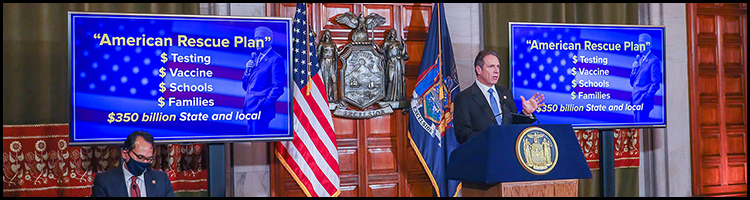
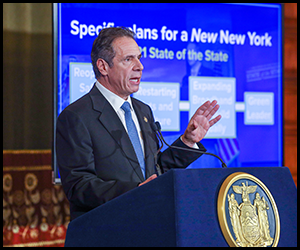
Governor Andrew Cuomo presented the Fiscal Year 2022 Executive Budget for the state on Tuesday, January 19, 2021.
New York State is facing an astronomical $15 billion deficit this year. The Governor offered two budget proposals, each contingent on different aid packages from the federal government. The first budget, labeled the “worst case scenario,” projects $6 billion in aid from Washington, while the second budget, called the “fair funding scenario,” projects $15 billion.
Focusing on the “worst case scenario, Governor Cuomo stated, “To get to $9 billion would require everything that you could do. You need to raise revenue, cut expenses, and borrow funding. The New York State Legislature proposed an income tax increase. If you raise income tax from 8.82 to 10.86 then the state rate and the city would be a total of 14.7, which would be the highest income tax in the nation, you’d raise $1.5 billion. And you’d have to do all of this in the middle of a COVID pandemic. On top of that you’d have to do significant borrowing. That would hurt the state’s credit rating and give our children debt that they would have to pay, dramatic budget cuts would hurt New York state long term and delay recovery.”
Discussing ways to increase revenue, the Governor offered two revenue areas, the legalization of recreational marijuana and online sports betting. The former projecting $350 million in annual revenue and the latter projecting $500 million per year in revenue. Neither measure nearly enough to make up for the budget shortfall without Washington’s assistance.
Focusing on $15 billion in federal aid, Governor Cuomo pointed out that this represents only 4.3% of the $350 billion aid package President Biden is bringing to the table. “We want federal help, but we want the help that is fair. What is fair? Fair funding from Washington would be $15 billion of the $350 billion. Considering what we went through I think it’s a modest request from Washington,” the Governor stated.
Fiscal Highlights of the FY 2022 Executive Budget, assuming $15 billion in federal aid:
· State Operating Funds spending is $103.4 billion
· All Funds spending $192.9 billion for FY 2022
· Provides $31.7 billion in School Aid
· Provides $7.5 billion in State support for higher education in New York
With “adequate federal support,” the budget focuses on:
· $306 billion to infrastructure plan
· $29 billion in private/public green economy investments
· $1.3 billion rent relief program
· $20 billion to create/preserve 100,000 affordable housing units
· $128 million for homeless housing and assistance
· $15 cap on broadband for low-income families
· $150 million to address food insecurity
· $10 million for Liberty Defense Fund
· $130 million Pandemic Recovery and Restoration Program (supporting highly-impacted small businesses, restaurant, arts, and entertainment industries)
· $40 million Infectious Diseases Resiliency Commercialization Fund (to fast-track innovation, address emerging health threats, establish Public Health Corp.)
Governor Cuomo again sharply took aim at the State and Local Tax policy, or SALT cap, calling for its repeal, noting it has cost New Yorkers over $30 billion over the last three years. The average cost of SALT cap to New York households is $2,600 per home. The Governor stated this amounted to the “first double taxation in history.”
Summing it up, Governor Cuomo noted, adequate federal funding would support New York State's ongoing war against the pandemic and post-COVID reconstruction plan. “If Washington doesn’t provide New York State with our fair share of funding, we’re going to pursue litigation,” Governor Cuomo advised.
For more information on the proposed budgets, click here.
Pandemic Recovery and Restart Program Proposed

With an eye on our local Main Streets and further drilling down on Governor Andrew Cuomo’s proposed state budget for fiscal year 2022, the Governor’s $130 million proposal to enact the Pandemic Recovery and Restart Program is projected to help highly impacted small businesses recover from the COVID-19 pandemic.
Basically, the program would establish three new tax credits and increase a fourth one to help highly impacted small businesses in the accommodation, arts and entertainment, restaurant and musical and theatrical production industries - all with an eye towards bringing back jobs to New York and help the economy recover faster.
"As we embark on our post-COVID reconstruction, it's critical that we not only jump-start our economic recovery, but also ensure we find ways to support highly impacted small businesses that have been among the hardest hit throughout this pandemic," Governor Cuomo said. "The Executive Budget was crafted to do just that. Through the creation and expansion of $130 million in tax credits, we are working to lessen the burden on critical sectors - restaurants, the arts, and so many others - so those funds can be redirected back to the businesses themselves and get them back up and running."
The proposal would establish or enhance the following tax credits:
· Small Business Return-To-Work Tax Credit: Provides $50 million in tax credits to support certain highly impacted small businesses impacted by COVID-19 in the hiring of additional workers through 2021. This would help employers hire workers faster than they normally would, helping reduce unemployment and getting workers back on the tax rolls. The credit is $5,000 per employee and up to $50,000 per business. Small businesses must have experienced a minimum 40 percent revenue or employment loss to qualify.
· Restaurant Return-To-Work Tax Credit: Provides $50 million in tax credits to support highly impacted restaurants hard hit by the pandemic through 2021. This credit is for restaurants that were hardest-hit by pandemic restrictions, in New York City and other areas in which restrictions were implemented. Restaurants would receive the credit immediately if they choose. The credit would be $5,000 per employee and up to $50,000 per business.
· New York City Musical and Theatrical Production Tax Credit: Provides $25 million in tax credits for the jump start of the industry and the support of tourism activity in New York City.
· Extend and Enhance the Musical and Theatrical Production Credit for Four Years: In order to support highly impacted musical and theatrical productions that occur in the State but outside of New York City, the Budget extends this credit for four years through 2025 and doubles it to $8 million.
Governor Cuomo stated, “We need to support the small businesses, restaurants, and theaters that have suffered the most during the COVID crisis.”
For more information on the proposed budgets, click here.

PinkTie and GivnGo Fuel Recognized for Chromebooks Donation
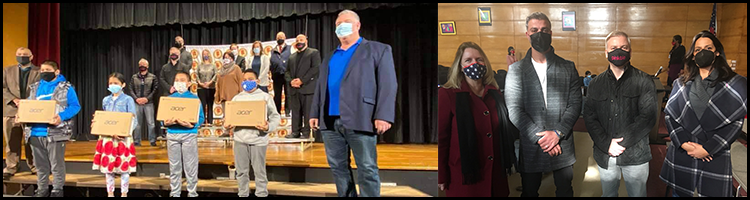
Here is a great example of local philanthropy that helped 45 Freeport students with virtual learning.
PinkTie and GivnGo Fuel were recently recognized for their generous donation to the Freeport Chamber of Commerce for 39 Chromebooks to kids at the Caroline G. Atkinson School (and 6 distributed to the Woodward Children’s Center).
Due to the current social distancing guidelines, the gathering was limited, but we were happy to see in attendance: the Village of Freeport Mayor Robert Kennedy, Nassau County Legislator Debra Mulé, and NYS Assemblywoman Judy Griffin.
Special thanks to Pinktie founders Mike and Rich Cave, and GivenGo Fuel owners Danny and Emre Ocak, for their generous donation of $10,000. Thanks also to Freeport Chamber’s Lois Howes and Gregory Ingino, also of Woodward Children's Center, for helping to obtain the Chromebooks. PinkTie members Michael Passantino and Eric Alexander were also out in support.
Knowing that these Chromebooks will help students keep up with digital learning can make us all smile right now.
You can support your local community by patronizing the GivenGo Gas in Freeport and other locations as the money stays in the community. Visit them at 300 W. Merrick Road, Freeport

President Biden Proposes $20 Billion for Transit Industry

On January 14, 2021, then President-elect Joe Biden unveiled a $1.9 trillion stimulus proposal which endeavors to combat the COVID-19 pandemic and the economic toll it is inflicting on Americans. President Biden’s relief package, titled American Rescue Plan, includes $1 trillion in direct aid; $440 billion in community support; $400 billion in pandemic response; and $10 billion in cybersecurity.
Highlights of the American Rescue Plan Include: Additional stimulus payments; Enhanced unemployment aid; Rental assistance and eviction moratorium; Help for the hungry; More money for child care and child tax credits; A temporarily increase of tax credits; Subsidies for health insurance premiums; Restoration of emergency paid leave; More assistance for small businesses; Aid for states and schools; Increased support for vaccines and testing; and a $15 hourly minimum wage.
Importantly, the plan also proposes $20 billion for the transit industry. According to the plan, “Safe and dependable public transit systems are critical for a robust and equitable economy recovery. The president-elect is calling for $20 billion in relief for the hardest hit public transit agencies. This relief will keep agencies from laying off transit workers and cutting the routes that essential workers rely on every day while making these transit systems more resilient and ensuring that communities of color maintain the access to opportunity that public transportation provides.”
As Mass Transit details, “In March 2020, the Coronavirus Aid, Relief and Economic Security (CARES) Act provided the transit industry with $25 billion, followed by the Coronavirus Response and Relief Supplemental Appropriations Act of 2021 that provided the industry with an additional $14 billion in emergency funding relief. Industry stakeholders and transit agencies had been advocating for at least an additional $32 billion after the CARES Act, which the second relief bill fell short of. Despite the $39 billion in emergency relief, transit agencies still face compounding budget deficits brought about by the pandemic.”
“New York Metropolitan Transportation Authority (MTA) Chairman and CEO Patrick Foye called the American Rescue Plan a ‘strong start,’” Mass Transit reports. “Reactions to the recovery proposal from transit industry advocates were also positive.”
Investment in public transit is not only crucial for our economy to recover, but to come back even stronger.
Click here to view the American Rescue Plan.
Click here for Mass Transit article

Long Island Main Street News, Under Production, makes Extended Interviews with Local Leaders Available
Vision Long Island has been in the process of interviewing some of our community partners: local civics, small business/chamber friends, municipal officials and local food pantry and religious leaders.
As part of these efforts, we have reached over half of the communities we work in and are starting now to connect to some of our friends not rooted in any one community from development, design and infrastructure professionals and environmental leaders as well. These interviews will be pieced together into a future show titled "Long Island Main Street News," but, in the meantime, you can view an extended version of these interviews here.
Special thanks to our guests for sharing their experiences, to our friends at Pink Tie for providing access to their studio, and to Rob Comforto from Videomasters for the filming and production.
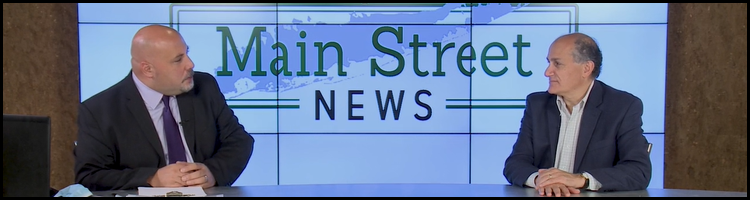
Last Friday’s Main Street News interview featured Village of Westbury Mayor Peter Cavallaro.
The Mayor provided us with an overview of his community and history along with recent accomplishments and plans for the year. His work with downtown revitalization over the last decade and a half helped secure NYS DRI funding, partner with the MTA for infrastructure investments, rezone aging buildings for TOD redevelopment and invest in community facilities, streetscapes, arts and events.
Mayor Cavallaro certainly made an excellent case for 21st century Village government with a real hands on personal style.
Check it out here.
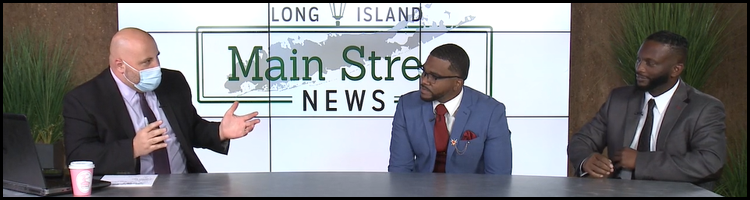
This past Monday saw a double episode of the LI Main Street News interviews.
Our first episode featured a special edition of the LI Main Street News interviews. Here we focused on Long Beach with James Hodge and Mack Graham from the Long Beach MLK Center.
Mr. Hodge shared with us the 50 year plus history of the center serving the local community. Their facility includes a gym, fitness center, commercial kitchen, media and learning center and a whole range of programs that reach out to all in Long Beach that are in need.
Through crisis situations like Sandy and the Coronavirus shutdowns the Center’s work took on more importance distributing food, running a soup kitchen, toy drives for the holidays and virtual programming as well.
Mr. Graham, who has been recently hired as the Center’s Executive Director, shared his background and plans for 2021 as well.
This is a great organization with a rich history as a hub for the Long Beach community.
Check it out here.
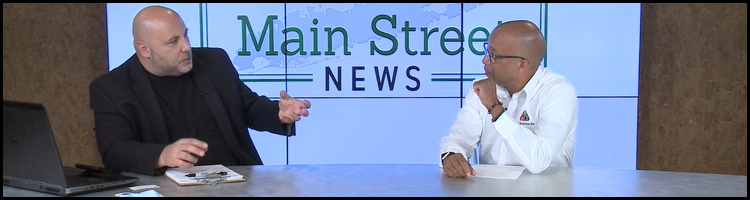
This interview was from our friend Ray Thomas founder of Black Business Zone.
Mr. Thomas presented the new platform that aims to bring minority owned businesses additional exposure through social media and a range of promotional services. The conversation covered that challenges connecting loan and grant programs to these businesses as well.
This last year of the Coronavirus has made most businesses looking to adapt and reach new audiences where the Black Business Zone could surely assist.
Check it out here.
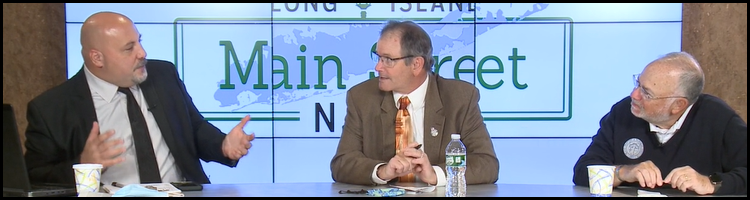
We were back on Tuesday with another double edition of the LI Main Street News interviews. This one featured Village of Amityville Mayor Dennis Siry and Amityville Chamber of Commerce President John Diliberto.
Mayor Siry provided an overview of the Village and a range of revitalization activities underway in recent years. Mr. Diliberto shared the status of the small business community through the Coronavirus shutdowns and beyond. Both spoke about how this tight knit community is open for business, enhanced walkability, well planned downtown development while keeping their local character intact.
It has been great to get to know these gentleman in recent years and of course look forward to seeing the results of their ongoing work.
Check it out here.
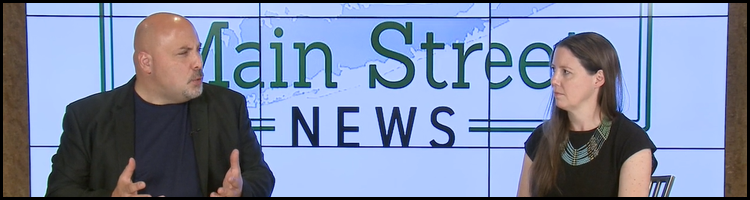
We were able to bring out another edition of the LI Main Street News interviews this week with Elissa Kyle, Director of Placemaking with Vision.
Elissa gave us an overview of solutions for pedestrian and bike safety in the form of complete streets and she tackled needed housing options through the missing middle housing alternatives. She also articulated the importance of local solutions to placemaking that can range from events on neighbors porches, native plantings, pop up events and more.
After nearly two decades of working with Elissa, we learn something new each day from her expertise and commitment.
Check it out here.
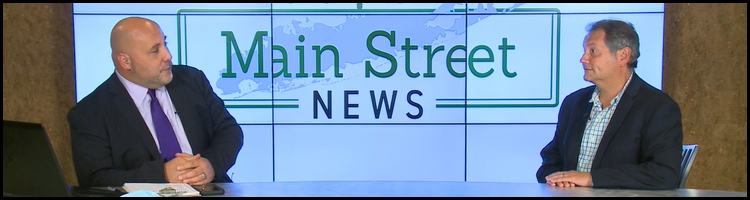
This interview brought us out to downtown Patchogue with David Kennedy of the Greater Patchogue Chamber of Commerce.
Mr. Kennedy shared the many components that led to the success of their multi decade downtown revitalization efforts starting in the 90s with the Patchogue Theatre. He also updated us on the innovative work keeping businesses open through the Coronavirus.
His work and of course his presentation is engaging and also inspiring. Great collaboration from all of the local organizations along with their Village government as well.
Check it out here.
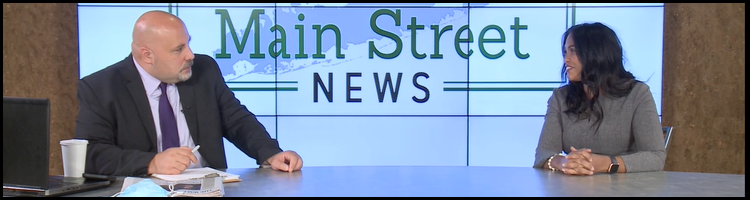
We were back with another edition of LI Main Street News interviews last night with Patricia Holman the Executive Director of the Glen Cove Business Improvement District.
Ms. Holman shared with us a profile of the business district the range of unique activities the BID manages and promotes. With redevelopment projects finally underway the benefits from these projects are felt with a range of restaurants in the downtown area.
Great to see the promotional activity, the diversity of new restaurants and the hard work through the Coronavirus crisis.
Check it out here.
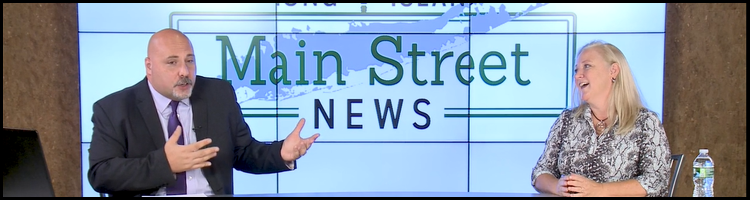
Thursday’s second edition of Main Street News, we will hear from Port Washington BID Executive Director Holly Byrne.
Hear how this newcomer has worked with the local businesses in her downtown to use diverse technology like social media platforms and shared services to help them get through these economic hardtimes.
Listen as she shares about the importance in valuing customer service and creating a sense of family with their patrons has kept business flowing with repeat customers.
Check it out here.

Keep an eye on Vision Long Island's Facebook page here, where we'll be premiering a new Main Street News Interview daily! Simply follow us if you have not already and you should get alerts before a new video debuts.
Here is our upcoming schedule of interviews for next week, so be sure and tune in for any that you are interested in:
January 25
Hon. Alan Beach, Lynbrook Village Mayor
January 26
Ghenya Grant, Wyandanch Chamber of Commerce
January 27
Debbie Cavanaugh, Central Islip Coalition of Good Neighbors
January 28
Julie Marchasella, Elmont Chamber of Commerce
Lisa Dellipizzi, Franklin Square Chamber of Commerce

Applying for the Second Round of PPP Loans for Small Businesses
The Paycheck Protection Program (PPP) has been revived, with $280 billion available for a second round, for small businesses still struggling to make ends meet. Monday, January 11th, was the first day to apply for this new, potentially forgivable, federal loan.
What you need to know about PPP Loans:
PPP loans are forgivable loans, meaning the money doesn’t need to be repaid if it meets the criteria laid out by the Small Business Administration. They have an interest rate of one percent and the current batch will mature in five years. The loans require no collateral and come without fees. Borrowers must spend at least 60% of the loans on payroll, with the other 40% going to other eligible operating expenses. Forgiven PPP loans are not considered income for federal tax purposes.
Differences in Round 2:
Targeted funds are being made available for the most vulnerable businesses; restaurants can get bigger loans; the forgiveness process is simpler; the tax break for PPP loan recipients have gotten bigger; and there is an expanded use of funds.
Eligibility for PPP funding:
For round 2 of the PPP funding, both first-time and second-time qualified borrowers are eligible to apply. First-time borrowers can apply for loans up to $10 million.
PPP applicants who are seeking funding in addition to what they received earlier in the year (also known as Second Draw Loans) are eligible for loans up to $2 million provided they meet the following requirements:
- Employ fewer than 300 people (down from 500);
- Have used or will use the full loan amount granted to them in their first round of PPP funding;
- Can show a 25% gross revenue decline in any 2020 quarter compared with the same quarter in 2019 (if a business was out of operation for a portion of 2019, they can use different quarters to compare gross receipts.)
How and when to apply:
SBA reopened the Paycheck Protection Program (PPP) for First Draw PPP Loans the week of January 11, 2021. SBA will begin accepting applications for Second Draw PPP Loans on January 13, 2021.
To promote access for smaller lenders and their customers, SBA will initially only accept Second Draw PPP Loan applications from participating community financial institutions (CFIs), which include Community Development Financial Institutions (CDFIs), Minority Depository Institutions (MDIs), Certified Development Companies (CDCs), and Microloan Intermediaries. Paycheck Protection Program lending will reopen to all participating lenders shortly thereafter. At least $25 billion is being set aside for Second Draw PPP Loans to eligible borrowers with a maximum of 10 employees or for loans of $250,000 or less to eligible borrowers in low- or moderate-income neighborhoods.
Applications close on March 31, 2021.
How much can a business borrow?
Loans are capped at 2.5 times an applicant’s average monthly payroll costs in the one year prior to the loan being issued (3.5 times for restaurants and other eligible hospitality businesses).
Loans are limited to a maximum of $10 million for first time PPP borrowers and $2 million for second time borrowers.
What can the money be used for?
The loan proceeds can be used to cover a business’s payroll and certain other expenses, including operations expenditures, property damage costs, supplier costs, and worker protection expenditures.
What about loan forgiveness?
If a business uses at least 60% of the loan on payroll expenses and maintains its employment levels during the covered period of the loan, it can apply to have the loan forgiven. Otherwise, the loans carry a 1% interest rate and a maturity of five years.
For further information, and to apply, click here.
La Fuerza CDC Offers P.O.W.E.R. Tech Loan

La Fuerza is a community development financial institution is currently offering loans to women entrepreneurs who need new technology, such as computers, for their businesses.
This tech loan program can provide zero-interest loans up to $3,000 and training for Women Entrepreneurs to help them get what they need for their small business.
For more information, please call 516-922-8700 or email Power@lafuerzacdc.org for more information.
Raising the NYS Bar Restaurant Recovery Fund

Restaurants in New York State have been among the hardest hit by the ongoing Coronavirus regulations and have been relying on local residents and their loyal customers to rally around these establishments to help them stay open.
In an effort to support small businesses during the COVID-19 pandemic, the Raising the NYS Bar Restaurant Recovery Fund offers approximately $3 million in reimbursement grants for up to $5,000 to eligible businesses. The program is intended to support full-service restaurants – the industry hit hardest by the pandemic – during the winter months when outdoor dining is limited and as restaurants adjust to New York State’s COVID-19 safety restrictions and new mandates.
The Raising the NYS Bar Restaurant Recovery Fund is a partnership between New York State, Diageo Wine & Spirits, Southern Glazer Wines & Spirits and The National Development Council (NDC). Grant funding will be managed by The National Development Council (NDC).
Restaurants can apply to the Rising the NYS Bar Restaurant Recovery Fund starting Monday, January 11, 2021.
To qualify for the program, an establishment must:
· Be full-service restaurants (NAICS code 722511), or establishments engaged in providing food services and meals prepared on-premises to patrons who traditionally order and are served while seated (i.e., waiter/waitress service), including on-premises food and drinking establishments licensed through the State Liquor Authority (SLA). Establishments providing take out or grab and go food services due to COVID-19 restrictions are also eligible;
· Franchises are not eligible;
· Have no more than $3 million in 2019 revenue;
· Be located in New York State;
· Have been in operation on or before March 1, 2019;
· Certify and demonstrate that they have experienced financial hardship due to COVID-19
· Agree to comply with all applicable New York State and local reopening guidance and COVID-19 health and safety policies, including the New York Forward reopening guidance and Cluster Action Initiative guidance, as well as SLA and DOH regulations.
Click here for full details.
New York Reopens Rent Relief Program

New York State Homes and Community Renewal Commissioner RuthAnne Visnauskas has announced the COVID Rent Relief Program will be reopened for application with expanded eligibility criteria in an effort to serve New Yorkers who may have not had the opportunity to initially apply and those who may have been previously ineligible. HCR will accept applications from households through Monday, February 1, 2021.
The Program’s eligibility has been changed to no longer require households to have been considered “rent burdened” prior to the pandemic in order to qualify. Rent burden is defined as paying more than 30 percent of monthly gross income towards rent. Residents that previously applied for COVID Rent Relief will not have to reapply to be reconsidered. HCR will re-evaluate all applications that were denied according to the new criteria and issue revised determination letters to applicants.
To qualify for this one-time subsidy, low-income renters impacted by the pandemic must meet all of the following criteria:
• Must be a renter and have a primary residence in New York State;
• Applicants must have lost income during the period of April 1, 2020 to July 31, 2020;
• Before March 7, 2020, household income must have been at or below 80 percent of the Area Median Income, adjusted for household size; and
• Households must be “rent burdened” during the months they are applying for assistance between April 1, 2020 to July 31, 2020.
For the purposes of assessing applicant income, cash benefits and unemployment benefits are both included in the calculation.
The subsidy for eligible applicants will be calculated as: the difference between the household’s rent burden on March 1, 2020 and the household’s rent burden during the months of April, May, June and July of 2020. For applicants who were not considered rent burdened on March 1, 2020, the subsidy will be calculated to bring them to the 30 percent rent burden threshold.
The application period will be open until February 1st, 2021.
Applications are available on the COVID Rent Relief Program portal on HCR’s website here.
New York State Accepting Applications for NY Forward Loan Fund

New York State has opened pre-applications for the New York Forward Loan Fund. Loans from this fund are available to small businesses, nonprofits, and small landlords in New York State. New York Forward loans must be fully repaid over a 5-year term with fixed annual interest rates of 3 percent for small businesses and landlords.
Small businesses may apply for the lesser of $100,000 or up to 100% of the average monthly revenues in any 3-month period from 2019 or the first quarter of 2020. This loan can be paid back over five years with first year being interest only. However, if small businesses have received either a PPP loan or an EIDL loan from SBA, they would not be eligible to apply. NYS has set a goal of 18% of total funds under this Program for Long Island
Applications will be reviewed on a rolling basis as industries and regions reopen however, priority for New York Forward Loans will be given to industries and regions that have been reopened. Resources are available to assist in preparing applications for small businesses, landlords and nonprofits in industries and regions that have not yet reopened.
To view more details, including eligibility requirements and how to apply, click here:
If you need technical assistance through this process, please contact an Entrepreneurial Assistance Center near you and inform the counselor that you need help for the NY Forward Loan application. You can find your closest contact center here.
Today's Sponsor
1st Equity Title & Closing Services

1st Equity National Title and Closing Services was established under the laws of New York and commenced business in 2003. Located in Melville, NY with offices in NJ and PA, they are a national title agency, licensed to do business across the country. They are local experts in the New York market, offering CEMA and Coop Search services along with a full suite of title insurance and related products nationwide. Their organization has grown year over year due to a loyal client base as well as strategic acquisitions within the market.
Their goal is to be a highly respected, compliant and best in class, national Title and Closing Services Company, delivering exceptional service to their clients. Their culture is client centric with a focus on supporting the growth of their clients as well as the surrounding community. Their approach to clients is “We do business the way you do business”.
Smart Talk
Contributors:
Eric Alexander, Director; Tawaun Weber, Assistant Director;
Christopher Kyle, Communications
Director;
Elissa Kyle, Placemaking Director; Linda Henninger, Outreach Coordinator
We strive to provide continued quality publications like this every week. If you have any news or events that you would like to add to our newsletter, submit them to info@visionlongisland.org for consideration.
If you are interested in becoming a newsletter or news blast sponsor, please call the office at 631-261-0242 for rates and opportunities.
Vision Long Island
24 Woodbine Ave., Suite Two
Northport, NY 11768
Phone: 631-261-0242. Fax: 631-754-4452.
Email: info@visionlongisland.org
Home | Contact Us | Donate | About Us