presented by Vision Long Island and the Long Island Main Street Alliance
March 10th, 2021
Quotes of the Week
 |
“Back in November, the American people and New Yorkers sent a crystal clear message to the previous administration: deliver the robust COVID relief this country needs or get out of the way. The deal we reached with the help of a new president, and a new democratic Senate marks real relief to the tune of $100 billion for workers, families, healthcare, small businesses, including our hard-hit industries like restaurants, and New York—the things we need to support in order to weather this crisis and then work to recover. This marks the second biggest stimulus bill in the nation’s history—second to the CARES Act—and it comes just in time, because Americans and New York still need real help to get through this.” - United States Senator Charles Schumer |
 Like us on Facebook



New COVID Relief Bill Delivers Billions to Families, Workers, Restaurants, and Small Businesses

After being passed in the US Senate, Senator Charles Schumer has announced numbers that New Yorkers can expect to see from the American Rescue Plan.
Schumer detailed the plan’s tentative impact to New York as $100 Billion dollars. The deal includes an additional round of direct stimulus checks, extends enhanced unemployment insurance benefits, and will help solve New York State, New York City, Long Island budget woes. This will go a long way towards providing relief for countless families, workers, restaurants, more independent venues, and small businesses across the state.
As part of the deal, more than $23.8 Billion flows directly to New York State government(s) on top of increased education funding, transit funding and highways, vaccine distribution, COVID health funding, emergency rental and housing assistance, and more.
“Back in November, the American people and New Yorkers sent a crystal clear message to the previous administration: deliver the robust COVID relief this country needs or get out of the way. The deal we reached with the help of a new president, and a new democratic Senate marks real relief to the tune of $100 billion for workers, families, healthcare, small businesses, including our hard-hit industries like restaurants, and New York—the things we need to support in order to weather this crisis and then work to recover,” said U.S. Senator Charles Schumer. “This marks the second biggest stimulus bill in the nation’s history—second to the CARES Act—and it comes just in time, because Americans and New York still need real help to get through this.”
The details and the impact on New York appear in the breakdown below. These numbers are tentative.
State and Local Fiscal Relief Include:
$23.8 Billion for New York – Total amount of funding provided to New York State through the state and local fiscal relief fund, to keep first responders, frontline health workers, and other providers of vital services safely on the job as states and local governments roll out vaccines and fight to rebuild Main Street economies. Funding can be used for assistance to households, small businesses, nonprofits, aid to impacted industries such as tourism, travel, and hospitality, investments in water, sewer and broadband infrastructure, and to provide premium pay to frontline workers.
Local governments of every size, including all counties, cities, towns, and villages, receive dedicated federal aid awards. A new $10 billion capital projects program also support state broadband deployment efforts. Funds are allocated in New York as follows:
• $12.569 Billion for New York State Government
• $6.141 Billion for New York City
• $3.907 Billion for New York’s Counties
• $825 Million for New York’s Small Cities, Towns, and Villages
• $358 Million for a New York State Broadband Investment Program
Additional New York Aid Includes:
• $2.7 billion: Medicaid FMAP increase ($2.1 billion already delivered from Schumer pushing President Biden to extend through the end of the calendar year, in addition to approximately 600 million from a targeted enhanced FMAP for home and community-based services from this legislation)
• $7+ billion: New York Area Transit ($6.5B to MTA) The New York State Department of Transportation will receive $12M directly to support rural transit systems. The remainder will support county bus services, and upstate transit agencies.
• $418 million: New York’s hard-hit airports to continue operating safely during the pandemic. Port Authority Airports will receive: $218M for JFK, $107M for LGA, $4M for Stewart, and $164M for EWR. This includes $60M in relief at the four airports for large and small concessionaire businesses that have been hard-hit by the pandemic and unable to pay minimum guarantees to airports.
• $1.7 Billion – Relief for Amtrak to help maintain operations and other expenditures during the pandemic, especially in New York.
• $15 Billion – The CARES Act Airline Payroll Support Program which will save thousands of New York airline and airline contractor jobs by keeping workers on payroll without furloughs or reducing pay rates and benefits until March 31, 2021 New York will receive sizable share of these funds.
Aid for Schools and Institutes of Higher Learning Includes:
• $9 Billion – K-12 Schools – these flexible funds will support school districts in reopening safely for in-person instruction and addressing the many needs that students are facing due to the pandemic. A portion of the funds are targeted towards addressing learning loss, providing resources through the Individuals with Disabilities Education Act (IDEA), and implementing summer enrichment and afterschool programs.
• $2.6 Billion – Colleges and Universities – Institutions must distribute half of their allocation to students in the form of financial aid awards to address hardships caused by COVID-19. The remaining portion of the funds can be used on reopening costs, revenue losses, classroom retrofits, PPE, and other expenses.
• $257 Million – Private K-12 schools – these funds are administered by the state educational agency to provide public health and related assistance and services to private K-12 schools.
Child Care and Family Aid Includes:
• $1.8 Billion – Child Care – Through the Child Care Stabilization Fund and the Child Care Community Development Block Grants (CCDBG), these funds ensure that the child care sector will continue to assist working families, and to support child care providers in meeting their increased operation costs during the pandemic.
• $59 Million – Head Start – this is emergency funding that will continue to provide access of services for children and their families.
• $7.03 billion: Child Tax Credit payment to New York families
• $786 million: Earned Income Tax Credit payment to New York families
• More than $1 billion in additional Emergency Rental Assistance and assistance for preventing homelessness
• $575 million in mortgage and utility assistance for homeowners
• $1.07 billion: Nutrition Assistance ($810 million for Pandemic EBT Benefits, $227 million for SNAP)
Unemployment Insurance and Direct Checks Include:
An estimated $21.7 Billion for NY in Enhanced Unemployment Insurance Benefits. This bill provides billions in additional federal relief for struggling New Yorkers – who are out of work through no fault of their own – by extending the historic unemployment insurance reforms established in the CARES Act, through September 6, 2021.
Importantly, it continues the critical lifeline of the enhanced unemployment assistance, providing an additional $300 per week on top of all state and federal unemployment benefits. The bill extends the Pandemic Unemployment Assistance program for the self-employed, gig workers, freelancers and others in non-traditional employment, as well as the additional weeks of federal unemployment insurance for workers who exhaust their regular state benefits.
Notably, this legislation excludes up to $10,200 of unemployment benefits received in 2020 from taxable income, providing much-needed tax relief for workers making less than $150,000.
There are also over $22 Billion in Direct Payments for NY that includes an additional round of Economic Impact Payments of $1,400 for individuals making up to $75,000 per year and $2,800 for couples making up to $150,000 per year. Eligible families will also receive an additional $1,400 payment per child and adult dependent, amounting to $5,600 for an average family of four. Nearly 9 million New York households will receive another round of direct payments, helping them to cover essential expenses like food, rent or mortgages, and medical bills during this crisis.
COVID Vaccination and Testing Funding Includes:
• Roughly $4 billion to support more vaccines, testing and healthcare in New York
Relief for Small Businesses, Restaurants, Nonprofits, Arts and Culture Venues, and Tourism Includes:
$28.6 Billion for Restaurants – A new restaurant relief fund, modeled on the widely support, bipartisan RESTAURANTS Act, which will provide flexible grants through the Small Business Administration (SBA) as a lifeline for New York’s restaurant industry, one of the hardest hit by the economic effects of the COVID pandemic. Food service or drinking establishments, including caterers, brewpubs, taprooms, and tasting rooms, that are not part of an affiliated group with more than 20 locations will be eligible. To provide comprehensive support to local restaurants, grants from the fund could be used alongside first and second Paycheck Protection Program (PPP) loans, SBA Economic Injury Disaster Loan assistance, and the Employee Retention Tax Credit.
The new restaurants relief fund will be designed to provide flexible grants of up to $10 million per restaurant group, $5 million per individual restaurant, that can be used to cover payroll, mortgages or rent, setup for outdoor seating, PPE, paid leave, food and other supplies, or debt and other expenses. Grants can be spent on eligible expenses from 2/15/20 through 12/31/21 and the SBA Administrator may extend the period through two years from enactment if conditions warrant. $5 billion of the $25 billion total is reserved for restaurants with less than $500,000 in gross receipts in 2019 for the first 60 days of the program. During the initial 21-day period, the administrator will prioritize awarding grants to eligible entities that are owned or controlled by women or Veterans or are socially and economically disadvantaged businesses.
$1.25B and a Key Fix for Save Our Stages – The bill provides an additional $1.25 billion for hard-hit independent live venues, performing arts organizations, independent movie theaters, and cultural institutions. The bill also includes a critical fix that allows venues to access a PPP loan and a Shuttered Venue Operators Grant, deducting the PPP loan amount from the grant amount. Including access to both programs will provide a much-needed source of additional capital as these struggling businesses and nonprofits try to stay afloat during the crisis.
$15 Billion for SBA Targeted EIDL Grants - This funding will provide hard-hit, underserved small businesses with increased flexible grant relief. These grants will be particularly helpful for very small businesses and sole proprietors, which include over 90 percent of minority-owned businesses that have been disproportionately devastated by this crisis.
Expanded PPP Eligibility for Nonprofits – This bill makes additional 501(c) nonprofits eligible for PPP. It also makes local offices of larger nonprofits eligible for PPP assistance as long as those locations are not larger than 500 employees for first PPP loans or 300 employees for second PPP loans, expanding access to vital relief for nonprofit organizations that are critical to local services and the economy.
Community Navigator Program for Underserved Businesses – $100 million is included to fund community organizations and community financial institutions with a focus on and experience working in minority, immigrant, and rural communities to serve as community navigators to help connect small business owners in these communities to critical resources, including small business loans, business licenses, and federal, state, and local business assistance programs.
$10 Billion for Small Business Opportunity Fund – This funding available through the Treasury Department is modeled on the State Small Business Credit Initiative and will support state and local capital and technical assistance initiatives for small businesses responding to and recovering from the pandemic, which will be particularly beneficial to minority-owned and other underserved small businesses.
$3 Billion for Economic Development Grants, Including for Tourism and Travel -- $3 billion is included for the Economic Development Administration to provide flexible grants for rebuilding the local economies of communities that have experienced significant job loss from COVID-19. A $750 million set-aside is included for assistance to states and communities that have suffered from job and GDP loss in the tourism, travel, and outdoor recreation sectors.
Extended Employee Retention Tax Credit – The bill extends through the end of 2021 the refundable payroll tax credit designed to help employers keep more of their valued workers on payroll during this economic crisis. This tax credit is available to struggling New York companies and nonprofits of all sizes, and is equal to 70% of qualified wages up to $10,000 per employee per quarter.
Broadband Funding for New York Families:
$632 Million -- The American Rescue Plan includes $7.172 billion nationally to close the homework gap by providing internet and connected devices to vulnerable students and educators. New York is estimated to receive around $632 million in funding to help students and educators.
Funding to Fight Poverty Includes:
The American Rescue Plan includes a significant expansion of two of the most powerful and effective anti-poverty tools the federal government has – the Child Tax Credit and the Earned Income Tax Credit – for 2021:
• Makes the CTC fully refundable and increases the credit amount from $2,000 to $3,000 per child age 6 to 17 (and $3,600 per child below the age of 6). An estimated 3.56 million children across New York will benefit from this expanded tax credit, and it will lift 680,000 children in the state above or closer to the poverty line.
• Strengthens the EITC for childless workers, many of whom are in lower-paid but essential jobs on the frontlines of the COVID-19 pandemic response, benefitting 910,000 of these workers in New York.
Funds Directed to Financial Stability for Workers and Retirees Include:
The American Rescue Plan importantly delivers critical relief for ailing multiemployer pension plans – which have experienced significant additional challenges as a result of this economic crisis – without cutting the hard-earned benefits of retirees. In New York State alone, there are more than 1.3 million participants in multiemployer pension plans, and around 624,600 New Yorkers are participants in plans that are expected to receive relief directly through this legislation
LIRR Cuts Service, Reverses Course after Outrage from Riders

This past week has seen a revolt of sorts from LIRR riders after the MTA decided to cut service after accepting billions in subsidies to counteract lost revenue.
It took about 24 hours for the LIRR to reverse course and announce service restoration starting March 29th. The cuts had reduced service from approximately 75 to 80 percent of pre-pandemic levels and forced riders to stand shoulder to shoulder on overly crowded trains. Many riders also expressed concerns over the potential to spread COVID-19 in such tight confines.
"We heard our customers' concerns about our new schedule loud and clear,” said LIRR President Phil Eng in a recent statement. “As a result, we will restore our previous timetable on March 29. In the meantime, we will continue to strategically add additional trains and lengthen trains to meet evolving ridership levels. We continue to monitor seating availability with unprecedented clarity thanks to new technology. As declining COVID-19 cases and increased deployment of the vaccine allow New York to fully reopen, customers should expect to see more riders returning to trains every day, and we look forward to it."
LIRR ridership is currently about a quarter of what it was at the beginning of the pandemic, so some cuts are to be expected. However, as the vaccine becomes more widely distributed, that number is expected to go up. At the same time, images from social media earlier in the week demonstrated that even at its current low, ridership far exceeds available trains.
“It was basically a weekend schedule on a weekday,” said Lisa Daglian of the Permanent Citizens Advisory Committee to the MTA. “Tempers were flaring, space was short and trains were overcrowded. Those do not make for a good combination. More people are returning to their places of employment. Employers are expecting more people to travel in. People want to return to normalcy, and the best way to do that is to provide them with reliable transit.”
Vision Long Island has previously spoken at a press conference for the LIRR service and co-sponsored a webinar with Senator Schumer and other transit advocates on a bailout package for the MTA. We strongly support emergency funds for transportation to help keep growth and stability in our local communities.
We were happy to hear about the bipartisan support over funding to keep LIRR going, but no one anticipated that they would take dollars from the Federal government and then cut service in half. Hopefully the extremely clear, negative reaction from riders, as well as just plain common sense, will help the leadership reverse course and put train service back to the old schedule.
At this crucial time it is important to build trust in the safety of the riders to get folks to come back as more people get vaccinated and Coronavirus cases recede, not to repel riders out of fear and crowding in cars.
You can read more at the New York Post and the Gothamist.
With Coronavirus Numbers Improving, Restaurant Restrictions Ease

Governor Andrew Cuomo announced on Sunday, March 7th, that restaurants on Long Island, and across most of New York State, can start operating at 75% capacity for indoor dining starting March 19th.
Currently, restaurants outside of New York City are only allowed to be open at 50% indoor capacity.
“That is all very good news. It’s not just good news for the restaurant owners, remember you have a lot of good restaurants. There are a lot of jobs for a lot of suppliers. So, we’ll go to 75%. We also think that 75% is what the consumer is ready for, all the same safety capacities remain in effect, but we will go to 75%,” Governor Cuomo said.
The Governor noted one caveat, if the numbers change, then this date could be readjusted, depending on how the pandemic continues. All of the same safety protocols remain in effect, such as mask-wearing when not seated and eating, and social distancing.
Restaurants in New York City will remain at 35%.
This announcement comes as the number of Covid-19 hospitalizations and deaths dropped to the lowest levels in about three months, and vaccinations are ramping up.
“Local restaurant owners have been struggling during the coronavirus pandemic and the effects of the shutdown have been devastating,” states Eric Alexander, Director of Vision Long Island and the Long Island Main Street Alliance. “This relaxed restriction is welcome news, but more relief is necessary.”
Job Growth Surges in February

“One of the biggest economic impacts from the Coronavirus regulations have been layoffs to key staff and many businesses working with skeleton crews,” explains Eric Alexander, Director of Vision Long Island and the Long Island Main Street Alliance. “Now, however, there are signs of hope as some businesses are hiring.”
The US Labor Department reported Friday, March 5th, that non-farm payrolls jumped by 379,000 for the month of February and the unemployment rate fell to 6.2%. That compared with expectations of 210,000 new jobs and the unemployment rate holding steady from the 6.3% rate in January.
This hiring surge comes amid Covid-19 cases steadily dropping and vaccine roll-outs providing hope for more growth.
Carolyn Gusoff at CBS News reported on Friday, “It’s a sign the labor market is recovering one year into the pandemic” But she notes, “The economy is strengthening, but with just a fraction of the 10 million jobs lost to the pandemic.”
According to the CBS report, areas that are seeing growth right now include the health care sector, such as nurses, phlebotomists, operations, administrative staff; the legal field; and non-profits.
Several companies Vision Long Island works with are among those interviewed for the CBS story, including Concern for Independent Living and Trellus.
Check out the full story here.
Long Island Clean Energy Leadership Task Force Hosts Virtual Meeting

Vision staff was in attendance, along with over seventy meeting attendees, at the Long Island Clean Energy Leadership Task Force virtual meeting on February 26th, 2021. The Task Force, created in 2004, brings together Long Island municipalities with state and federal government, power authorities, utilities, and environmental leaders for the advancement of clean and renewable energy solutions and initiatives at the local level.
The meeting featured a three-person keynote presentation by Sarah Oral, Civil Engineering Director at Cameron Engineering; David Tepper, Senior Planner at Cameron Engineering; and Andrew Manitt, Deputy Director at the Sustainability Institute at Molloy College. Sarah, David, and Andrew are also NYSERDA's Clean Energy Communities Coordinators for Long Island. In that capacity, the trio's keynote presentation was titled, "New Clean Energy Communities Leadership Round - Competitive Grant Opportunities for Municipalities."
To open the first 2021 meeting of the Task Force, Neal Lewis, Executive Director, Sustainability Institute at Molloy College welcomed and acknowledged many members of the Task Force in attendance, and pointed out the many years of work that the Task Force has highlighted over its history, and provided a progress report on a key Task Force goal of Commercial PACE Financing. After a year on Zoom, he also optimistically looked forward to a return to in-person Task Force meetings, perhaps even as soon as July. Neal went on to point out recent news stories capturing efforts to address climate change and energy efficiency.
Lead Long Island Clean Energy Communities Coordinator, Sarah Oral began the keynote presentation by recognizing that NYSERDA's program is designed for municipalities, but that its success is linked to individual support to get communities to participate in the program. She also outlined the overarching goals of the program as resiliency, clean energy and a green world shaping a green economy.
Clean Energy Communities Coordinator, Andrew Manitt explained how meeting thresholds were necessary to secure grants and that grants increased, not decreased, over time. In other words, big impacts (more energy savings) = bigger rewards (larger grant amounts).
High Impact Actions Must:
- Reduce energy
- Stimulate the economy
- Investment in or adopt policies that encourage clean energy
- Encourage citizens to take action and encourage energy efficiency
Examples and Points for High Impact Actions:
- Clean Fleets (100-1000 points)
- Unified Solar Permit (200 points)
- IPACE Financing (200-500 points)
- LED Street Lights (200-900 points)
- Energy Code Enforcement (200 points)
- Clean Energy Upgrades (500 points)
- NYStretch Energy Code Adoption (1200 points)
For more information about the Clean Energy Communities program, contact your CEC Coordinator. If you don't know who the Coordinator for your community is, contact Sarah Oral at soral@cameronengineering.com.
This CEC PowerPoint presentation can be found here.
This meeting of the Task Force also featured a presentation by Ian Latimer, Project Manager at NYSERDA who walked attendees through an overview of local energy storage systems and siting issues. He began his presentation with an explanation of the technology, and then highlighted incentives of the program.
NYS Clean Energy Goals:
- 70% renewables by 2030 (27% currently)
- 85% reduction in GHG from 1990 levels by 2050
- 100% emissions-free grid by 2040
Energy storage systems types and applications:
- Residential, commercial, utility scale
- Backup power for blackouts and storms, charging batteries when prices are low to store for when prices are high
Downstate incentives:
- Residential solar, $2.7 million committed, $1.3 million remaining
Ian highlighted the 115 projects currently in place on Long Island amounting to 13 MW in total:
- 65 projects in Suffolk County = 12 MW
- 50 projects in Nassau County = 1.1MW
To date, only three Long Island jurisdictions have adopted zoning laws for storage: Southampton, Brookhaven, Huntington.
Resources available from NYSERDA:
- One-on-one guidance
- Website resources
- Webinars
- Guidebooks
Renewable Energy and Efficiency Expert, Chuck Schwartz gave the final presentation of the meeting. He made attendees aware of the Climate Reality Project's upcoming Leadership Corps Virtual U.S. Training. A free opportunity to build the skills and networks to effect real policy change and inspire your community to act.
Chuck also announced the new funding program, Mission Energy. An opportunity available for nonprofit organizations to undertake solar and efficiency projects in the New York Metropolitan area. Questions and more info can be directed to Chuck Schwartz at 631.287.3270 or chuck@ligreen.com.
Long Island Coalitions & Updates:
The following coalitions provided issue updates: Smart Growth/Transit-Oriented Development, Commercial PACE Financing, NYStretch Energy Codes, Electric Vehicles, Offshore Wind, Solar, Green Buildings, Green Jobs & Training, Climate Jobs NY, Citizens' Climate Lobby, Students for Climate Action, Long Island Green Homes.
A video recording of the Task Force meeting presentations can be found here.
Clean Energy Communities PowerPoint can be found here.
Upcoming Events:
- 9th annual International Energy & Sustainability Conference hosted by Farmingdale State College's Renewable Energy & Sustainability Center and The University of West Indies
Thursday, March 18 | Friday March 19
- 2021 Compete Streets Virtual Summit hosted by Vision Long Island and The Main Street Alliance
Thursday. March 25 | Friday March 26. Registration and more details available here.
Kudos to Neal Lewis and the Task Force for outlining clean energy goals in our local region, and bringing local stakeholders and experts together to produce concrete solutions.

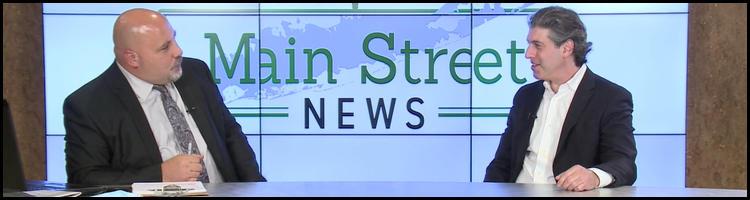
Long Island Main Street News, Under Production, makes Extended Interviews with Local Leaders Available
Vision Long Island has been in the process of interviewing some of our community partners: local civics, small business/chamber friends, municipal officials and local food pantry and religious leaders.
As part of these efforts, we have reached over half of the communities we work in and are starting now to connect to some of our friends not rooted in any one community from development, design and infrastructure professionals and environmental leaders as well. These interviews will be pieced together into a future show titled "Long Island Main Street News," but, in the meantime, you can view an extended version of these interviews here.
Special thanks to our guests for sharing their experiences, to our friends at Pink Tie for providing access to their studio, and to Rob Comforto from Videomasters for the filming and production.
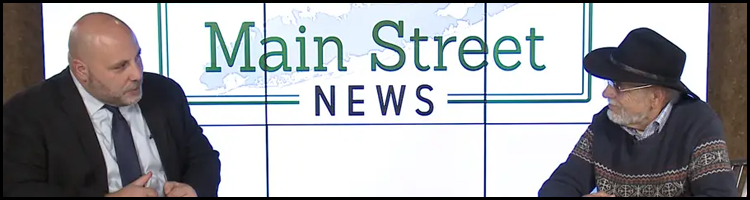
We were back with another edition of LI Main Street News this past week, this time interviewing LIU Professor Emeritus and longtime activist leader David Sprintzen.
Mr. Sprintzen presented a concept known as a public bank that has been in place in North Dakota and other nations for decades. There is now legislation that could authorize a public bank in NYS similar to the one that recently passed in California.
With the many questions of our banking community's response through the PPP process and the need for stronger CRA investments this concept is certainly worth exploring.
Mr. Sprintzen has been a thought leader in the progressive community for decades and was a key principal in the early conversations on sustainability on Long Island in the early 90s.
He continues his activism and leadership with the Ethical Humanist Society of Long Island as well.
Check out the interview here.
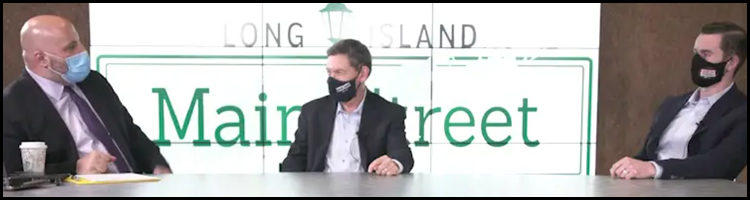
We were back with another edition of the LI Main Street News interviews featuring Roger Clayman and Ryan Stanton from the LI Federation of Labor.
Mr. Clayman and Mr. Stanton provided a profile of the many union members they represent and shared their goals of fighting for all working people. They gave a perspective of the front line workforce that managed through the Coronavirus and the importance of fighting for health and safety regulations for their betterment as well.
We discussed some legislative and infrastructure projects we have worked together jointly on through the LI Lobby Coalition and things that folks can do to both become a union member and fight for working people.
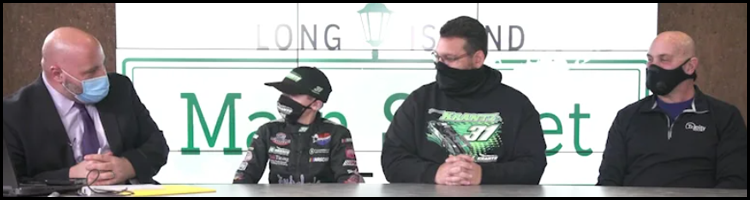
The next edition of LI Main Street News featured Michael Passantino of Trinity Solar, Darren Krantz and Darren Krantz Jr. from Recommerce and Pink Tie.
Mr. Passantino and Mr. Krantz shared their respective companies commitment to local charity and the Pink Tie efforts in particular. Darren Jr. talked about his NASCAR races that raise money and awareness for a range of local organizations as well.
The theme of giving back to the local community was evident in all of their work and particularly heartwarming with someone as young as Darren Jr. as well.
Check it out here.
We were back with another edition of Main Street News featuring Aryeh Lemberger of WSP.
Mr. Lemberger covered the firm’s work, including transportation, infrastructure, and support of municipal governments. His career also included years of service in Nassau County government, which provided another perspective to his planning work. Mr. Lemberger lives and works on Long Island and cares deeply about our local communities.
Check it out here.

Keep an eye on Vision Long Island's Facebook page here, where we'll be premiering a new Main Street News Interview daily! Simply follow us if you have not already and you should get alerts before a new video debuts.
Here is our upcoming schedule of interviews for the rest of the week, so be sure and tune in for any that you are interested in:
Wednesday, March 10th
Ken Johnson, Greenlawn Civic Association
Thursday, March 11th
Joe Garcia & David Saul, Farmingdale Chamber of Commerce
Friday, March 12th
John Murray, Kilwins, The Hero Joint Patchogue & Babylon

NYS Vaccination Guide Now Available
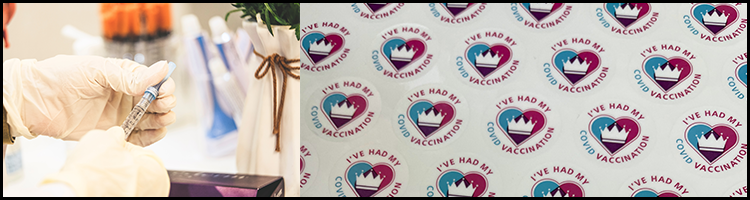
The State of New York has prepared a guide to help eligible New Yorkers schedule a COVID-19 vaccination appointment at a state-operated distribution site.
· Appointments are REQUIRED. To make an appointment, you can call the hotline or go the New York State eligibility website using the links below;
· New York State Vaccination Hotline: 1-8333-NYS-4-VAX (833-697-4829). The Hotline is open 7 days a week from 7:00 AM – 10:00 PM;
· Check your eligibility at this site: https://am-i-eligible.covid19vaccine.health.ny.gov/ You can also locate the site by googling “New York am I eligible.” If eligible, you will be able to move forward and search for an appointment near you at a state-operate distribution location;
· For further information, the New York State website is a great resource: www.ny.gov/vaccine.
The federal government has increased the weekly supply, but New York's vast distribution network and large population of eligible individuals still far exceed the supply coming from the federal government. Due to limited supply, New Yorkers are encouraged to remain patient and are advised not to show up at vaccination sites without an appointment.
The 'Am I Eligible' screening tool has been updated for individuals with comorbidities and underlying conditions with new appointments released on a rolling basis over the next weeks. Starting next week, local health departments will also receive vaccine allocations for these individuals. New Yorkers can use the following to show they are eligible:
- Doctor's letter, or
- Medical information evidencing comorbidity, or
- Signed certification
A reminder: Appointments are based on vaccine supply. Supply is currently limited.
Eligibility update, March 1st 2021: Vaccine eligibility has been expanded to public facing hotel worker, food banks and pantries, and home-delivered meal programs.
New York is currently vaccinating what they are referring to as Phase 1a and Phase 1b groups. Please head to the state's website here to confirm if you are eligible for vaccination.

YouOffice to Host Small Business Pop-Up on March 20th

Small business owners in Glen Cove have a variety of options when considering where to keep their office. One unique opportunity is found at YouOffice of Glen Cove. YouOffice, which sits in the heart of the Glen Cove business community, surrounded by shops and restaurants, offers boutique office suites and coworking space which cater to small businesses, entrepreneurs and start-ups.
On Saturday, March 20th, from 2 PM to 5 PM at 50 Glen Street, YouOffice is hosting a Small Business Pop-Up, featuring a diverse selection of small businesses found on Long Island. There will be businesses specializing in fashion, art, vintage, wellness, beauty, home decor, jewelry, artisanal foods, crafts, local services and more.
YouOffice is also hosting a giveaway for vendors. Each vendor will have an opportunity to win a suite in the building for 6 months free of charge.
For more information visit hello@youoffice.com.
The INN’s Curbside Food Drive Returns on March 20th
The INN was founded in 1983 as a single soup kitchen run by a small group of concerned volunteers. Working at a church in Hempstead, the volunteers discovered that not only were there large numbers of hungry people on Long Island, but that individuals working together could make a difference in their lives.
What began as a tiny seed quickly grew as other communities discovered that hungry people existed in their community, too. As word spread of the success of the Hempstead soup kitchen, The INN became a magnet for individuals who wanted to help those who were hungry in their own communities. Soon after the Hempstead soup kitchen began operations, others opened up Long Island wide.
From this simple start and through the vision and determination of a small group of dedicated volunteers, The INN has grown to become the largest private social service agency of its kind on Long Island.
The INN’s goal is to transform lives by addressing hunger, homelessness and profound poverty through awareness, action and generosity.
Here’s one way we all can help.
The INN, at 100 Madison Avenue, Hempstead, is holding its next no-contact food drive, to collect the most needed items for guests of the Mary Brennan INN soup kitchen, on March 20th, from 10 AM to 12 PM.
Most needed items include: Canned meats, Canned tuna, Canned soup, Canned stews, Canned vegetables and fruit, Dry soup, Peanut butter, Jelly (no glass), Travel-size toiletries, Hot and cold cereals, Rice, Powdered milk, Pasta, Canned beans, Baby food & cereal (glass jars accepted), Baby formula.
All donations are appreciated!
Call 516.732.6009 with question. You can find more information here.

Applying for the Second Round of PPP Loans for Small Businesses
The Paycheck Protection Program (PPP) has been revived, with $280 billion available for a second round, for small businesses still struggling to make ends meet. Monday, January 11th, was the first day to apply for this new, potentially forgivable, federal loan.
What you need to know about PPP Loans:
PPP loans are forgivable loans, meaning the money doesn’t need to be repaid if it meets the criteria laid out by the Small Business Administration. They have an interest rate of one percent and the current batch will mature in five years. The loans require no collateral and come without fees. Borrowers must spend at least 60% of the loans on payroll, with the other 40% going to other eligible operating expenses. Forgiven PPP loans are not considered income for federal tax purposes.
Differences in Round 2:
Targeted funds are being made available for the most vulnerable businesses; restaurants can get bigger loans; the forgiveness process is simpler; the tax break for PPP loan recipients have gotten bigger; and there is an expanded use of funds.
Eligibility for PPP funding:
For round 2 of the PPP funding, both first-time and second-time qualified borrowers are eligible to apply. First-time borrowers can apply for loans up to $10 million.
PPP applicants who are seeking funding in addition to what they received earlier in the year (also known as Second Draw Loans) are eligible for loans up to $2 million provided they meet the following requirements:
- Employ fewer than 300 people (down from 500);
- Have used or will use the full loan amount granted to them in their first round of PPP funding;
- Can show a 25% gross revenue decline in any 2020 quarter compared with the same quarter in 2019 (if a business was out of operation for a portion of 2019, they can use different quarters to compare gross receipts.)
How and when to apply:
SBA reopened the Paycheck Protection Program (PPP) for First Draw PPP Loans the week of January 11, 2021. SBA will began accepting applications for Second Draw PPP Loans on January 13, 2021.
To promote access for smaller lenders and their customers, SBA will initially only accept Second Draw PPP Loan applications from participating community financial institutions (CFIs), which include Community Development Financial Institutions (CDFIs), Minority Depository Institutions (MDIs), Certified Development Companies (CDCs), and Microloan Intermediaries. Paycheck Protection Program lending will reopen to all participating lenders shortly thereafter. At least $25 billion is being set aside for Second Draw PPP Loans to eligible borrowers with a maximum of 10 employees or for loans of $250,000 or less to eligible borrowers in low- or moderate-income neighborhoods.
Applications close on March 31, 2021.
How much can a business borrow?
Loans are capped at 2.5 times an applicant’s average monthly payroll costs in the one year prior to the loan being issued (3.5 times for restaurants and other eligible hospitality businesses).
Loans are limited to a maximum of $10 million for first time PPP borrowers and $2 million for second time borrowers.
What can the money be used for?
The loan proceeds can be used to cover a business’s payroll and certain other expenses, including operations expenditures, property damage costs, supplier costs, and worker protection expenditures.
What about loan forgiveness?
If a business uses at least 60% of the loan on payroll expenses and maintains its employment levels during the covered period of the loan, it can apply to have the loan forgiven. Otherwise, the loans carry a 1% interest rate and a maturity of five years.
For further information, and to apply, click here.
Nassau County Reopens Restaurant Recovery Grant Program

Nassau County Executive Laura Curran is pleased to reopen the portal below to accept more applications for the Restaurant Recovery Grant Program (RRGP).
The program is intended to support full-service restaurants – the industry hit hardest by the pandemic – during the winter months when outdoor dining is limited and as restaurants adjust to New York State’s COVID-19 safety restrictions and new mandates. Minority- and Women-Owned Business Enterprises (M/WBEs) are encouraged to apply.
Nassau County is using funding made available through the federal Community Development Block Grant (CDBG) program to provide grants to restaurants. Grant funds are valued at either $5,000 or $10,000 depending on the number of employees.
The deadline to submit an application is March 15th, 2021.
If you have not already begun the application process and would like to APPLY, click here: https://zoomgrants.tools/zgf/nassaurestaurantrecovery
Eligible businesses that have been APPROVED to receive Restaurant Recovery Grant Program (RRGP) funding are shown in the list at this link. These businesses will receive a direct email from the Restaurant Recovery team this week, requesting confirmation of bank details so that the grant can be disbursed. Please watch for the email from nassaurestaurants@ndconline.org.
Restaurants that have applied to the RRGP but do NOT see their business on the list at the above link must get in touch with the Restaurant Recovery team immediately to complete their applications at nassaurestaurants@ndconline.org and 1-646-825-9617.
For any questions, please contact the Restaurant Recovery team at nassaurestaurants@ndconline.org and 1-646-825-9617.
Questions?
Please email any RRGP questions to the Restaurant Recovery team at mailto:nassaurestaurants@ndconline.org.
Check back to this webpage for any RRGP updates!
Program Eligibility Criteria
Eligible Businesses
• Full-Service Restaurants (NAICS code 722511) engaged in providing food services and meals prepared on-premises to patrons who traditionally order and are served while seated (i.e., waiter/waitress service)
• Restaurant Establishment must have a current and valid Nassau County Department of Health Food Service Permit
General Eligibility
• Located in Nassau County
• In operation on or before March 1, 2019
• Must have 50 or fewer Full-Time equivalent (FTE) employees
o Maximum $5,000 grant – 0 (sole proprietor)-10 employees
o Maximum $10,000 grant – 11-50 employees
• Must agree to create or retain at least one low/moderate-income job at full-time status
• Must certify and demonstrate that they have experienced financial hardship due to COVID-19
Eligible Expenses
• Grant funds to cover working capital and operating expenses including:
o payroll, rent, utilities, purchase of PPE and sanitation supplies; lease or purchase of equipment like kitchen equipment or delivery vehicles; or COVID-19 related business improvements like patio heaters or contactless technology.
Ineligible Businesses
• Non-profit organizations
• Businesses with greater than 50 employees
• Businesses in violation of New York State Executive orders relating to the COVID-19 pandemic or other State, County or local ordinances
o e.g., EO 202.74 effective Friday, November 13 at 10 PM
▪ SLA FAQ: https://sla.ny.gov/Guidance-COVID-Related-Closing-Times
Keep an eye on the restaurant recovery page on Nassau County’s website for more information and to apply once the grant program becomes available.
New York State Homes & Community Renewal Community Development Block Grants
The New York State Community Development Block Grant (CDBG) program provides financial assistance to cities, towns and villages with populations under 50,000 and counties with area populations under 200,000.
Communities may apply for grant funds to support quality affordable housing and economic opportunities. CDBG funding must primarily benefit low- and moderate-income New Yorkers through housing activities; projects that create job opportunities; prevent or eliminate blight; or address community development needs that pose a serious and imminent threat to the community’s health or welfare.
Grants are currently available to support housing projects and economic development and small business activities.
- Eligibility: Cities, towns and villages located in non-entitlement areas with a population under 50,000 and counties with an unincorporated population of under 200,000 are eligible to apply for CDBG funding. Eligible applicants must be in substantial compliance with all applicable state and federal laws, regulations and executive orders that pertain to the CDBG program.
- Housing Grants: Housing grants are available for housing rehabilitation, down payment assistance and manufactured housing replacement.
- Funding: $10 million available, with a maximum of $500,000 for cities, towns and villages and a maximum of $1 million for counties.
- Deadline: April 9, 2021
- Economic Development Grants: Economic development grants are available to support business expansion, must create or retain jobs.
- Funding: Limits vary based on proposed activity.
- Deadline: Open application, rolling awards.
- Contact: OCRinfo@nyshcr.org
You can find more information here.
Salvation Army Hempstead Offering Assistance with Foreclosure Prevention Grants

The Salvation Army Hempstead Citadel Corps has been serving the Hempstead and surrounding communities for over 55 years. The Salvation Army is dedicated to “Doing the Most Good.” Efforts include everything from helping with food insecurity, to homelessness, child protection, disaster relief, anti-trafficking, rehabilitation, poverty relief and so much more.
In December of 2020, New York Governor Andrew Cuomo signed the COVID-19 Emergency Eviction and Foreclosure Prevention Act of 2020. The Act placed a moratorium on residential evictions until May 1, 2021 for tenants who have endured COVID-related hardship.
The Salvation Army is now reaching out to all Nassau County residents advising that ESG-CV grants will be available, once the moratorium is lifted, for those who are faced with difficulty paying rent due to COVID-19. This grant, unlike other rental assistant grants, will also be available to undocumented immigrants.
According to The Salvation Army, “It is our desire to assist effectively and prepare well as we anticipate the moratorium to expire on May 1, 2021.”
Please call for more information: ESG-CV Case Manager, Mia L. Baines, at 516-485-4900, ext. 11.
Application period for the 2021 AARP Community Challenge Now Open
The AARP Community Challenge provides small grants to fund quick-action projects that can help communities become more livable for people of all ages. Applications are accepted for projects to improve public spaces, housing, transportation, civic engagement, coronavirus recovery, diversity and inclusion, and more.
The program is open to the following types of programs:
- 501(C)(3), 501(C)(4) and 501(c)(6) nonprofits
- Government entities
- Other types of organizations will be considered on a case-by-case basis
The following projects are NOT eligible for funding:
- Partisan, political or election-related activities
- Planning activities and assessments and surveys of communities without tangible engagement
- Studies with no follow-up action
- Publication of books or reports
- Acquisition of land and/or buildings or a vehicle purchase
- Sponsorships of other organizations’ events or activities
- Research and development for a nonprofit endeavor
- Research and development for a for-profit endeavor
- The promotion of a for-profit entity and/or its products and services
AARP will prioritize projects that deliver inclusive solutions that meet the needs of diverse populations, as well as those that directly engage volunteers through permanent or temporary solutions that aim to achieve one or more of the following outcome areas:
- Create vibrant Public Places that improve open spaces, parks and access to other amenities.
- Deliver a range of Transportation and mobility options that increase connectivity, walkability, bikeability, wayfinding, access to transportation options and roadway improvements.
- Support a range of Housing options that increases the availability of accessible and affordable choices
- Increase Civic Engagement and demonstrate the tangible value of “Smart Cities” with innovative and tangible projects that bring residents and local leaders together to address challenges and facilitate a greater sense of inclusion
- Support local recovery from the Coronavirus pandemic with an emphasis on economic development, improvements to public spaces and transportation services
- Ensure a focus on Diversity and Inclusion while improving the built and social environment of a community
- Other community improvements. In addition to these areas of focus, AARP wants to hear about local needs and innovative ideas for addressing them
The following project types will be prioritized over those that support ongoing programming or events:
- Permanent physical improvements in the community
- Temporary demonstrations that lead to long-term change
- New, innovative programming or services
You can read more details on the grant at the AARP’s site here. You can apply for the grant here.
Applications are due by 8pm ET on April 14th, 2021.
New York State Accepting Applications for NY Forward Loan Fund

New York State has opened pre-applications for the New York Forward Loan Fund. Loans from this fund are available to small businesses, nonprofits, and small landlords in New York State. New York Forward loans must be fully repaid over a 5-year term with fixed annual interest rates of 3 percent for small businesses and landlords.
Small businesses may apply for the lesser of $100,000 or up to 100% of the average monthly revenues in any 3-month period from 2019 or the first quarter of 2020. This loan can be paid back over five years with first year being interest only. However, if small businesses have received either a PPP loan or an EIDL loan from SBA, they would not be eligible to apply. NYS has set a goal of 18% of total funds under this Program for Long Island
Applications will be reviewed on a rolling basis as industries and regions reopen however, priority for New York Forward Loans will be given to industries and regions that have been reopened. Resources are available to assist in preparing applications for small businesses, landlords and nonprofits in industries and regions that have not yet reopened.
To view more details, including eligibility requirements and how to apply, click here:
If you need technical assistance through this process, please contact an Entrepreneurial Assistance Center near you and inform the counselor that you need help for the NY Forward Loan application. You can find your closest contact center here.
Today's Sponsor
Harras, Bloom, and Archer LLP

The Melville, New York, law office of Harras Bloom & Archer LLP is known for providing sophisticated legal representation to sophisticated clients. The Long Island real estate law and litigation attorneys work with diverse clients in a wide range of real property, land use and zoning and business litigation matters, and have contributed to the success of many notable projects in Nassau County, Suffolk County, Queens County, Hudson Valley, New York City and the surrounding areas.
The conscientious decisions made in real estate and business matters can greatly contribute to the growth and success of an investment. The attorneys of Harras Bloom & Archer LLP help position their clients for success by balancing a high degree of knowledge and experience with the willingness to handle matters aggressively in the courtroom.
Smart Talk
Contributors:
Eric Alexander, Director; Tawaun Weber, Assistant Director;
Christopher Kyle, Communications
Director;
Elissa Kyle, Placemaking Director; Linda Henninger, Outreach Coordinator
We strive to provide continued quality publications like this every week. If you have any news or events that you would like to add to our newsletter, submit them to info@visionlongisland.org for consideration.
If you are interested in becoming a newsletter or news blast sponsor, please call the office at 631-261-0242 for rates and opportunities.
Vision Long Island
24 Woodbine Ave., Suite Two
Northport, NY 11768
Phone: 631-261-0242. Fax: 631-754-4452.
Email: info@visionlongisland.org
Home | Contact Us | Donate | About Us