presented by Vision Long Island and the Long Island Main Street Alliance
September 25th, 2020

Quotes of the Week
 |
“We cannot—and we must not—let the curtain close on Long Island’s live venues—I will fight tooth and nail here because the shows must go on. This issue, saving our stages, these venues—what it really means is multiple millions of dollars and thousands of jobs for Long Island.” - Hon. Charles Schumer, US Senator |
 |
“This [new CDBG] funding will help New Yorkers stay resilient during the pandemic and build on efforts to revitalize communities, create new jobs, and attract even more investments – all while helping ensure that housing can be accessible for all." - Hon. Kirsten Gillibrand, US Senator |
 |
“We need the roadmap that will allow us to appropriately prepare [theaters] for safe operations in a post-COVID world. New York is one of the last states in the union with no published guidelines for safely reopening cinemas. We’ve created safety protocols to assist in the crafting of standards that fit our unique subset of the film exhibition sector.” - Brett Bossard Executive Director of Cinemapolis |
 Like us on Facebook



Final Report of the Downtown Hicksville Complete Streets Project Released
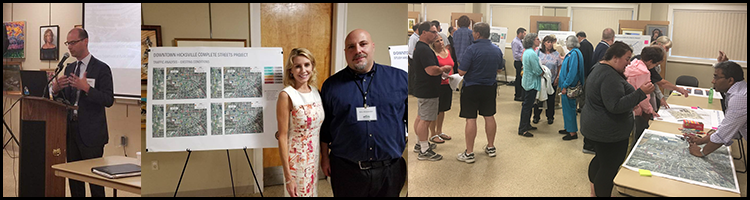
Part of the process for downtown Hicksville's revitalization includes improving the experiences for pedestrians, bicyclists and commuters around the train station area.
Vision worked with NV5 and hundreds of local residents and businesses on a Complete Streets Study that provides a blueprint to redesign the many dangerous roadways that induce high speeds and crashes.
The Coronavirus shutdown has further exemplified the need for walkability and multi-modal streets in local downtowns. The Final Report provides eight detailed recommendations that will improve the accessibility and safety for all modes of transportation in Downtown Hicksville.
They include circulation and pedestrian safety improvements at the Hicksville train station, modifications to the Barclay Triangle and expansion of Kennedy Park, and an “Underline” connection under the Long Island Rail Road (LIRR) overpass, providing enhanced bike and pedestrian access across the downtown area. All of the report’s recommendations will complement and support ongoing revitalization efforts underway by the local community, Town of Oyster Bay, New York State and the LIRR.
Kudos to Nassau County and particularly Legislators who helped create the public consensus Rose Walker, Laura Schaefer and Arnie Drucker
Special thanks to the County Executive and County Legislature
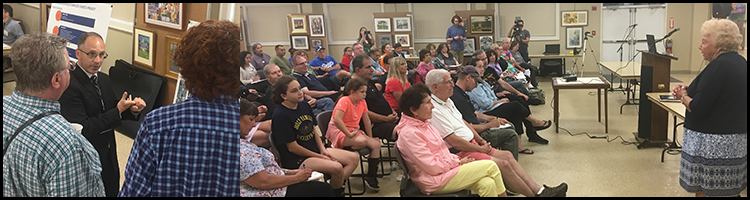
The process included over 200 hundreds residents came together at multiple meetings to provide input into the plan and the Hicksville Downtown Revitalization Committee hosted a walking tour of the area. Vision and AARP also collaborated on a walking audit and report. Other plans that this one works in concert with include the NYS-run DRI and the community-led Downtown Action Plan shaped by Hicksville Chamber and Community Council.
With more folks walking and biking than ever and the prospect of train ridership coming back, it is critical that we make Long Island's many dangerous roadways safe and humane.
You can read the latest news and view the final report of the Downtown Hicksville Complete Streets Project here. You can read coverage of this important report at Newsday and MSN.
Amityville Music Venue Revolution Bar and Music Hall Closes Doors
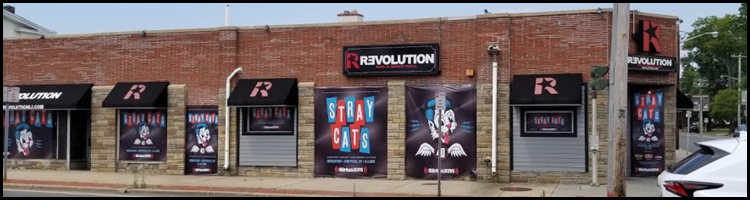
One of the local staples for live music will be forced to permanently close its doors as it became one of the latest victims of the shutdown stemming from the coronavirus health crisis.
The final nail in the coffin for the venue was the release of guidelines by New York State that stated that venues could not hold events requiring ticket sales. Unfortunately, a number of venues across the state require ticket sales to stay profitable and, as a result, have been forced to close their doors. The industry considers the restriction to be bother unfair and uncaring of businesses that need ticket sales to survive.
“I can’t keep up with it,” said Revolution owner Pauline Damiani. “We’ve been closed for six months and don’t know when we’ll be able to open back up. It doesn’t just affect me and my family. It affects the whole community.”
It I unfortunate to see these local venues become victims of the ongoing pandemic. Though the health of local residents I paramount, the fact that these restrictions are choking long standing businesses out of our local downtowns means the pain of the pandemic will only be extended. It is important for New York State to come up with smart and sensible regulations that will allow businesses to remain open, even if it’s not at full capacity.
Downtowns cannot continue to wait to reopen as the months continue with no revenue coming in, and there will only be more closings if we cannot figure out responsible ways to reopen.
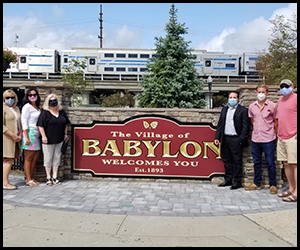
You can read more at Greater Babylon.
Babylon Beautification Society Unveils Restoration Project
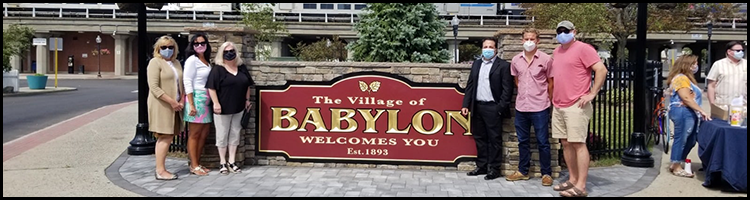
The Babylon Beautification Society has officially unveiled its restoration project outside of the local train station.
The project is centered on the corner of Railroad Avenue and Depot Place, which was previously considered an eyesore for the local village. The small triangle now features a blue spruce tree, flowers, lampposts, a black fence surrounding the exterior, and a brand-new cobblestone sign that says “The Village of Babylon Welcomes You.”
The Society held a brief ceremony earlier this month to celebrate the unveiling, which coincided with what should have been the Annual Fair at Argyle Park. Unfortunately, that event was canceled due to regulations on public gatherings from the COVID-19 pandemic.
Local officials gathered to celebrate the reveal, including Babylon Village Mayor Ralph Scordino. Mayor Scordino praised the society for the work they’ve done to help improve the village and beautify the local area.
“Our village looks so beautiful and the beautification society makes it possible in doing that,” said Mayor Scordino.
We applaud the Babylon Beautification Society for this improvement and look forward to next year’s fair, which is an important part of the local culture.
You can read more at Greater Babylon.

US Senators Schumer and Gillibrand Announce Additional $20 Million in Funding for CDBG Program

In some much-needed good news for Long Island, US Senators Chuck Schumer and Kirsten Gillibrand have announced an additional $20 Million in funding for Community Block Development Grants on Long Island.
Senators Schumer and Gillibrand say additional dollars for CDBG program will help mitigate local economic crises by investing in neighborhood revitalization efforts and providing essential funds for transformative housing initiatives across Long Island. CDBG funding is more important now than ever before as communities recover and rebuild from the current health and economic crisis.
In the third tranche of the CARES Act supplemental funding, U.S. Senator Charles E. Schumer and U.S. Senator Kirsten Gillibrand announced that Long Island localities will receive $20,493,856 in additional federal funding through the Community Development Block Grant (CDBG) program for communities to prevent, prepare for, and respond to COVID-19. The funding will be allocated by the Office of Community Planning and Development (CPD), which is part of the Department of Housing and Urban Development (HUD). The total eligible funding will go directly to the localities from the Secretary of HUD, Ben Carson, upon application.
“The Community Development Block Grant is a vital stream of investment that supports local economic growth, community revitalization, and affordable housing. In the midst of the coronavirus pandemic, we must not forget to invest in our future, and this funding does just that,” said Senator Schumer. “I worked hard to get this funding on the negotiating table and into the final CARES Act because this program delivers real results to Long Island and the entire state by creating good-paying jobs, delivering essential services, and investing in affordable housing for our vulnerable populations. I will always fight tooth and nail to deliver this critical investment for our communities.”
“I am pleased to announce this federal funding to support the CDBG Program, which will help promote local economic growth and expand access to affordable housing in Long Island,” said Senator Gillibrand. “This federal funding will help New Yorkers stay resilient during the pandemic and build on efforts to revitalize communities, create new jobs, and attract even more investments – all while helping ensure that housing can be accessible for all. I am proud to have fought for this CARES Act funding and I will continue working for the resources and support our communities need to thrive.”
A breakdown of the funding appears below:
CDBG Tranche 3 Long Island Allocations
Babylon Town $1,647,037
Brookhaven Town $3,284,817
Huntington Town $1,359,910
Islip Town $2,718,256
Nassau County $9,564,934
Suffolk County $1,918,902
You can read the full statement on the new funding here.
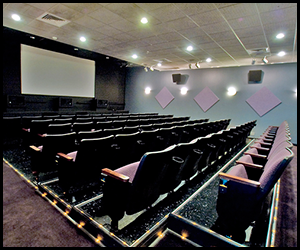
Independent Theaters say they are Ready to Safely Reopen
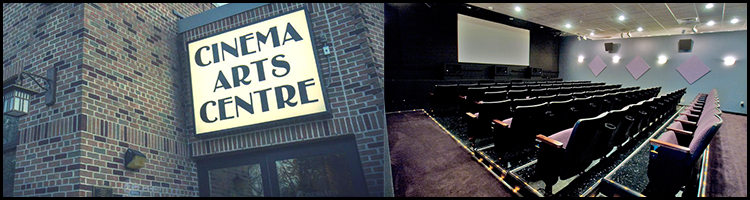
Art house theaters across New York have said that they are ready to safely reopen in a letter sent to New York State Governor Andrew Cuomo.
The letter stated that theaters are capable of following guidelines that have allowed other businesses to safely reopen during the coronavirus pandemic. It also noted that they were initially part of the Phase 4 reopening plan, but were pulled from consideration days before Phase 4 went into effect. Since then, other previously excluded businesses such as shopping malls, bowling alleys, gyms, and casinos have all been allowed to reopen while movie theaters still wait for permission.
Cuomo has declared movie theaters to be less essential and high risk, but has not provided guidelines to allow them a path forward.
“We need the roadmap that will allow us to appropriately prepare our community spaces for safe operations in a post-COVID world,” said Brett Bossard executive director of Cinemapolis, an art house theater in Ithaca, NY. “New York is one of the last states in the union with no published guidelines for safely reopening cinemas. We’ve created safety protocols to assist in the crafting of standards that fit our unique subset of the film exhibition sector.”
Theaters have agreed to follow CinemaSafe protocols, which were recently released by the National Association of Theater Owners. They have also agreed to additional measures such as the temporary elimination of concession sales in regions that do not allow indoor dining.
Most of the independent cinemas across the state are non-profit organizations that are dedicated to improving the economies of their local communities through non-mainstream entertainment. As theaters continue to languish, many are losing hope that they will be allowed to reopen in time to save their industry.
“We’re not looking for special treatment for cinemas,” said Brossard, “just accommodations equivalent to those that have already been afforded to other sectors of the state’s economy.”
You can read more at Long Island Business News.
US Senator Schumer Tours Live Venues on Long Island and Calls for Funding
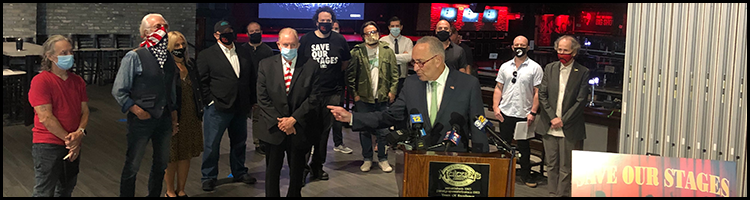
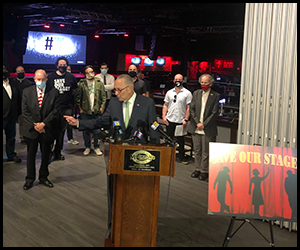
Standing alongside ‘Taking Back Sunday,’ ‘Blue Oyster Cult,’ Brian Byrne of ‘Envy on the Coast,’ ‘Violent Joy,’ Michael DelGuidice & more, U.S. Senator Charles Schumer pushed a bipartisan plan to save the many stages of Long Island. Schumer explained how the stages of the Island —from music to comedy & more—are in real peril amid COVID-19. They have no revenue right now and their live venues are in trouble. Schumer said Long Island CANNOT lose live venues, because they help make small business on the Island rock and the local economy as a whole roll.
Schumer pushed to provide federal relief for Long Island’s live events via the Save Our Stages Act. He explained that the legislation would create a $10 billion Small Business Administration program (SBA) to provide grants to eligible live venue operators, producers, promoters, or talent representatives to help cover six months of operating expenses and offset the economic impact of COVID-19. Schumer said Long Island would see a lion’s share of this federal pot of funds because of its proximity to the city, and that we have to get it done.
“We have got to rock and roll on a plan that keeps Long Island’s music and other live venues–along with the local economy—in tune, and this plan will help,” said U.S. Senator Charles Schumer. “Independent venues, like those hosted by Mulcahy’s Pub, other concert halls, pubs and more are the beating heart of Long Island’s cultural life and a driving force of the larger New York economy. These local businesses were among the first to shut down at the start of the pandemic, are struggling to stay afloat, and will be among the last to reopen.”
Schumer explained, 90% of independent venues report that they will have to close permanently without federal funding, according to a survey of National Independent Venue Association members. Schumer said that the bipartisan Save Our Stages Act is crucial to saving independent venues, like concert halls, theaters, and other places of entertainment, including Mulcahy’s and other venues across the Island—from jazz, to concert, theater and more. Schumer’s push comes on the heels of the first venue closure on Long Island—Revolution Bar & Music Hall announced it was closing its doors permanently earlier this month. Schumer explained that a 2019 report by Long Island’s Tourism Bureau, Discover Long Island, determined that tourism on Long Island is valued at $5.9 billion and generates more than $725 million in state and local taxes. Schumer said that the independent theatres on Long Island are a cornerstone of the tourism industry and that losing them would be a massive blow to Long Island’s local economy.
“That’s why it’s so important to provide dedicated federal assistance to independent venues so when it is safe, we can gather again for comedy, music, theater and other live performances in venues that have been around for generations. The Save Our Stages Act will help these places keep the lights and the laughs on, and I’ll fight to include this funding in upcoming legislation,” Schumer said.
Schumer said that live venues are a part of one of the hardest hit industries right now. He says they need dedicated assistance for long-term, flexible relief that would be available through the Save our Stages Act. If venues remain closed through 2020, it is estimated that live venues across the country will lose $9 billion in ticket sales alone. Independent venues not only drive economic activity within communities through restaurants, hotels, taxis and other transportation and retail establishments, but live events provide 75% of all artists’ income. Schumer warned that without federal aid, the economic impact of COVID-19 on live venues is insurmountable. And he said, the impact on Long Island –without federal help—could be a curtain closer.
“We cannot—and we must not—let the curtain close on Long Island’s live venues—I will fight tooth and nail here because the shows must go on,” Schumer added.
“This issue, saving our stages, these venues—what it really means is multiple millions of dollars and thousands of jobs for Long Island,” he added.
The bipartisan Save Our Stages Act (S. 4258) would create a new $10 billion Small Business Administration (SBA) program to provide grants of up to $12 million to eligible live venue operators, producers, promoters, or talent representatives to help cover six months of operating expenses and offset the economic impact of COVID-19. These grants can be used for payroll costs, rent, mortgage, utilities, and personal protective equipment, among other needs. The legislation has 28 bipartisan cosponsors, including Senator Schumer, and is supported by countless artists, performers, and industry advocates, including the Foo Fighters, Billie Eilish, Lady Gaga, Jimmy Buffett, Coldplay, Vampire Weekend, Jerry Seinfeld, Jay Leno, National Independent Venue Association, Recording Academy, Spotify, Association of Performing Arts Professionals, and many others.
New York Extends Moratorium on Commercial Evictions until October 20th

New York State has announced that they will extend a moratorium on COVID-related commercial evictions and foreclosures until Ocotber 20th.
This will extend protections currently in place for commercial tenants and mortgagors due to the ongoing economic crisis. The extension will allow for additional time for tenants and mortgagors to get back on their feet or renegotiate lease terms aimed at avoiding foreclosure.
“The pandemic remains far from over, and we need to continue protecting the business owners supporting their families amid restrictions necessary to protect the public health,” said Governor Cuomo. “That’s why it’s the right decision to extend the eviction ban for commercial tenants another 30 days.”
The State moratorium on evictions has been in place since March 20th.
You can read more at Huntington Now.

Without Public Transit, there will be No Economic Recovery

Once the epicenter of the world’s worst public health crisis in a hundred years, New York City has emerged as a test case for how discipline and planning can contain the novel coronavirus. As the only region in the U.S. that has so far successfully managed both COVID-19 and a phased reopening, the New York metropolitan area is also likely to be the epicenter of our national economic recovery. Everyone in the U.S., from unemployed service sector workers to the president, has an interest in a rapid return to normal.
Unfortunately, the White House and the Senate have thus far squandered our chances by failing to pass recovery legislation that funds the mass transit systems that ten million daily riders — and billions of dollars in wages, goods and services they produce — rely on to get to jobs in our nation’s biggest financial hub. The current breakdown in talks on emergency relief funding is a stark repudiation of the sacrifices essential workers, who often rely on buses and subways, made during the pandemic’s peak and a rejection of the needs of millions of workers who relied on transit before the shutdown and will need it again when the crisis ebbs.
At the recent New York City Metropolitan Transportation Authority Board meeting, Chairman Pat Foye laid out the stakes — the crisis we face today due to the pandemic is greater than even the Great Depression and the infamous near collapse of the system in the “bad old days” of the 1970s. Without federal emergency funds, the MTA will be forced to cut service virtually in half, hamstringing our recovery before it can even begin.
Just how dire is the crisis on our region’s rails and roads? At the pandemic’s peak, ridership had declined by 93 percent across the New York City region, and the resulting damage to transit agencies’ budgets, which rely heavily on fareboxes and tolls, has been existential in its scale. The Metropolitan Transportation Authority (MTA), which operates NYC’s subways, buses and commuter rail, needs $12 billion to keep regular service running in 2020 and 2021. The Port Authority, which runs commuter rail and buses serving over 284,000 daily customers, needs $3 billion. New Jersey Transit needs another $1.2 billion to provide service to its 910,000 daily bus and rail riders. In fact, the American Public Transportation Association is now calling for an additional $32 billion in federal funding just to keep public transit viable nationwide.
If the federal government fails to provide relief funds, these agencies will cease to exist as we know them — and so too will New York City. According to the New York Metropolitan Transportation Council, in 2018 nearly 8 million people entered or left Manhattan below 60th Street on an average day, 5.8 million of them via transit. With travel speeds in the midtown core already a meager 4.9mph, imagine if just 10 percent of those transit trips turn into automobile trips: traffic would bring the region to an utter standstill. Pre-pandemic gridlock already cost the New York economy $13 billion a year, according to a study by the Partnership for New York City. The economic damage a failed transit network would wreak is unfathomable.
Transit will always have a fundamental role to play in our cities’ fiscal health. While some might worry about whether our buses and trains could ever be made safe again, Europe and Asia are already showing that it is entirely possible: as our report “Back on Board” highlights, studies of transit systems in Paris, Vienna, Tokyo and other major cities have demonstrated that even with high levels of ridership, no outbreaks of COVID-19 have been traced back to transit. With high mask wearing compliance and clean, high-frequency service, buses, subways and commuter rail can be safe modes of transportation for returning workforces.
This spring, New Yorkers did the hard work, at great cost, of getting the virus under control. Now it’s time for Congress to do its part. New York’s economic output is almost as big as Canada’s, If New York were its own country, it would be the world’s eleventh largest economy. If the Senate and the White House fail to act responsibly and save transit, the long-term ramifications for our country’s business sector will be catastrophic.
For a White House that has been singularly focused on reopening our economic engines, neglecting the transit that brings workers, tourists, shoppers and diners to our cities will doom a successful recovery.
Nick Sifuentes is the executive director of Tri-State Transportation Campaign, a nonprofit organization fighting for sustainable transportation in New York, New Jersey and Connecticut.

W.I.N. Virtual Bridal Expo Taking Place on October 1st

During the pandemic of 2020, several local businesses in the wedding and events industry came together to discuss how they can help each other get through these challenging times and how they can help their clients. Celebrating a wedding is the most magical day in a couple’s life and the W.O.W. Focus Group, which stemmed from the Winning on Wednesday (W.O.W.) networking group, wanted to ensure they provided the best resources to their clients to keep the joy and magic of their special day!
As a result of these discussions, the WOW Focus Group founded the Wedding Industry Network (W.I.N.), which will remain committed and has vowed to not see the pandemic as a horrible experience but instead take a negative and turn it into a positive to accomplish a joyous wedding or event.
This organization will be holding a virtual bridal showcase to help engaged couples meet professionals in the industry as they prepare for what can still be one of the most joyous days of their lives. The event will take place on Thursday, October 1st fro 7 pm to 8:30 pm. People who are interested in joining the event can register here. Those interested in exhibiting can email W.I.N. at hello@winbridalexpo.com.
32nd Annual Keys for the Homeless Conference to take Place Virtually on November 18th
The Long Island Coalition for the Homeless is holding its 32nd Annual Keys for the Homeless Conference online this year to help bring relief to Long Island’s struggling homeless population.
This year’s event will take place on November 18th from 9 am to 3:30 virtually and will feature 14 workshop topics that address what can be done to help the most vulnerable residents in our region. The theme for the conference is “Adapting to Changing Times: Where Do We Go From Here?” Marc Dones, the Executive Director of National Innovation Services will be this year’s Keynote Speaker.
The Coalition is responsible for leading the region’s initiative to serve our most vulnerable and reducing barriers to housing. With their Continuum of Care partners, they have referred more than 200 homeless households for permanent housing. Throughout the years they have helped to guide over two hundred million dollars of US Department of Housing and Urban Development CoC funding to Long Island agencies, resulting in the development of over 2,700 units of housing for homeless persons.
You can register to attend, become a sponsor, or exhibitor for this event here. A full schedule of the workshops for the event is available here.

Cox Media and T-Mobile Offering Grants to LI Small Businesses

Throughout the Covid-19 pandemic, small businesses have suffered incredible financial hardship. As Long Island starts to open for business, many local businesses are struggling to get back on their feet.
Cox Media Group Long Island’s 102.3 WBAB and 106.1 BLI are dedicated to supporting locally owned businesses and shining a bright light on them during their time of need.
Thanks to support from T-Mobile, WBAB and BLI are kicking off the “Long Island Small Business Grant Program” and will be awarding $10,000 radio advertising campaigns to FIVE Long Island businesses.
To be considered, business owners will be asked to register at WBAB.com or WBLI.com and provide an essay of 300 words or less telling us why their business is deserving of this opportunity. Winners will be selected based on specific criteria, including their response to the Covid-19 pandemic, community service, business culture and employee loyalty.
Application period runs from August 10, 2020 through September 30, 2020.
Selected businesses will be announced and contacted on Thursdays starting September 3rd.
Requirements for eligibility include:
• Must be locally owned and operated in Nassau or Suffolk County, in the State of New York;
• Annual revenue less than $2 million in fiscal year 2019;
• Incorporated and active as a business for a minimum of two (2) years.
Additional rules and restrictions are posted at WBAB.com and WBLI.com.
Cox Media Group Long Island is excited to offer this program in partnership with T-Mobile to help our
local small businesses, an essential part of the Long Island community, survive and thrive.
Nassau County OCD Now Accepting HOME Program Funding Applications
The Nassau County Office of Community Development is pleased to announce the re-opening of its HOME Investment Partnerships (HOME) Program Funding Application.
NC OCD will be accepting applications through October 30th.
Please see the updated HOME Program website for information on Program requirements, Current Rent and Income Limits, Affirmative Marketing Requirements, and highlighted recently completed projects.
The on-line HOME Program Funding Application can also be accessed via OCD's website under the HOME Investment Partnership's Program tab: https://www.nassaucountyny.gov/1524/Community-Development
NYSERDA, Affordable Solar and Storage Predevelopment and Technical Assistance (Predevelopment Program)

The Predevelopment Program provides grants to address barriers to solar installations serving low-to-moderate income (LMI) households living in rental housing, multifamily buildings or other households not served by traditional on-site residential solar. Individual awards will not exceed $200,000. Funding to proposals through this solicitation will offset costs for predevelopment and technical assistance work needed to implement solar installations for multifamily affordable housing and/or shared solar (Community Distributed Generation) installations that benefit LMI households.
- Eligibility: Applications must be submitted by or include the documented participation of any of the following: owners, providers or managers of regulated multifamily affordable housing, community land trusts, land banks or portfolios of single-family affordable housing; local government agencies; Community Development Corporations (CDC), Community Development Financial Institutions (CDFI) or other community organizations providing services to LMI households and/or demonstrating an LMI constituency; and prior recipients of Predevelopment Program grants seeking to replicate and expand upon the success from a prior completed Predevelopment
Program project.
- Funding: Up to $10.65 million is available with individual awards not to exceed $200,000.
- Deadline: Continuous through December 31, 2024, or until depleted
- Contact:
Email: affordablesolar@nyserda.ny.gov
Website: www.nyserda.ny.gov/funding
Institute of Museum and Library Services, National Leadership Grants for Libraries Program (NLG-L)

This program supports projects that enhance the quality of library and archive services by advancing theory and practice. Successful proposals will generate results such as new tools, research findings, models, services, practices or collaborative approaches that can be widely used, adapted, scaled or replicated. All applications must designate one of the following project categories: Lifelong Learning, Community Catalysts or National Digital Infrastructures and Initiatives.
- Eligibility: Either a unit of state or local government or a private, nonprofit organization that has nonprofit status and be located in one of the 50 States of the United States of America, the District of Columbia or U.S. territories. Additional criteria is listed in the website.
- Funding: 40 awards for up to three years will be made with amounts varying by category: Planning Grants up to $100,000; National Forum Grants up to $150,000; Project Grants up to $1,000,000 and Research in Service to Practice Grants up to $750,000.
- Deadline: October 2, 2020
- Contacts: Jill Connors-Joyner
Email: jconnors-joyner@imls.gov;
Sarah Fuller
Email: sfuller@imls.gov;
James Neal
Email: jneal@imls.gov;
Ashley Sands, PhD
Email: asands@imls.gov
General email: imls-librarygrants@imls.gov
Website: https://www.imls.gov/grants/available/national-leadership-grants-libraries
Robert Wood Johnson Foundation (RWJF) Culture of Health Prize

The Robert Wood Johnson Foundation Culture of Health Prize (the Prize) elevates the compelling stories of places where residents are working together to transform education, jobs, transportation, housing and more so better health flourishes for all. A Culture of Health recognizes that where we live—such as our access to affordable homes, quality schools, good jobs and reliable transportation—affects how long and how well we live.
Through the RWJF Culture of Health Prize application process, a community comes together to tell its inspiring stories of collaboration, action and results. Communities should understand they are applying for a prize and not a grant. The Prize recognizes work that has already been accomplished, so there is no required workplan or budget.
- Eligibility: A community must be a geographically defined jurisdiction in the U.S. that falls into one of the following categories:
- County, parish, borough, city, town, village or other municipality with a publicly elected governing body;
- Federally recognized tribe or a state-designated Indian reservation;
- Native Hawaiian organization serving and representing the interests of Native Hawaiians in Hawaii; or
- Region defined as geographically contiguous municipalities, counties and/or reservations.
- Awards: Up to 10 winning communities receive $25,000 and a prize package of communications materials about their community, communications guidance and help in promoting their successes.
- Deadline: Oct. 15, 2020, 3pm ET
- Contact:
Phone: (608) 890-2045
Email: info@cohprize.wisc.edu
Website: www.rwjf.org/content/rwjf/en/library/funding-opportunities/2020/2021-culture-ofhealth-prize.html
NYS Launches Rent Relief Program

The COVID Rent Relief Program will provide eligible households with a one-time rental subsidy that will be sent directly to the household’s landlord. Applicants will not need to repay this assistance.
The Covid Rent Relief Program is not first come, first served. Applications will be accepted throughout the two-week application period. HCR will prioritize eligible households with “greatest economic and social need” accounting for income, rent burden, percent of income lost and risk of homelessness.
The rental assistance payment will cover the difference between the household’s rent burden on March 1, 2020 and the increase in rent burden for the months the households is applying for assistance. Households can apply for up to four months in rental assistance.
Eligible households must meet the following criteria:
- Before March 1, 2020 and at the time of application, household income must have been below 80% of the area median income, adjusted for household size. You can find your county’s area median income, based on your household size: www.hcr.ny.gov/eligible-income-limits-80-ami-county
- Before March 1, 2020 and at the time of application, the household must have been paying more than 30% of gross monthly income towards rent. Gross income includes wages as well as any cash grants, child support, social security, unemployment benefits, etc.)
- Applicants must have lost income during the period of April 1, 2020 to July 31, 2020.
HCR has created a dedicated call center to provide residents with help Monday through Saturday, 8 a.m. until 7 p.m. Call the COVID Rent Relief Program Call Center at 1-833-499-0318 or email at covidrentrelief@hcr.ny.gov
You can apply for assistance and check FAQ’s here.
New York State Accepting Applications for NY Forward Loan Fund

New York State has opened pre-applications for the New York Forward Loan Fund. Loans from this fund are available to small businesses, nonprofits, and small landlords in New York State that did not receive a loan from either the U.S. Small Business Administration (SBA) Paycheck Protection Program (PPP) or SBA Economic Injury Disaster Loans (EIDL) for COVID-19 in 2020. New York Forward loans must be fully repaid over a 5-year term with fixed annual interest rates of 3 percent for small businesses and landlords.
Small businesses may apply for the lesser of $100,000 or up to 100% of the average monthly revenues in any 3-month period from 2019 or the first quarter of 2020. This loan can be paid back over five years with first year being interest only. However, if small businesses have received either a PPP loan or an EIDL loan from SBA, they would not be eligible to apply. NYS has set a goal of 18% of total funds under this Program for Long Island
Applications will be reviewed on a rolling basis as industries and regions reopen however, priority for New York Forward Loans will be given to industries and regions that have been reopened. Resources are available to assist in preparing applications for small businesses, landlords and nonprofits in industries and regions that have not yet reopened.
To view more details, including eligibility requirements and how to apply, click here:
If you need technical assistance through this process, please contact an Entrepreneurial Assistance Center near you and inform the counselor that you need help for the NY Forward Loan application. You can find your closest contact center here.
This Week's Sponsor
Forchelli Deegan Terrana

Founded in 1976, Forchelli Deegan Terrana LLP is one of Long Island’s largest and most distinguished law firms. The Firm represents a broad range of clients, including national, regional and local businesses, public, private and family-owned companies, major real estate developers, property owners and operators, contractors, banks, municipalities, educational institutions, not-for-profits, foundations, and individuals. Personal attention and quality representation that is both practical and cost-effective are hallmarks of the Firm.
With over 60 attorneys, the Firm is able to provide expertise in nearly 20 different practice areas, with the talent, skill and experience necessary to meet the legal needs of virtually any client. These attorneys are supported by a dedicated team of paralegals, law clerks, administrative and support staff, and cutting-edge office and communications technology.
Headquartered in Uniondale, NY, in one of Long Island’s premier office buildings, the Firm is conveniently located for clients in Nassau and Suffolk counties, as well as those in New York City.
Smart Talk
Contributors:
Eric Alexander, Director; Tawaun Weber, Assistant Director;
Christopher Kyle, Communications
Director;
Elissa Kyle, Placemaking Director; Linda Henninger, Outreach Coordinator
We strive to provide continued quality publications like this every week. If you have any news or events that you would like to add to our newsletter, submit them to info@visionlongisland.org for consideration.
If you are interested in becoming a newsletter or news blast sponsor, please call the office at 631-261-0242 for rates and opportunities.
Vision Long Island
24 Woodbine Ave., Suite Two
Northport, NY 11768
Phone: 631-261-0242. Fax: 631-754-4452.
Email: info@visionlongisland.org
Home | Contact Us | Donate | About Us