presented by Vision Long Island and the Long Island Main Street Alliance October 1st, 2021
|
||
Quote of the Week
|
||
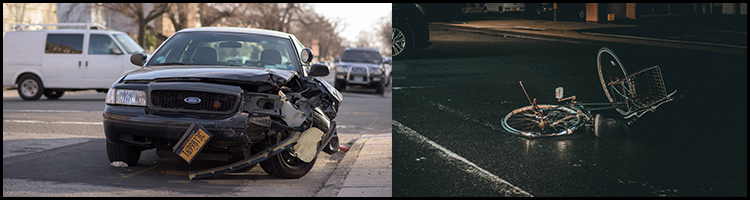
Suffolk County Leads New York State in Motor Vehicle Fatalities
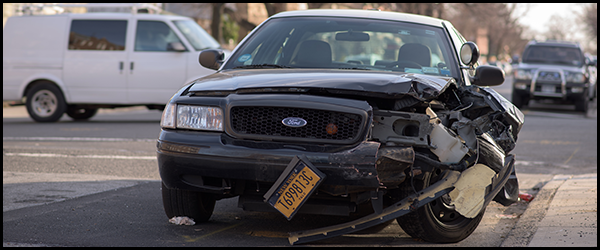
With 113 deaths, Suffolk County leads every county is New York State in motor vehicle fatalities which reviewed 2020 preliminary data from the Albany-based Institute for Traffic Safety Management and Research. Nassau County ranked third, behind Queens, with 78 vehicle-related fatalities. Those statistics, along with the overall number of accidents on Long Island last year, many of which are attributed to speed and other human-related factors, serve as stark reminders of the dependence on driving in the region, and the risks involved. “Nothing puts an exclamation point on Car Free Day than the release of crash statistics that shows Suffolk County leading NYS in fatalities,” observes Eric Alexander, Director of Vision Long Island and the Long Island Main Street Alliance. “Both Nassau and Suffolk County have dangerous roadway designs so it is no surprise to see the current numbers of these tragedies.” According to Newsday: • There were 113 people killed in motor-vehicle-related crashes last year in Suffolk, the most of any county in the state, according to the Albany-based Institute for Traffic Safety Management and Research. “A reduction of speed by roadway design, not punitive speed cameras, is the best way to get safer streets. It is important to change the culture of speed and respecting walking, biking and other modes of travel,” Mr. Alexander notes. Pedestrian and bicyclist error or confusion led to 14 fatal crashes in Suffolk and 17 in Nassau in 2020, data shows. Additionally, in Suffolk, data shows that driver inattention was cited as a contributing factor in 13 deadly wrecks, while alcohol was listed in 11 others. Suffolk police will launch a new safe-driving initiative next month that includes using targeted enforcement patrols to dole out more summonses for speeding, aggressive driving, and cellphone use or distracted driving. Over time, enforcement with marked and unmarked units will be set up at high-crash corridors. Marco DiAquoi, deputy director of Manhattan-based advocacy group Transportation Alternatives, advocates for a safe systems approach that includes the use of roundabouts, narrower roads, bulb-out extensions, bike lanes, medians and rumble strips to alert inattentive drivers. "The key is to make the drivers uncomfortable enough so they’re forced to drive slower with changes in roadway design. It’s a simple thing. If these crashes are at lower speeds, people survive," Mr. Alexander states. "Our values on Long Island are not about hurting people, so why do we feel we have an inalienable right to drive hurtling through neighborhoods?" Data from the Albany-based Institute for Traffic Safety Management and Research will be finalized this fall. You can read the complete Newsday article here. LI Motorists Could Pay up to $35 to Enter Manhattan Under Congestion Pricing Plan
Long Island motorists could pay as much as $35 to drive into Manhattan beginning in 2023, according to newly released details of the Metropolitan Transportation Authority’s (MTA) congestion pricing plan. The plan would require drivers to pay a surcharge to enter certain heavily trafficked Manhattan neighborhoods. It was estimated to raise up to $1 billion annually in fees to help the MTA pay for much needed improvements to mass transit. The Long Island Rail Road stands to get 10% of the revenue. Advocates expressed that congestion pricing offers environmental benefits, such as improving air quality, as well as a reduction of traffic. The MTA recently disclosed the range of prices it is considering for driving inside New York City’s Central Business District, defined as below 60th Street in Manhattan. E-ZPass users, who make up the majority of drivers, could pay as little as $9 for the new tolls, or as much as $23. That figure could reach as high as $35 for drivers without E-ZPass. Prices also would fluctuate depending on the time of day. The exact toll cost would depend on how many credits and exemptions are given out. Allison de Cerreño, the MTA’s deputy chief operating officer, stated, "All things being equal, the more credits and exemptions are given, the higher the toll must be to meet the project’s purpose, needs and objectives." The MTA already has said that qualifying emergency vehicles and vehicles transporting people with disabilities will not have to pay the new tolls. People who live within the toll zone and earn less than $60,000 annually would be eligible for a tax credit. Eric Alexander, Director of Vision Long Island and the Long Island Main Street, stated that while Vision supports congestion pricing as a means of getting more cars off the road, the "ability-to-pay question" must be considered. "Thirty-five dollars is hugely excessive to working people," Mr. Alexander said. "If millionaires are going to pay it, great. But if working people have to pay that or small businesses, that’s brutal. It would also be good to know specifically where the revenues raised are going to enhance our transportation network and how much in the way of improvements Long Island sees.” Once the MTA completes its ongoing environmental assessment a six-member Traffic Mobility Review Board will recommend final toll pricing to the agency’s Triborough Bridge and Tunnel Authority (TBTA), the organization tasked with overseeing the program, which will ultimately determine the toll prices. You can read the Newsday article on this here. You can learn more about the public meetings here. |
||
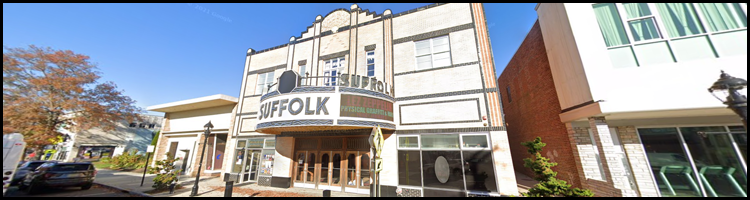
Suffolk Theater Proposing 28 Apartment Expansion
During a Riverhead Town Board work session on September 23rd, the co-owner of The Suffolk Theater, Bob Castaldi, proposed a five-story expansion of the theater that will create a steady stream of revenue for the downtown theater. The 59-foot-high addition to the rear of the building will create 2,970 square feet of ground-floor retail space and 28 market rate apartments on the second through fifth floors. The apartments will consist of 20 studio and 8 one-bedroom units. The expansion would also add 20 feet to the depth of the theater’s stage and would provide a green room, dressing rooms, a kitchenette, a laundry room, showers and a new mechanical room for the theater. The Suffolk Theater, which opened in December of 1933, is a 350 seat Art Deco movie theater located on Main Street in historic downtown Riverhead. The Suffolk Theater is the last remaining movie house built by architect R. Thomas Short and is the last remaining large art deco theater on Long Island. The theater was built as a National Recovery Act project for the Century Theater circuit chain. During World War II, the Suffolk Theater was an official issuing agent for U.S. war bonds. Various organizations, including the Long Island Farm Bureau, regularly used the theater for special events and meetings. The theater was, in fact, a hub of activity in the town, and a central attraction for many years. Unfortunately, The Suffolk Theater closed in 1987. In 1994, the Town of Riverhead purchased the theater. The theater remained dark and sat idle until 2005, when Dianne and Bob Castaldi purchased the theater with a vision of creating a unique, state-of-the-art performing arts center. Restoration was slow, but the ribbon cutting ceremony finally took place on March 1, 2013. The theater has been meticulously restored and transformed into a flexible performance space and special event facility, complete with a state-of-the-art lighting and projection system. Mr. Castaldi has stated that he always intended to expand the theater and also plans to seek Industrial Development Agency tax breaks on sales tax for construction materials for the addition. You can read the Riverhead News Review article here. The John and Alice Coltrane Home Receives a $1M Grant From The Andrew W. Mellon Foundation
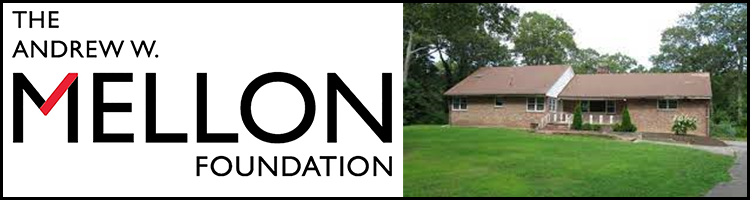
On what would have been John Coltrane’s 95th birthday, Friends of The Coltrane Home announced that the John and Alice Coltrane Home has been awarded a one-million-dollar grant from the Andrew W. Mellon Foundation. This grant will support the preservation of the Home, enhance organizational capacity, and expand its programmatic offerings. In 1964, John and Alice Coltrane moved with their family to a suburban house in Dix Hills. This mid-century ranch style house suddenly became the home to two of the great figures in 20th century music and spirituality. The Coltranes created some of the most influential and continually inspiring art of their time, much of which was composed, rehearsed, and recorded within the house itself, including the canonical A Love Supreme. In 2004, facing demolition, the structure was saved by a group of volunteers that became the Friends of the John and Alice Coltrane Home. By 2005, The Town of Huntington had purchased the property and transferred the deed to the Friends, who since have been working to raise awareness and funds for reopening the Home to the public. The Home was listed on the New York State and National Registers of Historic Places in 2007. In 2011, it was listed as one of eleven “Most Endangered” places and in 2018 was deemed a “National Treasure by the National Trust for Historic Preservation.” Beyond this esteemed award, the National Trust also aided in the restoration process by placing the Home in a cohort of significant African American cultural sites. Plans for the Home are extensive, including a total structural renovation and elaborate curatorial series to be enjoyed by the Dix Hills community and world travelers alike. With the Andrew W. Mellon Foundation grant, the restored Home will finally be able to engage students, artists, and visitors with many aspects of the Coltrane legacy, as well as greet them with their enduring gift to the world: their music. “On behalf of The John and Alice Coltrane Home, I extend our thanks and appreciation to the Mellon Foundation for this tremendous vote of confidence,” said the group’s chairman Ravi Coltrane. “Our project brings people closer to the Coltrane legacy; expanding understanding and inspiration and this funding will play an integral role in moving the project forward.” The next phase of the renovation will include restoration of the Home’s brick masonry facade, structural upgrades, and rehabilitation of stoops, patios, windows, and doors as well as the reintroduction of utilities. Renovation of the Home will also be funded in part by a $172,750 matching grant through the New York State Environmental Protection Fund secured in 2016. To successfully implement rehabilitation plans and to transform the Home into an innovative museum, the grant will fund the hiring of the group’s first Executive Director to lead the project. The John and Alice Coltrane Home will be true to its history, and will align with the programmatic vision, which calls for the Home to provide space for a new kind of house museum wherein visitors will explore an often-untold part of the American experience. Programmatic concepts include a pilot music education program to encourage active participation in music making, creativity and personal expression to empower all visitors - young and old. While the funds received from the Mellon Foundation will go a long way to renovating the Home and transforming it into an innovative museum, additional support will be needed before the Home can be opened to the public. The Coltrane Home welcomes donations. You can learn more about the John and Alice Coltrane Home here. You can read the Huntington Now story here. Suffolk County Legislator Jason Richberg Helps Celebrate Black-Owned Businesses At Ujamaa Fest
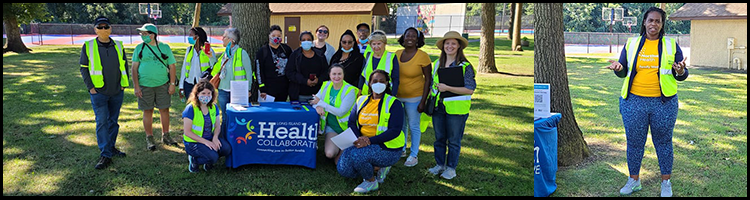
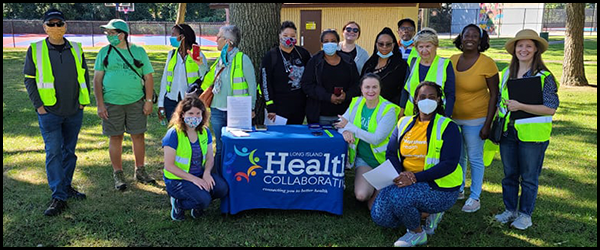
On Saturday, September 25th at Wyandanch Plaza, Suffolk County Legislator Jason Richberg attended the Black Long Island’s fourth annual Ujamaa Fest. The Ujamaa Fest featured approximately 100 vendors, youth entrepreneurs, celebrations of Pan-Africanism, live musical performances, and activities for children and families. “It was amazing to be a part of Ujamaa Fest, an event I look forward to every year,” said Legislator Richberg. “Seeing the community out in full force supporting our local businesses and lending words of support and encouragement to the young people in attendance was truly inspiring. Thank you to Black Long Island, the Wyandanch Plaza Association, the Albanese Organization and everyone who played a part in bringing this incredible event to the Wyandanch community.” The annual event aims to support Black-owned businesses and organizations from across the tristate area in an effort to rebuild the economic backbone of black communities on Long Island. Ujamaa Fest is named after the fourth principle of Kwanzaa, Ujamaa, which means “cooperative economics”. The day also included a healthy walk audit starting from the Wyandanch Park leading up to the Ujamaa Fest. Vision Long Island staff joined the New York Coalition for Transportation Safety (NYCTS)and the Long Island Health Collaborative (LIHC) as they came together to combine Walk Safe Long Island and Walk with a Doc for a special event. Dr. Keasha Guerrier briefly discussed the many health benefits of walking before heading out with pedestrian/bike safety experts.
|
||
Upcoming Fall Events in Farmingdale Village
With fall officially here, Farmingdale Village announces several upcoming community events: • Shakespeare on the Green, October 2nd and 3rd, Eastline Theatre Company presents: William Shakespeare’s “Romeo & Juliet” with 2:30 PM performances at the Gazebo, On the Village Green You can find more details here and here National Center for Suburban Studies to Host Virtual Sessions on Future of Suburbia
Join the National Center for Suburban Studies at Hofstra University for two virtual sessions featuring academics and practitioners in conversations on the future of suburban health and housing. The events are free but advanced registration is required. Session 1: REDEVELOPING THE SUBURBS, RE-ENVISIONING THE SUBURBS AFTER COVID Date: Wednesday, October 6, 2021 Postwar U.S. suburbs like Levittown, N.Y., now approaching its 75th anniversary, long served as archetypes of large-scale suburban development. Widely-circulated images and narratives of low-density, mass-produced suburban tract housing, segregated land uses, and racial exclusion concealed intra- and international variation in the built form, governance, and experience of suburban life. Today several factors are driving policymakers, builders, planners, and community activists to re-envision and redevelop older suburbs. This session will consider the prospects for equitable and sustainable suburban development and redevelopment at the regional, national, and international scales. Participants: You can register here Session 2: FAIR HOUSING AND AFFORDABLE HOUSING IN THE SUBURBS: WHERE DO WE STAND? Date: Wednesday, October 6, 2021 The last five years have been challenging for fair and affordable housing advocates. The Trump Administration consistently targeted affordable housing funds for elimination, effectively repealed the Affirmatively Furthering Fair Housing rule, and attempted to use suburban fair housing as a wedge issue in the 2020 campaign. At the same time, the Black Lives Matter movement drew public attention to structural racism and inequality. And most recently, Covid has added economic uncertainty to the work of both affordable housing producers and to the market-rate projects that might have supplied mandated inclusionary units. The supposed post-Covid “flight to the suburbs” and the shift to remote work raise new questions regarding the nature of housing demand, commuting, and generational preferences for urban and suburban living. How have advocates and affordable housing developers adjusted their strategies to this changed landscape? Do our policy priorities at the local, state, and federal levels need to change? Participants: You can register here. Public Meetings on Congestion Currently Being Held
The Metropolitan Transportation Authority (MTA), New York State Department of Transportation (NYS DOT) and New York City Department of Transportation (NYC DOT) are reminding the public that the agencies will be holding public meetings on the proposed congestion pricing program, formally known as Central Business District Tolling. These virtual meetings allow the public to learn more about the initiative and offer comments. Ten of the 13 meetings will allow members of the public throughout the 28 county Study Area in New York, New Jersey and Connecticut to learn about the program and environmental review process and provide comments. The additional three meetings will provide a special focus on individuals and stakeholder groups in identified Environmental Justice communities, who will have opportunities to receive information about the proposed program and its potential impacts – positive or negative – on minority or low-income populations. Ten Regional Public Meetings will be held September 23 Through October 6th. The 10 general interest public meetings will focus on different geographic areas within the region, but anyone from any area can participate in any meeting. Upcoming meeting dates and times include: • Monday, Oct. 4, 6-8 p.m.: New Jersey Three Environmental Justice Outreach Meetings will be held October 7th, 12th & 13th. Environmental Justice community members will be able to learn about or comment on the proposed program and Environmental Assessment process. Members of Environmental Justice communities will learn about the Environmental Justice Technical Advisory Group that is being created as part of the effort and how they can join an Environmental Justice Stakeholder Working Group or suggest someone else. Three virtual meetings will be held, focused on environmental justice communities located respectively in New York, New Jersey and Connecticut, though anyone may participate in or sign up to attend any or all of these: • Thursday, Oct. 7, 6-8 p.m.: New York Registering to speak or requesting language services can be done online or by phone. Those who wish to register to speak at any of the meetings can do so by visiting the Central Business District Tolling Program’s web portal at new.mta.info/project/CBDTP or by calling (646) 252-6777. The second option, (646) 252-6777, allows the public to hear a brief description of the project, to sign up to speak at the public meetings, or request in advance language or American Sign Language services, or request language at least five days in advance of each meeting. Feedback gathered in the public meetings will be part of the Environmental Assessment required by the United State Department of Transportation’s Federal Highway Administration (FHWA) that will be published for public review. Following the release of the Environmental Assessment, there will be additional public meetings for comment specifically on the document. The Central Business District Tolling Program was authorized by the State of New York in April 2019 and modeled on urban congestion pricing programs around the world to reduce traffic congestion and raise needed revenue to improve public transportation. Other cities across the world that have similar programs have also experienced improved air quality. If approved by FHWA, the CBDTP would be the first such program in the United States. Public Information Session for the Bay Park Conveyance Project
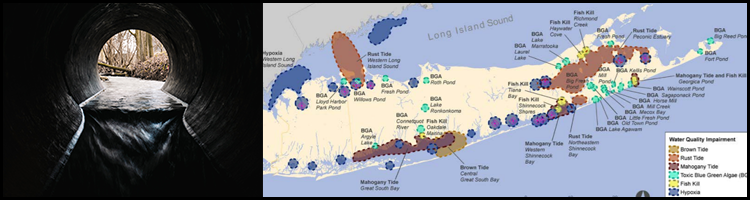
The NYS-DEC and the Nassau County Department of Public Works are hosting a virtual public information session for the Bay Park Conveyance Project on Thursday, October 7, 2021, from 6:00 PM to 7:30 PM via Zoom. Western Bays Constructors, the Design-Build contractor, will provide information on upcoming construction activities and be available to answer questions. The Bay Park Conveyance Project’s goal is to reduce nitrogen in the Western Bays of Long Island by conveying treated effluent from the South Shore Water Reclamation Facility (previously known as the Bay Park Sewage Treatment Plant) to the Cedar Creek Water Pollution Control Plant’s ocean outfall pipe. With treated effluent no longer discharged into the Western Bays, nearby communities will experience the benefits of improved water quality in the Western Bays, enhanced quality of life, revitalized shellfish habitat and restored vital marshlands that protect communities from wave action and coastal surge. You can find more Project details and meeting information here. HIA-LI's 33rd Annual Trade Show & Conference
On Thursday, October 14, 2021, the HIA-LI is hosting its 33rd Annual HIA-LI Trade Show & Conference live at the Hilton Long Island in Melville. Industries on Long Island will be represented, including Energy/Environmental, Technology, Manufacturing, Finance, Hospitality, Health Care, Media/Advertising, Education, Government & Workforce Development. The theme of one of this years’ seminars is Why Supporting Non-Profits Is Good For Your Profit. Moderated by Eric Alexander, Director of Vision Long Island and the Long Island Main Street Alliance, panelists include Lee Silberman CEO of Habitat for Humanity of Long Island, Paule Pachter CEO of Long Island Cares, and Rich Humann President/CEO of H2M. Discussion will include why Corporate Social Responsibility is more than just companies giving money to nonprofits because it is the “right thing to do” and it is more than nonprofits just having their hands out. Properly formulated partnerships between for profit and not for profit companies leads to higher employee satisfaction and retention, as well as the betterment of the communities in which we live. Details: You can find more information and register here. AARP NY to Host Discussion on Challenges Facing Rural New Yorkers
AARP New York, the Health Foundation for Western and Central New York and the New York State Office for the Aging are hosting a far-reaching virtual discussion on the challenges facing rural New Yorkers. New reports will unveil policy recommendations to address the needs rural New Yorkers face in accessing Health Services, Caregiving Support, High-Speed Internet and Telehealth. Experts, policymakers and academic researchers will share stories about rural New York inequities and what can be done to help. Featured speakers include: • Brian Alexander, the author of The Hospital: Life, Death, and Dollars in a Small American Town (2021), has written for many magazines and newspapers, including The Los Angeles Times, The New York Times, Science, Outside and Esquire. Details: You can register here. |
||
PSEG Long Island Adds $50,000 in Grants to Boost Local Economy
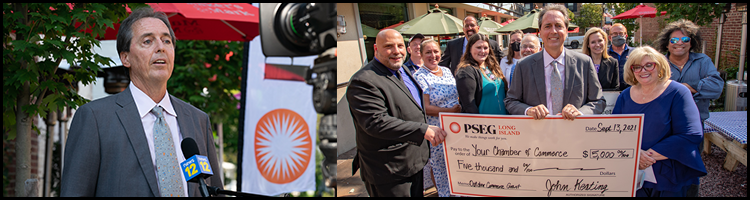
On September 13, 2021, in celebration of Small Business Week, PSEG Long Island announced an additional $50,000 has been allocated to its Main Street Chamber of Commerce program for the remainder of 2021 to help small businesses and Long Island’s local economy thrive. “We have created programs to help businesses across Long Island and the Rockaways attract customers and keep them shopping locally,” states John Keating, manager of Economic and Community Development at PSEG Long Island. “These programs provide funding for the enhancements that might not otherwise be in the budget, putting businesses in a position to succeed in these unprecedented times and into the future.” In 2020, the company began offering grants to local chambers of commerce and business improvement districts (BID) to help transform sidewalk areas and plazas with the seating, lighting, planters and protective barriers needed to keep customers safely dining and shopping locally amid new public health measures. The funding for this grant program was renewed for 2021 on a first come, first served basis. The program offers up to $5,000 to a chamber of commerce or BID. Applications will be accepted until Dec. 31, 2021. In honor of Small Business Week 2021, PSEG Long Island has added $50,000 in funding to this grant program. In addition to its Chambers of Commerce program, PSEG Long Island offers a “Beautification” grant to local chambers of commerce for decorative items such as hanging planters, flowerbeds, murals and welcome signs. This program offers funding of up to $2,000 to a chamber of commerce or business improvement district. Applications will be accepted until Dec. 31, 2021. To date, more than $2 million in grants and discounts have been provided to help thousands of local businesses and organizations continue to thrive and meet the ever-evolving challenges of COVID-19. You can find more information about all the programs PSEG Long Island offers to support local businesses here. Boost Nassau Main Street Recovery Grant Program
Nassau County’s Boost Nassau Main Street Recovery Grant Program supports small businesses located within the County that experienced financial hardship due to COVID-19 and that are in need of financial assistance to continue to operate or to be able to reopen as allowed by law during the crisis. Grants of $10,000 per business will be awarded for eligible businesses with 50 or fewer full-time equivalent employees. Per Internal Revenue Service guidance, these grants are taxable. The information below provides an overview of the Grant Program. Definition of eligible business: Reduction in revenues, increases in percent of expenses, costs related to COVID compliance, staffing difficulties, etc. Type of assistance: Grant General ineligibility: Only one (1) application per Tax-ID, regardless of how many sites applicant has in Nassau County. You can apply here. SBA Announces Enhancements to the COVID Economic Injury Disaster Loan
Administrator Isabella Casillas Guzman, the head of the U.S. Small Business Administration (SBA), recently announced major enhancements to the COVID Economic Injury Disaster Loan (EIDL) program, a federal disaster relief loan designed to better serve and support our small business communities still reeling from the pandemic, especially hard-hit sectors such as restaurants, gyms, and hotels. The SBA is ready to receive new applications immediately from small businesses looking to take advantage of these new policy changes. “The SBA’s COVID Economic Injury Disaster Loan program offers a lifeline to millions of small businesses who are still being impacted by the pandemic,” SBA Administrator Isabella Casillas Guzman said. “We’ve retooled this critical program – increasing the borrowing limit to $2 million, offering 24 months of deferment, and expanding flexibility to allow borrowers to pay down higher-interest business debt. We have also ramped up our outreach efforts to ensure we’re connecting with our smallest businesses as well as those from low-income communities who may also be eligible for the companion COVID EIDL Targeted Advance and Supplemental Advance grants totaling up to $15,000.” Key changes being announced by the SBA include: How to apply: Eligible small businesses, nonprofits, and agricultural businesses in all U.S. states and territories can apply. Visit www.sba.gov/eidl to learn more about eligibility and application requirements. The last day that applications may be received is December 31, 2021. All applicants should file their applications as soon as possible. For additional information on COVID EIDL and other recovery programs please visit www.sba.gov/relief. Small business owners may call SBA’s Customer Service Center at 1-800-659-2955 (1-800-877-8339 for the deaf and hard of hearing) or email DisasterCustomerService@sba.gov for additional assistance. The center is open Monday through Friday from 8 a.m. to 8 p.m. EST. Multilingual representatives are available. Small business owners may also contact SBA’s Resource Partners here. Nassau County Re-Opens HOME Investment Program
The Nassau County Office of Community Development has announced the re-opening of its HOME Investment Partnerships Program Funding Application. The HOME Investment Partnerships Program is provided by the U.S. Department of Housing and Urban Development (HUD) to states and localities in order to fund a wide range of activities that build, buy, and/or rehabilitate homes to provide decent and affordable housing, particularly housing for low- and moderate-income households for rent or homeownership. In general, under this program HUD allocates funds by formula among eligible state and local governments to strengthen public-private partnerships and to expand the supply of decent, safe, sanitary, and affordable housing, with primary attention to rental housing, for very low-income and low-income families. The HOME program was designed and implemented in order to increase the amount of affordable housing in the United States for its citizens. It was designed with four main objectives in mind: • Expanding the supply of decent and affordable housing in the U.S. The Nassau County Office of Community Development will be accepting applications through October 30th. Updated information on program requirements, current rent and income limits, affirmative marketing requirements, and highlighted recently completed projects is available here. SBA Webinars
The U.S. Small Business Administration is hosting the following informational virtual webinars to help small businesses during these difficult times. The webinars will be conducted by Man-Li Lin, Economic Development Specialist, District International Trade Officer, SBA New York District Office. Monday, Oct. 4, 2021 at 2pm (SBA and Manhattan Chamber of Commerce) Wednesday, Oct. 6, 2021 at 2pm (SBA and Accompany Capital) Thursday, Oct. 7, 2021 at 9:30am (SBA and Tech Incubator at Queens College) Thursday, Oct. 7, 2021 at 11:00am (SBA and AARP) Thursday, Oct. 14, 2021 at 9:30am (SBA and Queens Economic Development Corp) Thursday, Oct. 14, 2021 at 11:00am (SBA and AARP) Tuesday, Oct. 19, 2021 at 7pm (SBA and Finkelstein Memorial Library) Wednesday, Oct. 20, 2021 at 2:30pm (SBA and Tech Incubator at Queens College) Thursday, Oct. 21, 2021 at 9:30am (SBA and LaGuardia Community College SBDC) Thursday, Oct. 21, 2021 at 11:00am (SBA and AARP) Monday, Oct. 25, 2021 at 2pm (SBA and Manhattan Chamber of Commerce) Thursday, Oct. 28, 2021 at 11:00am (SBA and AARP) Thursday, Nov. 4, 2021 at 9:30am (SBA and York College SBDC) Thursday, Nov. 4 2021 at 11:00am (SBA and AARP) The NYS Emergency Rental Assistance Program (ERAP) Open
The New York State Emergency Rental Assistance Program (ERAP) provides economic relief to help low and moderate-income households at risk of experiencing homelessness or housing instability by providing rental arrears, temporary rental assistance and utility arrears assistance. Seven communities that received funding for emergency rental assistance directly from the federal government opted to administer their own programs. Residents of the Towns of Hempstead, Islip and Oyster Bay must apply with their local programs for emergency rental assistance and are ineligible for assistance from the state-administered Emergency Rental Assistance Program. Town of Hempstead: https://www.lihp.org/herapintake.html Eligibility: New York residents are eligible for ERAP if they meet all of the following criteria: • Household gross income is at or below 80 percent of the Area Median Income (AMI). These income limits differ by county and household size. A household may qualify based on current income or calendar year 2020 income that is at or below 80 percent AMI. There are no immigration status requirements to qualify for the program. Households eligible for rental arrears may also be eligible for help paying utility arrears at the same rental unit. Priority Applications: For the first 30 days of the program, priority will be given to households in the following order: 1.Households with income at or below 50 percent of the Area Median Income (AMI) that also include a household member who: • Is currently unemployed for at least 90 days; or 2. Households with income at or below 50 percent AMI 3. Households with income at or below 80 percent AMI that also include a household member who: • Is currently unemployed for at least 90 days; or 4. Households with income at or below 80 percent AMI After the first 30 days, applications for all eligible households will be processed on a first-come, first-served basis, as long as funds remain available. Benefits: Households approved for ERAP may receive: • Up to 12 months of rental arrears payments for rents accrued on or after March 13, 2020. Payments will be made directly to the landlord/property owner and utility company on behalf of the tenant. Tenant applicants will be notified of the amounts paid on their behalf. If a landlord is difficult to locate or does not otherwise provide information needed to complete the application, funds will be held for up to 180 days to allow sufficient time to locate the landlord and collect required information as well as to provide tenant protections and maximize landlord participation. Please note: Once the application is started, all questions must be answered and the application signed and saved to submit the application. There currently is no way to save a partially completed application. Applicants are encouraged to gather all the information needed before starting an application including income of household members and rental amounts. NYS Coronavirus Relief Grant Program for Small Businesses
The NYS Legislature has approved $800 million in grants for small businesses across New York. Applications are now open for anyone who is eligible to apply. The following is from New York State’s website: The New York State COVID-19 Pandemic Small Business Recovery Grant Program was created to provide flexible grant assistance to currently viable small businesses, micro-businesses and for-profit independent arts and cultural organizations in the State of New York who have experienced economic hardship due to the COVID-19 pandemic. Grant awards will be calculated based on a business’s annual gross receipts for 2019 (see below for more information). Grant amounts and calculations are subject to change by Empire State Development. Annual gross receipts: $25,000 – $49,999.99: Award is $5,000 / business Eligible Businesses Include: Small businesses, Micro-businesses, and For-profit independent arts and cultural organizations (collectively, “Eligible Applicants”) must be currently viable and have begun operation on or before March 1, 2019, and continue to be in operation as of the date of application (maybe shuttered due to COVID restrictions). See the FAQ section below for definitions of business categories above. Eligible Applicants will be required to show loss of gross receipts as a result of the COVID-19 pandemic or compliance with COVID-19 health and safety protocols which resulted in business modifications, interruptions, or closures. Small businesses and Micro-businesses must: 1. Have 2019 or 2020 Gross Receipts of between $25,000 and $500,000 per annum More information on the grants as well as a guide on how to apply is available here. |
||
Our SponsorNational Grid
National Grid is committed to delivering safe, affordable and reliable energy to the communities they serve. But more than that, they are at the heart of one of the greatest challenges facing society: the transformation of energy networks into smarter, cleaner, and more resilient energy solutions. Every day, National Grid works to promote the development and implementation of more sustainable, innovative, and affordable energy. They’re proud of their contributions and of the work done as an organization. |
||
Smart TalkContributors: We strive to provide continued quality publications like this every week. If you have any news or events that you would like to add to our newsletter, submit them to info@visionlongisland.org for consideration. If you are interested in becoming a newsletter or news blast sponsor, please call the office at 631-261-0242 for rates and opportunities. Vision Long Island Home | Contact Us | Donate | About Us |
 “Nothing puts an exclamation point on Car Free Day than the release of crash statistics that shows Suffolk County leading NYS in fatalities. Both Nassau and Suffolk County have dangerous roadway designs so it is no surprise to see the current numbers of these tragedies. A reduction of speed by roadway design, not punitive speed cameras, is the best way to get safer streets. It is important to change the culture of speed and respecting walking, biking and other modes of travel." - Eric Alexander, Director of Vision Long Island and the Long Island Main Street Alliance
 “It was amazing to be a part of Ujamaa Fest, an event I look forward to every year. Seeing the community out in full force supporting our local businesses and lending words of support and encouragement to the young people in attendance was truly inspiring. Thank you to Black Long Island, the Wyandanch Plaza Association, the Albanese Organization and everyone who played a part in bringing this incredible event to the Wyandanch community.” - Suffolk County Legislator Jason Richberg