
The 12th Annual Smart Growth Summit
More than 1,000 Long Islanders join together to address
downtown revitalization and infrastructure!
Reflecting on this year’s Smart Growth Summit the one thing folks keep telling us over and over was the positive and optimistic nature and can do attitude of all the varying attendees. We had about 1050 folks coming and going all day - 500 in the morning, a sold out lunch of 800 along with 20 workshops featuring 120 speakers, a well attended youth summit and a new elected officials orientation along with nearly 60 elected officials joining us.
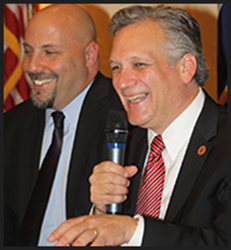
Scott Rechler's economic message was inspiring as it was great to hear from Congressman Israel and Suffolk County Exec Steve Bellone.The morning breakfast with supervisors and mayors from ten major municipalities was joined by Nassau County Executive Ed Mangano who spotlighted some of his advancements in our downtowns including support for office space conversions near transit.
Kudos to all of the participants, speakers, sponsors, Vision board and staff. Media coverage included Newsday, News 12, Verizon Fios One, LI Business News, the Herald, Patch and local publications. Enjoy reading the summary below including workshop narratives, photos and video links. We have a full calendar of programming for next year including dates for the Smart Growth Awards and next years Summit so stay tuned.
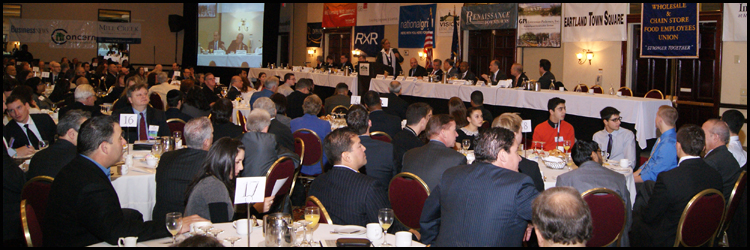
Breakfast Plenary Session
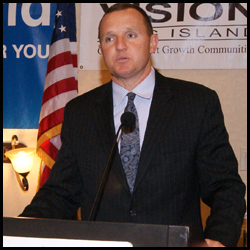 Kenneth Daly of National Grid spoke to crowd of 500 people during the breakfast plenary about National Grid’s response and progress one year after Hurricane Sandy. About 140,000 gas customers were impacted during the storm and during this time restoring utilities was the main focus, a task that was completed within a week. Daly added that the assistance National Grid received, 46 crew companies in all, was one of the largest efforts of its kind and it is inspiring to see the efforts continue a year later. Daly discussed the future of LIPA and stated that National Grid is committed to a successful transitioning process from LIPA MSA to PSEG-LI, with more than 1,900 National Grid employees transitioning as well. He ensured that the company will be guiding their customers through the transition, enhancing their presence across Long Island communities, and growing the Long Island gas business and energy efficiency programs. He also took the time to review some of the current programs, grants, and projects that will help enable Smart Growth, including: the Cinderella program, which has been successful for over 40 years, that recently award an economic development grant to Cathedral Place Apartments, New Cassel; award-winning energy efficiency programs which have given $10 million to fund natural gas energy efficiency, $9 million of annual gas thermal savings, particularly a recent grant to Canon North American headquarters, and the Northport VA Hospital conversion, which is the largest oil-to-gas conversion on Long Island. Daly said that National Grid will continue to improve customer service, mitigate bill impacts, and continue to invest in Downstate New York and Long Island to harden and grow natural gas infrastructure.
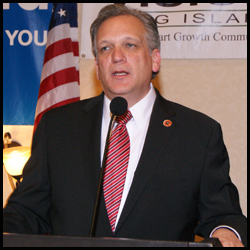
Nassau County Executive Ed Mangano thanked Vision Long Island for their hard work, and talked about their partnership in turning several brownfields in great projects. He also talked about getting transit-oriented development projects done, with some projects already in the mix. He discussed the importance of providing people, especially younger generations, with excellent transportation service and affordable housing choices. He talked about his vision for the county post-Sandy, “we want to maximize open and available space and build a stronger, smarter Nassau County...we want to strengthen our most important resources and get people back in their homes, get the relief for those who need it, and get small businesses up and running.”
He ended with a hopeful note, stating that the county is seeing positive economic indicators, such as low employment rate, great sales tax revenues, the return of many companies, and the entertainment business boom. “We want our communities to be better, to grow, and to thrive.”
Check out these biographies for Daly and Mangano.
Current State of the Towns and Villages
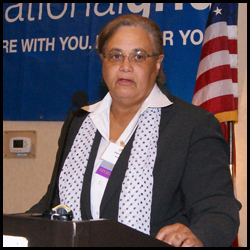 Traditionally, we welcome a panel of town supervisors and village mayors who are supportive of downtown redevelopment and infrastructure investments in their communities. Last year's panel was completely focused on Superstorm Sandy, although this year's agenda went back to Main Street redevelopment and housing.
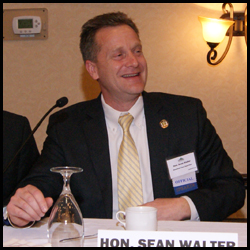
The breakfast panel, State of the Towns & Villages, was led by Joye Brown from Newsday. The panel featured Hon. Rich Schaffer, Babylon supervisor; Hon. Sean Walter, Riverhead supervisor; Hon. Ed Romaine, Brookhaven supervisor; Hon. Anna Throne-Holst, Southampton supervisor; Hon. Ed Ambrosino, Hempstead councilman; Hon. Steve Flotteron, Islip councilman; Hon. Wayne Hall, Village of Hempstead mayor, Hon. Peter Cavallaro, Village of Westbury mayor; and Hon. Ralph Ekstrand, Village of Farmingdale mayor.
The panel was not only informative, but exciting and entertaining. Brown opened up the discussion with a simple question: now that elections are done, moving forward, is it going to be easier or harder to get Smart Growth projects going?
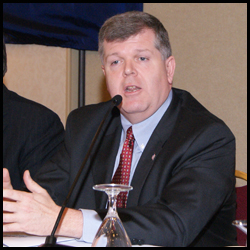
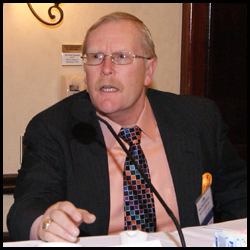
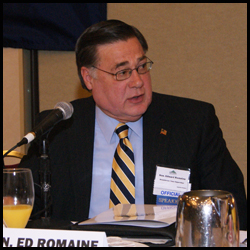
Hon. Rich Schaffer, Babylon Town Supervisor was excited about a lot of the work that was being done in the Town of Babylon. He discussed the importance of being smarter about the way we plan and build, “We’ve made communities haphazardly over the years, we need to change that.” He said that when you involve people in the communities in the planning process, it becomes easier to get things going. “It isn’t [about] the boogey man coming into town,” he said, “this is about people coming together, making decisions, and forming their own community.”
Hon. Ralph Eckstrand, Village of Farmingdale Mayor noted the Long Island Railroad, controlling traffic flow, and creating streets that are safe for all of its users are essential elements when building a great downtown. He stated that he has always been a supporter of affordable rentals, transit-oriented development, and vibrant downtowns, especially for young people, “because it works.”
Hon. Ed Romaine, Brookhaven Town Supervisor stressed that in order to make it easier to get great projects going, we need regional cooperation and we need to address important important issues, such as transportation needs. He discussed Sunday bus service and how we need to important service overall, especially our railroads. “They don’t run,” he stated, “there is barely any service, we need to figure out a better transportation network.” He also stated, that in order to get any kind of project going, we need to look at the way we structure our government and how it issues service.
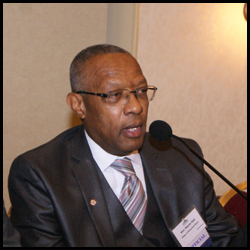
Hon. Wayne Hall, Village of Hempstead Mayor mentioned that he has two sons living at home with him, “that’s why I am really involved in trying to build a great downtown,” he added jokingly. He discussed how a $3 billion project in Hempstead will be shovel ready in late spring of 2014. “We’ve had some protests against projects like these, but things are still moving forward.” In the Village of Hempstead, Hall says yes, things are getting easier. “In Hempstead, we all know we’re the real hub, and we want to bring people back.”
Hon. Sean Walter, Riverhead Town Supervisor stated that winning elections wasn’t his concern, “I just try to do what’s right.” He discussed a project in the works, a community life center which will feature an Olympic size swimming pool, a child day care center, 132 affordable housing units, a performing arts center, and an indoor walking track on 12 acres. “I don’t understand why people wouldn’t want rental housing or great downtown spaces.” He talked about red tape and how it slows everything down, “anywhere you can find a problem, someone will point it out.”
Hon. Ed Ambrosino, Hempstead Town Councilman said that if we work to make great projects, then the people will want to come. He discussed the development plans of the Courtesy Hotel in West Hempstead, which had caused problems for the area for many years, to a transit-oriented 150- unit rental apartment community. It was a project which residents were excited about because it took an blighted building into a project that was beneficial to the community. He stated that things will be easier if “you put people ahead of politics.”
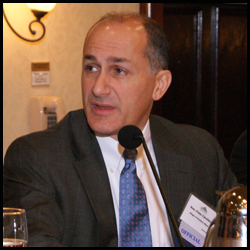
Hon. Anna Throne-Holst, Southampton Town Supervisor said that she has seen a lot of resistance against density in her town, mostly because Southampton has always been rural. most rural, all my children have moved away and cannot afford to live on long island. We see great resistance against the density. “Flanders and Riverside are desperately looking for downtown revitalization,” she said, “and people are fully behind it.” She hopes it will get easier, but for now things are difficult.
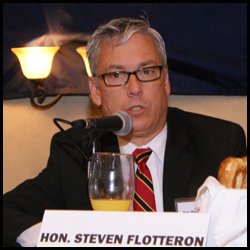
Hon. Steve Flotteron, Islip Town Councilman said that “housing diversity, not just rentals” is the key. He talked about providing choices for people, how we can intelligently reuse, recycle, and adapt underutilized assets and create better spaces.
Hon. Peter Cavallaro, Village of Westbury Mayor said “it’s going to be easier.” He added that looking around the room he could tell that “there is always going to be a majority of people who support these projects and a lot of elected officials who support these projects. We just need people to step up in public forums and speak out.”
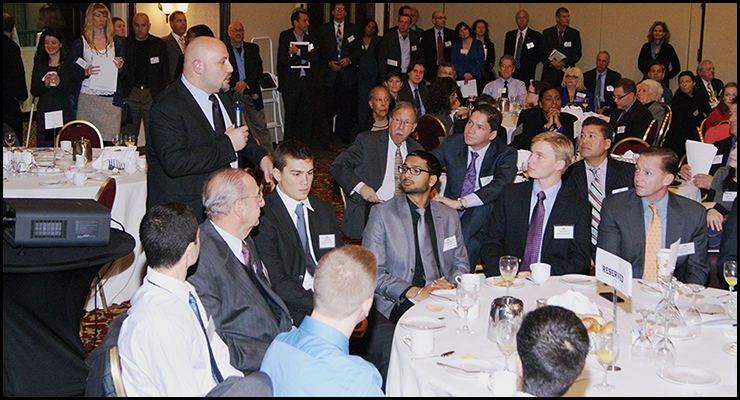
Brown asked the panel how many units were being planned, in progress, or finished in their communities? The response was hundreds in Islip, a dozen or so in Southampton, Brookhaven and Hempstead boasted 2,000 and 2,500 projects, respectively, Riverhead had 350, the Village of Farmingdale reported 254, Westbury had 850, and Ambrosino said at least 700 in the Town of Hempstead. Brown had a young person from the audience do the math, the result: “10, 628...ish.”
The panel held a brief Q&A session during which many of the students who participated in the summit raised concerns about transportation service, housing, and student debt. In their closing statements, the elected officials talked about how they each want to be remembered when they leave office and the need for regional cooperation.
Brown ended the session by saying that it was a good sign to see a young, diverse, and intelligent group of people in the room and a panel of electeds that want to get things done.
Pictured (L-R): Westbury Mayor Peter Cavallaro, Hempstead Mayor Wayne Hall, Vision Long Island Executive Director Eric Alexander, Brookhaven Supervisor Ed Romaine, Governor Cuomo representative Scott Martella, Newsday columnist Joye Brown, Babylon Supervisor Rich Schaffer, Farmingdale Mayor Ralph Ekstrand, Riverhead Supervisor Sean Walter, Southampton Supervisor Anna Throne-Holst and Islip Councilman Steve Flotteron.
Check out biographies of these speakers here.
Keep an eye on our YouTube channel for footage of this session.
Post-Sandy: Rebuilding and Resilience

This workshop covered the NYS Community Reconstruction Program, local approaches to prioritizing infrastructure projects and other case examples of resilience techniques used in waterfront communities.
The five members of the Post-Sandy: Rebuilding and Resilience panel offered observations each from their perspectives. John O’Connell led the discussion as moderator.
New York Office of Storm Recovery Director Jamie Rubin said the city has learned from past storms – e.g. burying power lines after the 1888 storm – and must continue learning. Through NY Rising, he said more vulnerable waterfront homes could be purchased. NY’s Community Reconstruction Program selected locations including 31 in Nassau and eight in Suffolk before creating an eight-month planning process – now 10 weeks in – to improve each community. Professional consulting firms were selected to work with each area along the way. Rubin also said comprehensive stormwater drainage will protect the power supply and vulnerable populations on the South Shore. Green infrastructure, he added, can facilitate drainage.
New York State’s Director of Smart Growth Paul Beyer sees NY Rising overlapping with Smart Growth, focusing more on resiliency, not just rebuilding, and not just adding layers of bureaucracy. Beyer said he’s finding the state government is working together as a whole. Redevelopment Councils are developing sustainable plans for themselves, with community input required, including from youth. New aspects include linking sustainability plans to a long-term focus on resiliency and economic development, effectively integrating multi-discipline networks of regional and local stakeholders for the first time.
Rob Weltner, of Operation Splash in Freeport shared his first-hand experience of losing two family-owned bay houses over time, as well as observing the post-impact Sandy scene through scuba diving and fishing. Although newly-appreciating the value of salt marshes, he sees persistent larger-scale industrial problems still affecting both homes and businesses along the South Shore: sewage – which contributes to mold – and the discharge of diesel fuel from damaged or destroyed oil tanks.
Oakdale Chamber of Commerce President Ron Beattie backed both state and federal support for the new transparent planning process for Oakdale/West Sayville, as well as the assignment of professional planning firms to provide tech support. Despite limited funding, Beattie said the committee is already developing a full list of needs for their area residents, including storm preparedness, response and recovery as well as future storm mitigation. He hoped incentives will be offered to replace cesspools with sewage treatment, and that more effective ways will be devised to protect utilities.
David Berg, of Cameron Engineering, is serving as a project manager for the eight Suffolk communities in NY Rising. Berg showed photos in the Netherlands, which has centuries of history of devising new approaches to flood mitigation and urban design, since one-third of their land is below sea level. Berg found similarities to the needs in Long Beach. In addition to sea barriers that can be closed when storms approach, he referenced Dutch roads and streetcar tracks on top of levees, and even underground canals to store stormwater.
Contractor Andrew Zucaro added a specialty of elevating homes to his other construction and restoration services, noting that insurance and other funding currently available to lift exposed homes will contribute to resiliency by enhancing the future resale value of those homes.
After a brief Q&A session, there was consensus was that although NY Rising has some limitations that may challenge its high expectations, compared to the usual workings of government, “New York State is moving at lightning speed.”
Check out biographies of these speakers here.
View video of this session here.
Brownfields Boom or Bust?
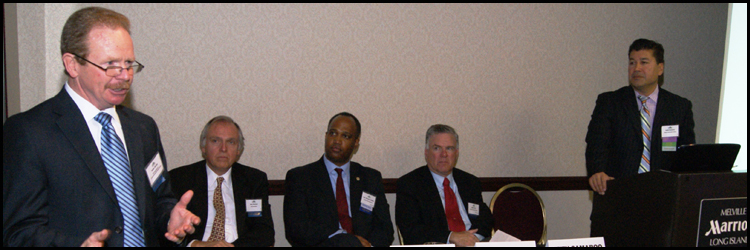
Long Island has many contaminated properties in need of remediation and numerous planning efforts underway to attempt to address them. Concerning the NYS-sponsored Brownfields Opportunity Areas program and Brownfield Tax Credit program, what can be improved to more adequately advance redevelopment of Brownfields? What other county or municipal resources are in place to facilitate Brownfields redevelopment?
In the Brownfields Boom or Bust workshop, guided by moderator Keith Samaroo, panelists seemed to agree Long Island needs to be more aggressive about the Brownfield Opportunity Areas (BOA) program. The conversation focused on why local municipalities need to get developers involved as well as what they could do to help incentivize the system.
The rental market for Long Island is spread to the five boroughs of New York City, Samaroo said, with the lack of rental housing in Nassau and Suffolk. At the same time, more than 300 Brownfield sites on Long Island still need to be remedied. He asked his panelists how tax credits can be extended beyond 2015 so more developers get involved.
Under the current plan, projects must be complete by 2015 to receive tax credit. Long Island Builders Institute CEO Mitchell Pally noted that developers would not be eager to jump into a brownfield clean up without some knowledge of what the site would produce. Meanwhile, municipalities are more concerned with the immediate cleanup and tend to not focus on whther or not that the site made for good development. These conflicting views often clash, creating issues between developers and municipalities over proposed sites.
Meanwhile, Suffolk County Legislator DuWayne Gregory confirmed there are more than 100 unused and undeveloped properties with great potential, demonstrating a need for local governments to work with developers to clean up these sites for mutually beneficial reasons.
Economic redevelopment was the inspiration behind the BOA program, GEI Senior Consultant Gary Rozmus said. He spoke on how a tax program such as BOA could help private developers to better get through the door instead of leaving it solely in the hands of municipalities. He salso uggested grants from the DEC and other agencies could be turned over faster to developers.
Finally, DEC Long Island Regional Director Peter Scully noted that local government does still promote economic growth. With Brownfields projects being very time-consuming and developers needing a return on investment, Mr. Scully predicted an extension to be discussed by the government and supported by developers.
Check out biographies of these speakers here.
Keep an eye on our YouTube channel for footage of this session.
Complete Streets
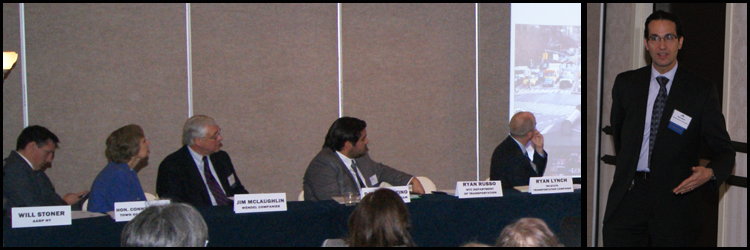
Long Island has some of the deadliest roadways in New York State. With a declining number of automobile users and an increased number of residents walking, biking and using transit, our roadways need improvements to accommodate all modes of travel. More than a dozen Long Island municipalities have passed Complete Streets legislation to lay the groundwork for pedestrian-safety oriented projects. This panel addressed the best practices and status of Complete Streets improvements for the island’s roads.
Funding and fatality rates dominated the conversation on the Complete Streets panel, moderated by Tri-State Transportation Campaign Associate Director Ryan Lynch.
In the Town of Brookhaven, Councilwoman Connie Kepert reflected on their Sustainable Complete Streets Policy passed in 2010. Designed to create roads safe for drivers, pedestrians, bicyclists and mass transit, Kepert admitted the board did fear some backlash from voters. But she also referenced startling statistics, like how almost a quarter of all traffic deaths in New York from 2007-2008 were pedestrians and that pedestrian traffic accidents are the leading cause of unintentional injury-related death among kids ages 5-14. Bicycle lanes were added to finished projects like Granny Road and active jobs like River Road.
Kepert also said New York has the third highest rate of pedestrian deaths, although AARP Associate Director Will Stoner said the state bumped down a spot. Stoner added that traffic deaths and an aging Baby Boomer generation are cause for concern. However, he said, Complete Streets could prevent many accidents while encouraging exercise, connecting people to mass transit and attracting new businesses.
Stoner also said he was very unhappy with the lack of community stakeholder input on the state DOT’s Sunrise Highway improvements. AARP is working with Vision Long Island and Tri-State Transportation Campaign to make the highway safer, although the director speculated the public will reject any plan that ignores them. Jim McLaughlin, public transportation specialist for Wendel Companies, also said that “getting people to the table” is critical to making Complete Streets work.
When Valley Stream resident David Sabatino created Envision Valley Stream to improve his community, he discovered that nobody knew what Complete Streets. Like McLaughlin and Stoner, Sabatino said education is an important piece of the foundation. And once his neighbors understood the project, Envision Valley Stream went about arguing it would improve not only road safety, but the local economy.
New York City DOT Assistant Commissioner Ryan Russo pointed at changes in Manhattan as proof that Complete Streets are effective. When Broadway was closed to motor vehicle traffic, reported injuries dropped by 31 percent. Russo, however, also said Complete Streets projects require proper planning and funding. Fortunately, he added these projects are not always excessively expensive; renovating 40 blocks of Broadway cost the city $700,000.
Check out biographies for these speakers here.
View the video of this session here.
Emerging Businesses
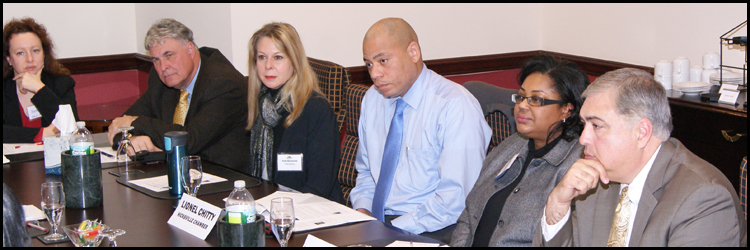
Long Island is becoming an increasingly diverse region. In many cases our downtowns are being shaped by independent businesses that cater to this growing diversity. Are many Long Islanders aware of the large market these businesses obtain and take advantage of the growing population? What is the role of minority owned businesses in the building community? How do we strengthen this emerging economic development sector?
Moderator Lionel Chitty from the Hicksville Chamber of Commerce, opened discussion on the Emerging Businesses panel about the use of technology and in what direction the future of Long Island business is headed. Jorge Martinez, of the Long Island Hispanic Chamber of Commerce; and Yvette Richardson, of SRW Engineers spoke about technology as a use for building reputation, how micro-lending is adding more growth in minority and female entrepreneurs, and the Huntington Business Incubator.
Richardson stressed the need to embrace technology to grow business, although Martinez cautioned taking care with technology.
The chamber representative also supported micro-lending. Local businesses can turn a couple thousand dollars into significant growth. Minority and women business owners specifically, he added, rely on this source of funding.
The current generation doesn’t know what manufacturing is, Chitty said. Instead, they are an idea generation, and venture capitalists are always on the hunt for the next good idea.
Discussion also touched on an increased need for both trade schools and business skills. Panelists mentioned a lack of interpersonal skills, especially with interns, and difficulty writing professionally.
Graham International’s President Corrinne Graham offered some closing thoughts. She referenced the need to focus on youth and how networking opens the door for future businesses.
Check out biographies for these speakers here.
Keep an eye on our YouTube channel for footage of this session.
Transit-Oriented Development
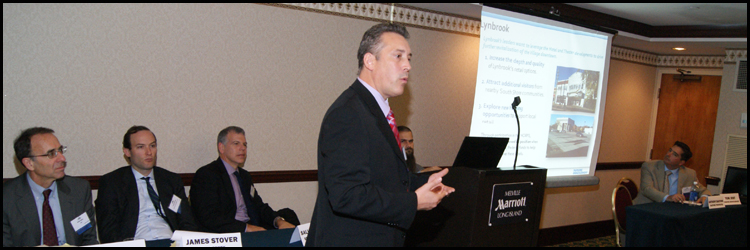
More than 7,600 units of transit-oriented development has been approved on Long Island over the last seven years in over 50 projects with more in the planning stages. What are some of the best practices that are working on and off Long Island? How can we overcome barriers to advance this needed form of downtown redevelopment?
The Transit-Oriented Development panel featured Anthony Bartone of Bartone Properties, Jamie Stover of Mill Creek Residential, Sal Coco of BHC Architects, Thomas Jost of Parsons Brinckerhoff, and moderator Bob Paley of the MTA. Panelists discussed links between transit investment, economic development and zoning.
Paley spoke of Long Island’s history of learning from New York City, citing the suburban model of Forest Hills Gardens and the anchored Roosevelt Field Department Store. Long Island continues to learn from the city’s use of zoning to allow higher density development around transit hubs. In the coming years, the MTA will receive over one billion dollars to reinvest in the NYC and LIRR transit systems, including the Double Track project and East Side Access to Grand Central Station. Paley stressed the need for Long Island’s leaders to collaborate early, and to be willing to explore innovative financing and accept financial risk as the transit projects proceed.
Bartone discussed his hotel and plaza project in Farmingdale, a complex with 154 rental units and 20,000 sq. ft. of street-level retail space a few steps away from the LIRR station and within walking distance of SUNY Farmingdale, Bethpage golf course and Main Street. An amenity rich lifestyle community, the site will include courtyards, a fitness room, movie theater, business lounge and underground parking.
Coco discussed Wyandanch Village, a TOD that broke ground in July 2013. The Station Green component of the development will include 91 residential units four floors above street-level retail within a short distance to education and retail destinations.
Jost spoke about TOD’s potential to create tax opportunities, increase economic value in the real estate market, and its necessity in responding to changing trends in transportation preferences. In an effort to reclaim station areas of Long Island, Parsons Brinckerhoff recently conducted a study of 21 Nassau County neighborhoods to find pilot communities in which residents desired transit-oriented development. Communities that indicated readiness for TOD included those around the Baldwin, Lynbrook and Valley Stream LIRR stations.
Check out biographies for these speakers here.
View video of this session here.
Education's Role in Rebuilding our Downtowns
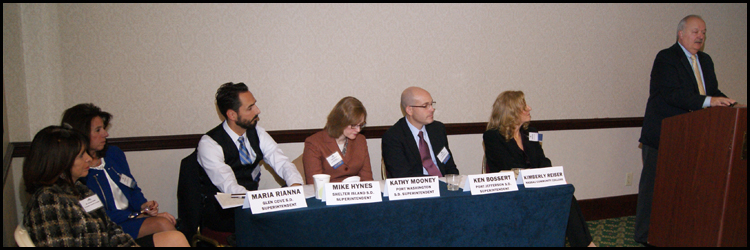
Strong neighborhood’s need effective school districts. One of the key attractions to living or running a business in a community is a healthy school system, as they are traditionally hubs of community activity. This panel discussed the health of our school districts and their role in supporting the redevelopment of downtown areas.
The Education’s Role in Rebuilding our Downtowns panel featured speakers Maria Rianna of the Glen Cove School District, Mike Hynes of the Shelter Island School District, Kathy Mooney of the Port Washington School District, Ken Bossert of the Port Jefferson School District, Kimberly Reiser of Nassau Community College, John Lombardo of Suffolk Community College, and moderator Dr. Elana Zolfo of Dowling College.
This panel discussed how Long Island can utilize its educational facilities to create great, vibrant spaces and the importance of fostering mutually interested relationships between educational institutions and local businesses. Dr. Elana Zolfo talked about incorporating shops, restaurants, and other local businesses into college campuses in order to draw students and teachers to places, she added that Oakdale is “tired of being a pass through town.”
It is in a school district’s best interest to take into account small businesses when making major decisions. Ken Bossert said businesses make up a large portion of taxes and revenue that fund Port Jefferson schools. Maria Rianna suggested field trips to local businesses as a way to create relationships. She also noted that a downtown within a school campus would make it safer for students, especially near high schools, because they could stay near school, instead of driving or walking near dangerous highways. Small businesses can facilitate gathering area where students can meet outside of class while staying within the campus area. Kimberly Reiser discussed the importance of having an efficient network of transportation, adding that many students from the community colleges often take multiple buses and trains just to get to school.
Kathy Mooney mentioned that in Port Washington, while there is a very wide, diverse socio-economic spectrum of people there is still a great need for skilled laborers in the workforce. Mike Hynes added that Shelter Island has about 200 students from grades K-12, one of the smaller districts, and finds that many of the students don’t have the proper skills to work with others or, for the older students, to work in the future job market.
The panel agreed that the region needs to invest in affordable, accessible transportation and infrastructure that allows easy access to campuses on Long Island, partnerships between local businesses and educational facilities, and find ways to make sure that Long Island students have the skill set that is necessary for the current workforce.
Check out biographies for these speakers here.
Keep an eye on our YouTube channel for footage of this session.
Youth Vision for Long Island's Future

There are many conversations that talk about the “Brian Drain” and the prospect of youth leaving Long Island. Very few planning efforts actually involve and have young people speak for themselves what future they want to see here on Long Island. This panel focused on the vision of five teenagers/twenty-somethings that play different roles in creating the types of communities that will attract and retain the next generation of workers and residents. The panel also involved the voices from the Long Island Youth Summit that is organized every year out of Dowling College.
Youth Vision for Long Island’s Future panel featured Tara Bono of LIincs Young Professionals, Jeff Guillott of the Suburban Millennial Institute, Joshua Lafazan of the Syosset School Board, Danielle Cirimello of Dowling College,Kendra Armstead of Stony Brook University and Dr. Nathalia Rogers of Dowling College as the moderator.
The panel focused on Long Island’s population of students, youth and young professionals, and what the region can do to invest in its youth. They discussed the lack of affordable housing, entertainment, employment opportunities and the cost of living. They also discussed some of the main factors that are driving youth off Long Island and what can be done not only to bring them here, but to get them to stay.
Rogers opened the discussion saying the amount of student debt surpassed the amount of credit card debt last year for the first time in years. Unemployment, debt and a severe lack of opportunities are just a few of the biggest concerns among Long Island’s youth. Older people are staying in their jobs longer, largely because they’re having trouble meeting costs of living after retirement. These jobs become unavailable and scarce to recent grads and young professionals; even paid internships are difficult to find. In a changing economy and a shift in job trends, young professionals are having a tough time trying to stay on Long Island.
With a challenging job market, young professionals are finding it difficult to afford to live on Long Island. People are getting married and starting families later in life and are not ready, especially financially, to buy single family homes. If they can’t afford to live here, Bono said, they will leave and not come back. Even if they did want to buy homes, the property taxes on Long Island are some of the highest in the country. Armstead noted it’s also expensive to own a vehicle, something that is necessary to get around on the Island. The panel discussed the importance of affordable and accessible transportation and investment in infrastructure that allows easy access to places where young people want to be, whether it be a school campus or a fun, vibrant downtown.
“You’ll move to New York City or Brooklyn or Astoria or North Carolina or Ohio, anywhere else because it’s affordable and because, let’s face it, it’s more exciting,” Guillot said.
The panel stressed the importance of participation on behalf of young people in both the communities and local government. Young people need to get involved, run for local office, participate in local public forums and voice their opinions. Otherwise, issues that are important to them will continue to be tabled. It is important that young people get a say in their communities in order to secure their future and the future of Long Island.
Check out biographies for these speakers here.
Keep an eye on our YouTube channel for footage of this session.
Future of Energy on Long Island
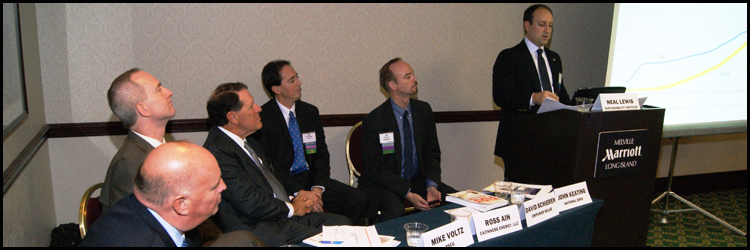
Long Island’s energy landscape has changed in the last year. The reformatted LIPA provides an opportunity to improve efficiencies while continuing the ongoing commitment to very effective clean energy and renewable programs. The panel involved the relevant power suppliers, operators and renewable energy companies and advocates to discuss the future energy direction for Long Island.
Efficiency was the primary topic on the Future of Energy on Long Island panel, led by moderator Neal Lewis.
Ross Ain, president of Caithness, said capacity is a major problem with power plants, especially as many age. Modern plants are more efficient and save money, not to mention release fewer pollutants into the air.
David Schieren, CEO of EmPower Solar, believes the demand for solar power is growing after Superstorm Sandy. People want self-sufficient, efficient systems, and introducing solar leasing for residents can help with the cost of these systems.
Rich Kessel agreed that solar and battery systems are more resilient, but emphasized a push for more renewable energy sources on Long Island. He also said people must learn to be more efficient and use less resources. Investing in infrastructure would be progress.
PSEG Director of Energy-Efficiency and Renewables Mike Voltz said maintaining a reliable system like his company’s requires resource integration and planning.
National Grid wants to make balanced choices during the PSEG and LIPA changes, Economic Development Specialist John Keating. Natural gas is not the only answer, Keating said, but utilities can keep up with the demand and provide emergency power supplies by using renewable options.
Lewis and audience members agreed rebates can’t last forever, but should be removed from renewable sources they should also be removed from traditional fuels like coal, gas and oil.
Check out biographies for these speakers here.
Keep an eye on our YouTube channel for footage of this session.
Tourism and Downtowns
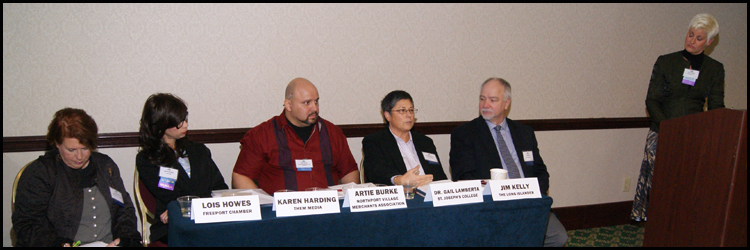
With the recent recession and slow economic recovery Long Islanders have opted to spend their money locally in the form of “staycations.” This has provided many opportunities for investment in downtown areas, events, new businesses, restaurants, bars, nightlife and other attractions. While our downtowns are seeing more life, we haven’t taken full advantage of marketing Long Island differently as we continue to focus exclusively on traditional attractions like parks and beaches. The panel discussed varying successful strategies to market Long Island’s downtown to tourists on and off Long Island.
Jaci Clement from Fair Media Council moderated the discussion on Tourism and Downtowns, inviting the panelists to address this issue in terms of stay-cations and promote an interconnectedness of communities. Gail Lamberta, associate dean at St. Joseph’s College; Lois Howes, Freeport Chamber of Commerce; Northport Village Merchants Association founder Artie Berke; Karen Harding, THEM Media; and Long Islander News publisher Jim Kelly had an intriguing discussions on stay-cations, specifically how Long Island communities work together and how to maintain the charm associated with each communities' uniqueness.
Lamberta suggested working more with East End wineries and better connecting local businesses. In Huntington, Kelly said there are two types of people – those who like to visit and those who call it home. He also referenced the growing attraction since the Huntington Lighthouse Boat Parade first set sail in 2010. Harding talked about bringing families in from the city for weekends, including Manhattan bus service packages.
Check out biographies for these speakers here.
Keep an eye on our YouTube channel for footage of this session.
Smart Growth/New Urbanism 101

The principles of Smart Growth and New Urbanism are more than 20 years old and the underlying values and designs chart back to the dawn of early settlement patterns. The Smart Growth movement on Long Island has grown, but some misconceptions of the types of walkable communities sought after remain. This panel tackled some of the basic tenants of placemaking and the built environment from design experts in the field.
The Smart Growth and New Urbanism 101 panel, moderated by Alex Latham of ADL III Architecture, discussed what Smart Growth and New Urbanism is and what it is not. Panelists included Bill Tuyn of Greenman-Pedersen Inc., Paddy Steinschneider of Gotham Design and Marc Wouters of CNU New York.
On Long Island, everything is based on driving with a car. Heavy traffic and large arterial roads leave little room for other users of the roads. This panel discussed the importance of smart placemaking, creating complete communities which benefit everyone and some of the main reasons for push back against Smart Growth projects, including fear of density, interfering with open space, retaining rural/suburban feeling and culture and complaints of “we don’t want to live in Queens.”
Wouters said fewer people are applying for driver’s licenses and buying car, and the cost of building towards a car and suburban oriented communities is expensive and wasteful. When looking at the demographics, seniors and millennials make up a large portion of the population. These generations want to live in highly-socially connected places, in communities where they feel they cannot only benefit but also contribute. It’s not just about affordable housing, but providing various choices of quality housing that people can afford. Latham cited downtown Georgetown, where rental is available over retail along their main street, was cited as an example where everything from groceries to entertainment is available within walking distance and the community has available housing.
Responding to these demographics does not have to mean risking quality or way of life. The panel agreed the key to building smart is to retrofit and redevelop spaces that are underutilized to accommodate the needs of local communities, and to create compact, complete and complex places that also reflect the local culture. They used examples from cities across the world, from Prague to the Tuxedo Reserve – located upstate in the foothills of the Catskill Mountains. They agreed what is great about building “smart” is that it takes into account the people, the space and the natural ecosystems that surround it.
Tuyn proposed the question, if, at the end of the day, when everything is built, would you put your community on a post card? Would you look at the work and feel confident that your community is a great place to live? They were optimistic about the future of Smart Growth on Long Island.
“We have a lot of good stuff going on, especially when you have multiple people working together to make it happen,” Steinschneider said. “We just need to learn from past mistakes, retrofit, and try again.”
Check out biographies for these speakers here.
Keep an eye on our YouTube channel for footage of this session.
New Town Centers
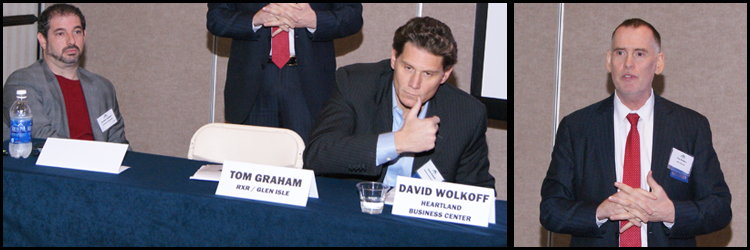
While Long Island has been slowly revitalizing its many existing downtowns there have been very few new town centers planned and approved. This workshop focused on the status of two of the most advanced new town centers, Heartland in Brentwood and Garvies Point in Glen Cove. Updates in two downtowns, Hempstead and Huntington Station planned with the community and the Master Developer were also explored.
The New Town Centers panel began with David Wolkoff of Heartland Town Square, a Smart Growth-planned community that will be built on the former Pilgrim State grounds in Brentwood. The project will include 9,000 residential units in a variety of housing types, transit alternatives such as bike routes and a shuttle service to the Deer Park LIRR station, and ample green space with pocket parks and two outdoor plazas. The project is expected to be approved by the town of Islip this January.
Tom Graham of RXR/Glen Isle talked about the Garvies Point project at the Glen Cove waterfront. Eight hundred sixty residential units, 25,000 sq ft of retail, and 19 acres of public amenities will be collaboratively planned by the city’s parks and recreation department and private developer RXR. Architecture and signage will reflect the city’s post-industrial past. Graham stressed the importance of public-private partnership.
Brandon Palanker, filling in for Don Monti of Renaissance Downtowns, spoke about the $2 billion Hempstead Village redevelopment. Residents will not be displaced because eminent domain will not be necessary; the site of the future redevelopment is currently a parking lot. SEQRA and zoning for the project was completed in an unheard of 127 days, a result of cooperation between public and private entities. Creativity in smaller unit design will be critical in creating residences that young professionals can afford. The project is now at the implementation stage, with a planned end date of 2015.
Moderator David Winzelberg of Long Island Business News prodded panelists with questions about roadblocks in the redevelopment process, drawing attention to particular challenges that panelists face day-to-day.
Check out the biographies for these speakers here.
View video of this session here.
Transit Opportunities
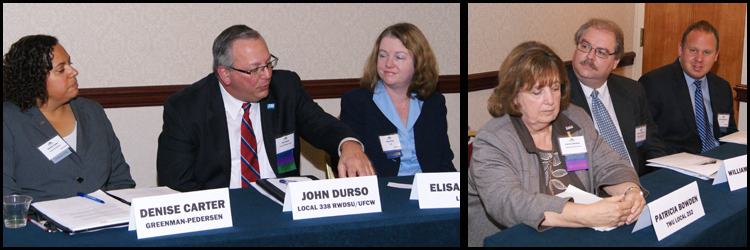
Transit investments for Long Island are continuing with East Side Access, Double Track to Ronkonkoma, East End Scoot Service and a major upgrade to the Hicksville train station coming online. Strengthening bus service in Nassau and expanding service in Suffolk are also underway. These projects and their impact on the mobility of our region were explored on this panel.
The Transit Opportunities panel featured speakers Elisa Picca of the LIRR, Pat Bowden of the Transit Workers Union, Michael Schoolman of 7 Bus, John Durso of LI Federation of Labor, William Henderson of PCAC and moderator Denise Carter of Greenman-Pedersen.
Picca began the discussion with an update on MTA/LIRR projects underway. The Hicksville LIRR station sees the second most riders after Ronkonkoma and is going through a $55 million renovation. The facelift will replace platforms and amenities.
“This will be a catalyst for future development in and around the train station,” Picca said.
She also spoke about the Double Track project; the first phase of adding a complete second line between Farmingdale and Ronkonkoma is expected to be completed before the year’s end. Picca also referenced the East End Access project. The $8 million job is expected to be completed by 2019, keeping Long Islanders from over-commuting 40 minutes every day.
Durso said none of his children drive into Manhattan and always give him odd looks when he does. But the executive director said the LIRR system leaves him high and dry when it’s time to leave the city.
Long Island’s youth, he added, are a major reason to improve the region’s transit opportunities. Transportation and affordable housing are instrumental to keeping youth from leaving the island. Without a modern transportation system, Durso said, there won’t be any middle-income jobs for them.
Bowden grew up on Long Island using the busses, which she griped haven’t improved since. The union president said NICE Bus employees lost 27 percent of their pension when Nassau County privatized its bus system.
Improving transportation, she agreed, is essential to creating jobs, especially for the poor. Without public transportation, their options may be walking miles to get to work or not having a job. Long Island’s youth, she added, have trouble paying the high cost of driving around the area.
Henderson referenced a concept known in the logistics industry known as “the last mile.” While transporting product over large distances between terminals is fairly easy, getting it to the final destination adds extra time and cost. The Permanent Citizens Advisory Committee leader suggested bicycle racks, shuttles, smarter parking and transit-oriented development as possible solutions.
“We have a way to get people from Manhattan to Ronkonkoma, but once you get to Ronkonkoma the fun starts,” he said.
Schoolman’s 7Bus began carting people to and from Long Island and Manhattan in July as an alternative to driving. His customers, he said, range from businessmen headed into the east side, families going to see a show, students going to college and senior citizens headed to a doctor’s office.
“From a Long Island perspective, the big picture is the LIE is the second most congested roadway in the United States. Any type of transportation that takes a single car and single driver off the road long-term is a good thing,” Schoolman said.
Check out the biographies for these speakers here.
View video of this session here.
Water and Wastewater
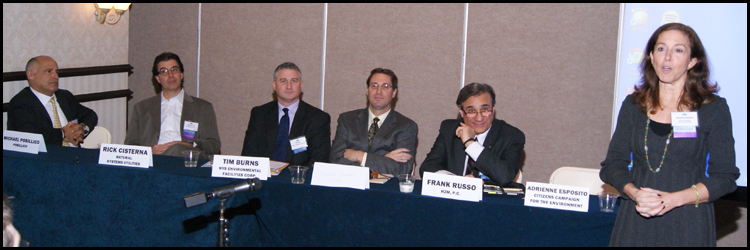
Infrastructure investment for our region’s key projects are well underway. Due to the Smart Growth Infrastructure Act and the Regional Councils some of these resources are directed to our downtown areas. The most promising development is the $455 million investment in Bay Park Sewage Treatment Plant to upgrade the failing facility that services hundreds of thousands of Nassau residents, possibly the largest single infrastructure grant to Long Island. Regardless of this progress, more needs to be done to protect our groundwater, advance new sewage treatment technologies and secure state and federal resources to grow our downtowns. This panel had a mix of engineers, sewer developers, water resource regulators, sewer financers and advocates.
While there was no shortage of details, figures and facts among the Water and Wastewater presentations, panelists offered different opinions and perspectives.
Suffolk County Principal Public Health Engineer Walter Hilbert, filling in for Legislator William Spencer, said they were examining future upgrades. With about 70 percent of the 1.5 million county residents not on sewer systems, Hilbert was optimistic code changes could be used to move beyond septic systems and leaching pools. He confirmed a study is underway to examine technologies that reduce nitrogen from the waste stream, especially in areas with growth potential.
However, Frank Russo, wastewater director for architecture firm H2M, argued it’s time for action, not studies. Pointing to suffering downtowns like Mastic Beach and Rocky Point, Russo said sewers allow for increased density, which can help create new business and housing, even stalling the departure of Long Island’s youth. New York State Environmental Facilities Corporation (EFC) and Suffolk County grants are a start, but he recommends issuing bonds.
“That’s part of this Smart Growth initiative. Let’s stop studying. Let’s put money to good use,” Russo said.
EFC Director of Engineering and Program Management Tim Burns talked about some of the funding available for water projects. The state’s 1987 Clean Water State Revolving Fund and 1996 Drinking Water State Revolving Fund help fund infrastructure for both causes. Burns said they help save millions by offering low-interest funding. He also highlighted water funds available through New York Rising for issues created by Superstorm Sandy. Almost $340 million is available for clean water and almost $68 million for drinking water, primarily through long-term loans with no interest.
But Michael Posillico, vice president of developers Posillico, said funding for wastewater projects largely dried up for decades when the federal gravy train ended in the 1980s. Few projects happened, he said, until the recent surge in renovating existing plants to modern environmental standards in the last two years. Work is happening at the fastest pace in 30 years, with Posillico recently winning a contract for the Bergin Point Sewage Treatment Plant. The demand is there, the vice president added, because the need to protect the environment is very real. He referenced septic systems contaminating Carmans River and Forge River in Brookhaven.
Natural Systems Utilities Vice President Rick Cisterna said his company specializes in treating and releasing wastewater, and converting waste organics into energy. He highlighted membrane bioreactors (MBRs) that cut nitrogen levels and can be hidden within the development or community. Two new MBR plants that spend no more than $30 per gallon per day were built in Islip apartment complexes, although that water is leached into the ground rather than recycled. Cisterna said their waste systems uses anaerobic digestion to transform sludge and bio gas into power.
Moderator Adrienne Espositio agreed with an audience demand for lower nitrogen limits – below the current 10 milligram per liter Suffolk County threshold. She added that money needs to be moved quicker and new technology must be deployed.
“We need the public pushing the charge,” Esposito said.
Check out biographies for these speakers here.
View the video of this session here.
Bringing Tech Companies Downtown
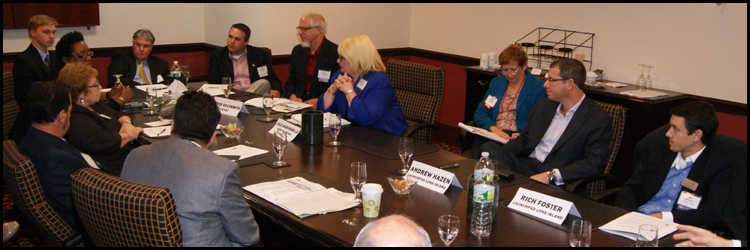
Emerging high-tech companies are looking to situate downtown. Launchpad Long Island in Mineola and tech incubators in Hicksville and Huntington demonstrate that trend. This panel tackled new strategies to create the best environment to bring these businesses into local communities.
Jon Rudes, of CRESA, agreed many Long Islanders prefer not to commute into New York City. He suggested connected the island to “Silicon Alley” in the city, which he helped to develop. Rudes referenced a “Demo Night” coming up on Dec. 4 with ideas being pitched in New York City. He’s found would-be entrepreneurs cannot usually sustain the expenses of a co-working tech site on their own, and need some public investment to have the best chance of success. This is a good chance to reuse old buildings, Rudes said, and density concentration around transit helps.
Peter Goldsmith, of LISTnet, said Long Island universities are stepping up to create incubators, including Stony Brook University, Touro Law School and St. Joseph’s. He hoped more “angels” can be found to invest in startups. One individual, Kimberly Hawkins, has been attempting to create an incubator site in Huntington Station herself, as well organize a 2014 summit that will include venture capitalists. She would be connected with others to facilitate further development in Huntington Station, including Renaissance Downtowns.
Launchpad LI co-founders Andrew Hazen and Rich Foster have self-funded their work to date and brought in partners through networking. They’ve rented space in Mineola near the LIRR station since February 2013, and regularly hold “pitch nights” where ideas are shared, but no funds are solicited. Launchpad rents office space and provides office services, with various experts available for advice. To date, the founders said 13 of their offices have been rented. They also said they hope to expand to the Huntington/Melville area soon. Others suggested they look into Great Neck Plaza and Patchogue, both of which have transit connections. Rudes said he’d like to help create Launchpads across Long Island. Foster also supports the Angel Network, which allows investors to see opportunities, with possibility for some to invest jointly but at different levels.
Check out biographies for these speakers here.
Keep an eye on our YouTube channel for footage of this session.
New Elected Official Orientation
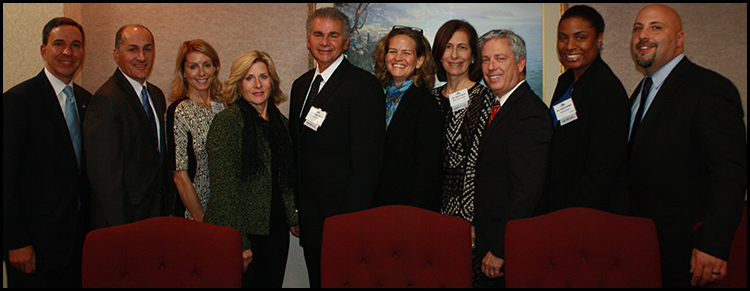
For the second time the Smart Growth Summit featured an orientation with newly elected officials in County, Town and local governments.
This session was a candid primer on how to advance downtown revitalization, transit-oriented development and mixed-use projects in local communities. The orientation also covered how to secure infrastructure funds for transportation, wastewater and energy projects and how to handle public pressures on controversial land use issues. Special thanks to the participants including NYS Senator Jack Martins, Islip Councilman Steve Flotteron, Westbury Mayor Peter Cavallaro and the newly elected officials, Brookhaven Councilwoman-elect Valerie Cartright, City of Glen Cove Mayor-elect Reggie Spinello, Councilwoman-elect Pamela Pazenbeck and newly elected Nassau Legislators Laura Schaefer, Ellen Birnbaum and Laura Cullen.
Plenary Luncheon Session

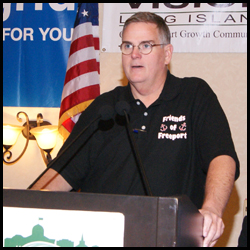 Rich Cantwell of Friends of Freeport opened the lunch plenary session with a tribute to Henry Lenahan, a firefighter of the Freeport Fire Department and lifelong Freeport resident who passed away after a long battle with cancer.
“He was essentially our very first volunteer, he provided us with anything we needed,” Cantwell said.
The day after the storm, Lenahan ventured out to help his neighbors and community, despite having severe damage to his house. He was a founding member of the Friends of Freeport team, still volunteering a year later, and Cantwell expressed his deepest gratitude for all his work.
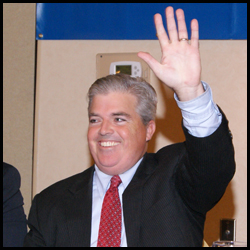 Suffolk County Executive Steve Bellone spoke about the importance of protecting our environment and local economy, and how we can begin to apply Smart Growth principles. He talked about the success of Wyandanch Rising and the Ronkonkoma Hub.
“Working in government, you get the sense that aren’t many people who don’t understand the challenges that are taking place; challenges that affect our long term economic development. But when I come [to the summit], I see that there are people who do get it and do want to see change,” Bellone said.
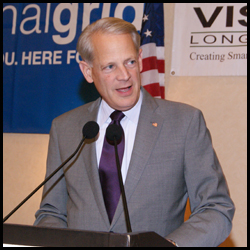
Congressman Steve Israel spoke briefly about the history of Long Island and a tribute to President John F. Kennedy for the 50th Anniversary of his death. He discussed about what Long Island used to be and where we are now and how we can move our region forward.
“How do we take that Long Island playbook of grasping crisis, creating opportunity, and pursuing vision and carry it into the 21st century?” Israel asked.
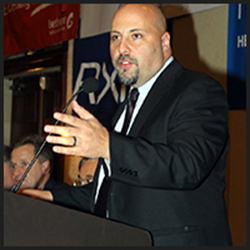
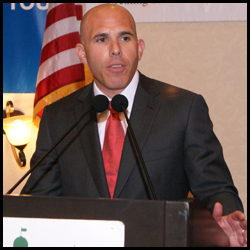 Scott Rechler of RXR served as this year’s keynote speaker, offering a far more positive message since his 2009 appearance after the economic crash. Calling the recession “an incredibly tough time for our country” back then, he told the 2013 lunch crowd that America is in a better position to handle the challenges ahead. His presentation focused on our view of the economic, where our region fits in, and possible strategies incrementally put Long Island in a positive where it could be competitive, long term, and successful once again. “Based on where we are in current economic landscape, we need to accelerate and focus our resources…and make sure we prioritize.”
Rechler briefly discussed RXR and his family, which has been a multigenerational Long Island real estate family. It started with his grandfather, a developer of farms almost 60 years, the company has become one of the largest owners of properties on Long Island, one of the most active developers, and committed to this community. RXR is also an active investor in New York City, owning more than 8 billion square feet of property. Rechler said having a regional perspective, not just Long Island, but on a state level, promotes and encourages economic development growth and moves us forward.
“When we think about where Long Island fits, we think about it in a bigger puzzle, and this is a piece of that puzzle,” the developer said.
To understand the status of Long Island, we must first understand what is happening in the broader economy. Where is Long Island positioned in the current economic climate? Rechler said the country is currently halfway through our own version of a “Lost Decade,” much like Japan in the early 90s, a 10-year period with no growth. He said America is seeing “below trend growth” with "startling unemployment." Structural changes and cyclical upturns continue to cause below trend growth and increased volatility. Factors such as heavy leveraging and debt, global and national uncertainty, paralyzing gridlock in Congress and a severe lack of bipartisanship, and self-inflicted uncertainty are weighing down our economy, he said, “it’s just been a wet blanket of cyclical growth.”
The upside is that we live in a region that has one of the greatest economies in the world, Rechler said describing New York City. Once full of crime and blighted by underutilized space, New York is now one of the most desirable and competitive cities in the world. Rechler attributes quality of life, availability of opportunities, strong infrastructure, parks and open space, networks of transportation and educational facilities to the success of New York City. He also added “good leadership and good planning” to the list. Rechler said it’s not always about starting over, but about “taking underperforming areas, retaining its character, and building anew to make improvements.”
Suburbs in New York constantly struggle with high taxes, aging infrastructure, enormous debt and adapting into new lifestyles. “Adapting into the 21st century lifestyle and business preferences and adapting to what people and companies want to live and thrive in” is an important step when moving forward into the future.
“The white picket fence just doesn’t work anymore,” the developer said.
Rechler also said Long Island boasts many great assets absent from other locations, like great beaches, parks, open spaces, world class research and educational facilities, one of the largest transportation systems, and most importantly “great talent to do great things.”
He talked about a project in Glen Cove he is working on in collaboration with Don Monti of Renaissance Downtowns, the Garvies Point Development. Glen Cove, which was once a great and sought out in its heyday, is now facing a lot of challenges, “but we’re bring people and businesses back,” added Rechler. The project, which is slated for 2014, is a 56-acre mixed use waterfront development which will include, 488 rental residential units, 488 for-sale residential units, 109 workforce housing units, a hotel and spa, commercial space, and two marinas. Every dollar spent on this project, he said, will be matched with $9 of private funding.
“We have the means to make this work...healthy diversity and accessibility, areas that have great transportation networks and areas that have great leadership that can help build in smart ways and collaborate with both public and private partnerships,” Rechler said.
Looking at the significant challenges ahead, he added that the key is to accelerate into the future without spending time on our legacies.
He stressed the importance of taking advantage of events like the Smart Growth Summit to come together and come up with solutions. He commended Vision Long Island for taking a leadership role in bringing people together and continually working on great projects, pushing the Smart Growth model.
“We need to take responsibility. It’s incumbent on all of us to make a difference,” Rechler said.
Check out the biographies for Rechler, Israel and Bellone here.
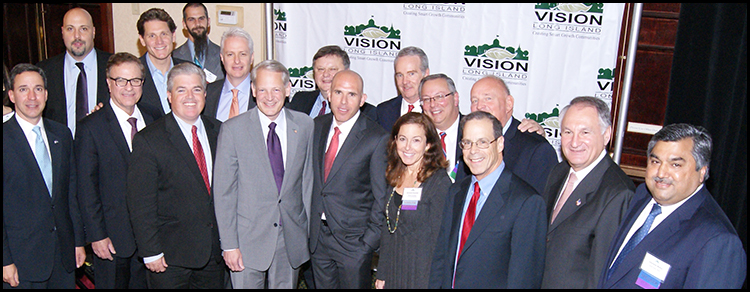
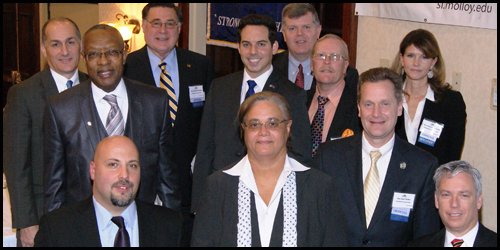
Pictured (Back Row, L-R): Eric Alexander - Vision Long Island, David Wolkoff - Heartland Business Center, Jon Siebert - Friends of Long Island, Steven Krieger - Engel Burman, Bill Tuyn - Greenman-Pedersen, John Cameron - Cameron Engineering (Front Row L-R): NYS Senator Jack Martins, Don Monti - Renaissance Downtowns, Suffolk County Executive Steve Bellone, US Congressman Steve Israel, Scott Rechler - RXR Realty, Adrienne Esposito - Citizens Campaigns for the Environment, John Durso - Local 338, Ron Stein - Vision Long Island, Richard Kessel, Nassau County Comptroller, Kamlesh Mehta - South Asian Times
Post Sandy: Disaster Planning and Recovery
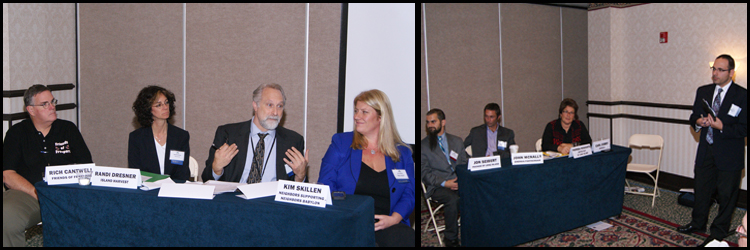
One of the biggest challenges post-Sandy has been the ability to marshal resources directly to local residents, businesses and local community infrastructure and resiliency projects. A number of local service groups, churches, small businesses and municipalities have stepped forward to assist in filling the many gaps and unmet needs. This panel addressed the strategies that have worked and lessons learned from the past year of Sandy recovery initiatives. Speakers included a plethora of community rebuilding and relief organizations who have been working round the clock to assist Long Islanders in need.
The Post Sandy: Disaster Planning and Recovery panel, led by moderator Carl Corry of Newsday, delved into the devastation post-Sandy, as South Shore communities pick up the pieces a year later. It was an emotional workshop during which the panel received feedback from the crowd and personal stories from affected people. With homes destroyed, difficult claims to file and lawyers challenging lawsuits, it’s been a struggle from many to get things back to normal.
The panel discussed some of the issues people across Long Island are still facing, well after the storm, and various groups' functions. Many victims and storm survivors are suffering from mental health issues. The group addressed the urgent need for mental health care for Sandy victims. Another big issue in the wake of the storm was the lack of communication and a grasp of what is really happening on the ground. The panel discussed ways of getting useful information to the public and local media to become a proactive resource, showcase real stories, and to avoid romantic storytelling.
Jon Siebert of Friends of Long Island, a group organizing various post-Sandy community volunteer efforts, said picking up the pieces is a slow process.
“Recovery is like a black, oil infested snowflake: no two residents or cases are the same,” he said, “[Our] groups ensure that houses being repaired are done so according to local code. These residents are waiting for funding for mitigation and elevation, and have no alternative but to repair now so they have a place to live.”
He also admitted that some in Mastic and Shirley simply gave up and abandoned their damaged homes.
Ron Benenati of FEMA recalled working in Long Beach after Sandy; he stressed that emergency management is not a long term solution.
“We could not even begin to touch the complexity of issues a catastrophic event like Sandy brings in just a 2-hour discussion. As much as we tout our accomplishments and development, we need to be humbled by the forces of nature. Smart growth really depends on understanding how fragile our built environment really is and not take for granted the lessons to be learned from our response to and recovery from this storm,” Benenati said.
The panel highlighted one of the most important successes that came out of Sandy: Long Island’s ability to efficiently mobilize groups and communities on a local level. Randi Dresner of Island Harvest was requested by the Office of Emergency Management to deploy in Bethpage, without any direction or instructions. Instead of waiting, her group took it upon themselves to organize, and bring food and supplies out to different communities. They redefined their method of operations and adapted quickly to help the residents in need. United Way of Long Island handed out literature and explained the 211 system and LIVOAD/Long Term Recovery Group's role in the recovery. Theresa Regnante, CEO of United Way of Long Island, said that although there were challenges in receiving the funding that was pledged, a total of over $7 million was raised, but that many resident across the Island were helped. She noted their role in recovery will end June of 2014. Friends of Freeport, which started as a just a few people helping their neighbors, now has a few construction crews and operates during the week and on weekends. Friends founder Rich Cantwell spoke about their rebuilding efforts and how social media was a helpful tool to garner support and assistance. Although more than 100 residents have already been helped, he said, there is a lot of work left to do.
Kim Skillen of Neighbors Supporting Neighbors said her group utilized local churches and schools to help pass out food and clothing to people who needed it. For Skillen, this past year has been trying with a lot of work ahead.
“When I look at my peers, I see that we have all been as successful as we have been because we each have a true love for our community and we have no egos. None of us, I think, are doing the work we are doing for recognition or a pat on the back. We are doing this work because it has to be done and we want our communities to remain strong and resilient and we do not like to see our neighbors in need,” she said.
Check out biographies for these speakers here.
Keep an eye on our YouTube channel for footage of this session.
Financing Smart Growth
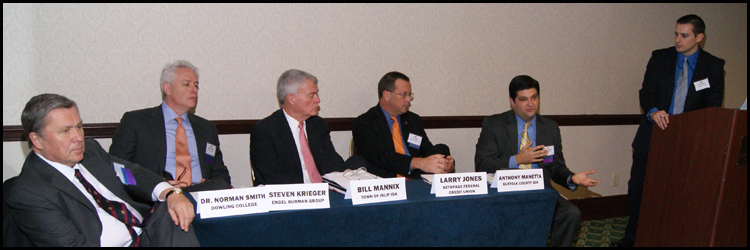
After the most recent recession financing Smart Growth projects has been viable but at times challenging in specific areas like the condo markets and independent mixed use developments. The increased amount of infrastructure, public benefits and amenities that are needed to invest in quality redevelopment often needs public matching funds to create the economic development and placemaking impact the downtowns need. Thankfully IDA’s, select local banks and a cadre of developers have stepped forward with strategies and deals that have created real projects on Long Island. This panel tackled a series of approaches and resources available to finance Smart Growth in a difficult market.
The Financing Smart Growth panel featured Anthony Manetta of the Suffolk County IDA, Bill Mannix of the Town of Islip IDA, Larry Jones of Bethpage Federal Credit Union, Steve Krieger of Engel Burman, Dr. Norman Smith of Dowling College and moderator John Callegari of LI Business News.
Panelists engaged a packed room with dialogue about the challenges and initiatives, particular to Long Island, of financing Smart Growth projects. Krieger spoke of Engel Burman’s Doubleday property in Garden City, in which the firm took advantage of time spent waiting for lending approvals by building a free-standing model unit in its parking lot, selling 27 of the 54 units in only three months. Jones discussed Bethpage FCU’s efforts to respond to pent-up demand for housing by beginning to offer commercial lending and business banking.
Suffolk IDA also plays a role in construction financing, particularly by providing incentives for retaining and growing existing businesses. Funded improvements make a company more cost-effective, increase its competitiveness, benefit the larger economy and often times the environment. Mannix discussed the Town of Islip IDA’s emerging role in revitalizing downtowns, as it has the power to exempt key items from sales tax such as building materials and provide tax abatement.
Smith spoke of the need for finances to revitalize Oakdale, the home of Dowling College. Panelists and audience members discussed Start-Up NY, Governor Cuomo’s initiative that creates tax-free zones for new and expanding businesses, as a possible asset in helping businesses locate around college campuses by offering tax reductions for those businesses and their individual employees.
Check out biographies for these speakers here.
Keep an eye on our YouTube channel for footage of this session.
Arts, Music and Destinations
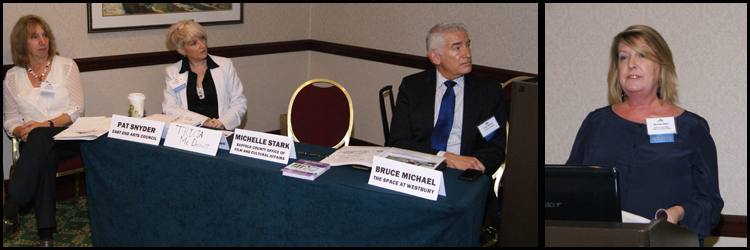
Westbury’s newest project opened its doors, “The Space at Westbury,” providing a music venue in downtown that is helping the retail and restaurants in the area. This adds to the tremendous value arts have added to local business districts. Theatres and music venues in Riverhead, Patchogue, Bay Shore and Huntington among others point to these successes. This panel tackled the role art, music, cultural events and other creative amenities have in strengthening downtown areas.
Panelists agreed that culture can lead to new jobs and businesses on the Arts, Music and Destinations workshop, moderated by Patricia Snyder.
Westbury is becoming more intriguing for visitors, Bruce Michael said, now that theater and community venue the Space at Westbury is open. The executive director first saw the space in 2011, when it was a decaying movie theater that owner Cyrus Hakakian considered razing for offices. Now able to house up to 1,500 sitting and standing patrons for smaller national acts, Michael said the Space gives Westbury a second professional theater – in addition to the NYCB Theater. And with the Old Westbury Gardens and other attractions nearby, he believes the community is getting stronger.
Michelle Stark, director of the Suffolk County Office of Film and Cultural Affairs, went a step further, saying the arts actively create jobs and support downtowns.
“Small businesses are smart businesses. They go where foot traffic is,” Stark said.
Arts, Stark said, were a major part of the Village of Patchogue’s recent revitalization. The dilapidated Patchogue Theatre for the Performing Arts was renovated back to the 20th century style in 2001 and a brand new sound system was installed three years later. The $18 million Artspace Patchogue project, opening in 2011, added galleries and retail space to mixed-use development.
Stark also referenced a study which said Long Island has a similar density of artists compared to communities like Boston and Silicon Valley, even though there’s less development of said art. With 10 percent of all Suffolk County hotel and motel taxes going to cultural programs – about $1.4 million annually – the director hoped to make the arts a central piece of all 71 Suffolk County downtown business districts.
Meanwhile, arts organizations on Long Island are actively seeking support. Tricia McDermott, artistic director of Airmid Theatre, said her nonprofit production company needs a home to produce their versions of classical works by women. She said the Long Island Philharmonic also lacks a home, and that a local opera company disappeared after a public/private partnership failed to materialize.
Unlike performing arts centers like the Space and the Paramount in Huntington, McDermott said production companies use local acting talent for their performances. At the same time, many actors are being forced to leave Long Island.
Audience questions led panelists to discuss uncovering untraditional performing spaces that everyone can afford or get to, e.g. poetry nights at a local cheese shop; creating artsy places for people to spend time at; and partnering local artists with venues and sources of money.
Check out biographies for these speakers here.
Keep an eye on our YouTube channel for footage of this session.
Sustainability Planning and Implementation
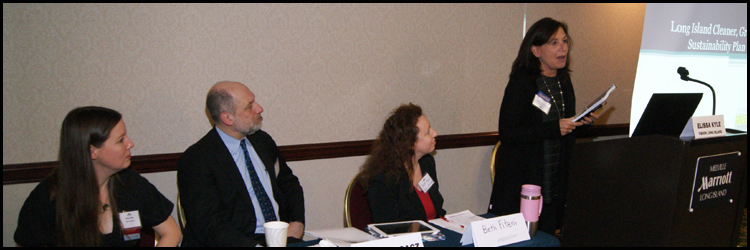
More than 250 community and regional plans based on the tenants of long term sustainability have been underway for years shaping many local projects with broad based public input. Beyond an academic exercise, the past two years has produced a number of plans that are tied to policy and regulatory changes along with potential grant funding from Federal and State resources. Officials from NYSERDA, NYMTC and the Federal Sustainability Partnership discussed these varying regional planning efforts towards bringing resources directly to Long Island’s communities and municipalities in order to implement the many community plans already in motion.
Panelists offered a variety of opinions on how resources should be directed towards Long Island's communities and municipalities in the Sustainability, Planning and Implementation session, led by moderator Elissa Kyle. Long Island has gone through and is going through several regional sustainability plans including NYSERDA's Cleaner Greener Communities plan and the Federal Sustainability Partnership plan. How these plan become implemented was the focus of the panel discussion.
Gerry Bogacz, planning director of the New York Metropolitan Transportation Council, said there are many types of planning that all produce fruitful conditions for implementation. The Federal Sustainability Partnership between the Department of Transportation, Housing and Urban Development and the Environmental Protection Agency has regional planning programs to coordinate place-based programs and initiatives and will follow with a $236 million in grants for implementation. This is one of the first attempts to coordinate planning between different agencies and get them out of their "silos." Livability is an important part for the federal partnership, while regional planning allows funding to reach local municipalities. The "Consortium" for the plan includes nine cities, two counties (Nassau and Suffolk), five regional councils and one non-profit planning organization across New York and Connecticut. The consortium can create place based plans, but cannot implement them. The responsibility of implementation falls to the local branches of government, which is difficult because Long Island has such a complex breakout of small governing entities and the two counties do not have control over land use. Further coordination is needed, but this is a first step. Using overlay maps of several areas such as transportation, energy, housing, food, education, and environment would provide a wider view and GIS should be used to help. Coordination between municipalities will help further sustainability goals through either cross-accepted plans, common plan sections or more spatially specific approaches.
Since the sustainability planning panel discussion at last year's Summit, the NYSERDA Cleaner Greener Communities Plan has been completed, said North Hempstead Chief Sustainability Officer Frances Reid. The plan, the result of substantial public input, was awarded a 2014 Engineering Excellence Award by the ACEC for Energy. The goals of the plan which are to implement policies and practices that support our communities as they adapt to the challenges of the 21st Century... and pursue an affordable, high quality of life, a strong economy, and equitable communities allowing everyone to enjoy the quality of life that Long Islanders desire. Reducing solid waste, installing more charging stations for electric vehicles and emphasizing livable communities, all with community engagement are several of the recommendations that came out of the plan. The development of the plan was phase one of the program, phase two involves funding for projects that meet the goals and recommendations of the plan.
Beth Fiteni, of the CDC of Long Island, said funding for many programs is available on the public benefit corporation's website as Program Opportunity Notices. These cover a wide variety of programs such as renewable energy fleets, storm water management on a small scale, and energy audits for homes and businesses. The first $30 million round of Cleaner Greener Community funding should be announced in December (applications were due in August) and two more rounds of funding of $30 million each, will happen in 2014 and 2015.
Check out biographies for these speakers here.
Keep an eye on our YouTube channel for footage of this session.
Housing Opportunities
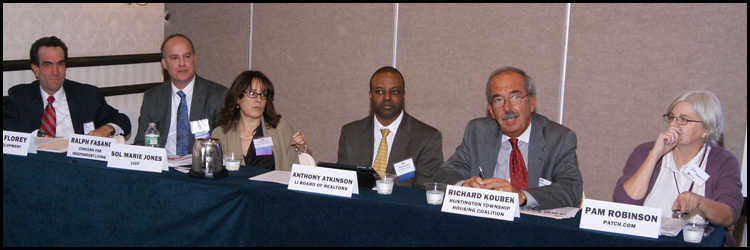
Long Island has for many years provided housing stock of small- and large-lot single family homes and illegal apartments. Recent demographic changes have pushed the market demand for a range of housing types well beyond the inventory of older apartments and creatively-designed housing in Long Island’s older downtowns. The necessary housing includes apartments over stores, live work units, loft apartments, townhouses, multifamily rentals and other smaller units adjacent to downtowns and transit. This panel spoke to this emerging market, the needs of working Long Islanders to have real housing opportunities and discuss real examples of success underway on Long Island and throughout the region.
The Housing Opportunities panel featured Sol Marie Jones of the LI Community Foundation, Anthony Atkinson of the LI Board of Realtors, Peter Florey of D&F Development, Ralph Fasano of Concern for Independent Living, Richard Koubel of the Huntington Township Housing Coalition and moderator Pam Robinson of Patch.Pam Robinson discussed the need for a wider range of housing options on Long Island. Maintaining a high quality of life depends upon meeting the demand for affordable rental units with ample supply. Communities should be more representative of who Long Islanders are today, with affordable as the majority. Speakers brought their own unique insight into the housing issue, a crucial component of both the local the national economy.
Ralph Fasano spoke on his work with Concern for Independent Living, which provides supportive housing and community resources to homeless veterans, the mentally-ill and other disadvantaged groups through the redevelopment of dilapidated facilities. Next, Peter Florey discussed the need to catch up with our surrounding suburban counterparts when it comes to rental housing, citing that Long Island is currently 15 percent behind Westchester and 10 percent behind Connecticut. Jones added that just 1-in-5 homes are rentals – 50 percent less than the average suburban area. Florey discussed his involvement with a future project on Ruland Road in Dix Hills, which will include mixed-income housing and 50 percent of units set aside for veterans. Panelists agreed on the need to convince people entrenched in myths that rental housing drives down property values of the success of similar projects.
Anthony Atkinson discussed the current state of the housing market. Residential sales have increased 39 percent since last year, the price of homes has increased 5 percent, and a large number of people are moving into larger homes while renting their old ones. Atkinson said affordability is the key factor in the Long Island housing market.
Sol Marie Jones brought attention to the fact that more than a quarter of Long Island’s rentals are clustered in only ten communities. Zoning restrictions prohibit all but five of Long Island’s townships from renting accessory apartments. Superstorm Sandy exacerbated the demand for rentals, but the supply is simply not there. Despite difficulties, panelists expressed confidence in our community’s ability to improve and diversify the housing supply.
Check out biographies for these speakers here.
Keep an eye on our YouTube channel for footage of this session.

Thank you to all of the attendees of the 2013 Smart Growth Summit!
This year featured our biggest trade show ever! Check out these pictures from some of this year's participants:

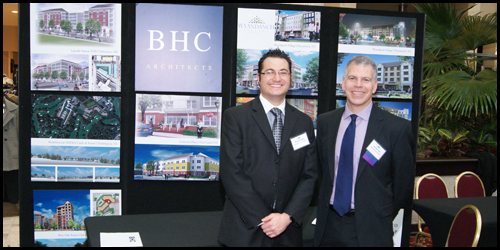 Pictured (L-R): Chris Croken - Bethpage Federal Credit Union, Michael Sargent - Beatty Harvey Coco Architects, Salvatore Coco - Beatty Harvey Coco Architects


Pictured (L-R): Janine Valentiner - The Bristal, Cheryl Silverman - Engel Burman, Debra Scala - Certilman Balin, Rick Greene - Long Island Board of Realtors
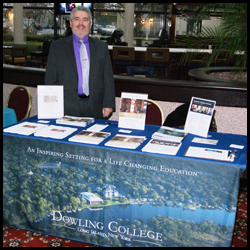

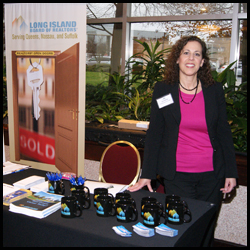
Pictured (L-R): Dowling College, GEI Consultants, Lisa Stellato - Long Island Board of Realtors
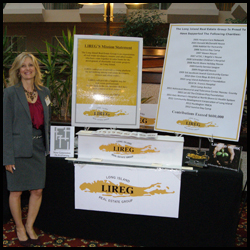
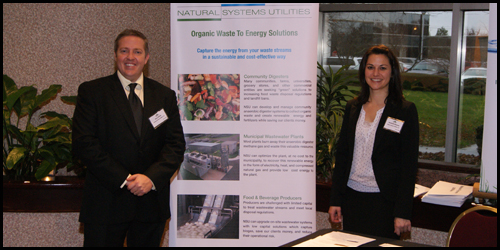
Pictured (L-R): Roseann Simone - LI Real Estate Group, Dave Smith - Natural Systems Utilities, Christelle Bruneas - Natural Systems Utilities
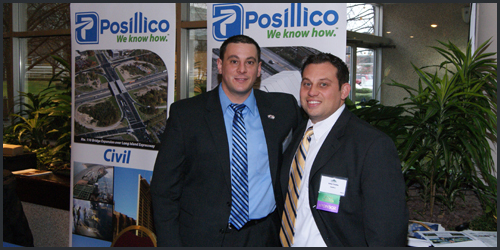

Pictured (L-R): John Trotta - Posillico, St. Joseph's College
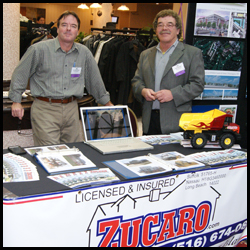
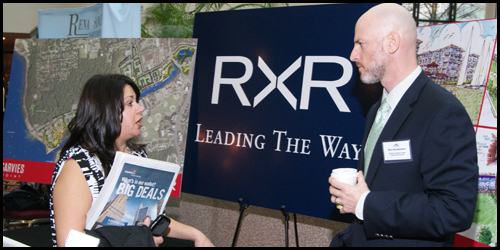
Pictured (L-R): Zucaro Construction, RXR Realty
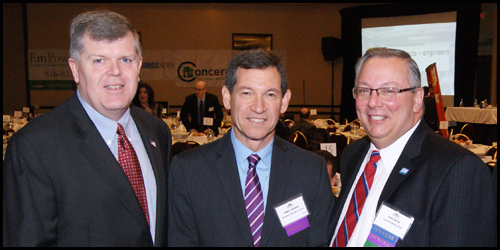
Pictured (L-R): Babylon Town Supervisor Rich Schaffer, Brookhaven Town Supervisor Ed Romaine, Roger Clayman - Long Island Federation of Labor, John Durso - Local 338 RWDSU UFCW

Pictured (L-R): Jeff Greenfield - Nassau Planning Commission, Syosset High School Student

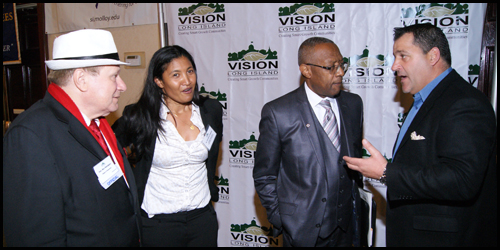
Pictured (L-R): Danielle Cirimello - Dowling College, Hempstead Village Trustee Max Rodriguez, Dr. Corrinne Graham - Graham International Consulting and Research Inc, Village of Hempstead Mayor Wayne Hall, Jimmy Carchietta - Cotocon Group
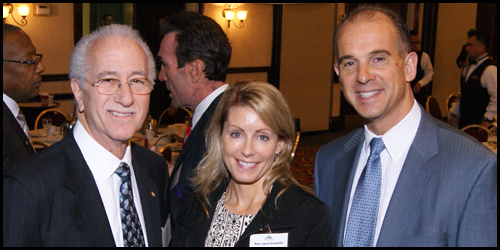
Pictured (L-R): Len Garden - Mill Creek, Nassau County Legislator-Elect Laura Schaefer, Town of Hempstead Councilman Ed Ambrosino, Jaci Clement - Fair Media Council, Artie Berke - Northport Village Merchants Association
Pictured (L-R): Hempstead Village Mayor Wayne Hall, Randy Kaplan - Long Island Board of Realtors, New York State Senator Jack Martins, Rich Bivone - Long Island Business Council
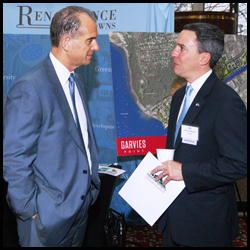
Pictured (L-R): Nassau County Legislator Dave Denenberg, Mitch Garbner, Ross Ain - Caithness, Michael Posillico - Posillico, Town of Hempstead Councilman Ed Ambrosino, NYS Senator Jack Martins

Pictured: Dr. Nathlia Rogers, Dowling College, and students at the Youth Vision for LI's Future panel
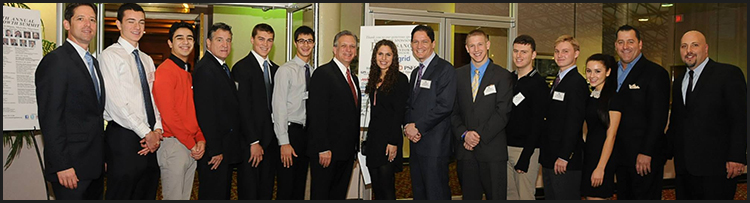
Pictured: County Executive Mangano joins Syosset Principal Dr. Giovanni Durante, the Syosset High School Student Council, Student Government Adivsor David Steinberg, and CotoconGroup CEO Jimmy Carchiett
Check out what folks were saying about the Summit!
Check out what folks were saying about the Summit!
New York State Office of Storm Recovery Director Jamie Rubin
“As we work towards building a stronger, more resilient New York, it is encouraging to see the commitment from so many of Long Island's leaders. The Green Summit is a great opportunity for industry and community leaders, who will be essential in the rebuilding process, to come together and discuss how we can all work as a team to achieve our goals.”
Suffolk County Executive Steve Bellone
“I continue to applaud the advocacy efforts of Vision Long Island in promoting environmentally sustainable development. Economic development is at the core of moving Suffolk County forward and must be done with innovative planning and effective implementation which embodies the use of smart growth principles.”
Babylon Supervisor Rich Schaffer
“Vision Long Island continues to be the leader in promoting Smart Growth principles, and every year this Summit provides a vital opportunity for Long Island’s leaders to address our most challenging regional and local issues. I look forward to discussing exciting developments in downtown revitalization in the Town of Babylon, as well as our long-term rebuilding efforts following Superstorm Sandy.”
Riverhead Supervisor Sean Walter
“As Town Supervisor, it’s great to hear business owners share their success stories and describe their excitement about the opportunities in our downtown. We’re seeing how proactive efforts have positioned us for growth and success in Riverhead.”
Southampton Supervisor Anna Throne-Holst
“Long Island is a unique and remarkably diverse region in terms of its development landscape and infrastructure. The opportunity to get together each year at the Smart Growth Summit is a terrific opportunity to learn from the experiences of other municipalities and planning experts and to support the concept of strategic regional planning for the challenges ahead.”
Suffolk Legislator DuWayne Gregory
“Every community says they want smart growth, but the trick is how to make that vision real and repeatable. By coming together to share best practices and learn from previous efforts, true smart growth not only becomes the achievable standard, but the process of accomplishing it is also better defined. That's the real value of this summit. And that's the reason why I wanted to be a part of it.”
Farmingdale Mayor Ralph Ekstrand
“The most important thing to villages to keep their economic growth continuing is transit-oriented development and walkability to downtowns is going to be the future of Long Island.”
Hempstead Village Mayor Wayne Hall
“Smart growth building is the way of the future. My administration is committed to progressive urban planning initiatives that will improve the economic vitality of Hempstead Village by creating greater shopping, dining and business opportunities for residents and non-residents alike. The Downtown Revitalization Plan serves as a clear indication that this administration is committed to building a sustainable economy for businesses, residents and visitors to thrive in this community.”
Citizens Campaign Advisory for the Environment Executive Director Adrienne Esposito
“Wastewater infrastructure is not a luxury item. Out of sight should not mean out of mind. At present, Suffolk County has three hundred and fifty thousand failing septic systems and cesspools sitting above our only drinking water source. In Nassau County, the Bay Park Sewage Treatment Plant remains on life support. Upgrading existing sewage infrastructure in addition to new sewage infrastructure is critical for our water quality and our quality of life. Civilizations have lived and died on how they treated sewage. Long Island’s ability to embrace smart growth is inextricably linked to our willingness to address the problem of our failing wastewater infrastructure.”
Neighbors Supporting Neighbors founder Kim Skillen
“Neighbors Supporting Neighbors Babylon is honored to be included in the conversation of rebuilding and resiliency with the caliber of speakers assembled by Vision Long Island.”
Tri-State Transportation Campaign Executive Director Veronica Vanterpool
“Current street design on Long Island is an impediment to mobility, safety and economic development. Long Island needs more Complete Streets with low-cost safety treatments like bike lanes, better crosswalks, and pedestrian islands. A minimal investment yields huge dividends as property values increase and towns bustle with new activity. Not implementing these measures is an economic loss to Long Island. Now that both counties have enacted Complete Streets policies, it’s time to apply the policy to the streets.”
AARP Associate Director for Livable Communities William Stoner
“Vision Long Island's Smart Growth summit is always the place to be to mingle and share ideas with community leaders who are working so hard at the local level to make our communities more livable for a lifetime. I come away from these events with at least three or four new ideas for incorporation into our work at AARP each time I attend.”
EmPower Solar Marketing Manager Tara Bono
“The future of Long Island depends on innovative thinking and perusing economic, social and environmental responsible development. Many millennials share Vision Long Island's goal to foster responsible growth on Long Island and understand that as the key to being able to stay and raise families where they grew up.”
EmPower Solar CEO David Schieren
“Vision LI has been an absolutely fantastic partner to help advance solar energy in our region. The audience at the Smart Growth conference is exceptionally high quality and we are always excited to engage them on the latest in solar energy for businesses and homeowners, and how to promote mass adoption of clean energy.”
Engel Burman Group founding partner Steven Krieger
“It is tough as it has ever been [to invest in Smart Growth], but there are financing opportunities for seasoned developers who are willing to invest substantial equity.”
Greenman-Pedersen Director of Town Planning William Tuyn
“All Long Islanders have a stake in their communities, and the Vision Long Island Smart Growth Summit is the place stakeholders need to be to get up to speed on what’s happening on Long Island and the latest developments in smarter place making.”
Long Island Federation of Labor President John Durso
“Vision Long Island continues to be in the forefront of Smart Growth, the Summit being held today is another example how Vision Long Island brings out the very best and brightest on Long Island regardless of your political affiliation. This meeting of over a thousand people transcends the political divide to help move Long Island forward into the 21st Century.”
Check out some of the press coverage for the 12th annual Summit!
Newsday
Long Island Business News
Long Islander News

Examiner.com

Save The Date!
The 13th annual Smart Growth Awards - June 13, 2014 at Huntington Hilton
Nominations are due by Feb. 28
The 13th annual Smart Growth Summit - Nov. 21, 2014 at Melville Marriott


Vision Long Island advances more livable, economically sustainable, and environmentally responsible growth on Long Island through Smart Growth. Smart Growth focuses on infill, re-development, and open space preservation. It supports mixed-use, mixed-income communities that are convenient, attractive, pedestrian-friendly, and that make affordable housing and public transportation desirable and realistic.
Over the past 17 years Vision has counseled downtown Villages and Towns, and has been a resource for the County, State, and Federal governments, as well as the business and civic community on downtown revitalization, planning and infrastructure. Vision has made over 1,900 presentations, performed 20 community visionings and advanced over 60 public and private planning projects towards implementing the goals of Smart Growth on Long Island.
Vision Long Island
24 Woodbine Ave., Suite Two
Northport, NY 11768
Phone: 631-261-0242. Fax: 631-754-4452.
Email: info@visionlongisland.org
Website: www.visionlongisland.org
 Facebook | Facebook |  YouTube YouTube |
 |
 Twitter | Twitter |  iPhone app iPhone app |
Home | Contact Us | Newsletter Archive | Donate | About Us
