Holiday Message:

The holiday season is always a time of reflection on the growth and progress of our families and our local communities. For the Smart Growth movement, the Summit is an exclamation point as it provides an opportunity for community, business and government leaders to weigh in on the challenges and solutions to making our region more vibrant. It is our hope that our collective work can help serve as a reflection on progress and opportunities as we enter the new year.
From our family to yours, Happy Holidays and safe travels.
PS: Don't forget to do your last minute shopping in your local downtown.

The 14th Annual Smart Growth Summit Recap
More than 1,000 Long Islanders join together to address
downtown revitalization and infrastructure!

More than 1,000 business, community and government leadersthis year’s event. Over 20 workshops featuring 140 speakers focused on varying topics related to downtown revitalization and infrastructure investment.
Opening Remarks

The 14th Annual Smart Growth Summit kicked off last week a little after 8AM with a standing-room only crowd filling the Grand Ballroom at the Melville Marriott for the Morning Plenary Session. Hundreds of business, civic and leaders as well as elected officials and designees from all levels of government listened on as Vision’s Co-Chair Bob Fonti addressed the crowd, leading with the Pledge of Allegiance and thanking the dozens of sponsors that helped make the Summit another success. Vision Long Island Director Eric Alexander touched on some of the recent transit-oriented development projects throughout Long Island, with 40 communities having projects currently open or under construction and nearly 11,000 units approved over the last decade.
“The Summit continues to support the activity, benefits and strategic advantages of Long Island’s downtowns. The good news is there have been numerous successes, including Farmingdale, Westbury, Great Neck Plaza, Rockville Centre, Valley Stream, Freeport, Mineola, Glen Cove, Port Washington, Hempstead, Huntington, Port Jefferson, Riverhead, Babylon, Bay Shore, Wyandanch, Patchogue and many others,” Vision Long Island Director Eric Alexander said. “And the folks that attend return to the thousands in their communities, creating more positive change back home.
Nassau County Executive Ed Mangano addressed the crowd, first discussing the long-awaited Nassau Coliseum project coming to fruition. The $260 million dollar, privately funded project is expected to bring up to 2,700 construction jobs with a completion date the end of 2016, bringing life back to the site while allowing future development, including Sloan Kettering cancer research. The County continues to work with state officials to assist this project, as well as others that are complimentary such as Bus Rapid Transit to the area.
Mangano closed by noting that new investment has led to 24,000 jobs over the past five years, and that a strong transit-oriented development program will answer the workforces’ and business owners’ questions how will employees be able to afford to live here and where will they live? “Transit- oriented development housing opportunities are opening all over Nassau County, and you can view our housing initiative that not only assists young families, it revitalizes downtowns by eliminating community blight and increasing economic activity,” said the County Executive as he thanked Vision Long Island and the Smart Growth movement for aiding the progress of downtown revitalization and transit oriented development.

Current State of the Towns and Villages

Traditionally, the event began with a panel of town supervisors and village mayors who are supportive of downtown redevelopment and infrastructure investments in their communities. The morning plenary, moderated by Vision Long Island Director Eric Alexander, was a consortium of progress reports, ideas for the future, and a platform to discuss the struggles that municipalities face.
The panel featured Judi Bosworth, Town of North Hempstead supervisor; Frank Petrone, Town of Huntington supervisor; Ed Romaine, Town of Brookhaven supervisor; Anna Throne-Holst, Town of Southampton supervisor; Erin King Sweeney, Town of Hempstead councilman; Steve Flotteron, Town of Islip councilman; Erin King Sweeney, Town of Hempstead councilman; Anthony Macagnone, Town of Oyster Bay councilman; Ralph Eckstrand, Village of Farmingdale mayor; Jean Celender, Village of Great Neck Plaza mayor, Reggie Spinello, City of Glen Cove mayor; and John Kennedy, Suffolk County Comptroller.
Huntington Supervisor Frank Petrone remarked on the Gateway plan for Huntington Station, which will redevelop three sites within walking distance of the Huntington LIRR station. It includes mixed-use development as well as a hotel, office space, and artists’ residences. Renaissance Downtowns, the Town’s master developer for Huntington Station, can now apply for site approval for the projects thanks to the Town’s approval. Other projected improvements included much needed sewer improvements for the area from South Station to North Station, parking improvements, and $20 million being allotted toward next year’s infrastructure improvement for the area. The Supervisor thanked Suffolk County Executive Steve Bellone for his assistance in securing $1 million into the planning of the sewering that will help drive the local economy.
North Hempstead Town Supervisor Judi Bosworth remarked on the housing needs for her area, highlighting partnerships between the Town, Community Development Agency and Long Island Housing Partnership which yielded 15 newly constructed 2 bedroom homes offered in a lottery. Zoning changes for senior housing were also lowered to 55 years of age, making more residents eligible to participate in opportunities. The Supervisor said that finding affordable housing on Long Island is “not an easy task”, and that “We need to work together to find housing and make the Town accessible to the workforce”.
Councilman Steve Flotteron, Town of Islip, talked about efforts in his Township. He touched on the $4 billion Heartland Town Square which will repurpose the vacant Pilgrim State Psychiatric Center, allowing 9,000 apartments and 4 million square feet of commercial space in Brentwood. Other exciting projects include a grant for Complete Streets to connect transportation to ferries, redevelopment of derelict buildings for mixed-use purposes, and summer walking initiatives. Councilman Flotteron received a Smart Growth Award in 2013 for his work, along with Central Islip Coalition of Good Neighbors, on the park revitalization efforts in Central Islip. “We in the Town of Islip are extremely committed to downtown revitalization. We are so fortunate to have several thriving downtown districts such as Bay Shore, Sayville and Islip. The ongoing revitalization of Bay Shore in particular, is something that the Town is proud of. Restaurants are thriving, the arts center is a huge success, and new housing is being developed. The downtowns in Islip have become the place to be, so far different from the days of the 80’s & 90’s.”

Town of Oyster Bay Councilman Anthony Macagnone spoke about several projects, saying that housing prices are steadily rising, and there has been two projects that have go up recently. $130 million is being invested into the Hicksville train station will opening up new opportunities for residents. A major concern of his was cost of living, hoping that additional prospects will come for multi-generational housing in Oyster Bay, while utilizing local labor to create the development. “We’re talking about empty stores, and people shopping downtown… make sure that Long Island(ers) builds Long Island.” He is also in favor of a training program for the younger generation to make sure that there is a skilled workforce on Long Island that can afford to live here. This type of program has been done in other municipalities. The councilman, when specifically asked about Hicksville, encouraged any developer interested in coming to the area to reach out to him.
Southampton Town Supervisor Anna Throne-Holst announced that the AAA bond rating that the Town was now given will allow them to do many things. There are now 28 units of workforce housing that will be made available on a site in Sandy Hollow which will target middle-income residents’ needs in the area. She also spoke of the downtown revitalization plan for Riverhead and Gateway River which will allow for 2,300 units with about 50% being below market value. “The overwhelming word was hope. This is giving us hope”. “The annual Smart Growth Summit has not only been an important teaching and learning experience for Long Islanders, be they practitioners or legislators, but also a helpful think tank for the betterment of local development projects. Our own efforts to develop the exciting Riverside Revitalization Action Plan (RRAP) reflects much of these valuable regional conversations.”
Ed Romaine, Brookhaven Town’s Supervisor, spoke about reserving and saving funds while working with the Town Board to prioritize projects to fit a conservative budget. Pensions and debts have been paid off according to the Supervisor, and the new budget is structurally balanced, paving the way for projects and initiatives that will make Brookhaven an area to invest in and live. Brookhaven’s newly adopted budget provides a 20% funding increase for protecting the Town’s environmental resources and other increases. It will also have no net increase on the property tax levy and is in compliance with New York States’ Tax Cap. He also outlined the progress at the Ronkonkoma HUB and the upcoming TOD plans that will be moving forward due to cooperated efforts with Councilwoman Connie Kepert.
Councilwoman Erin King Sweeney, Town of Hempstead emphasized the need to continue bringing development to the downtown and noted that a large emphasis is being committed towards bringing success to Grand Avenue’s redevelopment. With such a large Township, which has a population of nearly 800,000, he expressed that the success of the local economy is dependent upon investments towards successful downtowns, and continues to work to obtain that goal.

Suffolk County Comptroller John Kennedy spoke of the $80 million going towards sewering the Hauppauge Industrial Park. This will allow for expansion and bring opportunities in four story buildings in the area. Kennedy also highlighted the $17 million investment in Kings Park, a shovel-ready plan for the community, which has been in the works for years. He felt that the biggest item he sees that affecting all areas is energy and its cost to the area both financially and environmentally. “With every item that we do, whether it’s sewering, housing, or anything else, we need to get our arms around it.”
Farmingdale Mayor Ralph Eckstrand, discussed the efforts being undertaken in his Village, including Jefferson Plaza, which was coined the “lynchpin of transit-oriented development” efforts in the area. The housing units, keeping residents within walking distance of mass transit, are 100% occupied. The retail space, also fully rented, provides opportunities for LIRR riders to shop in the area. More plans are in the works for the village.
Village of Great Neck Plaza Mayor Jean Celender explained the village’s biggest accomplishment was infrastructure improvements while staying within the Tax Cap. Six traffic calming improvements to the tune of $4 million were awarded through State grants in order to incorporate walkability and the inclusion of the senior population to have safer streets. Mayor Celender noted that the Village has one of the densest downtown senior populations on Long Island and is working with AARP to incorporate a livable action plan to have Great Neck Plaza be a Smart Growth-friendly community.
Mayor Reggie Spinello, City of Glen Cove spoke of many advances in his area including public/private partnerships, downtown revitalization incorporating mixed-use, and the goal of the Chamber of Commerce to make the City to emphasize the area’s entertainment and Waterfront living potential. There have been 35 new businesses that have recently opened up, and the goal to make Glen Cove transform from “bedroom community to a destination location” is well underway. “From downtown Glen Cove to our City’s waterfront, 2016 will be a watershed moment for smart growth in our municipality”. “Through successful private-public partnerships and the support of the County and New York State agencies, we are getting ready to break ground on a $1 billion development that will put 56 acres of desirable waterfront property back on the tax roll while continuing the revitalization of our downtown with a mixed used development that will feature rental units, retail and restaurants to bring more vibrancy to downtown Glen Cove.”

Alexander brought up the topic of transit-oriented development to the panel-at-large, with many chiming in on struggles and solutions. Many that spoke, mentioned the need to create housing opportunities that are close to transportation services with retail and entertainment venues reaping benefits from such development in the area. Supervisor Bosworth noted that there have been challenges with affordable housing and redevelopment, with pushbacks from school districts and others that feel that workforce housing is not a “fit with the character of the area”. Mayor Eckstrand added that a Visioning processes was needed for the downtown, with the youth population growing in Farmingdale and in other areas. Many echoed that the key to revitalization is infrastructure investments, with parking being a major issue in many downtowns.
The need for sewering was also discussed. Supervisor Romaine talked about the long-awaited treatment project for the Forge River Watershed area, which has received funding. Throne-Holst mentioned that 360,000 homes are using cesspools. She also mentioned that technology is needed to treat waste on-site, and that incubator and research could lead towards further economic development and job creation for the area.
Other topics included the constraints of the 2% tax cap, the abundance of regional planning and overall infrastructure improvements and costs.
“The day was fruitful,” Supervisor Petrone said about the Summit. “The essence of it is when you hear what other groups are doing, other towns are doing, other Villages. The bottom line is we are feeling the same growing pains whether from a political perspective, financial perspective or governmental operation perspective.”
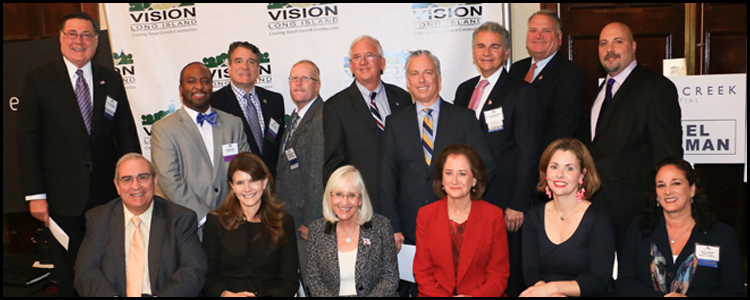
Check out the full video of the Morning Plenary Session here.
2% Tax Cap & Municipal Financing Strategies
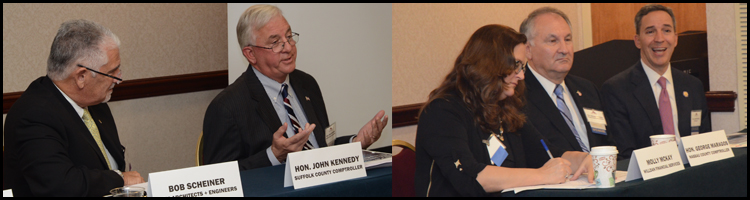
The 2% Tax Cap, which requires local governments and school districts to raise taxes no more than 2 percent or at the rate of inflation, has been the subject of controversy since it was enacted.
This workshop, moderated by Robert Scheiner of H2M Architects & Engineers, discussed the needs of the municipalities and ways to move ahead without piercing the tax cap. Panelists included NY State Senator Jack Martins, Suffolk County Comptroller John Kennedy, Nassau County Comptroller George Maragos, and Molly McKay, Willdan Group.
After Mr. Scheiner gave an overview of the issue, saying that the tax cap was “enacted by the State to control costs,” and adding that “some units of local government are hurt by their ability to fund infrastructure,” panelists discussed some of the problems and possible solutions. Senator Martins said that “People want something done. They’re concerned about rising costs. The Tax Cap is a blunt instrument; it’s inflexible, and doesn’t account for the needs of individual municipalities.” He mentioned that municipalities are struggling with aging infrastructure, and suggests that if the state has a surplus, that dollars should go to the municipalities that are struggling.
When asked whether he was in favor of an increased tax, Maragos said that he is a no tax advocate. “Government has to become more efficient; they can do a lot better. New York is the 49th highest taxed state next to New Jersey”. The Comptroller said that as an overall population, Nassau County is aging rapidly, with 20% of its population being over 65% as of the year 2000, adding that younger families are expected as the birth rate is declining, with 30,000 less school aged children anticipated in 2021- a trend that must be reversed. Maragos also feels that “infrastructure is an investment in our future. We talk about a plan, but there is no plan. We need bold discussions; we are falling behind in the competitive race. We need to take surplus, and cut expenditures, not service”.
Suffolk Comptroller Kennedy agreed that the tax cap has a significant impact on operations. “In Suffolk County, we have consolidated the Comptroller and Treasurer’s office. Let’s look at debt service; we need to work with partners at the state level.”
McKay added that the tax cap forced innovative ways to combat a smaller funding increase while maintaining growth with tax increment financing, PILOTs, and with local government efficiency grant programs that help with large developments and transit-oriented development.
While the panel varying in levels of support for the tax cap, they agreed that it does force municipalities to find ways to operate on a leaner budget while remaining efficient to serve the needs of their constituents. They also agreed that surplus funding from the state should be used to fill in the gaps for struggling municipalities with gaps in their capital budget to support major infrastructure improvements.
Economic Development & Infrastructure - Suffolk

Suffolk Economic Development & Infrastructure, moderated by Denise Carter (Greenman Pedersen), featured an update on progress of projects, as well as key objectives for future improvements. Panelists Sufffolk County Presiding Officer DuWayne Gregory, Darnell Tyson (Suffolk County Deputy Commissioner, Public Works), David Calone (Suffolk Planning Commission), and Stephen Holley (AKRF) spoke of IDA programs, public works programs as well as transportation initiatives.
Panelist discussed the 2035 Comprehensive Master Plan, which was the first master plan update to be adopted in 40 years. The plan itself included analysis on water resource, economic development, housing and transportation needs. It also addresses open space needs, quality of life concerns, collaboration, connectivity and sustainable growth. From this plan, there were 18 priority action areas and 108 priority actions to be addressed. The group discussed ways to address these action areas and challenges on a local level that would still fulfill the regional need. With this, there was some discussion of larger projects led by municipalities such as Connect LI and IZone. These plans look to create a more robust transit system by connecting all transit oriented hubs. The buildout of Ronkonkoma Hub was mentioned, which will sewer and develop a large area north of the LIRR station to create a downtown that’s walkable and mixed use. Other transit initiatives discussed included the creation of a new terminal at MacArthur airport to connect to the LIRR, as well as the relocation of the Yaphank train station east to provide better connectivity to Brookhaven National Laboratory.
Suffolk IDA benefits, including property, mortgage recording, and sales tax abatements were explained, particularily tax abatements for infrastructure changes for transit-oriented developments. Over the past 3 years, the Suffolk IDA has closed on 50 new projects that created 2500 jobs and retained 8300 jobs.
Downtown Showcase - Nassau
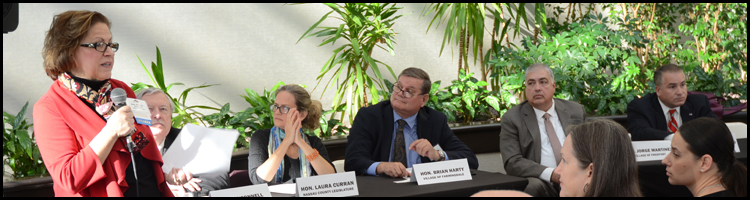
Herald Publications’ John O’Connell served as moderator for the Downtown Showcase- Nassau workshop. Panelists discussed past, present and future projects in their areas, highlighting the positive work that has been taking place while also speaking about opportunities for improvement.
Mindy Germain (Residents for a More Beautiful Port Washington) talked about the visioning process for Port Washington began in 2005. Through this process, they were able to address the desire from mixed-use infrastructure while tackling parking issues, vacant spaces and other concerns. They created design guidelines in 2012 to highlight the unique aspects of Port Washington. They also were able to take advantage of grant opportunities for businesses to upgrade facades, improving sidewalks and parking lots through a streetscape plan, creating mixed-use housing and revitalization a garden next to the LIRR station.
Glen Cove’s Deputy Mayor Barbara Peebles was pleased to say that their Downtown waterfront is making progress. The Downton BID (Business Improvement District) has supported positive growth in the area, assisting with community events as well as beautification projects. Glen Cove has opened 40 new businesses, 12 of them being in their downtown, representing 250 new employment opportunities. The walkable area has 3 LIRR stations, buses to Manhattan as well as locally, and is looking forward to ferry service. NYS DOT has recently completed a marketing study of the area which says that the potential for Glen Cove to continue to thrive is there.
Village of Mineola’s Clerk Joseph Scalero mentioned frequently he is asked the question “How do you revitalize Mineola?” He said that the answer is clear: it needs to be done intentionally and by design. The desires of the community were to preserve single family homes while creating a vibrant downtown along the LIRR station, and they continue to work towards that. The past 10 years have shown many improvements in the Village, including senior housing and luxury apartments, as well an increased business presence in their downtown. Over the past few years, Mineola has seen significant growth including new parking structures and the completion of the Mill Creek Residential project bring housing directly located next to the train station in their downtown.
Deputy Mayor Jorge Martinez of the Village of Freeport explained that although villages are on the frontlines of development, he’s found it to be very important to work across government lines. One example of that would be working with the county to fund a streetscaping project on North Main Street down to the LIRR station. With over 200 homes abandoned after Sandy and hundreds more damaged, Freeport has seen its share of displaced families, and is learning from that experience. They are focusing on their North Main Street developments right now, and have several downtown locations due to their unique layout.
Farmingdale’s Administrator-Clerk and Treasurer Brian Harty talked about zoning changes that were made to parcels along the LIRR to create transit-oriented development opportunities as one way to cut down a need for a car in their Village, as well as addition of zipcars. They have worked very hard to find federal funding and take advantage of it, such as a CDBG grant that was awarded to begin their downtown development. In six years, twenty empty storefronts have been filled, and according to a traffic and zoning study can add another 70 mixed use apartments to the area. Recently receiving a Smart Growth Award for a housing project next to their train station, the village continues at areas for growth and beautification.
Baldwin has been facing some unique challenges in their revitalization efforts according to Nassau County Legislator Laura Curran. Like many communities looking to grow, Baldwin has no existing downtown. However, unlike the other panelists, it is not an incorporated village so there is a local of a hyper local municipality to lead the way. She feels that Grand Avenue does not reflect the charm of the area that has great schools and unique homes. A Complete Streets traffic study was introduced to analyze the best way to improve Grand Avenue, with the hopes of proper pedestrian crossings, bike lanes, sidewalk widening and bus shelters.
They all agreed that there are some very common challenges to growth such as traffic calming, affordable housing, and infrastructure needs. Many of these can be addressed by various level of government coming together to pool resources and expediting the process.
TOD & Downtown Redevelopment

Long Island’s transit-oriented development projects have created thousands of housing units near our public transportation hubs, allowing for much needed apartments in desirable areas. The standing-room only Transit-Oriented Development and Redevelopment workshop, moderated by Bill Purschke of Z Title, highlighted some of the success stories on Long Island as of late, and touched on some of the areas for improvement to continue developing based on the need of the area.
Redevelopment of Farmingdale’s downtown has taken major steps recently as mentioned by Anthony Bartone of Bartone Properties. Three years ago, there were 23 vacant stores downtown. Due largely to his new development, where residents can wait in the lobby for the train, the downtown now has filled all of their vacant stores for lease. With the increased foot traffic and local residents being able to walk to dining and shopping destinations, the retailers are gaining new customers, enabling them to make building improvements.
Alan Handelman, Vice President of Construction at Conifer Reality, referred to Copiague’s visioning plan where residents weighed in on their desires for the area. This visioning produced the TOD project that will be breaking ground in February of 2016 adjacent to the Copiague LIRR station. This project is just one of Conifer’s, who has over 1000 units built or in progress on Long Island all taking place in downtowns or transit-oriented areas.
James Stover of Mill Creek Residential spoke of the great successes in Mineola after the Village created a comprehensive plan in 2005. With the adoption of an incentive bonus overlay district with flexible zoning, the village receives public benefits from the developer such as streetscape improvements. The developments bring in a diverse demographic of car-free tenants, as only 1.5 paved parking units are created per unit of development.
The panels discussed how the large demand for apartments and retail space in transit-oriented areas on Long Island is evidenced by how quickly the units are being leased. The diverse groups of renters (millennials, retirees, divorcees, and empty-nesters) enjoy the maintenance-free lifestyle, as well as the proximity to downtown entertainment and transportation destinations. Rather than moving to the city where rent is higher or leaving the state, working age renters are paying market rate on Long Island. The panel explained how the types of residents are cyclical; millennials’ start out in these developments and establish roots in the community. Since they are not geared for housing large families, the millennials move to single family homes, and in turn empty nesters move out of their homes into these developments.
Bartone added that these complexes are adding to the tax base by developing underperforming properties, but they are not adding school age children to the school districts.
Fair Housing / Segregation on Long Island

The Fair Housing and Segregation panel tackled an issue that is far more common than many of us are aware. While there is an have been several discussions on the lack of housing able to vulnerable populations, there have been varying opinions on placement and actual affordability. The panel, moderated by Sol Marie Alfonso Jones of the Long Island Community Foundation, included panelists from both nonprofits and the development industry. This diverse groups discussed possible solutions and best practices to addressing the issue of fair housing on Long Island.
Peter Florey of D&F Development, a Long Island based developer of affordable housing, touched on some of the challenges in building affordable housing in some wealthier villages. In one instance, once it was discovered that the apartments would be affordable, the village tried to condemn the land then restricted the development to only one bedroom units. This challenge has been seen throughout the country and several municipalities have made and effort to change practices to allow for fair dispersal. In Texas, a court of appeals determined that there was discrimination in the allocation of tax credits with too much investment in minority communities and not enough in wealthier communities. In order to get affordable housing in more than low income communities, lawsuits may be necessary.
Sharon Mullen, Long Island Housing Partnership, felt that one of the best things that can be done is to educate consumers so they are aware of when they are being discriminated against and what their rights are. She spoke of some of the programs that her organization conducts to educate vulnerable populations. Programs include realtor steering awareness and mortgage and home insurance discrimination protection. LIHP uniquely provides bilingual services.
Randy Kaplan of the Long Island Board of Realtors pointed out the ability of a landlord to deny a tenant without explanation allowing for no accountability to residents who were turned away due to discrimination. In response, he spoke about a bill that was drafted for the NYS Legislature to reduce discrimination by landlords and management companies. Currently, they are not required to give a reason why a potential tenant is turned down, this bill would require a reason within 45 days. They are also working on another bill in the New York City Council.
Siela Bynoe, Nassau County Legislator described the challenges of the housing voucher program and trying to de-concentrate and de-segregate places that accept the vouchers. In Nassau County, they introduced legislation to create a land bank of abandoned properties to resell to first time homebuyers.
Some solutions included looking at smart growth priniciplies to modify land use plans, repurposing of existing infrastructure and laws to reduce discrimination through fair housing laws.
Complete Streets: Walkability & Health

The Complete Streets workshop focused on health and safety as well as energy efficiency benefits of planning and/or retrofitting streets and transit hubs to safely accommodate pedestrians and bicycles. Panelists included Greg Del Rio, RBA Group, Michele Gervat, American Heart Association; Bernard Macias, AARP; and moderator Lisa Rosenthal, Well Beyond 55.
Greg Del Rio presented a comprehensive powerpoint highlighting the unrealized potential of Complete Streets for persons of all ages and abilities. In addition to reducing fossil fuel use, the ability to exercise and access transit have the potential to promote well-being and reduce obesity and social isolation. He noted that 1 in 5 persons have a disability, and with LI's rapidly aging population, a wider spectrum of users will require innovative accommodations other than driving a personal car. Several staff members from Hofstra University testified to the popularity of bike trails around central Nassau, but commented that interfaces and exit ramps where the trail crosses Meadowbrook Parkway were not well planned to ensure riders safety. They are tracking bike crashes.
Bernard Macias, AARP's new Associate State Director for Long Island, noted three municipalities already committed to becoming age-friendly: Great Neck Plaza, and the Towns of North Hempstead and Babylon. AARP has set criteria for Friendly Aging including auditing existing conditions, setting short and long-term goals for roads, trails and parks, and organizing local groups like the Gen Xers who are turning 50 and will decide in the next few years to stay on LI or go elsewhere. On his LI page, he promotes walkability and recommends safe locations to AARP members. Participants noted there are several trail guides available for individual towns, and for the north south crossing of LI, but a bi-county resource is needed. The NYSDOT has a route map showing origins and destinations of trails and paths, but it is not complete.
Safe routes to schools are a current focus. Long Beach was complimented on its educational program for young bikers and programs to enforce the use of helmets. Bus Rapid Transit is being implemented on Nicolls Road to and from Stony Brook, and some industrial areas are improving their community interfaces. Lisa Rosenthal described her work with HOAs (homeowner associations) and condo complexes, to assist residents who desire to age in place. The focus is on retrofitting services as well as structures so that independence and mobility can be maintained after people can no longer drive.
Michele Gervat of the American Heart Association stressed the prevention benefits of regular exercise as key to maintaining long-term health and mobility – encouraging older adults to think of this as “a gift to their grandchildren.” Michigan is far ahead in this, developing walking and bike paths that encourage entire families to be out together.
Discussion of 20-somethings' desire not to own cars has increased the focus on broadening safety of all types of intersections and crossings including adequate timing of traffic signals on major roadways. Massachusetts, a role model, strongly enforces vehicle traffic so that no other vehicle is moving when pedestrians are crossing. There was consensus among the panel that there is not enough input from actual or would-be users of these various users of mass transit or what constitutes truly safe, walkable spaces. More effort needs to be done to educate the public and engage them in identifying problems areas.
The 2016 Complete Streets Summit will be held at the Sustainability Institute at Molloy College on Friday, April 1, 2016.
Downtown Promotion

The Downtown Promotion panel, moderated by Jaci Clement of the Fair Media Council was an opportunity to discuss best practices taking place throughout Long Island’s downtowns that retain, grow, and showcase unique experiences for visitors and residents. Julie Marchesella, Nassau County Chamber of Commerce; Kristen Jarnigan, LI Convention & Visitors Bureau; Kim Kaiman, Town of North Hempstead; and Don Miller, West End Strategies; discussed the various ways to promote your downtown and insure business to stay downtown.
Kaiman mentioned North Hempstead’s 30-mile proximity to NYC, as well as its waterfront downtown, making it attractive for the movie industry to film there. North Hempstead is in season 2 of Business Buzz, which will feature 3 local businesses in order to promote them, as well as several other series that are filmed there. “Filming of these shows puts local businesses on the map, and also brings in more business,” said Kaiman, noting also that finances are always a challenge for the downtown.
Marketing strategically stood out as an important tool for promotion, with Marchesella stressing the need to “narrow their promotion and marketing to focus on their specialty”. She feels that relationships between the IDA (Industrial Development Agency) and small businesses have been stronger, with commercials being aired featuring mom and pop businesses. With sales tax contributions dwindling in both counties, she reminded the group that shopping locally not only supports the small business owners, but strengthens sales tax revenue.
“When I was new in town and at a hotel, I asked the concierge where to go to see Long Island,” said Jarnigan, “and was told to check out the Italian Restaurant in the strip mall down the street.” She stressed the importance of education and communication, not only towards visitors, but amongst businesses to give the 9 million visitors a year that come to Long Island the experience that they expect. “Visitors want unique,” she said, seeing an opportunity for all stakeholders to work together closer to have prosperity.
Miller noted the progress of Patchogue, Mineola and Freeport’s Nautical Mile, and said that strategic partnerships like the chambers of commerce are essential to narrow down what the draw is for the individual downtowns. He hopes that barriers can be broken down, and feels that creative, local events can be a key driver for many areas.
The overall message of the panel was one of the need to work together more closely with all partners, address the problems of the areas to be successful, and to use all resources available to have businesses and downtowns prosper and “stand out”.
Energy Efficiency & Renewables
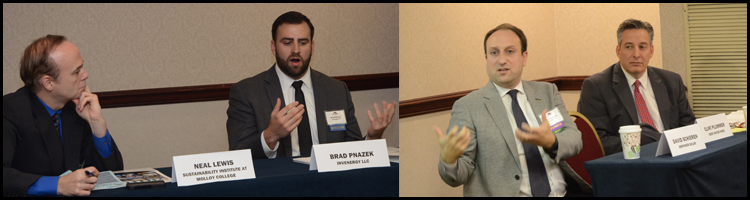
The panel on Energy Efficiency and Renewables looked at the rapidly expanding renewable energy sector. Neal Lewis moderated the panel which discusses renewables from both a government and private sector perspective.
Brad Pnazek of Invenergy who is the developer of one of the proposed solar farms in Shoreham, stated that commercial scale solar companies are looking to develop in areas where there is community support. The Shoreham proposal will be the second largest on Long Island (25MW) and will take advantage of energy infrastructure that was already built and paid for when the nuclear plant was constructed. It has the support of 70-80% of the community as it is one of the desired used for the conservation district and will pay property taxes and sell the energy to LIPA.
David Schieren of Sunpower (formerly EmPower Solar) gave his perspective as an installer of residential and commercial rooftop solar. Sunpower works with clients to determine their goals and discuss financing options. Most of his customers choose a power purchase agreement which allows for $0 down but provides less savings over time. A new option has recently become available that will expand the market to those who live in multi-family housing. This option essentially lets tenants lease panels on someone else’s roof to allow them to take advantage of cost savings and reduce their bill.
Jon Kaiman, Chairman of NIFA and former Supervisor of the Town of North Hempstead, gave the perspective of government trying to encourage the development of renewable energy. He discussed New York State’s REV (Reforming the Energy Vision) program which is looking to move from grant projects to market projects. The Cleaner Greener Communities study done several years ago found that baseline energy emissions for Long island went down 10% between 2005-2010 while energy use went up 3% per year. This indicates that energy production has gotten much cleaner during that period. Improved zoning, codes and new products are helping to improve the efficiency of our energy production and usage.
The group discussed other aspects of renewable energy but found that at this time, most opportunities are centered around solar.
Downtown Small Business Development
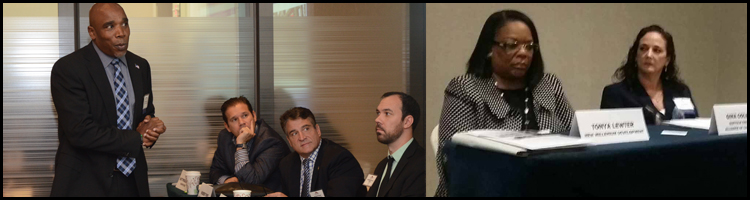
Downtown Small Business Development was moderated by Vision’s co-chair and LI Business Council co-chair Bob Fonti. The pane discussed some of the ways that Long Island’s small businesses have moved ahead, as well as some of the barriers being faced. Matthew Revere, ACCION; Walter Cotton, Townsend Consulting; Tonya Lewter, New Millennium Development; Matt Problekevitz, YouOffice.com; and Gina Coletti, Suffolk County Alliance of Chambers; gave their expertise as panelists.
In a survey of chambers, Coletti mentioned that the major concerns for businesses were infrastructure, revitalization initiatives and access to capital. She added that it is important to get the chambers involved to have money allocated to assist with those concerns.
Revere explained how ACCION gives small business loans to those who would not traditionally qualify as a potential source of improvement capital. Cotton noted, “there is no better customer that you can do business with than the federal government,” citing $1.4 billion in small business awards that helped veterans win $500 million in contracts. Lewter suggested a forum to connect with local businesses to try to assist with funding access as well.
The need to have a sense of place was discussed, with Problekevitz suggesting a model to keep business local. Wyandanch, Huntington and Hempstead were mentioned as communities within a community that are up and coming, and it would be a prime time for small businesses in those areas.
Working on reverse commuting opportunities was discussed as well, with thoughts of having younger workers live in areas such as Huntington. Suggestions included a reverse commute tax credit, which would give a tax credit to any business that pulls from the city. It was also noted that the LIRR’s Babylon branch is a hidden gem, with some stations having a half hour stop between trains, allowing a perfect amount of time for downtown dining and shopping.
Youth Vision for Long Island's Future

As Long Island continues to stay competitive and retain its youth workforce and talent, the Youth Vision for LI’s Future workgroup, focused on some of the more pressing needs of the millennials. The panel, moderated by Dr. Nathalia Rogers of Dowling College, focused on the concerns of youth along the lines of affordable housing, employment opportunities and transportation needs, as well as providing solutions for the concerns.
Panelists included Jase Panebianco, St. Joseph's College; Steven Delligati, Workforce Development Board; Jeff Guillot, Suburban Millennial Institute; Sev Davis, Dowling College; and Lionel Chitty, SUNY Old Westbury Alumni Association.
The overall message of the panel was that Long Island is moving in the right direction with job retention strategies by partnering and working in a collaborative effort with local, state and federal entities. The panel stressed the importance of participation on behalf of young people in both the communities and local government. Young people need to get involved, run for local office, participate in local public forums and voice their opinions. Otherwise, issues that are important to them will continue to be tabled. It is important that young people get a say in their communities in order to secure their future and the future of Long Island.
Networking, not only at events like the Summit, but at local networking events was also suggested as a way to engage outside resources and opportunities. This includes events that deal with local building issues that can shape housing or transportation needs, employment opportunities, as well as civic projects in the youths’ local area. Some felt that more of an emphasis on networking will help open doors to opportunities not only for the individuals, but also to help Long Island move forward for the younger generation from their unique perspective.
The 7th Annual Long Island Youth Summit will be held on April 8, 2016.
Economic Development & Infrastructure - Nassau
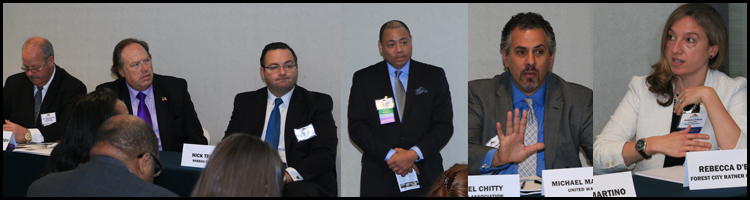
A wide array of topics including funding needs, crime, infrastructure and business retention were discussed as part of the Economic Development & Infrastructure – Nassau panel. Lionel Chitty, Hickville Chamber of Commerce, moderated the panel. Panelists included which included Nick Terzulli, Nassau IDA; Jeff Greenfield, Nassau Planning Commission; Michael Martino, United Water; Rebecca D’Eloia, Ratner Company; and Mayor Robert Kennedy, Village of Freeport.
Mayor Kennedy spoke about the various improvements to Freeport, including electric generation (independent of LIPA), “Operation Safe Streets”, and the mandate of his officers to wear body cameras and carry tasers. This is among the efforts of the mayor to revitalize the village including a downtown revitalization of their main street.
Water and sewage infrastructure was mentioned my Martino, explaining the post-Sandy troubles at the Bay Park sewage treatment facility. He continued by saying that Nassau’s economic development is stymied by a lack of sewage. In order for there to be significant economic development in Nassau County, there needs to be a serious investment in its aging sewage infrastructure.
Bikability was discussed in length by D’Eloia. She commented on Nassau Coliseum’s design of bike lanes, and how it can add to making the revitalized destination more pedestrian friendly. Greenfield expressed his concerns for Nassau not being bike friendly, citing pedestrian accidents, as well as a lack of North/South connectivity based on the road planning decades ago.
Funding future improvements to Nassau was discussed. Terzulli used Nassau Candy, who makes chocolate for Disney, as an example of how to bring business from the outside to Nassau. Freeport was said to be tax neutral over the past 3 years with a 20% increase in service. Kennedy mentioned Freeport luxury car dealerships that bring in revenue to the area. D’Eloia noted that Nassau Coliseum is now privately operated, which relieves county taxpayers of operating costs. The lack of a casino as a source of revenue was also talked about. Recently a casino in Nassau County was voted down as community members felt that it was out of character with the area and the negative impacts to local downtowns and traffic would outweigh any potential revenue. The group also discussed pushback from the public on some development projects that help areas with needed housing and employment- two roadblocks towards funding that the County feels is needed.
Job Development
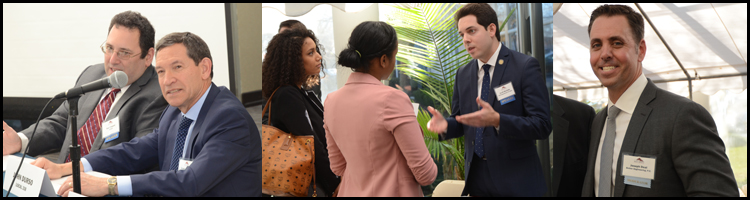
Employment opportunities are an ever-growing, ever changing need on Long Island. The Job Development panel, moderated by Joe Deal, Bohler Engineering, touched on what resources are available in the area for those seeking employment, and what is being done to obtain and retain employment opportunities.
Panelists invited to share and discuss job development opportunities and progress included Paul Trapani, LISTnet; James Bonner, NY & Atlantic Railway; Roger Clayman, LI Federation of Labor; and Scott Martella, NYS Department of Labor.
Startups, such as the Suffolk County IDA and Launchpad Long Island were featured, each being mechanisms for job development for their areas. In addition, the New York State job bank was discussed, which is a clearinghouse for employment opportunities, including union positions. Many union and non-union construction jobs have been made available through downtown development initiatives, with over 1,000 opportunities to come with the Nassau Coliseum project.
The group discussed the various types of employment opportunities whether through new growth in downtown small businesses or major projects coming on line.
Transit Opportunities

Moderator Veronica Vanterpool of Tri-State Transportation noted that only 11% of commuters use mass transit, but that there is an uncounted negative economic drain from the increasingly frequent transit delays and lack of adequate funding to upgrade transit facilities. Michael Setzer, CEO of NICE Bus, noted that Nassau Ridership has been dropping, as has state funding, and 9 routes are being cut. But he also acknowledged that while transit creates economic opportunity, route reductions including the recent ones reduce access to work and other opportunities for riders, and that persons with disabilities are further disadvantaged in that fixed route cuts also reduce the scope of accessible transit such as Nassau's ABLE Ride system.
Aaron Watkins-Lopez, an organizer for Jobs with Justice, gave the history of the LI Bus Riders Union formed in 2011. Nassau riders have more interaction with NY City and are requesting better cross-county connections, while Suffolk County has been somewhat responsive, recently adding some Sunday service and has increased connections to colleges and universities.
Rosemary Mascali of Transit Solutions described the Federal Tax Benefits for mass transit riders, which are widely used (and about to be mandated for NYC companies with 20+ employees starting in 2016), but much less well known on the Island except for 25 of the largest companies. She attributed that in part to busy HR managers, and their ill-informed assumption that “everybody drives”... She stressed that our area is missing out on a potential federal subsidy of $37 million which the NYC region is not getting due to our lack of participation. She encouraged consideration of ways to participate in the annual Car Free Day – which has become like an Earth Day for transportation worldwide. Contrasting with the prevailing local assumption that only the poor and lower middle class will use mass transit, she noted that in Bogota, Colombia the rich are the primary users of mass transit.
Mitch Pally of the MTA Board spoke of the LIRR's importance not only to LI but also to our regional economy, including removing people and vehicles from highways. He described the 11 major MTA capital projects which will benefit LI, including improving communications at all stations, upgrading of signals, and electrification of the Port Jeff branch once a railyard site can be identified. He stressed the urgency of moving forward now, especially with more students commuting, more workers needed in the health and personal care for our aging population, with young adults desiring to live in transit-friendly communities, and with a more of the aging population who will soon have to stop driving. He envisions more flexibility in bus sizes with smaller ones for less-used routes but larger, articulated buses on the busiest routes such as between Nassau and Queens.
Michael Setzer noted that a majority of riders primarily use 5 lines, and half those riders go into Queens. Ron Roel advocated for better interconnections between rail and bus hubs and increased understanding that all ages groups are stakeholders in modern transit. Concern was expressed for north-south riders, who include non-driving retirees needing to access medical or retail services. New Jersey offers student fares. Other ideas put forward: reduce or end the vehicle subsidy for autos, plan routes to places such as cemeteries, shopping and entertainment; create incentives to develop relationships between transit and small businesses such as selling Metro Cards, advertising on buses and bus stops, and improving the quality and safety of bus stops – perhaps create “adopt a stop” as NY already does with highways?? Although some lines are overcrowded and seats are scarce, there was a suggestion to make the LIRR more bike-friendly, which Mitch said would necessitate adding more cars so as not to reduce available seating. However, not all stations are long enough to accommodate longer trains. LI Bus has no plans to add bike capacity.
All stressed that the 2016 State Legislative session is the most important for transit in a long time – if funding is not obtained this year for the essential projects which are pending, the opportunity might be lost for another 5 years.
Downtown Showcase - Suffolk

Suffolk’s downtowns have been in a resurgence over the past several years. Many have looked towards new avenues in order to overcome some local challenges to make the downtowns thrive for residents and visitors alike. The panel, moderated by Peter Sloggat of the Long Islander, also featured Hon. Laurie Devlin from the Village of Patchogue, Hon. Steve Flotteron of Islip Township, and Ryan Porter of Renaissance Downtowns.
Devlin mentioned the renovation of the Patchogue Theater began the revitalization of downtown Patchogue as restaurants starting to come in to serve the theatre-goers. Patchogue already had a sewage treatment plant and zoning, which only helped to speed up the revitalization. As the Village started to acquire blighted lots, housing was added to bring people into the downtown. With the advent of online shopping, retail can be a challenge, but little by little, Devlin says that shops are opening in the downtown. With the large amount of entertainment and dining attractions that Patchogue has, the Village is experiencing parking pressure at night, so they have metered the lots and Main Street at night, and are exploring additional parking options in the future.
Steve Flotteron explained how Bay Shore was hurt by both Pilgrim State being de-institutionalized and the development of shopping centers on Sunrise Highway. Things got so bad that “people who couldn't stand each other had to work with each other” for the common cause of revitalizing Bay Shore. However, with Southside hospital as a major employer, and with Bay Shore being a “gateway to Fire Island”, there is still great opportunity. Dilapidated housing is being reconverted into apartments in close proximity to Main Street, such as Village Gate. The Councilman noted that “communities will accept change, but it's important to have good designs and use good materials”.
Ryan Porter said Renaissance and Huntington have a public-private partnership to revitalize underutilized municipal parcels, enabling them to take uses and put them where they make more sense. Renaissance’s inclusive crowdsourced placemaking program, a grassroots, social media effort gives local residents a say in what gets built in their community. Once the master plan was done, they looked at the infrastructure issues. The entire south side of the project was not sewered and they worked with the town to sewer the south side. They also had a quick SEQRA approval, helped by the public-private partnership. Additional parking was added to the area by simply redesigning existing lots to make them more efficient, and will be looking into parking garages in the future.
Growth always has challenges, such as objections in Patchogue about a concern of school districts being overcrowded by children living in the new apartments, but studies by economists help calm fears of residents. Panelists spoke also of zoning being a great tool to ensure that open space is maintained, and that creative ways to fund parking infrastructure improvements can be developed, such as Patchogue’s PILOP (payment in lieu of parking) program, which will have those coming into the area to do business to pay into a fund aimed at purchasing dilapidated housing to create parking.
Tax Incentives & PILOTs

Long Island Bussiness News’ Joe Dowd moderated the Tax Incentives and PILOTs workgroup which featured Dan Deegan, Forchelli, Curto, Deegan; David Leno, Rivkin Radler; George Graf, former mayor of the Village of Farmingdale; and Matthew Frank, Richman Group. Subtopics discussed included the role of the IDA, the PILOT concept, as well as other incentives used to promote and retain business and job development on Long Island.
One of the IDA’s tools, PILOTs (Payments In Lieu Of Taxes), was explained to correct misconceptions of the program by the public. Deegan explained that the IDA does not write checks, but incentivizes projects, inserting themselves into the lease making the payment tax exempt. Leno pointed out that New York is the second worst state for tax cost, and that PILOTs are a tool to obtain development of multi-unit housing, as well as rehabilitation of older buildings to attract people and businesses to Long Island.
Panelists also discussed the balancing act of having less revenue to contribute to municipalities, providing job opportunities to retain residents, and companies leaving Long Island when tax abatements end. Graf said, “Decisions are a balance. People are struggling to stay in their houses and municipalities need to raise money because of tax caps.” Frank agreed on this point, saying that “misperception is stopping projects. Tax breaks to corporations allow the company to provide jobs.”
It was suggested by Deegan that those who are interested in learning more about IDA programs such as PILOTs, tax incentives, low or no interest bonding and other IDA tools should contact their IDA for more information.
Illegal Dumping & Groundwater

Illegal Dumping is an issue that has been happening for a long time on Long Island, but recently began making headlines with the construction debris that was discovered at several parks, a site for veterans housing, and the Brookhaven Rail Terminal. Cecilia Dowd of Fios 1 News moderated the panel to discuss, why dumping is occurring, why it is harmful to both the environment and our health and look for solutions to eliminate it.
Adrienne Esposito of Citizens Campaign for the Environment explained the dangers of illegal dumping to our groundwater and how few people realize where our water comes from. While illegal dumping can refer to anything from sewage, garbage to toxic substances and liquids, much of what is dumped is construction debris. Over the course of a year 55,000 tons of construction debris was dumped onto the soccer field and into the recharge basin for Roberto Clemente park in Brentwood. The debris was found to contain heavy metals, pesticides and asbestos. While specific toxins have strict procedures for disposal, construction debris is not tracked once it leave the site. Rather than pay a fee of $25 per ton, companies will simply find a place to dump it where it won’t be reported. The cleanup plan for the site that have been discovered includes groundwater testing, air monitoring and soil sampling to ensure that toxins do not spread to other areas. Until the fines for illegal dumping are worse than the cost of legal dumping, it will continue to happen.
Gary Rozmus of GEI Consultants talked about the history of dealing with toxic substances on Long Island from the “steaming piles of ash” referred to in F. Scott Fitzgerald’s The Great Gatsby, to today’s methods which still do not include a “cradle to grave” accounting for construction debris. Redevelopments of brownfield sites have to meet different standards of clean up depending on the proposed use for the site. In many cases, it is cheaper for companies to litigate than to clean the site back to the “background” level of contamination. Another common issue is that, what is called “clean fill” for development site work is actually contaminated with construction debris. Certain municipalities are beginning to deal with this issue by requiring inspections of fill brought to the site to ensure that it is clean.
Future of Energy on Long Island

Future of Energy on Long Island panel consisted of John Keating, PSEG; Michael Ruiz, National Grid; Ross Ain, Caithness Energy; and moderated by Richard Kessel. Kessel began introducing the panelists. The group then discussed some of the existing energy infrastructure as well as future challenges.
Noting challenges such as 2/3 of LI is over 50 years old, 1/2 of LI’s energy is generated off-island, only one modern plant, and the old plants built for coal, don’t cycle well; we need to take a hard look at or options for the future. Many of the future options come with their own challenges. Many existing plants require extremely costly upgrades. Often there is strong community opposition to new facilities in their neighborhoods, and general lack of support infrastructure adds to the difficulty. Three things however, remain critical to the future of Long Island: cost, supply, and environmental impacts.
In looking at solutions, the group reviewed the history of power companies on Long Island including LILCO and LIPA. Most people do not remember LILCO after it was taken over by LIPA. LIPA, formed in 1987, has de-commissioned nuclear power plant, in 1998 became LI’s electric company and now faces controversy about its own takeover.
Although there have been some recent advances in fitting energy needs on Loong Island. Caithness Energy Plant which in 2003 Caithness participated in RFP and includes a 60,000 Megawatt Cable. Located in Yaphank, it is the first state-of-the-art project since 1978. The second phase submitted is still undergoing review by LIPA. Some believed that continuing this trend by building new facilities instead of replacing the old be beneficial by saving on fuel costs, cleaner, reduces air emissions, uses less water, storm resilient, and property taxes per megawatt hour are significantly less.
Other ideas included renewables like wind but most agreed that the time for wind has passed. There is some increasing support for solar however it is not enough to fulfill Long Island’s need. National Grid would like to see more people converting from oil to natural gas.
So the question remains, with 53% of Long Island’s power coming from off island, do we repair od plants, build new ones, look to other renewables, or build more cables for off island sources? While the panel all have varying options, they agree that Long Island needs to source its own power.
Networking Luncheon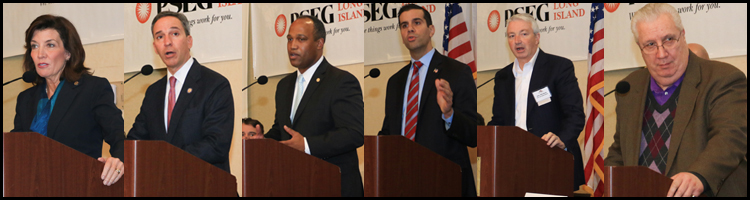
The Summit’s Networking Lunch began with remarks from NYS State Senators who presented a strong commitment to support downtown and critical infrastructure commitment on Long Island, some of which would come from a $550 million windfall, with Lieutenant Governor Kathy Hochul delivering the keynote address. Suffolk County Presiding Officer DuWayne Gregory addressed the crowd, noting the importance of Suffolk providing infrastructure funds to shape the capital budget of downtown areas and providing jobs.
Senator Michael Venditto was the first of four to address the lunch session, saying that “One of the primary objectives is to move LI forward from a development standpoint, but to do so in a way that is consistent with the suburban quality of life that we have enjoyed here for generations.” Having been surrounded by politics for some time, he did acknowledge that government does play its part in development, but said that the driving-force behind moving things ahead are organizations like Vision Long Island and those in attendance. The need to take the input from the constituents of Long Island and being their voice to bring the resources for infrastructure down to make projects move ahead was expressed.
Senator Phil Boyle, who serves as the Chairman of the Commerce Committee, said that he was at Vision’s first summits, and was glad to see ideas come to fruition. As one of the elected officials that has helped many residents post-Sandy, he understands the needs of Long Island and wants to help move projects forward sooner, rather than later to “expand the economic base on Long Island.” Senator Boyle, understanding that the some state agencies do not always act on the needs as quickly as required, urged those in attendance to contact their representatives to help move things forward a little faster. “We can never say ‘you have to approve this, or have to disapprove this’… a call from a Senator or Assembly person is at least going to get them to at least looking at them quicker, and we promise that we want to do that to get your projects going.”
Senator Carl Marcellino acknowledged the need to for user-friendly communities, and urged municipalities to make their zoning work for their areas. “You have to tell us what you think is worthwhile,” Marcellino said, noting that municipalities need to make their zoning work. He insisted that communication is key and that planning needs to be done for the people.
Senator Jack Martins commented on the limitless opportunities on Long Island, and that it starts with infrastructure. He said that the “best years are ahead of us”, and that the future of Long Island is optimistic. "Infrastructure is one of the smartest investments we can make. Infrastructure projects create jobs, grow our economy, and enhance our quality of life. Whether it's roads, bridges or other vital systems, Long Island has no shortage of need, which is why we delivered $550 million for Long Island infrastructure projects in this year's state budget. I look forward to continuing to work with my colleagues to address these important needs for our communities."

Lieutenant Governor Kathy Hochul as the keynote speaker said that those in attendance were “living proof that leadership matters.” She spoke of increasing the connection to Long Island communities, and stressed the importance of local government leading the way. Lt. Governor Hochul as expressed her commitment to work closely with local civics, grassroots organization, businesses and Vision Long Island to move efforts on Long Island forward in the positive direction that is needed. She was impressed of what Long Island has to offer in terms of shorefront and history, and stressed the importance of those in the room to fight to maintain it. “Never compromise. Once it’s gone, it’s gone”.
“This Summit provides a unique opportunity to bring together local stakeholders with a common vision of creating smart growth communities. In order to sustain a vibrant economy, we must continue to invest in development projects that transform our downtowns. By utilizing key transportation assets, supporting mixed-use development, and providing better affordability for our young people, we can ensure a positive and livable future for all Long Islanders.” Lt. Governor Kathy Hochul
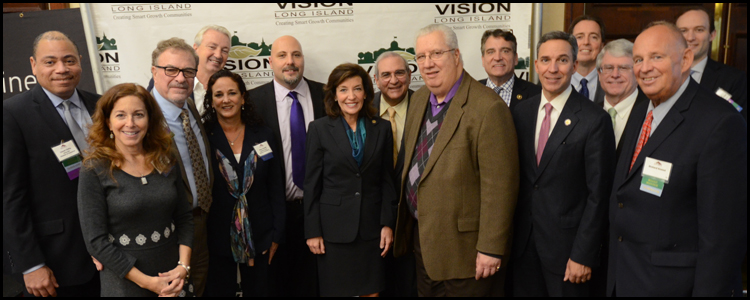
Check out the video of the afternoon's featured speakers here.
You can view Liuetenant Governor Kathy Hochul's kenote address here.
Major Development Projects

David Winzelberg of LI Business News moderated the panel on Major Development Projects. The two projects highlighted by presenters were Wyandanch Village and Garvies Point in Glen Cove. Salvatore Coco of BHC architects noted that the 10 year plan begun in 2011 as part of Wyandanch Rising, which is being built in phases. An MTA parking garage is included with 2 major multi-story apartment complexes on either side of a long central green. The anchors will be a branch of NY Community Bank (NYCB) and neighborhood retail. State Senator Phil Boyle would like to seek resident input on how this transit-oriented development is fitting into the existing community.
Frank Haftel of RXR Realty described the plan for 56 acres at Garvies Point. A new Ferry terminal will offer a 40-minute ride into NY City. The beachfront will be restored and the former industrial waterfront barge transfer point, after nearly 20 years of land remediation, will be transformed. Current plans are for a central 3-acre open space surrounded by multi-story rental housing and condos that are interlaced with walkable parkland. Out of 1100 units planned, 111 will be “workforce housing.”
The “affordability” of rents around $2,000 was a point for discussion. The market rate of $3,000 (1 BR) -$3500 (2 BR) anticipate that young adults might be willing to share accommodations, but that downsizing empty-nesters will appreciate the amenities in and around the complex. The impact on existing retail also drew questions, with existing rental rates in the neighborhood of $12/square foot and the new build anticipating $25-$28/square foot. Overall, developers anticipate that the pressure for apartments which are only 21% of LI's housing supply, will overcome the perceived financial challenges. Our peers, Westchester and New Jersey housing, have 37% apartments in their housing mix.
Water & Infrastructure

One of Long Island’s most precious resources is water- not only for drinking, but for commercial and recreational uses. Looking at ways to conserve, repurpose and maintain water quality was a focus of this panel, moderated by Maureen Dolan-Murphy of Citizens Campaign for the Environment, with panelists Peter Scully from Suffolk County, Sean Sallie from Nassau County, Dave Smith from Natural Systems Utilities, Dean Gowen from Wendel Companies, and John Turner from Seatuck Environmental Association weighing in on the important issue.
Gowen discussed a de-pave movement to help reduce storm water pollution by removing non-permeable spaces and creating beautiful and functional landscapes. Water drainage is slowed and runoff is cleansed before flowing into the water table, with damming systems in place to allow contaminants time to settle. Water is then filtered through a rain garden before it reaches the outflow, reducing some of the pollutants that pavement contributes to storm water.
Nassau County is retrofitting massive storm water infrastructure according to Sallie, initiating the South Shore Storm Water project, which is funded through CDBG-DR (Community Development Block Grant- Disaster Recovery) moneys, stemming from past storms Lee, Irene, and Sandy. Projects require inter-municipal cooperation, and the County will look at areas that were identified as problem spots by community groups as established by the State through the NY Rising CRP program. Barnum Island/Harbor Isle received money and has already started their own study.
Suffolk County, home of 376,000 cesspools, continues to take steps to improve water quality and reduce nitrogen outflow into groundwater and bays. Scully noted a spike in water usage over the past 10 years was due to irrigation usage, and says that Suffolk has received funding for four sewer construction projects from CDBG-DR in order to make communities more resilient against future storms; two are an extension of the Southwest Sewer District with two others, the Patchogue and Forge River Watersheds, undergoing new construction. An additional $500 million will be required to complete the projects. Alternative septic solutions are being piloted in the county, and there may be requirements in the future for new construction and sold properties to utilize these technologies in the future. This will help more rural areas and areas that will not have sewers reduce nitrogen loading.
John Turner reaffirmed that nitrogen loading is a large source of algae blooms, which weaken tidal marshes and increase fish kills, as well as health impacts on humans, especially infants. He spoke of water reuse or reclamation projects in Florida and California that can be used to irrigate crops or golf courses, and for factory and power plant cooling. Mr. Turner mentioned Long Island’s first major reuse project that will be operating in Riverhead; the sewer treatment plant will be shunting 300,000 gallons of treated water a day for irrigation at Indian Island golf course. This water, which currently discharges into the Peconic Bay, will irrigate the golf course while returning to the aquifer, rather than going out to sea. Other areas that could use this technology were mentioned, and would potentially conserve millions of gallons of fresh water annually.
Membrane bioreactors (MBRs) and their usage were discussed by Smith as another alternative way to treat wastewater. The units can be built in basements, with sludge being pumped and hauled away. He mentioned that Battery Park City reuses water for toilet flushing, landscape irrigation and for cooling towers, resulting in a 48% reduction of water usage. There are still issues with MBRs not filtering out pharmaceuticals, and that Natural Systems Utilities are building their fourth unit on Long Island.
Tactical Urbanism - Placemaking Strategies

The Tactical Urbanism and Placemaking panel explored what makes places worth being in or visiting and what are some strategies for creating great places. Elissa Kyle of Vision moderated the panel which discussed different perspectives on creating a sense of place.
Andrea Bonilla of Crowdsourced Placemaking Group spoke of some of the initiatives and events that Source the Station is doing in Huntington Station including Porch Crawls and Gateway Nights- a soon to be monthly event at Gateway Plaza bringing activity to the plaza while the approvals process for the buildings that front it is underway. In Riverside, an Arts in the Park program is helping to activate a park that had seen little usage previously, through poetry events, music and evening activities.
Jonathan Keyes from the Town of Babylon’s Office of Downtown Revitalization, showed examples of large scale urban placemaking projects and events such as burying a freeway through a downtown and covering it with a park to an “Outstanding in the Field” type of event with a long table set for over a hundred people an also more modest versions that could be easily implemented in smaller downtowns or suburban areas such as a parklet or a block party. He also presented several projects the town is working on to create better places from a small road redesign in downtown Copiague to the plaza at the Wyandanch Rising project.
Glen Cherveny of GRCH Architecture presented several project his firm has designed including the Glen Cove Piazza which will turn an awkward 1970s collection of mostly vacant professional offices into a traditional urban plaza with student housing above retail and residential uses. It will provide a place for community events as well as an informal place to spend time and people watch. Another project in downtown Farmingdale that is currently under construction will create residential apartments above shallow retail spaces below which allow for parking to be hidden behind them. Balconies at the upper floors allow for activity that helps to bring vibrancy to Main Street. In another rendering, he showed how existing architecture on Main Streets can be used as a model for new development helping to enhance the character of the place.
Finally, Shanequa Levin of Every Child Matters spoke about what makes places family friendly. Giving parents and children places to go, places to meet and places to shop helps local businesses. Coupling family friendly activities like sprinkler parks or outdoor movie nights or concerts, with places to go eat afterwards makes them more user friendly. Even simple things like restrooms with changing tables or expecting mother parking, makes places more supportive of more types of users.Food, Beer, Arts, Music & Destinations
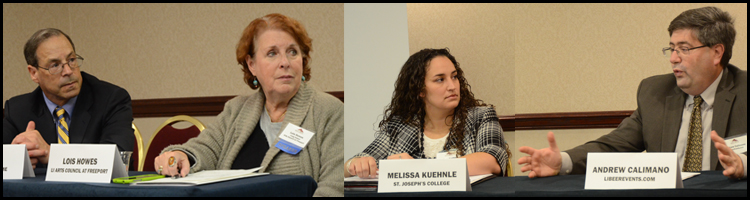
The Food, Beer, Arts, Music and Destinations panel was a lively workshop moderated by Ron Stein of The Coltrane Home and Vision LI founder, discussing ways that food, beer, arts and music helps downtown thrive and prosper throughout Long Island. Andrew Calimano from LIBeerEvents.com, Melissa Kuehnle from Patchogue Chamber of Commerce and St. Joseph’s College, and Lois Howes from LI Arts Council at Freeport were on hand to share ways that they have seen events on Long Island drive business.
Creative and unique events were shared, such as Freeport’s Fire Department Expo and Chowderfest which the Village helped bring back after Hurricane Sandy. Howes says that it is a challenge to compete with nearby Jones Beach to pull business to the Nautical Mile. However, their light display and boat parade where children eat for free gives the area something unique to attract visitors. When someone from the audience had asked what sort of events are available for the 50+ age group, Calimano reminded the group that “beer does not discriminate” based on age. He also added that there is a coffee and tea fest in Brooklyn in March. Kuehnle had mentioned that events in Patchogue, such as Alive after 5, are generally not geared towards one demographic, which could help to bring out the senior population.
Councilman Flotteron noted from the audience that Town parks do not allow a lot of beer and wine at events, and that makes it a little harder for people to visit the parks and enjoy their natural beauty. He then suggested a potato or horseradish fest to the parks, which started a whirlwind of ideas and sharing from not only the panelists, but the audience as well. Some of the other ideas for the downtowns to consider included Cider Fests, historic tours, art walks and using buildings for public events.

Special Thanks to Robert McBride, Richard Kessel, Friends of Jon Kaiman, and the Incorporated Villages of Farmingdale, Manorhaven, and Westbury
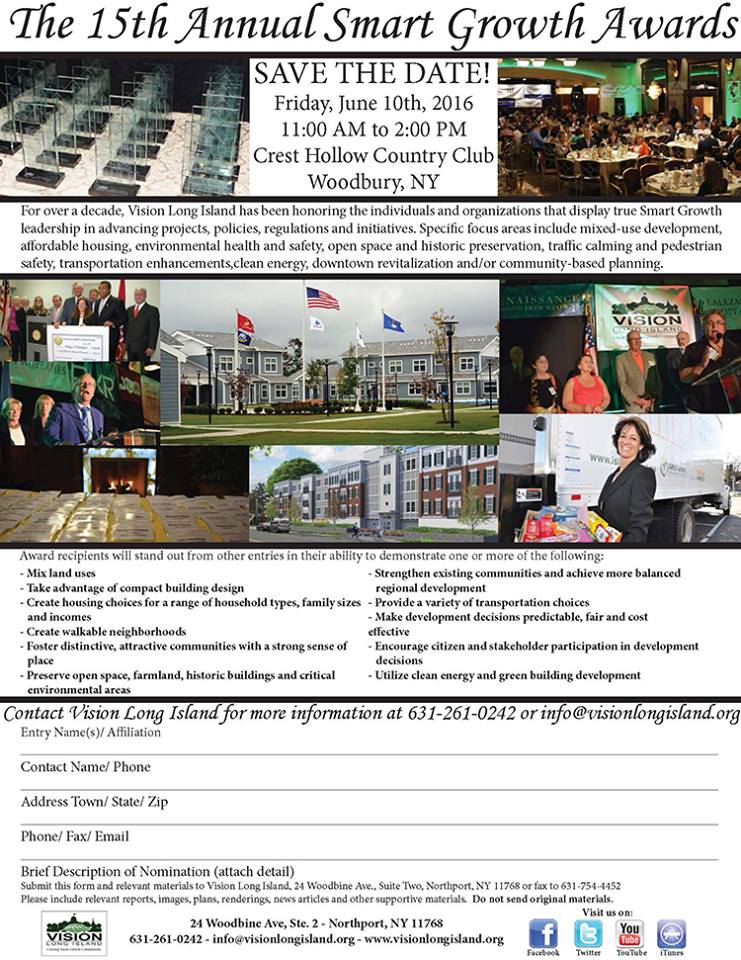
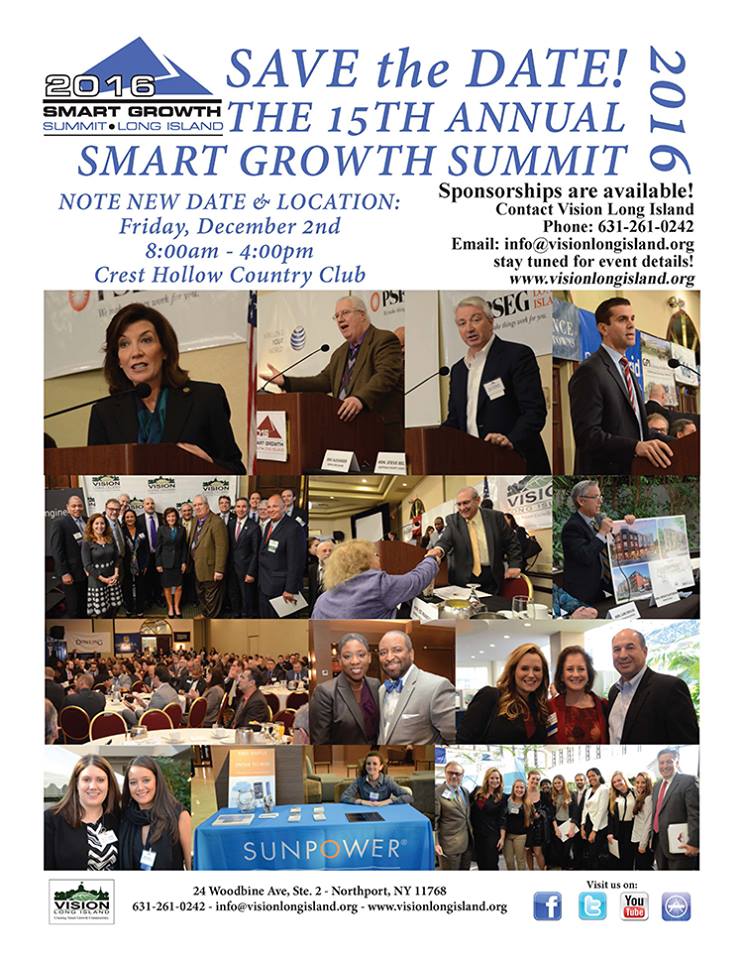
Thank you to all of the attendees of the
2015 Smart Growth Summit!!!

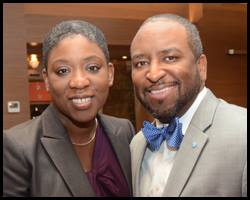
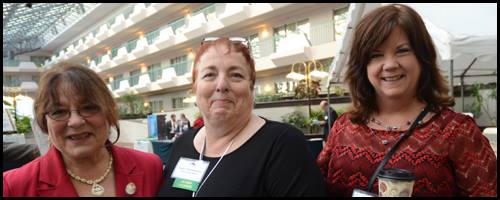
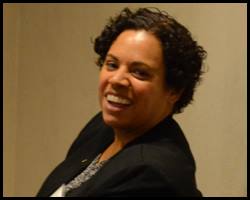
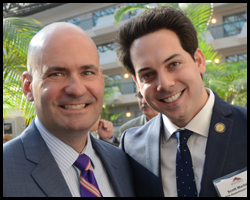
Here are some photos from this year's participants:


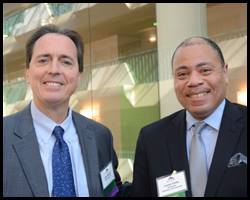
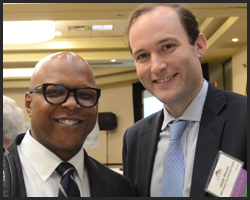

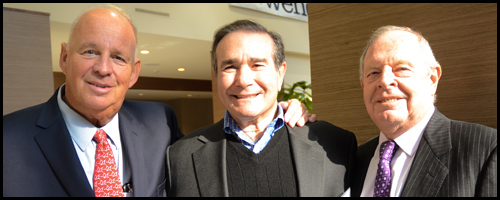
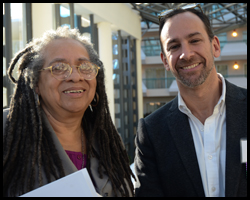









Check out some of the press coverage for the 14th Annual Summit!
Click here
Click here


Vision Long Island
24 Woodbine Ave., Suite Two
Northport, NY 11768
Phone: 631-261-0242. Fax: 631-754-4452.
Email: info@visionlongisland.org
Website: www.visionlongisland.org
 Facebook | Facebook |  YouTube YouTube |
 |
 Twitter | Twitter |  iPhone app iPhone app |
Home | Contact Us | Newsletter Archive | Donate | About Us
