

Over 1100 small business, civic, environmental, labor and governmental leaders who participated in the 15th Annual LI Smart Growth Summit last week at the Crest Hollow Country Club in Westbury. The range of talent and experience that lent their voice to the day included 135 speakers covering 70 downtown, energy, transportation and sewer projects in 20 workshops. Over 70 elected officials joined from multiple levels of government.
The theme was how bottom up planning from local communities to the regional level is the antidote to the division in our politics today. “For twenty years with our organization, and fifteen years with these Summits, we’ve come together, and we’re producing,” said Vision’s Director Eric Alexander about the importance and impact that the Smart Growth movement has had on Long Island. “Fifty of the last 64 public hearings for transit-oriented development had more supporters than opponents.” Clearly we are seeing progress in the over 40 downtowns that have approved 110 transit-oriented developments and many infrastructure projects underway. Alexander also spoke of the ways to gain momentum in an ever-changing political climate. “The antidote to our negativity and our division on the Washington level, the State level, and our Regional level is what we are doing. Building up trust from the bottom-up, getting things done in our community proactively, and meeting regional goals along the way, but starting with our community is the recipe for success in this climate right now.” Nearly 100 youth joined the concurrent Youth Summit with participation from St. Joseph's College, Suffolk Community College, Hofstra University and Amityville High School, among others.
Opening Remarks
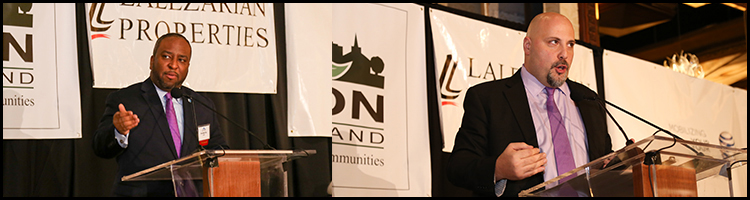
This year’s Summit kicked off after opening remarks by Brandon Ray from AT&T, emphasizing focusing on connecting business to investments in local communities. Ray lives in Hempstead, and has had the goal, in his capacity at AT&T, of providing business leadership to pull government entities together to revitalize Long Island’s downtowns. “AT&T, like the elected officials on this panel wants to provide a quality of life for our customers and communities by giving them the latest technology, coolest devices, and the most up to date content.” Ray acknowledged the hard work of the elected officials, and pledged continued support to the communities through good and bad times, providing support through the AT&T Foundation contributions, as they have with Bridgehampton Childcare Recreation Center in the Town of Southampton and the Youth Enrichment Services in the Town of Islip. “We are one Long Island, and AT&T wants to work with Vision Long Island and our leaders to make sure that we are the best Long Island,” said Ray, further pledging the will to assist to serve Long Island.
The implementation of Smart Growth on Long Island ultimately comes down to municipal officials, 12 of whom gave local updates on the State of the Towns and Villages panel moderated by Joye Brown from Newsday: Town of Babylon Supervisor Rich Schaffer, Town of Islip Supervisor Angie Carpenter, Town of Brookhaven Supervisor Ed Romaine, Town of Riverhead Supervisor Sean Walter, Town of Southampton Supervisor Jay Schneiderman, Town of North Hempstead Supervisor Judi Bosworth, Town of Hempstead Councilwoman Erin King Sweeney, Town of Oyster Bay Councilman Anthony D. Macagnone, Town of Huntington Councilman Mark Cuthbertson, Glen Cove Mayor Reggie Spinello, Village of Westbury Mayor Peter Cavallaro, and Village of Farmingdale Mayor Ralph Eckstrand.
State of the Towns and Villages

Joye Brown started the State of the Towns and Villages started with posing a question to the panel, asking the elected officials if they thought that it was easier to get the idea of visioning and a different types of housing projects underway on Long Island as compared to 10 years ago, with a majority saying that it is now easier to move those projects ahead. Mayor Cavallaro mentioned the receipt of a $10 million grant through the state’s Downtown Revitalization Initiative to help move the Village of Westbury’s downtown ahead. Mayor Ekstrand of Farmingdale mentioned the benefits of the visioning process and transit-oriented development in its renaissance, with commercial vacancies dropping to 2 from 26 availabilities, the construction of 200 new housing units with 98 percent occupancy rate. The closing on a $1 billion waterfront project in Glen Cove was highlighted by Mayor Spinello, after a 20 year wait. “The sale of this property has really recognized our shift from an industrial past to a future that’s poised now for economic, cultural and recreational growth.” Spinello estimates that $50 million will be brought into the local economy along with over 1,000 jobs with the project finally moving ahead.
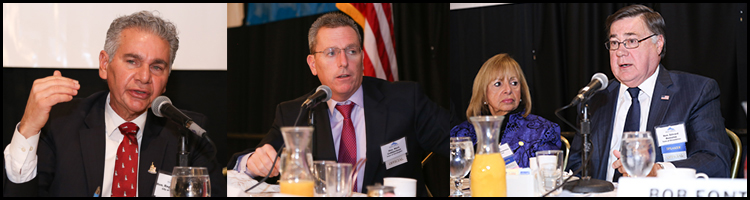
Councilman Cuthbertson from the Town of Huntington mentioned progress in downtown Huntington, with infill mixed-use developments going up with a lot more up and coming, but did mention the need for parking as progress is being made. Cuthbertson mentioned grappling with reaching the right mix in terms of the amount of parking that the areas have, saying that it’s a good challenge to have as it shows that there is growth. The new Renaissance Downtown mixed-use building in Huntington Station by the LIRR station that will be breaking ground in the spring of 2017 was mentioned as a good model for other hamlet areas in the town. The Councilman also mentioned that it is now easier to approve such projects as it has been disproven that mixed-use developments have a negative effect on the areas school systems. “If a school board or community member comes to us and says that it will hurt or overpopulate the schools, they really don’t have any credibility because we’re closing schools at this point. That really helps turn the tide in terms of trying to build quality residential housing at a greater density than we might have done otherwise in the past.”
Supervisor Romaine of the Town of Brookhaven, which is the largest Town in the state in terms of geographic size, with 45 hamlets and half of a million residents, highlighted projects moving ahead such as WinCoram, and Veterans’ housing developments in Ronkonkoma and Middle Island, as well as developments in the Villages of Patchogue and Port Jefferson, and the upcoming groundbreaking of the Ronkonkoma Hub project. The Supervisor did say that the lack of infrastructure investment is telling, with rail transportation technology in the 19th century. “We have the largest state university in the SUNY system at Stony Brook and it has no electrification, no rail transportation. If we want to talk to talk about housing, we need to talk about infrastructure particularly rail infrastructure. Public transportation needs a shot in the arm.” Romaine mentioned the disappointment in cutting bus routes, particularly those connecting rail road stations to the north and south in Brookhaven due to fiscal concerns, and urged looking towards remedying that issue. Additionally, the need for a regional solid waste management solution, as the Brookhaven landfill is slated to close within a few years. The upcoming dissolution of Mastic Beach Village, which will revert the village back to the control of the Town, was also discussed, especially in terms of sea level rise. “We have a plan to go in there full bore to invest in the community… it’s also a community threatened about rising sea level, and we are concerned. And I do not believe that climate change is a hoax, we are definitely concerned in addressing those issues,” Romaine stated, pledging to invest in the community in a major way.
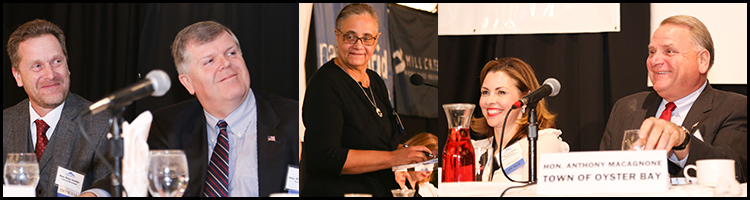
Brown questioned where the funding is in order to get projects moving ahead, with several officials mention public-private partnerships and the involvement of Industrial Development Agencies (IDAs). Supervisor Schaffer of Babylon Township, addressing concerns of tax benefits that are offered to move projects ahead. He cited properties such as Wyandanch Rising that were offered assistance, and the need to ensure that benefits do not hinder the school systems, and that the districts are kept at the same taxing rate with a steady growth over a 30 year period in order to not give a negative impact. Supervisor Bosworth agreed with both the utilization of IDA and CDAs, obtaining state tax credits, but emphasized also the need to increase public-private partnerships. She cited Brownfield properties being remediated and developed upon, returning the properties to the tax rolls. “It’s through looking at creative ways, making sure that we are able to get these things accomplished.” Councilwoman Eric King Sweeny identified leadership as a key ingredient towards moving projects ahead, mentioning the Grand Avenue project in Baldwin. “There’s never enough money… we need to be willing to risk failure. We have to commit ourselves to making this happen. We can’t have this be another 18 year story of just a downtown that looks terrible as you drive through it.”
Brown also asked who is driving the projects underway, the municipalities or the developers, with the panelists saying that developers are coming to the municipalities with ideas, but that community involvement is very important. Supervisor Carpenter of Islip mentioned a developer coming to the town with a potential project, where a developer had an interactive website ready to go to address questions and concerns of the area residents, and providing accurate information towards proposed projects. “Communication is key. Working with the developers, municipalities, and the private sector and having that vision for what you want to do” is important. Supervisor Schneiderman of Southampton has seen both developer and community led proposals, saying that the community-driven proposals have less pushback. “Laying the framework that sets the stage for what it’s going to look like, having the community deeply involved in that process I think makes it go much smoother”. Councilman Anthony Macagnone spoke about the community driven process in Hicksville, saying that it helped immensely. “We used to be the ‘land of no’…we’re now the land of ‘come, sit down and talk,” saying that there has been a huge cultural change in the Town of Oyster Bay.

Some of the changes in development trends were also discussed, alongside the heavy downtown investments. Supervisor Walter of Riverhead mentioned progress, but income caps in the increased amount of workforce housing being problematic. “One of the complaints that I get is when the ‘income out’, they get one year and then are forced out. Then there’s a turnover of people…. You lose good tenants, lose rent” for one to three months. Walter also mentioned a lack of trains being a hindrance towards transit-oriented development, as well as the need to look towards adapted reuse of nearly 200,000 square feet of former big-box stores on route 58. Supervisor Romaine agreed that vacant large stores may be good candidates towards mixed-use projects in the near future.
In closing, Vision’s Director Eric Alexander challenged the attendees to continue to fight negativity, rebuild trust, and to continue to move forward while working collaboratively and locally. You can see the Breakfast Plenary’s first part here, and the second part here.

You can view the full video of the
Morning Plenary Session
here (part 1) and here (part 2).
WORKSHOPS I

Making Long Island More Resilient
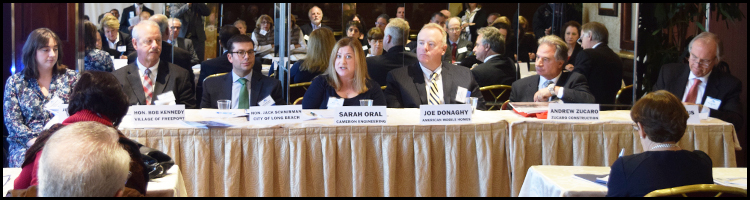
Creating sustainable communities by leveraging available resources is an important task to undertake on Long Island in order to better prepare for future disaster events, and to recover faster with less of an impact. Those who attended this panel were able to learn about ways that municipalities have been able to undertake and assist in various resiliency projects on Long Island, and what else needs to be done in order to ensure that businesses and residents can get on their feet faster in the future.
The panel, moderated by Gary Rozmus of GEI, kicked off with Jeanmarie Buffet, Director of the New York Rising Community Reconstruction Program for Long Island. Following Superstorm Sandy, one of the programs that New York Rising, which is the state’s program to distribute $4.4 billion in Community Development Block Grant funds, has developed was the Community Reconstruction Program. The program designated 23 Long Island zones, mostly along the south shore, to come up with plans in a grassroots planning process to recover from Sandy and Tropical Storms Lee and Irene, as well as mitigate against future events. Each area received between $3 and $25 million in funding. Updates have recently been sent to the communities, with 46 projects in the implementation stage, with a heavy emphasis on stormwater and tidal flooding issues. Buffet also mentioned two downtown planning projects that have received funding in Island Park and Baldwin. “There’s a social resiliency element as well; that’s something that the communities through the planning process discussed… identifying the need for additional resiliency economically”.
Freeport Mayor Robert Kennedy gave an overview of Freeport, which is the 2nd largest village in New York. Freeport hosts 100 police officers, their own water and wastewater departments, and 3 power plants which supply the Village as well as electric to the Northeast United States, keeping all maintenance in-house and not subcontracting work out. Several months ago Mayor Kennedy requested a roundtable meeting with DEC, FEMA, NYS agencies, the Town of Hempstead, and Congressional and Senate offices to discuss working towards a feasibility study for the installation of flood gates to protect not only Freeport but a large section of Nassau County. Examples were given of practices in Holland, as well as Stamford and New Bedford Connecticut, where these gates are installed and have payed themselves three times over. “They were installed in the 60’s and they have not flooded since”. The feasibility study for the flood gates should begin in 2017 or early 2018, with a $3.5 million study being approved- NYS will pay $1.5 million, Nassau County $450,000, and the Army Corps of Engineer chipping in $1.5 million. During Sandy, Freeport had over 3500 homes flooded with over $10 million in damage to their Department of Public Works alone, along with 15,000 tons of debris removed. “Many businesses rely and survive on being on the water in Nassau County. We can’t stop Mother Nature, but we can minimize the damages that occur,” Mayor Kennedy said.
Long Beach City Manager Jack Schnirman reflected on the immediate aftermath of Sandy, and how networking with those at the Smart Growth Summit in 2012 made a difference in Long Beach’s recovery via assistance by those reached out to. Updates were given regarding the $122 million in damages that were submitted to FEMA, as well as bringing funds back into the general fund by doing work in-house while reducing unemployment post-disaster from a peak of 10 percent. Long Beach’s residential assistance program has helped 1,481 households to date, helping them navigate the process of rebuilding. Since Sandy in the City of about 9,500 parcels, 5,295 Certificates of Occupation have been issued since Sandy (up from 433 the three years prior to Sandy), with 769 housing elevation permits being issued since. The $40 million boardwalk project which was fully funded by the federal government came in on time and under budget, being built to withstand more of the effects of future storms. The City Manager also spoke of the inadequacies of the Stafford Act, which guides the recovery process. “The Stafford act says that you can build things back as they were,” said Schnirman …in a world where we are talking about resiliency that doesn’t make sense. For example, it would have cost $32 million to build the boardwalk back to code and standard the way it was before, just to be destroyed again; where it would cost $40 million to build it the right way. On the federal level, we need to rethink the Stafford Act. “Millions of other dollars of other improvements were highlighted in terms of stormwater management, as well as the bulkheading as well as critical infrastructure improvements. Rebuilding of the dunes on the oceanside of Long Beach and the opening of a City-specific emergency management office was discussed as well.
Sarah Oral from Cameron Engineering discussed how they will be able to assist in obtaining no-match grants through NYSERDA for up to $250,000, which can provide funding, economic assistance and local recognition through the Clean Energy Communities Program. There are 10 high-impact actions that are targeted, with 18 grant opportunities targeted for Long Island. Suffolk County was cited and an example towards using benchmarking towards efficiency, with another no-cost or cost-positive incentive for municipalities to adopt a unified solar permit policy in order for installers to have a uniform policy to install. “By having a unified solar permit across the entire state, it makes the entire process more seamless. This helps support the Governor’s vision of 50% of all energy use in New York State to be renewables by 2030,” said Oral. Free energy code enforcement training was also discussed for municipalities, provided by NYSERDA, in order to better train for new standards. LED street conversions were also discussed, with no lay-out. The Long Island CRS Users Group was outlined, which can assist municipalities in reducing flood insurance costs for their residents; Long Beach and Freeport were credited towards a 15% reduction in their flood insurance rates.
Joseph Donaghy of American Mobile Home Leasing, based in Patchogue, discussed their role in assisting those recovering from disaster. The company supplies HUD coded homes for large-scale disaster, as well as localized disaster, whether it be storm damage, fire, or remodeling. A site inspection is performed relative to the work that needs to be completed, and they will coordinate with contractors to disconnect and connect from the resident’s current home to the temporary unit which can range in size depending on the family’s needs. Donaghy discussed the need for this type of housing in comparison to conventional rentals on Long Island, where availability and cost can be prohibitive, with conventional housing costing about 50% more. The disconnect after Sandy between federal and state agencies and their company was discussed as well. “I think that’s an area that we can approve upon moving forward when there are additional hurricanes and storms.”
Andrew Zucaro, of Zucaro Construction, took a look back on Sandy, and the birth of an offshoot of his construction company in order to elevate homes on Long Island. “I felt in my own heart that this could have been the end to Long Island and a lot of our communities, it was that devastating. I was so impressed how everybody came together and made sure that didn’t happen,” said Zucaro. To date, over 500 homes have been elevated by his offshoot after reaching out to a 3rd generation company based out of California, moving the company to Long Island to get homes elevated. He implored that experience is key in elevations, and that there is a science alongside of experience in elevation of homes, which is somewhat new to Long Island.
Question and answers followed, with questions to American Mobile Home Leasing regarding challenges that may come about with areas that may not be sewered when serviced by temporary homes, with Donaghy saying that it is not an issue, and that codes are followed to ensure compliance. Questions and suggestions regarding co-dependency and collaboration post-Sandy and into the future were posed as well, with Inter-Municipal Agreements in Oceanside given as an example as resilience birthed post-Sandy.
You can watch the recording of the panel here, and see supplemental information provided by the City of Long Beach here.
Downtown Showcase - Nassau

Downtown Showcase-Nassau panel included Kim Kaiman of the Town of North Hempstead, Business and Tourism Development Corp., Mindy Germain of Residents for a More Beautiful Port Washington, Laura Curran, Nassau County Legislator, Lionel Chitty of the Hicksville Chamber of Commerce, Francesca Carlow of the Plainview/Old Bethpage Chamber of Commerce and Sean Sallie, Director of Nassau County Department of Public Works, Planning Division discussed downtowns across Nassau County using a variety of different strategies for revitalization and growth. Jaci Clement of the Fair Media Council started the panel with three questions: Why is having healthy downtowns important to Long Island? What are some best practices-downtowns that maintain a Long Island spirit, but also attract from around and off the island? How do we work together to create the places that we need and how to we get people involved in making those places?
Kim Kaiman noted that downtowns are important because they are vital to our communities, serving as an anchor while creating an identity of the community, and represent who we want to bring in and how we want to promote ourselves. Arts can also be an economic driver , with the TV and film industries driving tourism to downtowns. She added that by working with partners, chambers and other entities, over 30 villages/downtowns have matching grant beautification programs. She said that programs like that are small baby steps that have a greater effect on overall visual aspect of local downtowns, making them attractive by working with community leaders
Laura Curran noted that Baldwin has a patchwork of different areas, and there is a large need make Grand Ave. safer to walk, bike, drive on by working with different levels of government, while reflecting the character of the surrounding community. Francesca Carlow mentioned that there are 49 chambers of commerce in Nassau County, with individual communities hosting lots of restaurants, retail, with the chambers being the first ones that everyone goes to for assistance and to collaborate with (boy scouts, baseball teams etc.)
Sean Sallie said that the revitalized downtowns are a source of pride for community and an economic driver, with the county trying to ensure that infrastructure is keeping up with the local revitalization efforts. He added that Complete Streets and sewers are important improvements, and that the county is helping to support and catalyze these efforts.
Chitty said that Hicksville really hasn’t changed much since 1965. Roads have widened, tracks elevated, and much of the downtown has been torn down. However six years ago the Chamber began working with the community to develop a plan that is small and realistic, aimed at starting redevelopment efforts, and looked at neighboring downtowns for best practices. “We went to other downtowns where revitalization has worked-maybe we can get a little bit of that here.” He added that although there has been change, and that people generally do not like change, downtowns are a place for people to spend the day, and that work must continue towards revitalization efforts.
You can view the full video of the Downtown Showcase - Nassau panel here.
Downtown Showcase - Suffolk

Downtowns across Suffolk County have been revitalizing using a combination of different strategies. Attendees of this workshop were able to learn about what Kings Park, Riverhead, Patchogue, and Huntington, and other Suffolk downtowns are doing to revitalize their Main Streets.
The panel, moderated by Gina Coletti, Suffolk Alliance of Chambers’ Co-chair and member of the Suffolk County Downtown Revitalization Board, asked the panelists to explain the core of their revitalization. Anthony Tanzi, President of the Kings Park Chamber of Commerce and member of the Town of Smithtown Board of Zoning Appeals, noted that there is opposition of almost every application that comes before them. “The opposition usually comes from a place of those most affected, even though it may be in the best interests for 95% of the rest of the town.” He said that by pairing with the Kings Park Civic Association and creating a bottom-up approach to learning of stakeholder’s concerns helps move projects ahead, saying that zoning can be a great tool to move through opposition issues. John Murray, owner of Kilwins of Patchogue felt that zoning laws can help or hinder business development, and that it needs to be flexible as times change. Trustee Lori Devlin of Patchogue mentioned changes in zoning that has taken place to nurture the growth of the Village. “In each case we had objections, and each case the biggest objection was density. We went to each developer and said we need to make this beautiful,” speaking of negotiating with developers for aesthetic upgrades in turn for increased density. Linda Henninger, Vice President of the Kings Park Civic Association, which has teamed up with the Kings Park Chamber of Commerce to work on a redevelopment plan for the downtown agreed that coordination between stakeholders is important to have a consensus between all stakeholders in order for plans to move ahead.
A lack of parking, an issue that affects many of the downtowns in Suffolk, was discussed. Joan Cergol from the Town of Huntington spoke of how certain downtown attractions such as the Paramount increase parking needs at peak times, with struggles to find a way to remedy the issues. The Town is looking towards building a parking garage for visitors, however Cergol says that it is a challenge to fund due to the 2% state-imposed tax cap. Parking variances granted from zoning boards were touched on, in order allow for development, with examples of keeping an eye on how many times that variances are granted, potential ways to pay for parking improvements in the future, as well as different permitting for residential and business parking. At times though, according to Tanzi, a lack of parking in some areas can be a good thing, making shoppers walk past businesses that they wouldn’t necessarily know was there.
Some who attended the panel posed ideas to move Suffolk’s downtowns ahead, such as referendums for major infrastructure improvements such as parking garages, bringing a conversation on what can be done in the downtowns without major cost. Examples of holiday festivals were given, giving visitors a reason to look and stop and hopefully shop. Coletti mentioned that there is grant potential to fund small projects of the sort to drive traffic to the downtowns.
You can check out the full video of the Downtown Showcase-Suffolk panel here.
Retaining Youth on Long Island
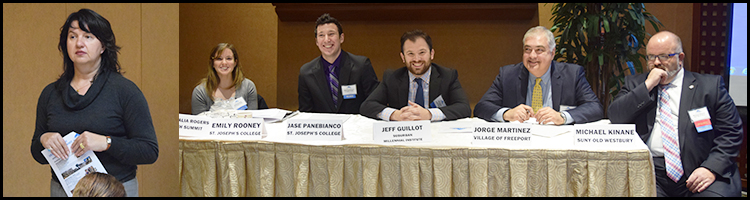
Long Island has some of the most unaffordable housing in the country in some of the most segregated neighborhoods. A high demand for downtown living leads to high rents making them unaffordable to many. Those in attendance at this panel learned how developers, advocates, realtors, and municipalities are navigating new Fair Housing laws to aide inclusivity, realities of development financing, municipal approvals and community support to add diversity to Long Island's housing stock.
Dr. Nathalia Rogers co-chair of the Long Island Youth Summit started off by introducing the panel, and commending those in attendance, including Assemblyman Chad Lupinacci, SUNY Farmingdale President Dr. John Nadar, Dean Gail Lamberta of St. Joseph’s College, and a large assemblage of high school students from Amityville.
Panelists were posed with questions for discussion, the first being “What are the challenges for young people on Long Island?” Emily Rooney of St. Joseph’s College noted that there are many students that are not finishing their schooling, but do not have funds available to finish or continue their education. Additionally, the high cost of student debt and ways to understand and handle the debt load were discussed. Affordable housing for students transitioning to graduate school or to the workforce was discussed by Jase Panebianco of St Joseph’s College, citing the need to connect students to affordable housing options, as well as continue to make more affordable housing available. Jeff Guillot, of the Suburban Millennial Institute cited a NY Times poll that stated that 65% of millennials would move to a new city without a job first if that city was “cool” and had desirable amnesties. “That’s why there is a robust investment by groups like Vision Long Island on building walkable downtowns and mimicking an urban environment so that young people will decide to stay here.” Jorge Martinez, Deputy Mayor of the Village of Freeport, past president of the Long Island Chamber of Commerce, and father of a college student, noted three main problems; the negative perception of Long Island, housing stock, and new waves of immigration that mirrors the 1920’s and 1930’s of Long Island. Michael Kinane, SUNY Old Westbury Assistant Student President and father of a 20 year old college student said that entry-level career availability is a major issue. A lot of times to apply for a job, you need 2 or 3 years’ experience; OK, chicken or the egg, how do I get three years’ experience when I can’t get a job?”
To the question of “how should we solve those challenges?” Panebianco discussed the need for transportation alternative for students to commute to and from school, home, and work. “I have a lot of friends that rely on the bus system. They live 25 minutes away by car, but 2 hours by bus to get home. If we expand our transportation, it may encourage more students to stay on Long Island and go to school, and stay on Long Island.” Rooney has said in terms of the heroin and opioid epidemic on Long Island, not only do we need to address the problem on the local level, but also merge that with state and national efforts. Other suggestions that were given by panelists were to have more of an availability of paid internships, communication of policy changes towards what benefits are available for millennials to stay on Long Island in terms of job and housing opportunities, connectivity between the south shore and north shore, and the disparity in funding that returns to Long Island’s 3 million people for what is given.
You can view the coverage of the full panel discussion on retaining youth on Long Island here.Increasing Affordability and Reducing the Barriers to Fair Housing
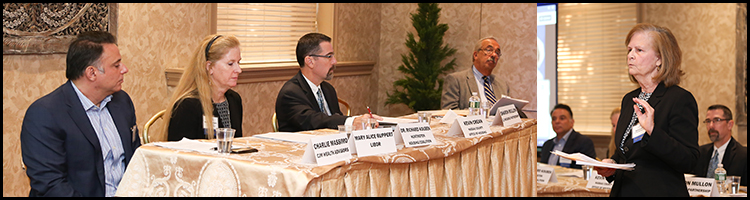
Long Island has some of the most unaffordable housing in the country in some of the most segregated neighborhoods. A high demand for downtown living leads to high rents making them unaffordable to many. Those in attendance were able to hear how developers, advocates, realtors, and municipalities are navigating new Fair Housing laws to aide inclusivity, realities of development financing, municipal approvals, and community support to add diversity to Long Island's housing stock.
The panel, moderated by Dr. Richard Koubek, President of the Huntington Housing Coalition, tackled one of the most difficult topics at this year’s Smart Growth Summit. Koubek gave an overview of some of the issues with increasing affordability and reducing the barriers to Fair Housing on Long Island, mentioning that only 20% of housing on Long Island is rental, compared to roughly 35% of housing stock being rentals in nearby Westchester County. For example, the median price of a 2 bedroom rental in Huntington averages $2,000 per month, with the tenant having to earn about $100,000 per year to afford a typical rental in Suffolk County. Long Island is one of the top 10 most segregated communities in the United States. There is good news though… 70% of Long Islands recognize the need for more affordable housing. However, 63% do not want affordable housing in their neighborhoods.
Sharon Mullon of the Long Island Housing Partnership gave an overview of LIHP’s mission, including housing counseling for first-time home buyers, technical assistance programs, and housing for those eligible. Four major conferences have been held, discussing topics including the source of income law in Suffolk, land-use and zoning, mental health issues and reasonable accommodations and adaptations, and Fair Housing rights in the LGBTQ community upcoming. Mullon explained that Fair Housing funding is being cut, and there have been issues with Fair Housing lawsuits, with trainings for communities in complying. “The biggest problem that we face on Long Island probably is preference; when Villages and Towns decide that they will only provide affordable housing for their own people,” having an effect on minorities that desire housing who live in other areas, where the area desired may have a majority of non-minorities as residents. Many other concerns facing Fair Housing on Long Island were discussed by Mullon.
Charlie Massimo of CJM Wealth Advisors discussed a segment of Long Island’s population that not many are talking about in terms of fair and equitable housing options. “We are so unprepared for what is going to happen over the next 10 years as it relates to children with autism, and it’s a major issue.” Long Island has one of the largest populations of autistic children next to a county in California. (Part of Massimo’s presentation can be seen here). With 90% of adults with autism being either unemployed or underemployed, and 500,000 children with autism transitioning into adulthood in the next 10 years, Massimo feels that there is a dire need for Long Island to have a privately funded community for those with autism. “We want to build a community that is integrated, and to make it affordable for all,” without exclusion for caregivers.
Kevin Crean from the Nassau County Office of Housing spoke about the county’s role in affordable housing. The county receives consolidated funding from HUD, and administers 3,000 housing vouchers, with 2,200 being administered by other entities. In 2015, changes from HUD came down with the Assessment for Fair Housing rule, focusing on ten issues in Fair Housing. Education of providers and municipalities is a possibility, and the assessment of barriers is underway in Nassau. Crean did mention a development being funded for those with autism in Seaford, Karen’s Hope.
Mary Alice Ruppert from the Long Island Board of Realtors spoke of some of the challenges on Long Island, which she felt was two-fold; NIMBYism and affordability. “Nassau County is in the top 3 as far as tax burden on real estate in the country, Suffolk County is not far behind that. Across the Island we have 950 of municipalities,” outlining a large tax burden. The high cost of student debt was discussed as a barrier, with Ruppert discussing pushes for legislation, such as the First-Time Homebuyers Savings Account, with an individual or couple being able to deposit into an account tax free for a down payment on a home. Availability of rental properties was also identified as an issue, with rentals over $2,000 a month not being seen as affordable for millennials. Cooperative housing was seen as an opportunity for improvement for Long Island, with co-ops having a rigorous approval process, with co-op boards being allowed to reject applications for any or no reason, and being allowed to delay decisions, which can be a hindrance for prospective purchasers that would like to transition from renting to ownership.
Other barriers were discussed by those in attendance, and can be seen in the panel’s video.
Cutting the Red Tape for Mixed Use

Long Island has an unfortunate history of taking longer than desired for mixed-use projects to attract developers, gain community support, go through a lengthy approval process, break ground, and finally move towards completion. This workshop discussed ways that industry experts have overcome hurdles in creating mixed-use projects in a challenging environment.
Rich Bivone, Long Island Business Council’s co-chair, moderated a panel to discuss processes with Mitch Pally from the Long Island Builders Institute, David Pennetta from Cushman & Wakefield, Keith Archer from Harras Bloom & Archer, and Robert Fonti from the Suffolk Alliance of Chambers of Commerce. Bivone has a grasp of the needs and mechanisms to move projects ahead from the community, municipal, and developer’s standpoint, and aims to find a balance in moving aspects ahead. “Process is extremely important for any development for any community. Communities live or die on development,” said Bivone.
Fonti explained that “development is a process, not a light switch”. He advised to build a great development team to communicate, not only to the Town Board, but to the community, citing Avalon in Huntington as an example. While the developers were working with the town board to move ahead on the project, the community became engaged later on in the process, which made the overall plan undergo additional changes later on. In comparison, more recent projects, such as those being undertaken by Renaissance Downtowns where the community is involved in every step of the development process, projects move together faster with crowdsource placemaking being utilized as part of the SEQRA process.
Bivone had asked if the SEQRA and zoning should be taken away from the local municipalities in order for projects to move ahead. Pally had said that an assumption that home rule would be taken away from local municipalities, as proposed by the federal government, would “not happen”, partially due to the fact that the right for local municipalities to govern their own zoning ordinances is written into the state constitution. However, Pally had said that villages and townships do have the ability, through their own zoning, to move processes along faster. He had suggested doing away with segregated uses of residential, commercial industrial, etc., and moving ahead towards an integration of uses, with towns and villages changing their zoning codes to allow it. Pally had credited leadership of elected officials for moving projects ahead over the hurdles. “The great thing about Long Island at the moment is that Patchogue is not the only place where it works,” Pally said, saying that it is complimentary for mixed-use in a downtown and single-family residences to co-exist, with a “diversity of housing options providing opportunities for everybody, and every income level, and every professional level.” Pennetta agreed, saying that within the past ten years, he has seen the most monumental change in this area. He had said that some of the more depressed villages and hamlets that have moved ahead are more of the low-hanging fruit, and are more favorable to positive change and growth to the area. Pennetta also spoke about the mindset of change; as an example, taxpayers may be upset about $114 million in tax breaks to businesses (the amounts that Nassau and Suffolk IDAs allowed towards development), the dollar amount might be more palatable if $9.8 billion in private investment was attached to said subsidies. Misinformation towards development was also touched on, with emphasis placed on getting the correct information out to community stakeholders early on.
SEQRA was touched on by Archer, with suggestions to incorporate aspects of the SEQRA process early on in order to proactively handle issues and delays that may occur with the state environmental quality reviews on projects. Archer says that the state is trying to “better define what requires a DEIS (draft environmental impact statement), and to try and cut the timeframes,” and that scoping parameters should be better defined in order to mitigate any opposition in the future, whether those oppositions are founded or not. Changes in some of the regulations, such as timelines on reviews, could be mandated in order to move things forward quickly, without cutting corners.
Mentioned also was that proactive changing in zoning by municipalities would move projects ahead faster, where developers could fit projects into the desires of the community rather than try to push a project through without buy-in. Fonti attributed progress towards key principles; courage, leadership, perception, reality, and communication. Health department regulations were cited by a workshop attendee as a barrier towards moving projects ahead, however significant changes have come about for permitting in the past several years to move that aspect of development ahead.
You can learn hear more of the discussion by clicking here.Creating 21st Century Downtowns
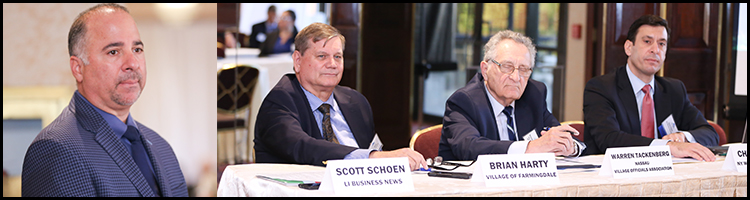
Residents, retailers, and municipalities alike benefit from walkable, vibrant downtowns that incorporate upcoming trends and desires. How does a village or town center become a place where people want to work, shop, dine, walk, bike, and live? This workshop included experts on innovative strategies and tools for creating, managing, and funding such places.
The panel, moderated by Long Island Business News’ Scott Schoen, included Chris Fisher, President of the NY Wireless Association, Brian Harty, Clerk/Treasurer/Administrator from the Village of Farmingdale, and Warren Tackenberg, former Mayor of New Hyde Park and Executive Director of the Nassau Village Officials Association.
Fisher explained NY Wireless’ role in bringing together wireless providers, wireless infrastructure providers, and small businesses that help deliver wireless services, as well as the $65 million Smart Cities Solutions grant that was awarded to Columbus, Ohio. Mobile broadband was deemed as an economic driver, with the Greater New York area contributing to 10% of the nation’s $125 billion mobile app industry. Some trends in the industry included the increase of energy efficiency of up to 30% when wireless technology is utilized, and a large increase in retail usage, with over 50% of Black Friday and Cyber Monday purchases being done over mobile platforms in 2016 for the first time. As workforce demographics change, mobile and wireless technology is expected to be used more in the workforce, with global data demand slated to grow by 70% over the next five years, requiring additional wireless infrastructure, especially in terms of density, in order to provide the required data availability to help sustain and grow. Outside of helping to grow “cool” 21st century downtowns, the wireless industry generates $2.4 billion annually in tax revenue just from the cell phone industry.
When asked to define a 21st century downtown, the panel used words and phrases such as welcoming, safe, attractive, pleasing, and safe. The Village of Farmingdale has a beautification committee of about 30-40 people to work on aesthetics in the downtown, and have received federal grant funding through the county for sidewalks and street lighting. Tackenberg has explained that one-size does not fit all for all downtowns, as all have their own unique flavor, needs, and desires. “Why would the Village of Hempstead with 65,000 people do the same thing as the Village of New Hyde Park with 9,000 people?” said Tackenberg. Thirty five of Long Island’s 97 villages have a population of under 3,000 and do not have, need or desire downtowns, and are bedroom communities. The larger downtowns tend to need to build off of railroad as a means of transportation, with many of the downtowns having parking troubles. The Downtown Revitalization Initiative, which recently awarded Westbury with $10 million, was discussed, with some concern that not enough money is being spread to all of Long Island’s municipalities, especially because state funding of unrestricted aid has not increased since 2008.
Some feedback was given on how to get some of the projects to move along faster, with Harty saying that the planning needs to be in place, and others saying that there needs to be a balance between all funding streams and tax bases in order for projects to move ahead. The price of downtown housing was discussed as well, with concerns over whether or not millennials are able to afford rental housing. Hopes are that by creating destinations in downtowns for young professionals that have good broadband components will help to retain younger folks.
You can view the full video of the workshop’s discussion here.
Solar Ready Buildings: Integrating Solar, Geothermal, and Electric Vehicles

The renewable energy industry has changed considerably over the last few years. Changes in regulations and rebates have allowed the solar industry, in particular, to expand rapidly. Attendees of this workshop were able to learn from leaders in the renewable energy industry who have helped advance projects as they discuss a range of solutions for expanding solar ready buildings in both new and existing development.
David Schieren, CEO of Sunpower by Empower Solar moderated the workshop, explaining the notion of constructing and buying building so that they are solar ready. Neal Lewis, Executive Director of the Sustainability Institute at Molloy talked about “50 by 30”, that is New York State’s goal of having 50% of electricity generated to be done so by renewables by the year 2030. Since upstate New York State has had hydroelectric power since the 1950’s, it gives a starting ground of 20% of New York’s existing energy being generated by renewable sources. In order for wind to bridge that gap, a total of 225 wind turbines would have to be constructed, and although that is possible, Lewis said that “even if we could get all of our electricity from wind, ideally we want to match wind with solar; there are times that the sun is not shining, and the wind is not blowing.”
By using all options for solar installation, car lots, residential commercial, and open space areas for solar, accomplishing the goal of increasing the amount energy that is produced by solar is more easily obtainable, rather than simply developing solar generation with one single approach. There has been active opposition towards open solar fields, with nearby residents pushing back against the projects for various reasons, further showing the need to diversify the ways to produce solar, and work with the built environment. The potential for solar on carports has not been fully analyzed, but there could be a large potential to increase the amount of solar power generation by installing on carports in order to add to the already 37,000 houses and businesses that have solar installed on Long Island.
Part of the reason for the increase in solar installation has been the flexible options that have become available for lease or buying of solar panels, added incentives to install solar through rebates and tax incentives, as well as improvements in solar technology according to Tara Bono of Sunpower by Empower Solar. Another reason for many solar conversations may also be attributed to the high cost of energy on Long Island, which is the second highest in the country next to Hawaii. Additional options are available now for those in condos, co-ops, and townhouses have also become available, where homeowners that cannot install traditional panels can buy in to larger offsite projects and still reap the benefits. Hopes are that developments can design buildings and their infrastructure in the planning stages and become solar ready, saving money on retrofits in the future, and increasing the probability that those buildings can generate power.
Zach Fink of ZBF Geothermal discussed geothermal technology, and how it is actually solar technology, and how it provides heat in the winter and cool air in the summer. Different options and installations were discussed, as well as the economics of switching to fuel switching. With heating and cooling costs costing about $3,500-$4,500 per year for oil and electric for air conditioning for the average home on Long Island (depending on the price of oil), geothermal could be a viable option for many, especially for those who utilize solar and geothermal since geothermal technology is electric-based.
Ron Gulmi from Emerald Alternative Energy Solutions spoke of alternative energy vehicles, with compressed natural gas (CNG) including Long Beach School's fleet being run on CNG, and providing full services in the green transportation industry. Some of the struggles in getting the electric vehicle industry competitive with traditional vehicles were talked about, such as battery storage, speed, and other issues. Resurgence in electric vehicles was seen starting in the 1980’s when California passed clean air legislation, with some Long Island municipalities using smaller electric cars in their fleets, with federal tax credits and other incentives enabling municipalities to receive electronic vehicles at half of the typical cost. Gulmi discussed charging options and ranges, as well as the mechanics of the vehicles, as well as some of the technology advances that are making it easier to operate and maintain electric vehicles.
You can check out the video of the panel discussion here.
WORKSHOPS II

Top Projects Underway - Nassau

Infrastructure and redevelopment investments within Nassau that are underway have the potential to allow for increased economic development and a desirable quality of life for residents, businesses, and visitors. Those who attended this workshop learned from development experts discussing a range of projects and initiatives across the county.Glen Cherveny, of GRCH Architects moderated the workshop, with Anthony Bartone from Bartone Terwilliger, Nick Halstead from Mill Creek, and Steven Dubb of The Beechwood Organization presenting some of the projects that have been helping move Nassau county ahead.
Bartone gave a presentation highlighting some of the work done in Nassau, including in the Village of Farmingdale, after decades of master planning. “Many would say that Farmingdale’s waterfront was its train and its epicenter of the community,” said Bartone, highlighting the transit-oriented development opportunities around the LIRR station in three phases with mixed-use product. Farmingdale is unique because it hosts mixed-use buildings where residents can wait in the building’s lobby for the train, as the station’s platform is a stone’s throw away from the building. The first two phases of Farmingdale’s redevelopment feature 154 rental units above retail on the bottom floor, with major regional and national retailers being attracted to the available space. The Cornerstone, which is the 3rd phase of the redevelopment, is all residential, with 42 residential units. All of the buildings are 97% leased, with all developments having at least 50% leasing filled at opening.
Halestead spoke of the ways that the projects help to promote positive sales tax revenue for the municipalities while developers bring the necessary housing stock to the area. Modera Mineola was discussed, where the ground floor was built to help street scape the area and hosting no retail, but the gym facilities for the building. Questions arose regarding parking regulations for the Farmingdale redevelopment, with concern as to why so much parking was developed so close to the LIRR station when it is apparently not needed. Bartone had said that even though data supporting a need for less parking was proposed, public pushback thwarted less parking measures. Halestead had said that some of the problem may be that when TOD projects “first came to Long Island, it was hypothetical traffic counts, and hypothetical everything,” since newer projects of the sort have never been undertaken in the past. Garage traffic counts are being used to try to justify less of a need for parking, as evidenced in Mineola where 1.7 parking spaces per unit were built with 1.2 spaces being used at peak periods.
Costs about The Beechwood Organization’s development in East Rockaway were discussed; with Dubb mentioning that prices will range from the mid $400’s to $600’s for the units, and potential owners not being worried so much about housing costs to purchase. “It’s not the sticker price of the house that gets people, it’s the taxes, they are a real problem.” Dubb said that taxes are about 2 ½% of the purchase price, with the carryover charges at about $400-$500 a month. HE said also that although Long Island IDA’s PILOTS and incentives have encouraged over $9 billion in development, bad press and misconceptions about the concessions leave a bad taste in the public’s mouth, and without the subsidies, development would not be possible. Since the Great Recession, it has become more difficult to finance projects, with around 40% of the cost of the development having to be put down by developers, compared to about 10% in years past.
In terms of affordability of the rental units, the panelists cited the high cost of building these developments in an area with a high cost of living as a barrier, although there are rentals available as affordable housing. Dubb had said that as more projects become approved as they have in the past several years after long wait times, there are hopes that the cost to develop the projects will go down, making it more affordable. Additionally, panelists had said that the amenities included such as gyms, walkability and things of the like help give more “bang for the buck”, reducing the overall cost for those that are able to secure a unit.
You can check out the video of the panel’s discussion here.
Top Projects Underway - Suffolk
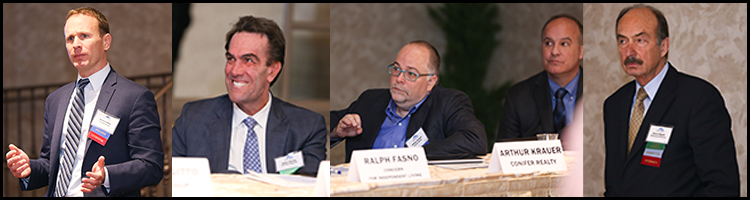
Suffolk County has numerous projects with the intention to spur economic development and creating opportunities for much needed housing. Attendees were able to learn about projects that are underway that are aiming to meet the ever-changing needs Suffolk’s 1.5 million residents and 50,000 businesses. Bruce Migatz from Albense & Albense moderated the workshop, joined by Arthur Krauer of Conifer Realty, Peter Florey from D&F Development, Rob Gitto of the Gitto Group, and Ralph Fasano from Concern for Independent Living.
Florey discussed D&F’s operations as builders, developers, and property managers, with about 2,500 rental units in their portfolio. Recently D&F has branched into assisted living development, notably one in East Main Street in Patchogue now under construction by Tritec Development. “We wanted it to be reflective of the surrounding area,” said Florey, noting that there is a historic church next door to the building. The 144 bed facility includes a bistro, a pub, movie theater, a full dining area, and views of the Great South Bay and Fire Island on the 4th and 5th floors in close proximity to the LIRR station, in Patchogue’s downtown. Another development ¼ of a mile from the Bay Shore train station was discussed as well, with the project currently in the planning stages for the affordable senior units. Another TOD project was discussed, with 70 affordable multi-family units being worked upon, with sewage being handled on site as accessibility to sewering is an issue in Suffolk County. One other assisted living facility is underway, with a zoning change being worked on in Hauppauge, repurposing blighted realty, including an abandoned gas station. When asked about how long these projects are taking to move ahead, Florey said that it’s an average of 2-4 years, plus any zoning changes and other hurdles, although a project that was moving ahead for 15 years has been undertaken by D&F in the Town of Huntington, with public opposition being a barrier.
Fasano of Concern for Independent Living discussed their mission, providing supportive and affordable housing, and moving towards mixed-use housing. CIL had taken over three adult homes over the span of two years and converted them to housing developments in West Sayville, Patchogue, Amityville, and Riverhead, being one of the first to convert downtown buildings to housing, with positive feedback by local businesses. After the project in Amityville, Liberty Village, which converted 60 units of housing for veterans and their families, another similar project in Ronkonkoma was inspired. 30 units were set aside for homeless veterans, and 29 reserved for workforce housing in the walkable community. Tax-credit funding was utilized for about 50% of the funding for the development, making it feasible. “The deadlines that they (the state) has set has helped us push this along,” said Fasano, saying that fast-tracking projects is vital towards being eligible for the state funding. 123 units with 50 supportive housing in Middle Island were discussed also, having formally being a failed project. This development will create a downtown where there is none, with creative engineering used to make the area more walkable.
Gitto talked about one of five multi-family mixed-use projects, The Hills in Port Jefferson. The Hills, now under construction with the first stage opening this past July, has 74 units with 38 market-rate units. Each building, once completed, will have separate garages underneath with three stories of studios, 1-bedroom and 2-bedroom units available. The Hills is located in Upper Port Jefferson Village, a blighted area, steps from the LIRR station and in close proximity to Stony Brook University. The building was pre-leased within 3 weeks, and there is currently a waiting list for the second phase, slated to open up in June of 2017. “It helped change the uptown area; a couple of commercial spaces were leased up, some property owners fixed-up their own buildings,” said Gitto. “Now it’s opened up the area to help jumpstart this revitalization area in Port Jefferson.” About 60-70% of the rentals are occupied by those affiliated with Stony Brook University, as there is a large need for housing for the large university. Although some do use the train system to get to Stony Brook, only one of 38 units’ renters do not have a car, with Gitto citing an inadequate bus system.
Krauer had said that “there is no obstacle other than politics,” in reference to the long wait times for development to be delivered. A 45-unit affordable development on the Peconic River was talked about, with Conifer paying $1.8 million for a half acre site at the former Long Island Science Center location in downtown Riverhead. The site does however have the necessary components to develop on Long Island; available sewers, where PILOTs can be secured, other infrastructure, and the political will to get the development underway. Even though there was strong community support for the project, Krauer said “it still took two and a half years to get the project to full-site approval.” Some funding for the project could be available through CDBG funding stemming from Sandy, with six other funding sources making the project 100% financed. “It’s a very exciting project but it is a lesson in a microcosm of issues that we face on Long Island in terms of getting deals done and not being tied up in the past, so that we can move on and get more development done.” He says that the project should lease within three months maximum, as their projects usually lease up within minutes of coming online with highly competitive rental rates.
Questions were raised about making developments energy efficient with the state’s plan of “50 by 30”; that is having 50% of New York State’s energy generated by renewable sources by 2030. It was explained that that is an important aspect, as funding is graded on a point structure, so preference is given to those that will be able to deliver based on that goal.
You can check out the panel’s vibrant discussions here.
Job and Small Business Development

Downtowns have historically been centers for jobs and small businesses. Though office parks are most commonly thought of as present day job centers, downtowns have become not just hubs for retail and restaurant jobs, but also high tech and professional services jobs. This workshop gave examples from experts about ways to improve job development in a difficult regulatory environment. Elizabeth Custodio from Suffolk County National Bank moderated this workshop, with Dr. John Nader, President, SUNY Farmingdale; Jamie Moore, Manufacturers Consortium of Long Island; Peter Goldsmith, Chairman of LISTNET and Long Island Veterans Group; and Tim Williams, Board Chair of Nassau County IDA.
Nader spoke of his goal towards raising the profile of Long Island by addressing the “brain drain” through the works of SUNY Farmingdale, and said that upstate areas do share the same effects. Nader expressed that their broad curriculum as well as location being favorable towards students to learn and stay on Long Island. Their small business development center on campus serves thousands of businesses a year with over 800 a year being new clients annually, having millions of dollars a year in grants and credit opportunities being afforded to those that are assisted. “I really believe that it’s an eye opening thing to see how many tools my campus, and other campuses on Long Island have; and I don’t think that we do this enough,” said Nader, adding that 92% of Farmingdale graduates are employed within 6 months, with 72 % being employed in the NY metro area. He hopes to keep technology in the classrooms current in order to better prepare students for future and prepare them for the job market.
Moore spoke of the support that can be offered by the Manufacturers Consortium of Long Island, and the engagement with workers and businesses to work with colleges to find solutions and barriers between the industry and potential workers. Moore said that high-skill jobs are in demand, but there is a problem filling them based on school curriculum, and hopes to find a balance between supply and demand. He spoke also of apprenticeship programs by industry sector that are available outside of the region, but not yet available as readily on Long Island. “We’ve done a great job about talking about this, we haven’t fixed this. The hourglass is running out,” said Moore, saying that as employers like Grumman left Long Island, it’s been a challenge. “We have 435 aerospace companies in a small geographic region. We don’t brand it.”
Goldsmith spoke of Project Long Island’s role 20 years ago in retaining former Grumman employees on Long Island and providing opportunities in software and IT. “This is exactly the kind of careers and jobs that people can have on Long Island; especially with cloud computing- people can start businesses at their homes… grow a company and become very large.” He explained LISTNET’s new internship concept, finding a solution for the smaller businesses to match student interns to opportunities in order to try to help keep students and graduates on Long Island and provide a linkage to existing job opportunities.
Williams spoke of Nassau’s two groups of workers- “white collar and blue collar- and we need to make sure we have jobs for both.” He recognized opportunities for matching employment with housing in transit oriented development communities, and urged future conversation and efforts to continue to create blue collar jobs in order to build business on Long Island. He mentioned the fact that every piece of candy sold at Disneyland and Disneyworld is created in Hicksville, while also looking towards growing small businesses. “I love the jobs that have 2000, 3000, and 200 jobs. But it’s going to be the company that hires 5 employees this year and grows to 55 in ten years. Those are the jobs that are going to create growth and create the economic tax base that we need for our county.”
You can hear the conversations with the panel here.
Transportation Infrastructure - Getting Long Island's Fair Share
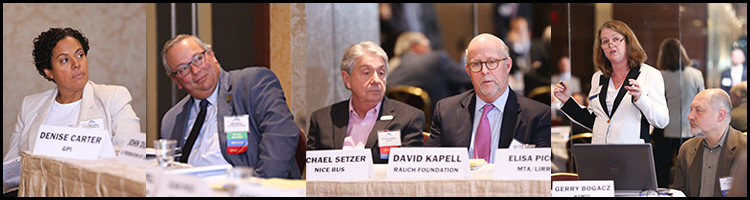
A robust infrastructure ensures that we are able to move goods, services, and people in the most effective ways possible. In order to attract and retain quality jobs, reconnect, and sustain communities, construction of functioning and updated transportation infrastructure is necessary. Those who were able to attend this session were able to learn about projects completed, upcoming, stalled, and the need for Long Island to receive its fair share in funding.
Densie Carter from GPI moderated the panel in a standing-room only crowd, with Gerry Bogacz from the New York Metropolitan Transportation Council (NYMTC), Michael Setzer of NICE Bus, Elisa Picca from the MTA/LIRR, David Kapell from the Rauch Foundation, and John Durso from the Long Island Federation of Labor weighing in on some of the biggest issues pertaining to transportation and infrastructure on Long Island.
Bogacz spoke of funding that comes down from federal, state and county sources, and how capital funding is a majority of expenditures of that funding, opposed to operational funding. It was explained that NYS DOT has 8 sub regions, and that the DOT is the primary agency that allocates funding. Web resources to find out what projects are active and what stage of the process they were in were also discussed, with it being said that Nassau and Suffolk receives roughly 23% of the regional total of funding, which is close to the population rate of the two counties. Projects being perused with the capital funding include the Nassau and Ronkonkoma HUBs, as well as the East Side Access project.
Picca had said that “transportation investment is alive and well on the LIRR system,” with mention of the East Side Access project as well as others. She said that the goal was to make Long Island a vibrant place, and that the transportation is a backbone of that success. The East Side Access will increase the ability for LIRR riders to better travel to the east side of Manhattan, increasing capacity by 60% to the east side. The LIRR Expansion, a 9.8 third track project, was highlighted, with a web link given to view the recently published Draft Environmental Impact Statement. Picca spoke of expansive community outreach for the project, and the incorporation of feedback as it moves ahead. Picca had said that the project will help the reverse commute, assist with issues when there are equipment issues, as well as increase capacity and service reliability in the future. Additionally, seven grade crosses are proposed ot be eliminated, improving air quality and safety for the system.
Kapell, former Mayor of the Village of Greenport, spoke of the history of the LIRR in his Village, which was the original terminus of the LIRR in 1844, in order to connect New York to Boston, travelling via steamship through the Long Island Sound. Kapell noted how the Rauch Foundation through the LI Index has assessed LIRR projects, showing that without the Third Track Project, the younger generation will not be able to commute as well as they would in other areas. Giving historic perspective, Kapell said that the two existing tracks were laid in 1844 and 1890, with no expansion since; Long Island’s population has surged from 100,000 people in 1890 to over 3 million presently. “Because of that restraint, you can’t have a reverse commute,” saying further that in construction, the construction of the third track would 2,250 jobs, $910 in Gross Region Product, and $910 million in personal income. “After ten years, there would be 14,000 new jobs, 35,000 new residents on Long Island, $40 million in new sales tax revenue, $103 million in new property tax revenue, $3 billion in personal income and $5.6 billion in gross regional product.” Additionally, 40% of the population increase would be those in the 25-44 year age bracket, which is what is trying to be retained on Long Island. Communities in between rail stations will include parking garages, sound walls to prevent noise issues as well as visual blight, improving property values along the corridor. As Executive Director of the Right Track for Long Island Coalition, Kapell spoke of the 331 members with 3,000 commuters that have signed on to support, with an estimate of 1 million people supporting the effort to build the third track.
Setzer gave an overview of NICE bus, as operator of the Nassau County bus system. NICE is a public-private partnership between Nassau County who receives federal and state funding and regulates policy decisions, and TransDev that operates the system. After 5 years in operating the system, NICE has started to rethink operations, analyzing the 40+ routes operated. “The biggest route in the system carries 15,000 passanger trips on a weekday, and the smallest one about 100. Up until recently we were meeting them with the same product… a 40 foot bus on a fixed route with a fixed schedule”. Retooling the thought, right-sizing buses has begun, with flexi-routes beginning as a fixed-route and demand responsive route, and an Able-Ride option incorporated. Five articulated buses are being deployed to large-demand routes as well. Technology advances are being looked at, with more of a dynamic model being undertaken, such as real-time tracking of buses through a smartphone app. Setzer did mention the budget shortfalls in the county, and beginning a process that may start to curtail additional routes, stating that dedicated funding and the lack thereof was an issue.
Durso started off his presentation saying that good jobs are the center of trying to fit everything in with transportation and infrastructure needs of Long Island, saying that “you can’t have Smart Growth if you don’t have good jobs,” going further to say that those who are affected by transportation cuts are the ones that need it the most. “It is the people who need the bus the most that suffer… the people that have the lower paying jobs, the middle class jobs, the people that don’t have a car, the students who go to our community colleges that depend on the buses.” Durso said that without proper transit systems, including bus service, and the second and third track proposals, growth will be stagnant on Long Island. He spoke also of opportunities for young people who have had disadvantages and are trying to move ahead in their communities, saying that a lack of proper transportation alternatives do not harbor growth for them as people, and for the region in general. Opportunities Long Island was discussed to move people ahead with getting into building trades, building confidence and tools to do so.
You can see the entire panel discussion here.
Sustainable Waste Systems
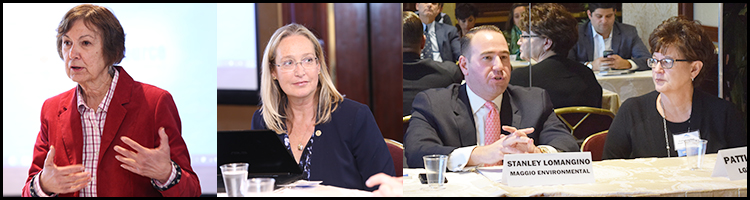
Techniques and technology for managing both stormwater and wastewater have improved substantially from the relatively basic systems of the past. Those that attended this workshop were able to learn about about new methods for dealing with storm and wastewater in ways that help protect our groundwater while also allowing for different development types, and how the advances are able to help Long Island in various ways. The panel, moderated by former Brookhaven Councilwoman Connie Kepert, had input by Stanley Lomangino of Maggio Environmental, John Waffenschmidt of Covanta Energy, and Suffolk Legislator Bridget Fleming of Suffolk County.
Legislator Fleming had taken the pulse of the needs of the room to discuss the needs that were pressing, and referenced past experiences in her tenure as a Southampton Councilperson who had worked towards getting a handle on the solid waste stream. Primary ways for waste disposal for east end towns are currently not regulated, with 15% of Southampton town residents’ waste being self-hauled to transfer stations, then being transported to Brookhaven. There has been more oversight on private hauling as of late, including an itemization of solid waste being disposed of; there it goes and what it is. Fleming spoke of Shelter Island’s self-hauling program in a small community, commending them on handling waste properly. She did speak of IMAs with Brookhaven Town with single-stream recycling, but has seen obstacles due to financial constraints. Fleming also spoke of Sanitary Code changes for the first time since 1973, with innovative and alternative septic systems now being an option for unsewered areas.
Lomangino discussed the history of Maggio, with manual picking of wood overnight to create warmth being the planting a seed towards recycling and waste reduction. Single-stream recycling was talked about, specifically with the Village of Port Jefferson, where recycling ratios have increased to about 20% with the introduction of single stream recycling; consumers are more apt to recycle when it is made easier. Technology improvements in sorting systems have increased worker productivity, with the amounts of material picked and sorted increasing to about 20 yards per hour per worker from about 4 yards per hour per worker. The facility in Yaphank, which can be toured by interested parties, can process as much as 40 to 50 tons of material per hour, with workers picking through pre-sorted material towards the end of the process. Not only does this reduce construction and demolition waste going to the landfill by about 50%, the product picked (cardboard, metal, wood, plastics) has value. About 30 percent of municipal waste is diverted from going to landfills, lowering fees to ship out of state landfills.
Hamilton discussed some national statistics and the differences between certain states’ practices. Florida, for example, has a lofty goal of bringing their recycling percentage up to 75% by the year 2020, with their rates increasing from 33% in 2010 to about 42% now. She had said that Long Island’s focus should be speaking to people regarding sustainability, educating people on the processes, and mirroring models of programs in other states. Construction and demolition waste is one of the largest contributors nationally to the waste stream, with the amount of waste contributed ranging from 28% to 40%, with recycling of the product that has value being a potential asset to both the processer and the generator of the reclaimed materials. Hamilton has said that not only does a robust recycling program help the environment by reducing waste it also produces jobs for the local economy. Construction and demolition waste has increased from 125 million tons per year in 1996 to about 670-800 million tons generated annually, with a lot of that being concrete (which is 99% recyclable) from roads being replaced.
You can view the entire panel including a question and answer session here.
Aging in Place

More than 90 percent of older adults would prefer to age in place rather than move to senior housing; however a gap exists between their desire and the reality of the modifications their home may require as well as the affordability for empty-nesters and seniors on Long Island. Attendees were able to hear about how Long Island is aiming to bridge this difference between supply and need. The panel featured Bernard Macius from AARP, John Cochran from the New York State Department of the Aging, and Bernadette Martin from LI Green Market, and Lisa Rosenthal from Well Beyond 55.
Cochran gave an overview of statistics of the current gap in housing needs, and discussed the changes needed for seniors to age in place, as well as some of the economic issues that are faced. Explained also were the dollar amounts of economic activity by age bracket, with a high amount of contribution by seniors. Discussed also were other non-financial impacts that seniors have on the community, such as volunteerism and mentoring. Larger populations of seniors were noted to be in certain areas, including the Town of Southampton.
Macius spoke of AARP’s 38 million national members, with 600,000 members right on Long Island, ranking Long Island highest in membership concentration in the country. He mentioned that people are aging from the day that they are born, so it is important to make sure that communities are inclusive for those of all ages, saying also that the largest amount of AARP’s membership is working adults between 50 and 65. Age Friendly Communities were discussed, with Town of North Hempstead, the Village of Great Neck Plaza, Suffolk County, and Brookhaven Township being designated as Age Friendly Communities in 2013. There are certain domains used to designate the communities, with a goal for New York State to be designated in the future. The AARP Network of Age-Friendly Communities is an affiliate of the World Health Organization’s Age-Friendly Cities and Communities Program, an international effort launched in 2006 to help cities prepare for rapid population aging and the parallel trend of urbanization. The program has participating communities in more than 20 nations, as well as 10 affiliates representing more than 1,000 communities. The 8 domains are: outdoor spaces and buildings; transportation; housing; social participation; respect and social inclusion; civic participation and employment; communication and information; and community support and health services.
Rosenthal discussed Well Beyond 55’s role in communities, and how they are designed to bring valuable resources that empower seniors and those aging to navigate your physical health, financial wealth, and ongoing prosperity for the future. She mentioned that Long Island has 1,100 HOA communities, and that there is a lack of communities that are built intentionally for where seniors live, having properties requiring modifications. Issues with communities’ maintenance costs were outlined, with solutions given to make the issues more cost effective and ways to work towards a solution.
Martin discussed Long Island Green Market’s mission to preserve open space and assist family farms by providing an opportunity for regional farmers, horticulturalists, fishermen and local food producers to provide direct access of homegrown, fresh and nutritious foods to Long Island residents. Seniors at times face food insecurity and a lack of healthy food option. LI Green Markets has four farmers markets in Kings Park, Nesconset, Long Beach and Spinney Hill that can assist seniors with healthy food options. They also are able to visit the new Long Island Welcome Center on the Long Island Expressway in Dix Hills. The market accepts EBT and SNAP benefits in order to help seniors receive healthy food with any applicable benefits.
You can view the panel’s discussion here.
Water and Sewers

Across Long Island one of the pressing issues that both Nassau and Suffolk counties face together is wastewater and sewage management. Without rectifying the problem there can be a multitude of economic and environmental ramifications that impact the island. So what’s being done? The panel, moderated by Adrienne Esposito, Executive Director of Citizens Campaign for the Environment, explained ongoing and upcoming projects being implemented. Mike Martino of Suez/United Water, Peter Scully from Suffolk County, David Berg of DB Engineering, Frank Russo from H2M Architects & Engineers and Brian Herrington from Scotts Miracle Grow joined the panel to discuss what is being done, and possible solutions.
A study of the Great South Bay found that 69% of the nitrogen comes from septic/cesspool systems. Fortunately, Suffolk County was selected as one of 16 municipalities worldwide to participate in IBM’s Smarter Cities Challenge, where a team of experts spent three weeks assessing the area’s needs. They recommend developing a funding mechanism and creating a wastewater management district. Deputy County Executive Peter Scully touched on the evolution towards active treatment plans. Phase one has already begun where new systems have been donated to ensure their functionality and effectiveness. They need to run efficiently for six months before being certified for use in 360,000 homes, with training to install them being offered in June. “Change is coming,” Scully said. “We don’t need to waste money on systems that don’t work.” While none of the proposed projects would be possible without the $388 million grant for Suffolk County, homeowners will share a portion of that debt which, in the absence of subsidy could be an average of six thousand dollars a year. To help minimize the burden on individuals, IBM suggested a surcharge on water rates. If one dollar is added on to the current $1.80/1000 gallon fee, the additional $100 a year would provide an incentive to be more mindful of water usage.
Esposito posed, “How do we treat water as a finite resource?”
Mike Martino, communications manager for Nassau Operations SUEZ (formerly United Water), a clean water management company hopes to bring their expertise and knowledge to the table. “We do this work all around the world. Water is going away. In California we repurpose water in 4 ways (not drinking). We will implement the technologies to bring down the waste.” 100-year-old pipes on the North shore that eroded to non-existence are just one way that hundreds of thousands of gallons of water are being wasted a day. Though some are skeptical of a private company in this role Martino noted that not only do they have an invested interest, but for their $57 million annual cost they promise a $10 million return in savings. Year one of their 20-year partnership with the county yielded a $12 million return for 2015, with an expected $11 million for 2016. SUEZ and the county advisory board meet four times a year to review data.
Long Island Nitrogen Action Plan’s David Berg said we need to get to the end point and determine what level of nitrogen is acceptable to maintain a healthy ecosystem. Delineation of watersheds on both North and South shores is currently underway in Suffolk and will follow in Nassau to estimate the nitrogen loads from wastewater, fertilizer, storm water and other sources such as domesticated animals. LINAP (a collaboration between NYDEC and Long Island Regional Planning Council) was awarded $5 million for the five-year project. An island-wide groundwater model is being done by the U.S Geological Survey as well. “We will be looking at solutions, what percent needs to be reduced and how that is going to happen.”
“There is hope. There is a plan,” said Frank Russo, director wastewater, H2M Architects & Engineers. “This holistic approach of not only managing our resources, from air and fertilizer and sewage, but also tying in state, capitol, town and village all getting involved to figure this problem out.” In September of ’16 Riverhead became the first wastewater reuse project on Long Island, diverting over 350,000 gallons of wastewater a day from the estuary and being reused to irrigate the Indian Island Golf Course at less than 2 milligrams/liter of nitrogen. This was made possible through $8 million in funding from Suffolk County. “The grants and funding mean nothing if you don’t have that constant source of revenue. We have to make a decision if we want to protect that resource or if we want it to continue to degrade.”
Berg mentioned the adverse effects of fertilizers used on golf courses, landscaping and farming, with products that many use in their daily affairs without realizing some of the implications. Brian Herrington, director of government affairs from Scotts Miracle-Gro, revealed that the company has removed phosphorous from their lawn-maintenance fertilizers. “People are not going to use our products if they think they are polluting the environment. Our goal is to help gardeners use our products in a sustainable way and make sure we are not part of the problem.” In 2016 they started the Water Positive Landscapes Initiative, which partners with groups across the country to reevaluate formulations and implement technologies to improve water quality and efficiency. They also are instrumental in consumer education on how to reduce environmental impacts, recycling and community preservation. Additionally, they have a new technology called Blossom that measures the moisture in your soil and allows you to turn off your sprinklers from a mobile device. In California, where it’s been rolled out, they have seen a 20% reduction in water usage. Herrington also mentioned new seeds being used to help plants absorb water more efficiently.
Esposito did say that that the corporations aren’t always the bad guys. Scotts has been voluntarily phasing out pesticides which have been linked to the mass bee die off. “You have to work with corporations to bring issues to them and then work with them to make changes,” said Esposito. “Change has to happen on many levels.”
To view the video of the entire panel you can go here.
Top Energy Projects

The Top Energy Projects Panel was a discussion amongst both new and old Energy producers who discussed the various initiative currently ongoing to meet the energy needs and challenges on Long Island. The question posed by the panel was what the future will look like and how to best allocate resources for traditional and renewable energy projects. The panel also touched on the need to upgrade our aging infrastructure and the hope to capture some of the promised infrastructure dollars to improve it. Panelists included Ross Ain from Caithness Long Island, Mike Voltz from PSEG Long Island, Clint Plummer from Deepwater Wind, Christopher Cavanaugh from National Grid New Energy Solutions, and was moderated by Richard Kessel.
Mr. Kessel started by briefly recounting the history of energy companies on Long Island, starting with the forming of the Long Island Lighting Company, or LILCO. He also spoke of Governor Mario Cuomo forming the Long Island Power Authority, noting that its origin was as a replacement for the Shoreham Nuclear Plant, which was extremely controversial in its time. During the two decades that that controversy was ongoing, there was not much allocation of resources to improve the local energy grid. When LIPA was finally created in 1997, it was determined that the gird had deteriorated more than realized and that it was a struggle to keep the lights on across the island, culminating in a five day heat wave in 1998. This led to emergency projects to create small production plants and connect to other state’s resources, and eventually the creation of several small, local programs to increase energy efficiency and renewable energy solutions.
First up, Ross Ain of Caithness Long Island spoke on the new Caithness II Energy Resource Plant, laying out goals of reasonable rates, lowering greenhouse gas and volatile compounds, and protecting the water supply. He noted that Long Island has an obligation to protect its aquifer as it is the sole source of our drinking water. Mr. Ain also taked about the generational gap in our power plants, with the most recent one being from the 1978 and working with a different set of envionmental standards, pointing out that we get over two thirds of our power from these aging plants. This ineffecient fleet of plants is hurting our effeciency and reliability concerning energy. Finally, Mr. Ain spoke on meeting the Governor’s goals concerning clean energy and upgrading our plants to meet those goals. Co2 reduction goals can be met by fossil fuel plants and the newer ones are capable of meeting those goals as well as fluctuating day to day needs.
Next, Mike Voltz spoke on the needs of a growing economy and population and the ability to do so in a clean and efficient way. PSEG has been working to increase effeciency at the same rate of growth, essentially meeting the needs of a growing populace by keeping it flat. Part of this is adding solar to homes at the rate of about 1,000 a month. He also spoke on the commercial market and how they work with local business to create new energy jobs and grow the economy. Mr. Voltz talked about the financial incentives provided to CA Technologies, a local company looking to improve their facility, and how they provided solar and natural gas upgrades as well as new, more efficient appliances. The company is now saving $275,000 on their electric bill, with a pay back happening in about one year. This provides a great incentive to upgrade and decrease grid use. He also spoke on adding geothermal energy to Amneel Pharmaceuticals, noting that it’s on of the most efficient systems that someone can install, and is estimated to save almost half a million dollars per year, a reduction of almost 27% on traditionally designed plants. He finished by point out that all this is good for customers, the environment, and the local economy.
Clint Plummer spoke next on Deepwater Wind and offshore wind development on Long Island. He started by talking about Governor Cuomo’s plan for renewable energy, and noted that offshore wind fits quite well into this plan. Mr. Plummer noted that offshore and renewables work by allowing us to offset other types of energy. He talked about Block Island, the first offshore wind farm in the US, currently preparing to turn on the first time off the shore of Rhode Island. He noted that this is just the beginning and the Deepwater is working to open up more famrs off the coast of New Jersey and Long Island. He also talked about European efforts, noting that this is not unique technology and that there are numerous efforts ongoing across the world, creating a massive global energy and numerous international opportunities. The technology has evolved to operate in the harshest marine environments and the turbines have grown to be able to deliver more clean, cost efficient energy while helping to solve numerous energy problems. He also noted that the Northeast United States offers one of the most unique and exciting opportunities for offshore wind because of population density and environmental factors.
Finally, Mr. Cavanaugh spoke on National Grid’s efforts for energy advancement. He started by noting that right now is the most interesting time in the past twenty years for energy innovation and technology. Long Island is a leader du to a lofty goal of carbon reduction by 80% in the next few decades. They are working to reduce leaks and methane gas burning while expanding the system and transportation abilities. National Grid is also introducing a neighborhood expansion system to reach local communities while evaluating the idea of expanding geothermal abilities. They also have received approval for four projects that will provide residential methane detectors, automatic shut off valves and flood detectors for customers and their control centers in order to improve safety. They will also try to identify places where they can help customers and businesses to use renewables through a shared savings agreement. They are hoping that these financial incentives provided to customers will provide economic development for both commercial and residential customers.
The panel covered numerous topics of efficiency solutions for the future, stating that Long Island can be a leader for the country in numerous areas and provide clean, renewable energy for a majority of customers and businesses. You can watch he full discussion by the panel here.
Luncheon Plenary Session

The Lunch Plenary, featuring keynote speakers Ken Daly of National Grid, Mike Voltz from PSEG, and State Senator Phil Boyle started with acknowledgement of over 80 sponsors, Vision Board and staff, more than 70 elected officials in attendance, as well as those on the dais.
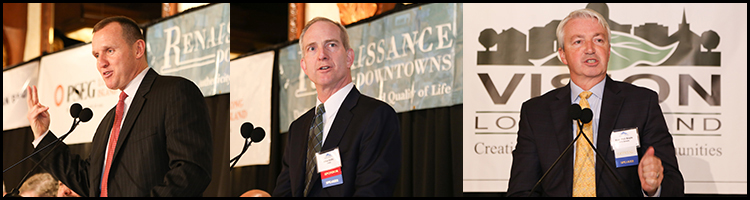
Ken Daly with National Grid went over five main pillars that coincide with Vision Long Island’s efforts; infrastructure, economic development, jobs, technology, and moving towards clean energy solutions. As part of National Grid’s rate filing, which Vision was supportive of, a 3 year, $3 billion investment program was announced for Long Island and New York City, replacing old gas pipes with new, while converting more customers from oil to gas. Rather than going home to home, they will be doing it in a smarter way with “Neighborhood Expansion”, going neighborhood to neighborhood. “Right now the harsh reality is those customers that cannot afford to convert to natural gas are paying 50% more for their heating bills” than those that were able to convert to natural gas. National Grid will be funding for the cost of the conversion for low income customers so that they can benefit from the conversion. National Grid has announced the creation of 382 new positions on Long Island and in New York City, with professional positions opening up. A Gas Academy, in partnership with Farmingdale, has opened. The first of its kind initiative will train workers for jobs in the industry, with the first 12 people graduating so far. Technology investments were also discussed, with Long Island customers being converted to Smart meters, the gas control center being created in Melville for the state of New York, and the introduction of robotics in the field to replace and repair the old gas mains, reducing the cost by 90%, and allowing repairs to be made while the gas is still flowing. The need to shift to renewable energy was talked about also, with wind and solar projects coming on board. National Grid has done more solar conversions than gas conversions in the past two years, with geothermal projects coming on board to areas where the gas system cannot be reached. “We are proud partners with Vision Long Island. Let’s work together for a clean, smart future.”
Mike Voltz spoke for PSEG, who is completing their third year on Long Island, discussed four key goals; improving reliability, improving customer services, improving storm response, and supporting energy efficiency and renewable energy technologies. Significant capital investments have been made, partially funded by FEMA from the aftermath of Hurricane Sandy, in hardening the electrical system, improving infrastructure, and enhancing tree trimming practices. Systems have been redesigned to make it easier for customers to do business with the utility, with PSEG being the first in the country to allow a customer to send a lightbulb emoji being sent to pay the utility bill. PSEG has also been promoting business growth, with $85 million a year being spent on financial incentives towards efficiency improvements for businesses. Additionally, PSEG continues to support businesses and communities in terms of sustainable growth, and charitable endeavors.
State Senator Phil Boyle, who is now a member of the Long Island Regional Economic Development Council and Chair of the State Senate Commerce, Economic and Small Business Committee, mentioned the growth in Smart Growth and transit-oriented development since he attended the first Summit. Senator Boyle mentioned the small business IRA bill, proposed by Senator Jack Martins, which will allow small businesses to create a fund where they can put money aside for an economic downturn and that can be used for other exempt purposes. “We saw 170,000 small businesses eliminated after the economic downturn. We never want to see that again, we want them to be protected”. Speaking on infrastructure, Senator Boyle mentioned that both political parties on the national level support heavy infrastructure investment, and is looking forward to working with the state government to bring dollars down to communities where needed to promote smart growth.
Upcoming events were also mentioned, including Vision Long Island’s upcoming 20th Anniversary Gala. Vision’s Assistant Director, Tawaun Weber, who was recognized as being honored as one of Long Island Business News’ Top 40 Under 40 discussed the upcoming Gala. “It’s about celebrating the movement and the accomplishments and the things that have happened over the past 20 years. A lot of that has been possible because of all of you in the room”.
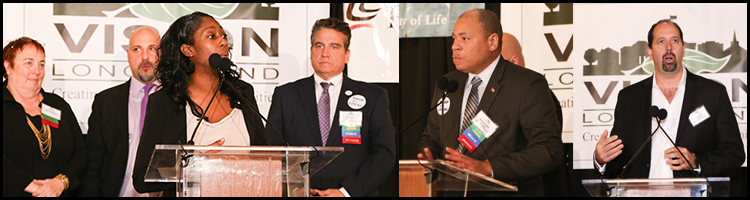
Community updates were provided, with Vision’s Director Eric Alexander reminding those in attendance of the importance of not allowing the toxicity of national and regional events filtering down and negatively affecting the progress on Long Island. “We need to heal and fuel our communities and redevelop our communities with the trust that we build with each other, through projects like what we do, through community initiatives, the challenge of managing places.” The challenges of communities, such as Hicksville, were touched on with progress happening where it was once thought that it would be impossible to achieve. Hicksville Chamber of Commerce President and Vision Board Member Lionel Chitty discussed the primary needs of Hicksville finally being achieved, with 500 people recently attending a meeting to discuss the future of the area, which has been talked about since 1969. Now that the community is onboard, progress is starting to come about. “Somebody said (at the meeting of 500 stakeholders) ‘It’s an ongoing fairy tale, like a never ending story’. Now we’re hoping that Hicksville will be a great place to live, work, and play, and Hicksville will have a happy ending.”
Movement in Kings Park towards redevelopment was discussed, where progress towards transit-oriented development was originally rejected 10 years ago. “Smithtown is known as the ‘Land of No’,” said Tony Tanzi of the Kings Park Chamber of Commerce, as he talked about how the Chamber teamed up with the Civic and all other stakeholders to create a visioning after several town meetings. A vision plan has been presented to the township with the hopes of adoption, in the hopes for Kings Park to become a thriving downtown.
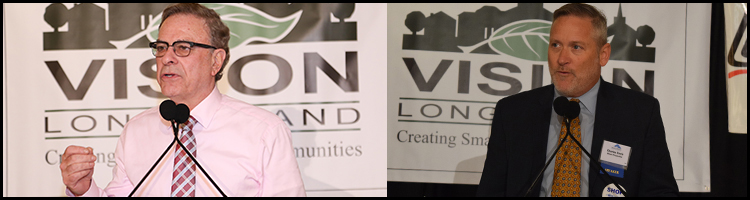
Don Monti of Renaissance Downtowns discussed progress in downtown Hempstead, thanking Vision staff as well as his team at Renaissance Downtowns. “I’ve had some knocks… when’s he putting a shovel in the ground. This is not easy stuff but it is getting easier.” Monti proudly announced 5 groundbreakings for Renaissance Downtowns within the next month. He thanked Mayor Wayne Hall for his assistance in moving the project ahead. “Without political will, nothing happens. With political will, anything can happen.”
“We’re changing the narrative. We’re changing the tide,” said Alexander, discussing changes in the climate of the acceptance of Smart Growth on Long Island. “We can’t just do the easy stuff; we can now do the tough stuff. And there’s no reason to say no.” Keynote speaker Chuck Davis, of Simon Properties, a design professional by trade, is working towards laying the groundwork for change, proposing a mixed-use development rather than another conventional mall in Syosset. “It’s been a long, patient process for this little 94 acre piece of property.” The property, former landfill, former Superfund site, and former Cerro Wire factory site, is not near a train station, where most new urbanist models favor. The community has had expectations of what would be a comfortable neighbor next door. Davis explained that in his experience, unless the developers get in touch with those directly affected, nothing will move ahead. “There are no two redevelopment projects like this that are alike. There are no cookie-cutters; there is nothing you just drop in. Everything is being sensitive to the folks that you are responsive to, whether they are the government, legislative jurisdictions, environmental issues, LIRR… the list goes on. It’s not for the faint of heart and not for the impatient”. Davis senses that it will be a 5-10 year process to move the project ahead in its various steps of pre-planning to execution to see the proposed vision realized. However, like most major projects that is on the table and has moved ahead, Simon is in it for the long haul. Simon has developed other mixed-used properties of this sort before in Texas, with others across North America. “You have to listen, you have to be patient,” Davis said. The project, Syosset Park, was featured in a panel in the afternoon, describing further in depth what has been accomplished, and what is coming ahead in the near future for the project by changing the business model by working with the community the way that Long Island needs.

You can view the full
Lunch Plenary Session here.
WORKSHOPS III

Major Redevelopment Projects
There are many large development projects being proposed and under construction across Long Island including Garvies Point in Glen Cove, Hempstead Renaissance, the Ronkonkoma HUB, and Heartland Town Square. Attendees were able to get updates on these projects from those involved, and learn about their progress. Joining the panel were Bob Coughlan from Tritec (Ronkonkoma HUB), David Wolkoff for the Heartland Town Square, Frank Haftel from Garvies Point, Don Monti of Renaissance Hempstead and moderator Joe Dowd, who is the editor of Long Island Business News.
Haftel spoke about the recent progress at Garvies over the past few years, with about 50 percent of the project being made for the public, including parks and waterways. The site was used for various industrial uses in the past, and a $130 million reclamation process was undertaken to clean the heavily polluted waterfront area. The development which will have over 1,000 units will include commercial and office space, 550 rental and 550 condo units. Tax incremental financing made the project possible, with $125 million in infrastructure improvements being done through bonding. The project began in 1976 with the urban renewal plan, with the plan finally underway now, with Haftel speaking of the lengthy timeline and some of the barriers that have been undertaken to bring the project to fruition. The billion dollar project is expected to bring over $800 million in tax revenue, as well as major local spending returns. Overviews were given of some of the public use features of the walkable community, with explanations on how the project will be 100% sustainable, without a burden to the existing tax base.
Monti shared the frustration with time frames for development, but says that things are starting to get better. He talked about four groundbreakings taking place in the next year, with Renaissance working on developments on Long Island and elsewhere. 3.1 million square feet of projects has been approved in Riverside in the Town of Southampton, with a 50% affordable housing component, with half of the 2,200 units being workforce housing. Renaissance’s projects and collaborations on Long Island and nationally will represent 50,000 construction job years, over $6 billion in construction activity, 200,000 permanent jobs, and 1.1 billion in annual economic activity, with millennials having opportunities in the transit-oriented developments.
Coughlan discussed the Ronkonkoma HUB project, which will be located at the LIRR station in proximity to MacArthur airport and the Long Island Expressway. The 53-acre project will host an 18-hour community with residential space, an entertainment component, and commercial space to highlight some of the best aspects of Long Island, connecting road, rail, and air. 17000 commuters travel through Ronkonkoma’s station daily, with a 25% increase coming with the 2nd track project giving more access. Groundbreaking on 489 residential units should begin in the first quarter of 2017, with about 1/3 of the 53-acres acquired. The second phase will host 261 housing units, 95000 square feet of retail, 65000 square feet of office space, and the construction of parking garages, with the site plan scheduled to be submitted in the 2nd quarter of 2017.
Wolkoff gave an overview of the Heartland Town Square proposal, with 9000 housing units proposed for the Smart Growth community, with the first phase being approved by the Islip Town Planning Board recently. The project is located near the LIE and preserves, redeveloping the former Pilgrim State hospital property. Although it’s not adjacent to the Deer Park LIRR station, electric buses will be made available in the first two phases to transport commuters in an eco-friendly manner, reducing traffic congestion. The project would be undertaken over a 30 year period, combining 400,000 square feet retail and housing into one walkable area. The next movement for the project will be approval from the Suffolk County Planning Commission, then approval from the Islip Town Board. The $4 billion project is expected to generate $50 million in tax revenue.
You can see the whole panel discussion which has a lengthy question and answer session here.
Designing Great Places I: Syosset Park
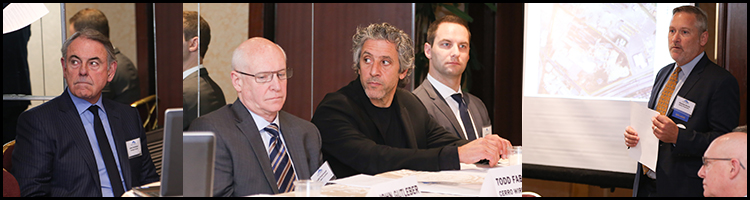
Syosset Park is a walking village that meets the demands of the 21st century, while acting on the desires and needs of local residents. Those attending learned how a mixed-use live, work, relax, and play community center is being integrated into the community, rather than previous plans for a mega-mall on 90 acres of a former industrial site. Joining the panel were Chuck Davis with Simon Properties, Todd Fabricant Cerro Wire Coalition, Rick Parisi from Paul Freeburg Landscape Architects and Jay Vicker VHB civic.
Syosset Park is on 94 acres which is larger than Nassau Coliseum site, and contains both the former Cerro Wire site and adjacent town landfill site. It is adjacent to train tracks, halfway between Syosset and Hicksville, and LIE. Collaboration with both the federal and state governments took place in order to comply with rules for redevelopment of contaminated properties. Rules are constantly changing, so they are working closely to make sure everything is done properly and done with a public process. Previous proposals for the site included a shopping mall slightly smaller than the Walt Whitman Shops.
Todd Fabricant said that a coalition of 26 civic and community groups were assembled to show that they aren’t just NIMBYs, they wanted to show that better development could be done. Instead of saying no, they interviewed seven different companies to see what they thought was feasible to build. Simon’s proposal had Smart Growth components, with a mix of uses including residential, commercial, hotel and most importantly park space. Development can be good, but the key is good communication.
Simon purchased the town DPW property, and a public referendum approved the sale by 2:1. The acquired parcels are industrial property but surrounded by 2500 single family homes. The Town of Oyster Bay has a low density zoning code, where there is not much of a precedent for higher densities. Under existing code, the developer could propose a large single use development such as office park, but it would have different impacts.
Regarding traffic concerns, it was said that there is always going to be traffic, but mixed-use spreads traffic out rather than concentrating it at certain times of the day. Opportunities for many uses in mixed use were highlighted, with mention of the demand for restaurants, hospitality and residential. Syosset has limited diversity of housing stock, and little options for empty nesters or first time home buyers in the area.
The plan is for a commercial village at the lower portion of site with a residential village up hill. Office and residential uses would be spread out to help with traffic peaks, and also have allowance for some shared parking with retail and restaurant. The project is not at a transit hub, so buildings would be kept to a three story height limit.
When looking to begin the project, the town said to go to the community first- so that’s what was done. Community outreach started in April of 2015, and a total of 5 community meetings were held, with the plan tweaked and modified based on input given. As of now, they have started the SEQR process to study the environmental impacts. The program includes 300,000 retail square feet, 65,000 of restaurant/café space, 35,000 square feet of dine in cocktail theater experience, 50000 services space for a bank, dry cleaners, yoga and things of the sort, 200,000 square feet for an office mini campus, a couple of hotels, about 3,100 parking spaces, and a residential mix-all condos, village condos, townhomes, cottages with different price points, having 10% affordable and not age restricted. Duany Plater Zyberk spoke of theoverall design, VHB engineering and EIS work, with many specialists including Certilman Balin working on the project, Torti Gallas architectural on hand for the design process.
There are limitations on what can be done with capped landfill, and rather than surface parking, park space is needed in the area. 30 acres was said to be a lot of fun to design, since there is not always so much space to work with. There’s a 20 foot grade change in the park and another 20 foot change to neighborhood below. Smaller parklets are planned to connect with neighborhoods, with community input of was wanted in the park being incorporated. There were some strange ideas, but many good ones and they looked at them all. A plan was created for a great lawn for concerts, a meadow, a sports center for various uses, a meditation garden, as well as other things adjacent to the residential areas, on the way to retail destinations. There have been 2 public park meetings thus far, with the community being involved in the ideas for the park.
There will be much work to do to get through jurisdictional needs, with many agencies on every level of government, as well as schools, water districts, and other groups needing to vet the process. Next steps will include a full DEIS to be completed, with hopes for approval for the master plan and DEIS. After other agencies vet the project, remediation and construction will be able to begin. Discussed also were things that they would like to see there, including some rental units for empty nesters and a little higher density in some places.
You can see the entire panel session including the question and answer session here.
Designing Great Places II: White Plains

Sal Coco of Beatty Harvey Coco Architects moderated this panel that deals with projects off Long Island that can serve as good models for Long Island projects. A revitalization effort in downtown White Plains and a newly built neighborhood in Storrs Connecticut offer lessons in getting good projects built.
Beth Zall of Parsons Brinkerhoff, introduced the White Plains revitalization project. It has been a yearlong process. They are looking to revitalize area around metro north station with a multimodal approach. White Plains used to be walkable, with tree lined streets but urban renewal in the 1970s tore down buildings and built shopping malls. They conducted extensive outreach to find out why and how people interact with downtown. They found that it’s hard for people to move around-conflicts between motorists, cyclists, pedestrians and there is “no there, there.” The train station area is a parking lot. They did education about density and increasing pedestrian safety. City has to make investments to show commitment. Focus on public spaces, apply for transportation grants for bike ped improvements, design guidelines for future development. They also created a transit district zoning to shape redevelopment.
White Plains has wide roads, many jurisdictions controlling the roadways. They are adding on street parking and bulbouts to calm traffic and shorten crossing distances and removing travel lanes to create protected bike lanes. Many had concerns about gridlock, but they used traffic models to show it will work. Similar projects on Long Island to the White Plains revitalization plan include Hempstead, Ronkonkoma Hub and Nicholls Road BRT.
Lou Marquet of the Leyland Alliance introduced their project in Storrs. He is a builder and years ago got involved with local community group and became aware of New Urbanism. Now they focus exclusively on New Urbanist development. They have worked with North Augusta, GA to develop new zoning as master developer-creating a new neighborhood. Warwick Grove, NY, another project was stalled halfway through because of recession, but have since finished. He has moved into one of the homes in the community and lives among his customers. Another project in Norfolk, VA transformed 100 acres of blighted neighborhoods on Chesapeake Bay. It became so popular, other communities copied the feel of the community.
When developing, it is important to understand where you are and how you connect to everything and need to have a 50-75 year view. Understand local context and style and reach as far as you have to, to pull it back into the project. A parking strategy is fundamental-start with parking which is depressing- but then you can get to the good stuff. The site in Storrs is 42 acres, but only 17 are buildable. They had to work around existing properties which is difficult, but they did it. The partnership with university started in 2001 began with a vision plan. He advised municipalities to put out an RFQ, not an RFP. Too much time and money spent for RFP’s and you don’t yet know what you need.
They built this as an open book development plan, they laid it all out in order to build trust. They brought in a lot of people and professionals in- a big tent. Currently, the residents are 80% students, 10% staff, 10% seniors. They planned to build 50% ownership/50% rental, but then economy crashed so it had to change. They had a strong relationship with community so they were able to work it out.
The project needed more infrastructure than developer could pay for, so they needed to partner with government. State and federal funding was needed and took 7-8 years to get it done. In rural communities, they can’t charge high enough rents to make it work and to pay for the infrastructure. Funding paid for a 600 car garage, the rest on street parking. Transportation grant funded an intermodal center. The project consists of 172,000 sf of retail, 660 units of housing. There is such a demand that apartments only stay vacant for a day and there are 56 people on the waiting list. The town made the developer operate garage for 15 years because they didn’t think it would make a profit. They sell parking spaces to tenants and split profits with town. Parking management manages the street and garage parking. He explained that in order to get the retail to work in the middle of nowhere, you need to think about how much, what are the phases? You need the right mix of tenants. They brought in utilities instead of empty boxes which allowed them to charge $30/sf instead of $24. The development has a240 child day care, an Amazon pick up center, a CVS, and medical center. They sought out a local coffee shop to serve as an anchor. They were given rent discount to establish themselves since they are a draw to the area.
Residential parts of the development include for sale townhouses with parking in back and apartments that started at about $1000/bedroom, but are now at about $1275/bedroom.
Overall this project makes college more desirable which is how they built such a strong partnership. It brings more people to the college, which can attract better staff and better students.
You can watch the video of this panel here.
Regional Partnerships

The Regional Partnerships panel was a discussion concerning subjects ranging from our place in the shadow of the largest city in the nation to how non profits help to keep us together as a community. There was also a message of how tourism benefits the region as a whole and how transportation better binds us on an economic and community level. The panel included Larry Leva from Hofstra University, Carolyn Meagher from the New York City Department of Planning, Carey Bearak from Queens Chambers of Commerce, Randi Dresner Shubin of Island Harvest, Kristen Jarnigan from Discover Long Island, George Tsunis from Chartwell Hotels, and was moderated by Vision Long Island’s Director Eric Alexander.
Mr. Alexander began the panel by recounting Vision Long Island’s experience concerning regionalism and efforts to promote good regional planning, something that’s been lacking on Long Island. He noted that pople have many areas where we can agree on, and pondered why we can’t move forward concerning those.
To begin the conversation Larry Levy lamented that in the past there have been impediments to having constructive conversations on modern concepts such as smart growth and regional development, subjects that are almost takn for granted these days. He noted that municipalities have come to a point where they won’t even talk with developers until they’ve spoken with local civic groups and neighborhood organizations to get them on board. It has come to be understood that ideas that don’t come from the community must be sold to the community. Communities must be treated with respect and wield a lot of power in local development process. This coincides with an increase in money that has become available through state and local agencies to help actualize these developments. Smaller, more downtown centric projects have begun to move at an easier pace due to all of this.
Next up, Carolyn Meagher spoke on what New York City has been doing in their planning department for the past decade. She compared them with how Long Island balances their planning issues, noting that the size of the populaton is growing and how this has created a new found appreciation for planning for the city. Representing about 40% of the regional population, which has shrunk from 90% back when the city incorporated in the 80’s, New York has become more and more aware that they are interdependent with the rest of the region concerning growth. This has exposed a lack of institutional knowledge of how regional neighbors grow and a need to find a role in the region beyond just being the largest city. The desire is to ensure that they are not hogging all the development and can spread the wealth as far as economic growth is concerned by opening channels of communication. Ms. Meagher stressed that New York City wants to move ahead with this as equals.
Corey Bearak of Queens Chamber spoke next concerning on the Chamber’s place concerning development in the region. He began by noting that there has been cooperation between Queens and Nassau in Bellerose and that there is a rather porous border for business. There is a lot of back and forth and it is important to realise that the two are interconnected and that it makes sense to strengthen those connections. He spoke on public transportation as an example, with an emphasis on the bus system and how the recent switchover from the MTA to NICE bus in Nassau has affected Queens businesses. He said that bus ridership in one region directly affects the next and that having a line that connects railroad stations can be useful to local business. He spoke on the fact that Jamaica and Flushing have thrived as transportation hubs and could improve by connecting them with bus depots as well as rail lines. He finished by noting that the region is more dynamic than it’s boundaries and that it’s important to move beyond this idea that businesses stop at the edge of Nassau ior Queens County.
We then heard from Randi Dresner Shubin concerning Island Harvest and the things they do for the local region. She began by stating that her viewpoint comes as the CEO of a food bank as well as a representative of the non-profit sector. She noted that things have changed in the past 20 years when business and government leaders would get together and try to move forward as a region but no one was listening. A good demarcation line was Superstorm Sandy, when the region put aside the need to compete and local groups were able to work together and take action based off a shared sense of responsibility. Ms. Dresner Shubin spoke on her memories of working with various regional players who called her during the hurricane and asked Long Island Harvest for help. However, there was an absence of leadership, forcing these organizations to become interconnected and work to help the community on a local level. This has led to a base of non profits who are all working together to bring help to the same group of people and benefits the region as a whole.
Kristen Jarnigan of the Discover Long Island initiative was the next speaker, who talked about regional efforts to bring tourism to Long Island. She started by talking about the fact that she was a recent move to the region, and noted that she was able to bring an outside perspective to the region. She is able to see the destination through the eyes of a visitor and allows her to better see the branding possibilities of Long Island on a national level. Talking about Long Island sectionally has led to a fractured internal view, and doesn’t allow people from off island to see the area as a whole. Ms. Jarnigan spoke about how tourism is driving tax revenue for local communities and that there is a benefit to raising Long Island’s national profile as a tourism destination. Visitors to the region provide a wealth of benefits, and has incentivized the region to act in a more interconnected manner in order to have tourists spend in as many communities as possible.
Finally, the panel heard from George Tsunis of Chartwell Hotels. Mr Tsunis began by speaking about transit oriented growth, noting that it was absolutely necessary for regions. As a Long Island native who is raising a family locally, he stated that it’s becoming more and more important to get things right, and the there is a need for good projects to be completed regardless of who it may anger. The flip side, however, is that bad projects need to be identified and done away with regardless of who might be connected to the project. The process has been getting better, with an increasing certainty of what can and cannot be done, but the process needs to become more transparent and disconnected from the political process. Mr. Tsunis also spoke on the challenges and opportunities that are present with so much freight and product moving through the region. We have the opportunity to work with New York City thanks to our local region and if we’re not then we’re wasting opportunity. It is becoming more and more important to work together as a region, especially with the increasingly interconnected communities, but we can’t allow a lack of trust and transparency to hold us back economically or socially.
The panel drew a lot of lines between us, the region, and our state, with all the speakers noting what can be done to better provide for our local communities and bring about change in positive steps for our region. You can view the video of the panel here.











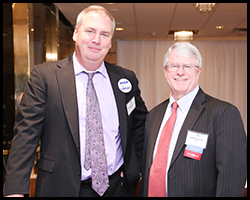

Vision Long Island
24 Woodbine Ave., Suite Two
Northport, NY 11768
Phone: 631-261-0242. Fax: 631-754-4452.
Email: info@visionlongisland.org
Website: www.visionlongisland.org
 Facebook | Facebook |  YouTube YouTube |
 |
 Twitter | Twitter |  iPhone app iPhone app |
Home | Contact Us | Newsletter Archive | Donate | About Us
