Progress on Complete Streets across Long Island
Welcome to the inaugural newsletter of the Long Island Complete Streets Coalition, a group of community organizations, individuals and businesses working with local and regional governments to improve roadway safety for all users. The Coalition kicked off at the Second Annual Complete Streets Summit earlier this year to inform, coordinate and advocate with the growing number of Long Islanders seeking safe downtown, residential streets and commercial corridors.
This first issue covers Federal, State, County and local activity to improve our roads as well as upcoming events. The initial stages of the Coalition will be supported by Vision Long Island, Tri-State Transportation Campaign and AARP with many more supporters to follow.
Please send us photos, maps and descriptions of unsafe conditions for walking and biking in your community that will help illustrate the numerous changes needed to our dangerous roadways. If your organization or municipality is working on a project, needs support or wants to promote an event, please contact us at info@visionlongisland.org or 631-261-0242.
Legislation Makes Complete Streets A Federal Priority
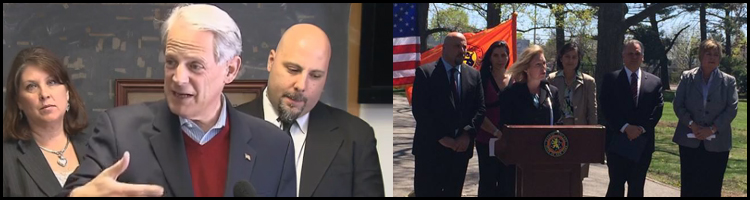
Congressman Steve Israel (D-Huntington) and Senator Kristen Gillibrand have helped pass through the Pedestrian Safety Act and the Safe Streets Act, which will allocate funding towards projects that protect pedestrian safety and will require every state or metropolitan planning department to have a law or policy in place that mandates federally funded transportation projects to follow Complete Streets principles. The support of these pieces of legislation by Gillibrand and Israel indicates a prioritization of improving streets on Long Island coming from the federal level and creates hope for tangible changes to be made. Projects may include improvements to sidewalks, decreasing lane width or creating traffic islands in the middle of roads.
In a press conference held in East Meadow in May, Senator Gillibrand, Nassau Executive Ed Mangano, Hempstead Town Supervisor Kate Murray, and Eric Alexander from Vision Long Island all discussed the necessity of this legislation and the role it will play in lowering the number of pedestrian deaths that occur on Long Island. Supervisor Murray captured the importance of this event when she stated, “Long Island is a bustling suburb with over 2.6 million cars on our roadways. Ensuring the safety of pedestrians who share the streets with motor vehicles is critically important. Senator Kristen Gillibrand has crafted legislation that will safeguard all pedestrians and help local governments protect our children, senior citizens and all neighbors who walk along area streets.” This legislation will assist in putting pressure on county and town governments to implement Complete Streets projects that keep roads safer. Research is making it exceedingly clear that the only way to avoid pedestrian accidents is to design safer streets.
Check out CBS, FiOS1 and Newsday (subscription required) for more about Israel's legislation, and Newsday for coverage of Gillibrands' proposal.
Implementing Complete Streets At The State Level
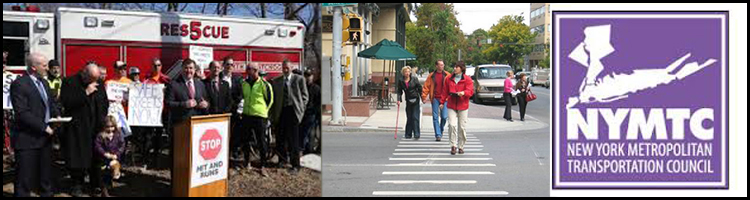
New York State is also making important efforts to implement a Complete Streets law that was recently passed. At a press conference held in March in Patchogue, Assemblyman Edward Hennessey ensured that New York State would continue to allocate funds for Complete Streets Projects. He was joined by local bike and running clubs, federal, state and county officials, and advocates for Smart Growth Development, showing the multi- level support that exists for these projects.
State offices are also putting in effort to provide some of the technical understanding required to make lasting road improvements. The New York Metropolitan Transportation Council provided a two day training session in the Suffolk County offices to train attendees on subjects including street crossing principles, street crossing counter measures, sidewalk design, and roundabouts among others. Attendees included members of the state DOT, representatives from municipal planning, traffic safety, and engineering departments. Those that attended received training in the engineering principles and theory behind Complete Streets improvements and are better equipped to oversee Complete Streets projects.
Another training session will be held Sept. 16 in a partnership between NYMTC, the Department of Transportation and the Town of Babylon. Attendees will learn about design changes that can be made to calm traffic and make roads safer for pedestrians, bicyclists and all users. Attendees will learn about changes that can be made to calm traffic and make crossing and walking safer for pedestrians.
Walkability Tour Confirms Sunrise Hwy Needs Improvements
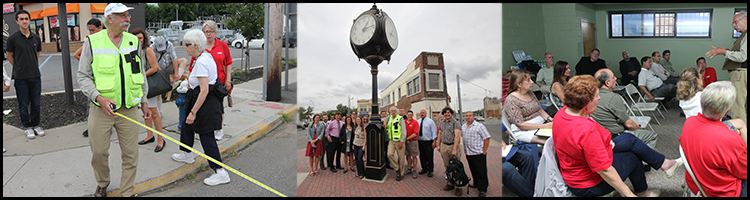
Long Island traffic advocates called for changes to make Sunrise Highway safer and more efficient last year, only to be stonewalled by the New York State Department of Transportation (DOT).
In June, street design expert Dan Burden joined Vision Long Island, AARP and Tri-State Transportation Campaign for road audits in Valley Stream, Baldwin and Freeport. Burden is the executive director of the Walkable and Livable Communities Institute.
"It's clear that much more is needed to address the ongoing safety issues facing communities along the Sunrise Highway corridor," Vision Director Eric Alexander said. "We hope drawing attention to the needs of these downtowns helps improve safety along the corridor and benefits local businesses."
With two dozen community members, elected officials and advocates following, Burden meandered through all three downtowns highlighting flaws in road design. Traffic lanes larger than 10 feet – 11- and 12-foot lanes were found in Valley Stream and Baldwin – encourage drivers to speed, while traffic lights strung diagonally across an intersection – found in Freeport – are too high for drivers to see pedestrians in the road. Unpainted crosswalks and debris along sidewalks also limited walkability, while pedestrian buttons are largely ignored.
He presented participants with a toolbox of solutions, including roundabouts, 9-foot travel lanes, wider sidewalks, post-mounted traffic signals, plants along the road’s edge and bicycle lanes.
Sunrise runs through each community’s downtown and is routinely ranked as one of the most dangerous roadways in the region for walking. According to a Tri-State Transportation Campaign analysis of pedestrian fatality data, from 2010-2012 eight pedestrians were killed along Sunrise Highway in Nassau County. Over the same time period, there were 94 crashes between motorists and pedestrians and 32 crashes involving motorists and cyclists along Sunrise Highway alone.
“Walking around today I realized this is a suburban community best enjoyed from your car,” Tri-State Executive Director Veronica Vanterpool said in Valley Stream. “A lot of the resources are not being used because people don’t feel safe.”
In Baldwin, Nassau County Legislator Laura Curran admitted crossing the highway in her hometown by foot was frightening. However, she saw the solutions Burden pointed out as an economic opportunity.
“Walkable communities attract and keep jobs. They also attract young people. For us to survive and thrive, that’s what we need,” Curran said.
Last year, Vision, AARP and Tri-State called for improvements to Sunrise Highway between the Queens border and Massapequa. Eventually, the DOT admitted they were working on a plan, but declined to release details. A $2.7-million RFP has been issued for the project, with submissions due by the fall. Construction is expected to begin in the winter and end by spring 2016.
DOT officials responded to press calls from yesterday’s audits with a comment about working with the community. The organizers of the event have not found any specific business or public officials that are working with DOT on the pedestrian safety plan.
For media coverage of Burden's visit, check out CBS 2, FiOS 1 and News 12.
Burden will exhibit a follow-up presentation with recommendtions for Sunrise Highway improvements on Oct. 2.
County Executives Invest In Complete Streets Improvements

More money will be allocated to create safer roads in Suffolk County going forward.
The county Legislature voted in favor of amending the 2015-2017 Capital Program in June. That includes $250,000 annually for Complete Streets beginning next year.
“Today the Legislature supported my efforts to establish an annual fund for Complete Streets components to Suffolk County roadway projects. It is not only important to say that Suffolk County supports access for all users, but it’s important that we support those ideals with funds to create bike lanes, curbing, sidewalks and signage. Safety for all Suffolk County residents, whether they drive a car, ride a bike or walk to their destination, is our highest priority and I thank my colleagues for their support,” Legislator Rob Calarco (D-Patchogue) said.
County Executive Steve Bellone recommended a $410 million capital budget for 2015 – three times the 2014 spending – and a $789.1 million three-year capital program this spring. A bipartisan legislative working group added $22.3 million in amendments to the capital plan and $58 million to the three-year program.
Suffolk County passed and signed Complete Streets legislation in 2012. However, the current federal transportation bill – MAP-21 – cut dedicated walking and bicycling infrastructure investments by 30 percent. The New York State Department of Transportation’s (DOT) 2014-2017 Statewide Transportation Improvement Program approved last year plans to spend only 0.98 percent of its transportation funds. That marks a 40 percent, or more than $100 million, cut for bicycling and pedestrian projects compared to the 2011-2014 plan. The DOT has planned to cut spending on walking and biking projects by 24 percent over the next four years, resulting in just 0.57 percent of regionally allocated transportation dollars being spent on these projects.
The federal and state transportation cuts put more pressure on local governments to fill in the gaps. Tri-State Transportation Campaign, AARP and Vision Long Island testified before the Suffolk County Legislature two weeks ago to amend the capital budget. Vision Assistant Director Tawaun Weber recommended no less than $1 million for four years; lawmakers responded with the lower amount.
An investment in Complete Streets demonstrates Suffolk County is serious about developing a comprehensive plan for all users of our roadways. This is a very worthy investment of public tax dollars," Presiding Officer DuWayne Gregory (D-Amityville) said.
Investing in infrastructure like raised crosswalks, pedestrian safety islands, protected bike lanes and landscaped medians can force drivers to slow down and improve general safety on Suffolk County roads.
“The establishment of dedicated funding for safe walking and cycling infrastructure is an important step for Suffolk County as funding from New York State and the Federal government dwindles,” said Ryan Lynch, associate director of the Tri-State Transportation Campaign. “County Legislator Rob Calarco and Presiding Officer DuWayne Gregory have shown incredible leadership by advancing this funding.”
“We are happy to see Suffolk County provide dedicated funds for desperately-needed Complete Streets projects. This is the type of initiative that is needed to move Suffolk DPW towards creating safer roadways for our region," Vision Long Island Director Eric Alexander said.
In the 17-1 vote, Legislator Thomas Barraga (R-West Islip) was the lone voice of dissent. Barraga, who made headlines worldwide with comments about bicycling in Suffolk County this winter, said his vote stemmed purely from fiscal concerns.
“It’s just too much spending, too much borrowing and the people I represent can’t afford anymore,” he said. “I have nothing against the individual projects.”
Pedestrians In Danger On Montauk Highway In Lindenhurst
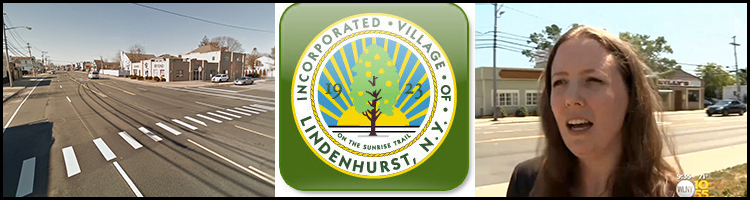
Village of Lindenhurst officials, residents and transportation advocates renewed a request to the Department of Transportation (DOT) earlier this summer for improvements to a strip of Montauk Highway.
Much like the 13-year-old killed trying to cross Hempstead Turnpike on June 15, a 10-year-old boy was struck by a car on June 14. John Johnson, of Lindenhurst, was with his family going across Montauk Highway when they were caught in the middle of the road without the refuge of a median. The nearest vehicle began to slow, but Johnson sprinted into the next lane and a car launched the boy 15 feet in the air.
The child is expected to survive, but locals say the stretch of road between South Strong Avenue and Park Avenue is just too dangerous to continue ignoring. Brittney Walsh, 18, was killed two years ago when her car was rear-ended by an alleged drunk driver.
Village officials have pestered the state for traffic-calming measures for a decade, including Mayor Thomas Brennan writing to the DOT in March for a traffic study and requesting one lane be eliminated in each direction. The state responded with a statement that they began a study using “traffic data analysis and sound engineering principles.” They also said traffic engineers are conducting on-site observations, delay studies, crash analysis and a speed study.
However, Village officials said they are unaware of any studies and have not met with any DOT staff.
“We’ve had nobody come down and sit with us and go over our concerns,” said Village Clerk-Treasurer Shawn Cullinane. “If they’re just doing counts and statistics, that’s not enough.”
Not only does the crosswalk lack a median, but there are no traffic lights. A sign warning motorists about pedestrians is just 150 feet away from the intersection where Johnson was hit, following a curve in the highway.
“We almost lost a young boy trying to cross this road, which is very difficult. How many people have to die before something is done?” Suffolk County Legislator Kevin McCaffery (R-Lindenhurst) said.
Both officials have pleaded for the DOT to remove a lane, while advocates recommend making some modifications to improve pedestrian safety and traffic flow.
“Narrower lanes, well-designed medians, a number of things which makes the road seem narrower, which makes drivers more diligent and cautious,” Vision Long Island Sustainability Director Elissa Kyle said.
More Calls For Safer Roads At Complete Streets Summit

“Here we have to rustle up energy to these common sense activities.”
Eric Alexander, executive director of Vision Long Island and emcee for the 2014 Complete Streets Summit, let a little passion slip through at the beginning of the April conference. He complained how people are still getting hurt and killed on Long Island roads, while other parts of the world have made the necessary changes to protect them.
The second annual Complete Streets Summit, held at the Sustainability Institute at Molloy College in Farmingdale, was a gathering of government leaders, planners, engineers, nonprofits and other community stakeholders who support policy changes to design roadways for all uses – not just automobiles.
For Sandy Cutrone, the Summit was a chance to remind participants of the campaign’s significance. The West Islip resident was an avid bicyclist since her days growing up in North Babylon; she was riding along Montauk Highway in Babylon Village last September when a van turned into her. Cutrone developed neck pain, vision problems and post-concussion symptoms that continue to keep her from working. Her story crossed the world in February after Suffolk County Legislator Tom Barraga criticized her for bicycling in Suffolk County.
Complete Streets, she added, could help prevent similar accidents in the future. That includes designated bike lanes and signage, better pedestrian crossings and traffic lights that display a red left turn arrow when the light turns green for oncoming traffic.
Downtowns would also benefit from more pedestrian and bicyclist traffic, Cutrone said.
“We won’t simply drive through. We will stop [and shop],” she said.
Complete Streets policy could also be a lifesaver, a change too late for Lavena Sipes. The Smithtown resident watched a driver high on heroin smash into her 11-year-old daughter, Courtney, back in 2009. Mother and daughter were crossing Main Street for a music lesson Courtney was looking forward to when an SUV sent her flying under another car and killing the girl.
The family moved from Texas to Smithtown in 2008. With shops along Main Street and people walking in the community, Sipes believed they were alright leaving their car behind.
Since her daughter’s death, the family founded the Courtney Sipes Memorial Foundation. The nonprofit advocates for pedestrian safety and supports youth interest in music and arts.
“It seemed safe. We had our blinders on,” Sipes said. “It’s easy to separate yourself from these tragedies and think it won’t happen to your family.”

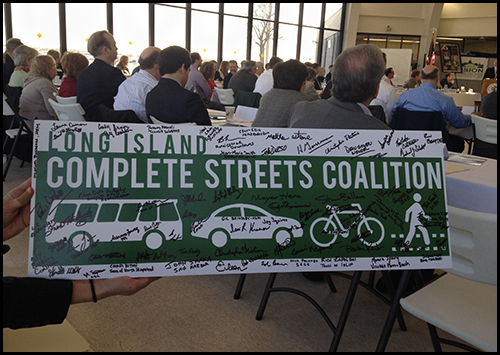
Cutrone and Sipes joined Alexander in unveiling the Long Island Compete Streets Coalition at Thursday’s event. The coalition is a contingent of chambers of commerce, civic associations, local governments, engineering and professional trade groups, transit advocates and members of the public who want safe streets for all modes of traffic.
The group will look to coordinate Complete Streets planning efforts, communicate on finding opportunities for local projects, act as a clearinghouse for information and lobby with a united voice for safe roadways.
The keynote speaker at Thursday’s Complete Streets Summit was Suffolk County Executive Steve Bellone. Referring to Barraga’s comments, the county leader admitted Suffolk was designed auto-centric as Robert Moses developed America’s earliest suburbs. But if Long Island wants to stimulate the economy, create a sense of place and reverse the Brain Drain, he said it’s time to embrace the common sense-solutions of Complete Streets.
“If we’re going to have a vibrant economy and a safe environment for all of us, then Complete Streets is part of the solution,” Bellone said.
Such policies would also play a part in his “Connect Long Island” initiative. The county executive wants to link the existing east-west railways with new north-south options like Bus Rapid Transit to connect universities, jobs and affordable housing. Complete Streets, he said, would help connect destinations without needing a car.

Bellone was flanked by Suffolk County Legislator Rob Calarco (D-Patchogue) and Nassau County Legislator Laura Curran (D-Baldwin). He said the effort has to be less about changing culture and more about reminding residents why they moved to the suburbs in the first place, while she said transit-oriented development creates jobs, reduces traffic, keeps young professionals on Long Island, improves sales tax revenues and solves many of the region’s problems.

Under guidance of Tri-State Transportation Campaign Associate Director Ryan Lynch, the Implementation: Challenges and Policies panel began discussing issues facing Complete Streets solutions. Great Neck Plaza Mayor Jean Celender said their village of 6,700 already embraces these policies. Passing Complete Streets legislation in 2012, the village has slowed speed limits, increased access to all modes of transit and added bus shelters and benches.
Celender was optimistic she could return next year with a success story for Welwyn Road and Shoreward Drive. The area currently has one lane of traffic in each direction with heavy congestion, deteriorating pavement, cracked concrete sidewalks and no pedestrian facilities. The village received a $5.1 million grant for enhancements, including brick walkways and raised crosswalks.
In Nassau County, Traffic Safety Coordinator Christopher Mistron focused on the three E’s of planning – education, engineering and enforcement. Instead of having EMS as a fourth E, Mistron said he wanted it to be encouragement. In education, the county official said having conversations about Complete Streets is effective. What starts as a dinner table conversation turns into pedestrian awareness about safety. In enforcement, Mistron said red light cameras have reduced crashes by as much as 40 percent. He also said police officers crossed crosswalks and chased after drivers who didn’t yield. In engineering, he said the county makes changes to their own roads but is limited by local governments.

A late minute addition to the panel, Suffolk Bus Riders Association President Robert DeVito emphasized both education for drivers and bicyclists. They go into schools teaching how to properly ride, but also stress that most bicyclists also own cars. DeVito said spending money on bridging the disconnect between bicyclists and other drivers would go further than infrastructure projects.
In the Town of Brookhaven, Councilwoman Connie Kepert said Complete Streets policies have been a success since the board passed it in 2010. Kepert said she’s finding some opposition to proposed transit-oriented development in North Bellport from neighbors to the south. They were able to install sidewalks and bike lanes on some roads, but the councilwoman said they’re still facing some opposition about Complete Streets.
“It’s not creating Queens in Brookhaven. It’s making the roads safe,” she said.
Led by VHB Director of Transportation Matthew Carmody, the second panel focused on the design and regulation to guide Complete Streets projects.
Babylon’s Director of Downtown Revitalization Jonathan Keyes said they don’t get many opportunities to rebuild communities in Babylon with 99 percent of the town built up. Wyandanch Rising may be “an engineer’s headache” with narrow roads and underground utilities, but wider roads would increase traffic speeds as well as making the work easier, violating the tenets of Complete Streets.
Rich Zapolski is still relatively new to the Town of Islip as their commissioner of Planning and Development, but he’s actively learning about Complete Streets and works with a small, but talented staff. The Town approved a Complete Streets policy in 2010. Complete Streets is part of the planned Heartland Town Square, currently undergoing an environmental impact study, Zapolski said. He added they’re trying to incorporate the concepts in projects throughout the town’s other hamlets.
Southampton Transportation Director Tom Neely admitted his region may be less dense, although it’s geographically large. With lots of roads to worry about, Neely introduced a discussion of the expenses behind accidents. With the average accident in America costing $16,000, the director said his town sees about 2,000 accidents every year.
He urged conference participants and guests to vote for elected officials who want change. Many towns have an elected highway superintendent who operates independently of the town board. Southampton officials took an inventory of sidewalks to go along with their map of bike roads, which their highway superintendent used while plowing snow.

The Town of North Hempstead passed Complete Streets legislation in 2011. Town Planner Wes Sternberg said they used the policies when they put Prospect Avenue on “a diet.” What once was a four-lane road with limited but high speed traffic was turned into a slower, two-lane road. They’re also investigating solutions for Marion Street on the border of Greenvale and Oyster Bay. The neighborhood is fine by itself, but Glen Cove Road and Northern Boulevard traffic speed through as a shortcut. A car drives through ever 53 seconds on weekdays and every 38 seconds on Saturday.
“That’s a lot of traffic that shouldn’t be there,” Sternberg said.
To slow traffic down, he said, the town is considering a few options. That could include a lane choker to restrict to one lane of alternating traffic or using islands to constrict the roads. Other municipalities, he added, could try these solutions out temporarily using traffic cones.
Stepping away from Long Island, Wendel Companies Sr. Landscape Architect Dean Gowen examined Complete Streets through a project in upstate Buffalo. When they considered the $11.3 million-plan, Gowen said they needed to identify specific values, like improving traffic flow, opening up Brownfields properties and serving as a catalyst for revitalization.
Complete Streets, he added, incorporates three basic concepts. Projects must involve multiple forms of transportation, environmentally-sound decisions and include both education and smart technology.
The final speaker of the second panel was a newcomer to engineering firm Greenman Pedersen, inc. Transportation Safety Director Frank Pearsen reflected on his three decades with the New York State Department of Transportation to emphasize the importance of Complete Streets.
He worked on a project along Newbridge Road as a rookie engineer. Back then, he was proud of the four-lane road he created. Responding to elected officials’ complaints 20 years later, Pearsen realized the smarter decision to make it safer for everyone was actually to remove a lane and add traffic signals. He also responded to Main Street in Smithtown after Courtney Sipes was killed, tasked with finding a cheap solution quickly. After getting community input, the DOT used a west-bound lane to create a turning lane, added traffic signal and installed wider sidewalks.
Pearsen cautioned major projects like the NY Route 347 Safety, Mobility and Environmental Improvements project renovating 15 miles of highway are not often feasible solutions. Instead, he urged government officials to seek more practical low-cost solutions.
“The big projects are splashy, but few and far between,” he added.

For more information on how to join the Long Island Complete Streets Coalition, contact Vision Long Island.
Upcoming Events
Smart Growth Saturday, Sept. 20

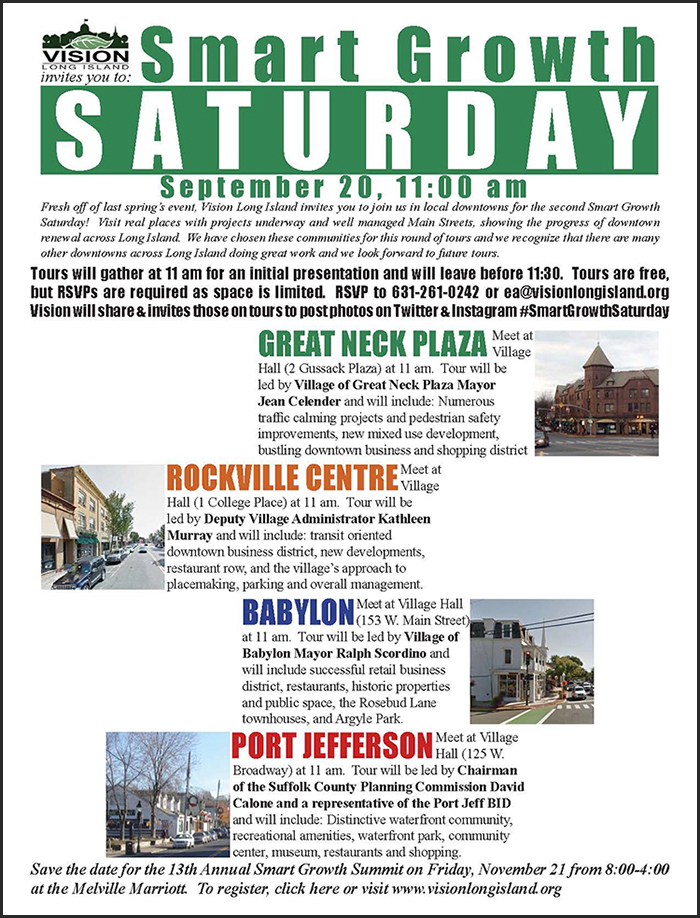
The second Smart Growth Saturday is slated to take place this Saturday, Sept. 20, at 11 a.m. Guided tours will be led through the towns of Great Neck Plaza, Rockville Centre, Babylon and Port Jefferson. These downtowns are all examples of communities that have enhanced walkability with thriving downtown districts with calmed traffic and safe street crossings. For more information and registration, download this flier.
Sunrise Highway Safety Meeting, Oct. 2
On October 2nd there will be a follow up meeting from transportation expert Dan Burden's previous visit at the Freeport Library from 7-8:30 p.m. This meeting is sponsored by AARP, the Tri-State Transportation Campaign and Vision Long Island to discuss the recommendations Burden advanced in his recent visit. Attendance can be confirmed with AARP.
Smart Growth Summit, Nov. 21

Vision Long Island will be holding their annual Smart Growth Summit on Nov. 21 from 8 a.m.-4 p.m. at the Melville Marriot. The summit will have a workshop panel on Complete Streets improvements. Find more information on Vision's website.
Car Free Day Rally, Sept. 18
Long Island’s 2nd Annual Car Free Day will take place on Sept. 22. All are encouraged to take the pledge to go car free by biking, using mass transit and carpooling. There will be a rally to kick off the event at Farmingdale State College on Sept. 18 from 2-4 p.m. with speakers discussing the importance of transportation alternatives and transit oriented development. All are encouraged to attend and learn about the importance of going car free. Visit their website for more information.
Suffolk County Bike Summit, Sept. 22