
20th Annual Long Island Smart Growth Summit brings together nearly 150 speakers in thirty sessions, including over 50 elected officials, twenty development and infrastructure presentations, and more than 1,000 participants
The 20th Annual LI Smart Growth Summit brought together nearly 150 speakers in thirty sessions, with over fifty elected officials, twenty development and infrastructure presentations and more than 1,000 participants.
The three-day summit, running November 17th through the 19th, consisted of two virtual days and one in person event at the Crest Hollow Country Club in Woodbury. The summit focused on helping small businesses recover from COVID-19, supporting downtown revitalization, investing in infrastructure, economic development and much more.
“This year’s summit brought together folks of all backgrounds, politics, economics, races and cultures to raise up local voices in the support and planning of Long Island downtowns,” explained Eric Alexander, Director of Vision Long Island and the Long Island Main Street Alliance. “This successful bottom-up approach should send a clear national message on how to work together in a climate of chaos and division.”
Day 1 - Virtual Program
This year's Long Island Smart Growth Summit addressed the unique situation that we find ourselves living in during the ongoing pandemic by incorporating both virtual and live events. Even though we continue to have limited in person events, it is important for the conversation about the future of our downtowns continues. Please enjoy the following write ups about the virtual workshops we held to address that very concern:
Complete Streets and Walkability on Roadways and Neighborhood Streets

On day 1 (virtual), participating in the Complete Streets and Walkability on Roadways and Neighborhood Streets panel was Sean Sallie, Nassau County DPW; Jonathan Keyes, Suffolk County Planning; Frank Wefering, GPI; Karyn Kischbaum, Western Suffolk BOCES; Joe Depalma, Suffolk County Bicycle Association; and Elissa Kyle, Vision Long Island, Moderator.
Frank Wefering of GPI started with the maxim, “If you plan for cars and traffic, you get cars and traffic. If you plan for people and places, you get people and places.” Mr. Wefering discussed recent walk audits, including one is North Babylon, on Deer Park Avenue, to look towards economically revitalize the corridor between Sunrise Highway and 231. Mr. Wefering also discussed Let’s Move LI, a Long Island transportation initiative by the US Green Building Council LI. “It is a collaboration among municipalities, schools, businesses and other organizations to promote active transportation across Long Island,” Mr. Wefering explained.
Western Suffolk BOCES’ Karyn Kischbaum was happy to report that Western Suffolk BOCES has received three 5 year Creating Healthy Schools and Communities (CHSC) grants from NYS Department of Health. “Instead of targeting just five communities, we are targeting three townships,” Ms. Kischbaum explained. The townships include Hempstead, Babylon and Islip. “[The work] is really about changing the environment, changing the messaging, to support healthy behaviors,” Ms. Kischbaum stated. “What surrounds us, shapes us.”
Joe Depalma, with Suffolk County Bicycle Association, discussed the groups biggest gains throughout the years, including bicycle lanes and bicycle paths. “Bicycle lanes gives bicyclists more authority and legitimacy on the streets,” Mr. Depalma noted. Bicycle lanes are multi-use lanes. Mr. Depalma discussed past and future projects, including the success of the Ocean Parkway project, which is going to be expanded. “Using bicycles will make us more green,” he added.
Sean Sallie, Deputy Commissioner of Nassau County DPW, spoke about the County’s ongoing projects with respect to complete streets and mobility. These projects and programs include: Austin Boulevard, Island Park; Grand Avenue, Baldwin; Park Street/Beech Street, Atlantic Beach; Shared Mobility Management Plan; Nassau Hub Initiative; Nassau County Bikeshare Initiative; and Lido Boulevard Safety and Accessibility Initiative. “It is great to see some of these projects getting constructed,” Mr. Sallie concluded.
Jonathan Keyes, Director of Downtown and Transit Oriented Development, Suffolk County, presented an update on the Suffolk County Hike & Bike Masterplan. “We completed a hike and bike masterplan on March 12, 2020. The goals and priorities laid out include safety, design, equity, economic development, and education,” Mr. Keyes explained. The plan’s recommendations, among other things, include 1,200 miles of proposed hike and bike facilities and 802 miles of bike lanes.
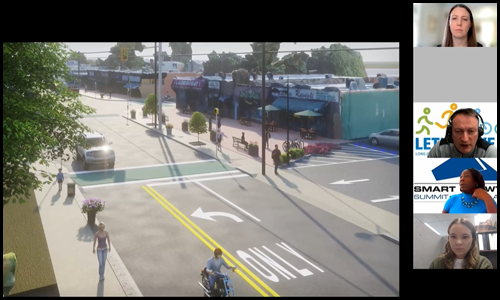
You can view the Complete Streets and Walkability on Roadways and Neighborhood Streets panel here.
Human Needs Post COVID
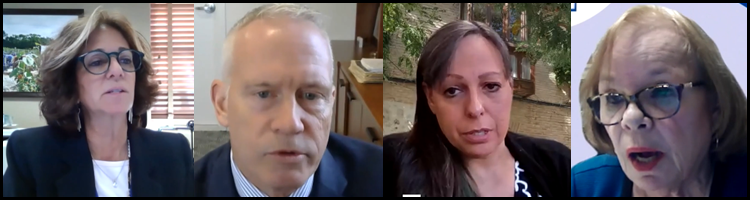
The Human Needs Post COVID panel included Randi Dresner, Island Harvest; Jeff Reynolds, Family & Children Association; Greta Guarton, LI Coalition for the Homeless; Michelle DiBenedetto, LI Housing Partnership; and Tawaun Weber, Vision Long Island, Moderator.
Randi Dresner, President & CEO of Island Harvest, started off the panel by stating, “We are never going to end hunger by giving someone a can of food. We are not going not stop giving people that can of food. It is important for today, and probably for tomorrow, but as a food bank, we are looking at strategies to help us holistically help people in need across our service area.” Ms. Dresner explained, “Along with analysis comes the need for action items. We are looking at the expansion of our programs.” She added, “One new division is called community empowerment. We need to listen the needs of each individual community.”
Jeff Reynolds, President & CEO of Family & Children Association, discussed how well organizations worked together during the pandemic “to ensure that the full continuum of needs was addressed during COVID.” Discussing COVID, Mr. Reynolds stated, “Until it is over for everyone, it is not over for any of us.” Pointing to the damage, including skyrocketing suicide rates and drug use, Mr. Reynolds advised, “Those are things that won’t end just because we have vaccines. This should be our opportunity to fix stuff that has been broken for a long time. We need to have a conversation about adequate funding.”
LI Coalition for the Homeless Executive Director Greta Guarton stated, “The whole idea of continuum of care is organizations across the homelessness and housing spectrum working together and strategizing as to how best to use [available] funds.” Ms. Guarton noted that at the beginning of the pandemic, the Coalition saw a very brief rise of homeless families in our region for the first month or two. This number has decreased steadily since the beginning of the pandemic. “This is mostly because of the eviction moratorium put in place,” Ms. Guarton explained. The number of homeless singles, however, has skyrocketed. Discussing challenges at this time, Ms. Guarton stated, “The rental market is tighter than ever and the cost of rentals is at a peak. We desperately need more housing development.”
Michelle DiBenedetto, Director of LI Housing Partnership, explained, “We have, in the time of the pandemic, gone from face-to-face mortgage counseling to zoom mortgage counseling so we can continue to help people achieve the American dream of homeownership.” Ms. DiBenedetto also expressed concern about the lifting of the rental moratorium in January, 2022 and discussed options, including the Emergency Rental Assistance program.
You can view the Human Needs Post COVID panel here.
Forecast – Residential, Commercial, Mixed Use
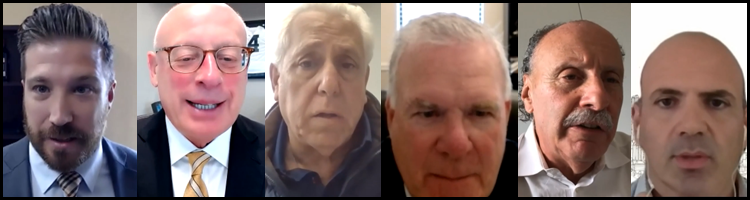
Participants on the Forecast – Residential, Commercial, Mixed-Use panel included Larry Rosenbloom, Zyscovich Architects; Mitch Pally, LI Builders Institute; Dale Koch, Bohler Engineering; Barry Paley, Keller Williams; Nick Strachovsky, KOW ARMA Development Consultants; and Michael Sahn, Sahn Ward PLLC, Moderator.
CEO of LI Builders Institute, Mitch Pally, kicked off the panel discussing the recent Infrastructure bill, stating “The infrastructure bill will have three major benefits to Long Island. First, highway reconstruction, repair, perhaps some expansion… Second issue is mass transit, the LIRR will get a substantial infusion of capital and provide the railroad with increased opportunities… and the main way development will be impacted positively is the addition of sewers, especially in Suffolk County.”
Larry Rosenbloom, Partner Zyscovich Architects, spoke about the state of the retail industry. “What we are finding is retailers in the e-commerce world have figured out they need new formats,” Mr. Rosenbloom shared. “Another change that is happening is the voids you are seeing in malls and strip centers right now; they are going to get filled with new formats.” Mr. Rosenbloom concluded, “The developers are going to have to start to focus more on placemaking. Also, properties are going to have to be split up into mixed-use. There is an opportunity to reinvent these places into something that is exciting and vibrant.”
Dale Koch, an Associate with Bohler Engineering, stated, “Retailers are reinventing themselves. They are finding new ways to make an experience type of center and towns seem to be excited about it.” Sewers and change of codes have to be addressed, he noted.
Keller Williams’ Barry Paley explained, “At the end of the day, it is an interesting market. In other parts of the country, developments in communities are synchronizing both the experience on the commercial side and where the developments are blending in to the retail community. We need that here.”
Nick Strachovsky, CEO of KOW ARMA Development Consultants, stated, “Right now we have a real great opportunity on Long Island. The strip malls changed the face of suburban living years ago, now that model isn’t the same as it used to be. We need the community to be proactive with local government to pave a way, master plan, what they would like to see their community look like.”
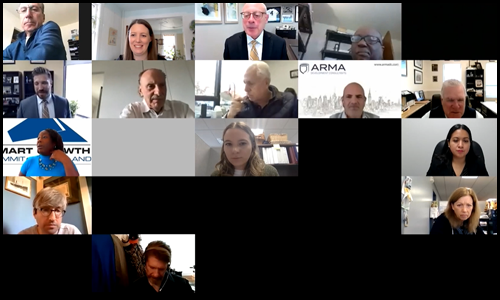
You can view the Forecast – Residential, Commercial, Mixed Use panel here.
Post-COVID Resiliency & Lessons for the Future

Sitting on the Post-COVID Resiliency & Lessons for the Future panel was Aryeh Lemberger, WSP; Ryan Prime, VHB; Anthony Postiglione, FirstNet-AT&T; John Keating, PSEG-LI; Lyle Sclair, National Grid; and Eric Alexander, Moderator.
WSP Senior Supervising Planner, Aryeh Lemberger, started off the panel focusing on two interrelated resiliency topics: Improving Infrastructure Resiliency and Integrating Resiliency into Supply Chains. “The passage of the 1.5 trillion-dollar infrastructure bill is a game changer,” Mr. Lemberger stated. “We are trying to understand what the opportunities are. It is really a big opportunity to address our environmental concerns and our resiliency in the face of multi hazard conditions.” Looking back at Superstorm Sandy, Mr. Lemberger noted, “We need quicker recovery and we need to make sure we protect ourselves as much as possible from the next potential hazard. Continuity and recovery are very important.” Mr. Lemberger concluded, “Technology is really a friend of ours and that is going to be the key to helping us get through a lot of different challenges.”
Ryan Prime, VHB Sustainability Practice Leader, discussed the impact of COVID on urban planning. “COVID has really changed our thinking on urban planning and how we use space,” Mr. Prime explained. According to Mr. Prime, several opportunities that have arisen during COVID include the rise of telecommunication, streets converted into pedestrian zones, open space for recreation, increased active mobility, town squares, adaptive reuse, healthy buildings, and more. “Many of these [best practices] will likely last beyond the current state we are in,” he concluded.
Anthony Postiglione, FirstNet-AT&T, explained, “FirstNet is a nationwide public safety broadband network, services and solutions dedicated to first responders and those that support them.” Mr. Postiglione stated, “During COVID, we had to adapt on the fly and apply [changes] on the spot.”
PSEG-Long Island’s Manager, Economic Development, John Keating, stated,” Clearly electric reliability is a piece of resiliency. We have had a strong hardening program going the last three years, an 800-million-dollar investment into the system. What we learned from COVID is how to deliver [services] to a great extent with a workforce that was remote.” Regarding technology, Mr. Keating acknowledged that it is evolving rapidly and interconnectivity is growing. “What we also learned during COVID was creativity,” Mr. Keating added.
Part of National Grid’s Economic Development Team, Lyle Sclair reflected, “A lot of issues were exposed over this past eighteen months, whether it’s in social inequity, whether it’s in energy.” Nation Grid has launched a new initiative called Project C, as part of its response to these challenges. “It is going to connect our communities to clean and sustainable energy, care for our neighborhoods and their revitalization, compassionately address the challenges our customers face, and create the workforce that is going to build the clean energy future,” Mr. Sclair stated.

You can view the Post-COVID Resiliency & Lessons for the Future panel here.
Job Training & Intergenerational Employment
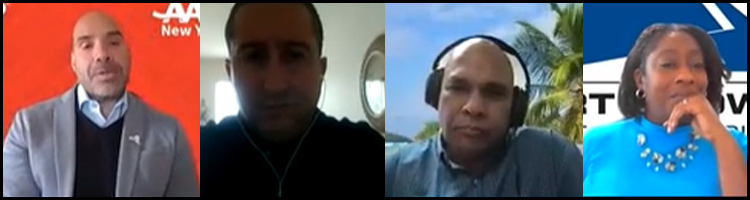
Participating in the Job Training & Intergenerational Employment panel on day 1 were Bernard Macias, AARP; Sal Ferrera, Electrical Training Institute; Michael Govinda, Arista Careers, Hempstead; and Tawaun Weber, Vision Long Island, Moderator.
Starting off the discussion was Bernard Macias, Associate State Director AARP Long Island. Discussing the recent surges in career changes, “What AARP LI is asking at this time is how do we get education in front of our 50+ community, and offer it as a free resource,” Mr. Macias stated. “We have been focusing on free online educational classes and at home virtual programs.” AARP, understanding how difficult it can be for 50+ people to find a job, created a job bank which can be accessed on its website.
Michael Govinda, from Arista Careers, expressed to the younger generation, “If you don’t have an education, you cannot go to the next step. Additionally, technical skills are important. We want our people on Long Island to be skilled and to have the resources to move forward. We are involved in lot of retraining.”
Sal Ferrera, owner of Electrical Training Institute, enthusiastically explained, “What I see is this - not everybody is made out for college. There are other alternatives. The trades are needed. The money will come over time.”
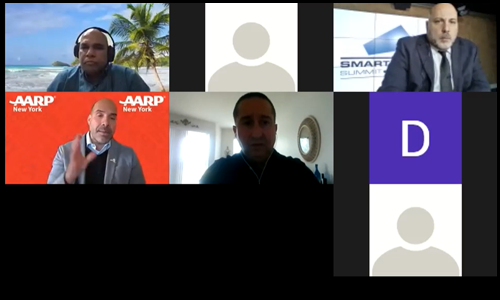
You can view the Job Training & Intergenerational Employment panel here.
Labor Shortage on Long Island: Employers’ Strategies and Solutions
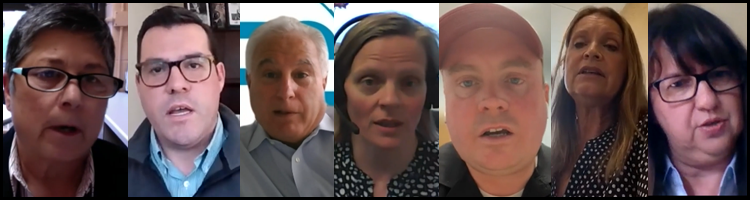
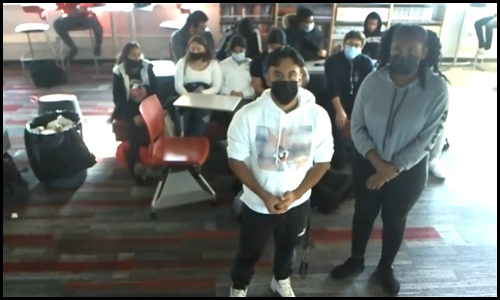
Speaking on the Labor Shortage on Long Island: Employers’ Strategies and Solutions panel were Dr. Gail Lamberta, St. Joseph’s College; Patrick Boyle, Ignite Long Island; Michael Tucker, LI Food Council; Anne Davis, H2M Architects & Engineers; John Murray, Business Owner; Kate Schneider, St. Joseph’s Collage Alumni; and Dr. Nathalia Rogers, LI Youth Summit, Moderator.
Moderator Dr. Nathalia Rogers started off the discussion with a snapshot of today’s labor numbers, “The Labor Department on November 12th reported that about 4.4 million Americans have voluntarily quit their jobs in September, which is the highest number on record. Employees specifically depart industries where there is face to face interaction. There were 10.4 million job openings in the United States in September. Employers are hiring, job growth picked up, but the participation labor force remains stable. Two-thirds of people who left the labor market during the pandemic were 55 and older.”
Michael Tucker, President of the LI Food Council, discussing the changes in the labor picture, stated, “It is really coming down to a whole mindset and a quality-of-life issue. It’s not only about money, now its quality of life.” Drilling down, he explained, “People want flex hours, they want different time schedules, which puts a burden on the food and beverage side. Everyone is trying to figure it out, there is no silver bullet. We have to be a lot more flexible going forward. It’s not the employers dictating anymore, it’s the employees.”
Anne Davis, who works in human resources at H2M, told attendees, “We were really facing a labor shortage before the pandemic started, but it has been exacerbated.” According to Ms. Davis, this has led to more aggressive offers and aggressive recruiting behaviors. “The employees we want to attract are looking for organizations that have a strong meaning, a place they will have interesting work and connections,” Ms. Davis concluded.
Ignite Long Island’s Executive Director Patrick Boyle advised there are over 3,000 manufacturers that call Long Island home. “Going into the pandemic, we had over 8,000 unanswered help wanted postings in manufacturing. The pandemic just exacerbated it tremendously. This includes the wave of retirement age folks, who are leaving with institutional knowledge. Now we are faced with the resignation of younger folks.” The challenge, he noted, is attracting new labor, and then keeping them.” Mr. Boyle stated incentives to get and keep employees can include higher pay, increasing benefits, such as a life insurance and 401k policies, and additional training.
Dr. Gail Lamberta, from St. Joseph’s College, advised, “We have to revisit salaries. We live in an area where cost of living is higher. We also have a lot of people who decided they are retiring now. Childcare is also a big problem. With the amount of money spent on childcare, many have decided they were better off staying at home, raising their kids. We have a lot of different issues.”
John Murray, business owner, stated, “A lot of people thought that when the enhanced benefits ended, we might start to have a steady stream of applicants. That did not happen. Unfortunately, people that are coming in are demanding top dollar. It is improving though.” As for solutions, Mr. Murray stated, “We have to start telling people you have to go back to work. Enough of this. The whole economy is being held back.”
You can view the Labor Shortage on Long Island: Employers’ Strategies and Solutions panel here.
Diversity: Addressing Demographic Changes on Long Island

Diversity: Addressing Demographic Changes on Long Island included panelists Retha Fernandez of Suffolk County, Harry Malhotra of the South Asian Chamber of Commerce, Sol Marie Jones-Alfonso of the Long Island Community Foundation, and moderated by Vision Long Island Board Chair Trudy Fitzsimmons.
Retha led off the presentations by discussing many of the changes Suffolk County government, particularly speaking regarding the County Executive’s office and initiatives, has done to ensure that they are inclusive of all in their services and programs. The county has developed additional committees that both represent and provide oversight for populations that in that past, may not have been directly considered. She spoke about a focus on disadvantaged communities to bring additional resources to them. She also talked about how, even in county workers, there is more diversity. Retha explained the county’s understanding of the importance in ensuring that all of its communities have access to resources and programs, and provided information on how people can get involved.
Harry Malhotra of the South Asian Chamber of Commerce discussed many of the ways the chamber has helped South Asian businesses prosper. Often referencing their work in Hicksville, Harry discussed some of the events like holiday festivals that help to draw crowds to support the businesses as well as provide a way to come together as a community to honor their culture. Harry spoke of some of the challenges they faced because of covid, but also the support to help them to continue to thrive.
Sol Marie of Long Island Community Foundation, talked about some the shifting trends they see happening across the island. She spoke about how the change in deeds should be reflected with a change in resources, particularly for diverse and minority communities as they are among those seeing the most growth. She also talked about what some nonprofit organizations are doing to help disadvantaged/minority populations. She noted that these needs are not new, but more at the forefront now as racial divide has been more of a topic recently.
Trudy Fitzsimmons moderated this panel. In highlighting some of the statistics provided by Sol Marie, Trudy led a discussion encouraging both panelist and participation to provide their thoughts on the ways Long Island is changing. Noting significant change in diversity since the original developments throughout Long Island to present day, a discussion on how to plan for the continuous shift of minority to majority sprung ideas about topics such as housing types, economic development, and cultural integration in new ways.
Small Business Financing

Small Business Financing panel included Ray DiPresso, People’s United Bank; Ian Samlin, REIL Capital; Adam Haber, Trellus; Gina Coletti, Suffolk County Alliance of Chambers; and Frank Camerano, Nassau Council of Chambers, Moderator.
Ray DiPresso, of People’s United Bank, informed those in attendance, “A lot of business thrived in 2020 based upon what industry they were in, some businesses did suffer. Money generated through the PPP helped businesses tremendously. Lending was strong in 2020 and it is still strong this year.” According to his observations, Mr. DiPresso stated, “Out of my portfolio, businesses are really back to normal in 97% of the cases.”
Co-founder of REIL Capital, Ian Samlin noted, “People have really come back. I would say since August of 2020, lenders are willing to put out money. There are more lenders than ever, there are more applicants than ever. There is so much opportunity out there right now.” Mr. Samlin concluded, “Just surviving the last two years means everything in the world, no matter what industry you are in.”
Adam Haber, Co-founder and CEO of Trellus Same-day Delivery and Marketplace, remarked, “You are not going to shop local unless there is a value to the consumer.” Discussing small businesses, Mr. Haber stated, “If you don’t adapt, you are going to die. If they don’t grow with the times and change, they just aren’t going to stay solvent.” His advice was to update technology and computerize.
Gina Coletti, Co- Chair of the Suffolk County Alliance of Chambers, discussing the pandemic and small business, stated, “It is so important to adapt – to be able to pivot. You just have to think outside of the box.”
You can view the Small Business Financing panel here.
Growing Minority / Women-Owned Business Enterprises (MWBE)

“Growing Minority/Women owned Business Enterprises (MWBE)” panelist included Glenn Vickers, MRV Group, Lionel Chitty, Nassau County Office of Minority Affairs, Luis Vasquez, LI Hispanic Chamber of Commerce, Dr. Corrinne Graham, Graham International Consulting, and moderator Valerie Anderson Campbell, LI African American Chamber of Commerce. This session provided an update on the work underway to support MWBE’s from certification to access to public and private funding and contracts.
Each speaker provided information from their particular area of expertise regarding Minority/Women owned Business Enterprises. The speakers discussed the criteria and process for becoming and MWBE. They also spoke to some of the challenges that MWBEs face as well as programs and resources that are available to address these challenges and needs.Green Energy Building Potential
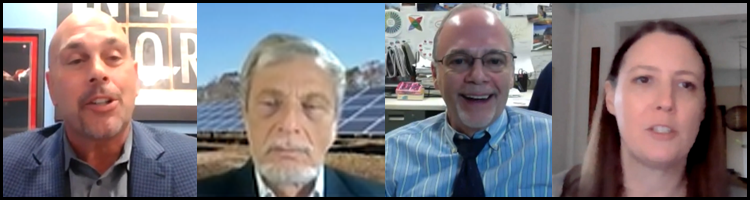
Wrapping up day 1 was the Green Energy Building Potential panel. Speakers included Mike Passantino, SUNation Energy Systems; Peter Gollon, Sierra Club; Neal Lewis, Sustainability Institute at Molloy College; and Elissa Kyle, Vision Long Island, Moderator.
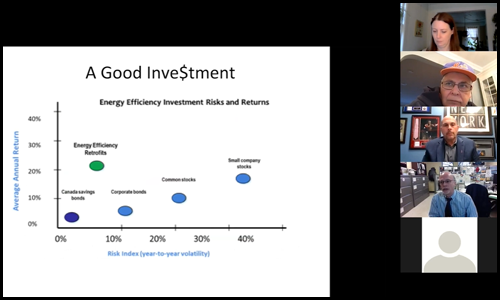
Starting off the panel was Neal Lewis, Executive Director of Sustainability Institute at Molloy College. Mr. Lewis offered a presentation on Building Potential. Regarding housing opportunities through Smart Growth, Mr. Lewis explained, “We want to go further, we want to make these green buildings.” Focusing on what businesses can do in the context of Smart Growth, Mr. Lewis explained “Waste is inefficient and costs businesses money.” Mr. Lewis advised business owners to invest in their buildings, thus saving on energy costs they incur. Mr. Lewis also listed a myriad of Green Building Standards, programs and funding opportunities. He stressed to attendees that PACE (Property Assessed Clean Energy) is a complete game changer.
Sierra Club’s Peter Gollon focused on building electrification. Starting his presentation, Mr. Gollon stated, “Climate change is real, it’s here it’s now. Climate change is caused by the emission of greenhouse gasses, mostly from human activity,” Mr. Gollon discussed NYS’s Community Leadership and Climate Protection Act and its goals. He added, “We just have to get off the carbon fuel entirely. Carbon-free buildings can be built. Building electrification is the only way we meet our clean energy goals.”
Mike Passantino, General Manager for SUNation Solar, discussed the practical side of solar. “We probably have about 22 buildings on Long Island that are in contract for solar. It is becoming more progressive on Long Island.” Businesses are taking advantage of tax credits, he advised. “Once the initial payment is paid back, solar is like a burden free tenant on your roof,” Mr. Passantino explained. “It helps businesses reduce their overhead.”
You can view the Green Energy Building Potential panel here.
Day 2 - Virtual Program
North Hempstead Downtowns

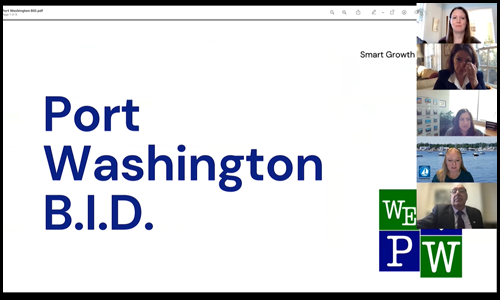
Participating in the North Hempstead Downtowns panel was Holly Byrne, Port Washington BID; Joel Harris, Mineola Chamber of Commerce; and Sarah Oral, Village of Rosyln.
Starting off the panel was Sarah Oral, Trustee in the Village of Rosyln. Discussing growth in Roslyn, Ms. Oral stated, “In order to be brought into the 21st Century, we need to be smart about our growth within the Village and we need to balance the historic nature and the future of housing needs.” Expressing the importance of infill development, Ms. Oral explained, “In our core downtown, along Old Northern Boulevard and the waterfront, we have a waterfront overlay district which allows residential development.” On the other end of the Village, a change of zone passed which created a transit mixed-use oriented district. “We are very proud of that rezoning,” Ms. Oral noted. “All housing developments within the Village of Roslyn require 20% affordable housing units.”
Joel Harris of the Mineola Chamber of Commerce discussed the success of the One Third Avenue apartment building and the Mineola Morgan Parc apartments, the latter backdoors onto the platform of the Mineola Railroad Station. “This has brought in an entire new demographics of younger folks,” Mr. Harris explained. Regarding the pandemic and local businesses, Mr. Harris noted, “Although some businesses went out, we saw others coming in.” Mr. Harris concluded, “Let’s make our areas more family-oriented areas.”
Holly Byrne, Executive Director of the Port Washington BID, discussed 2021 goals, which include increase awareness beyond borders, get feet on the ground, improve efficiency and communication, and help businesses be found. The BID created its own customized membership management system, which has been very successful. Another successful initiative is its app Try Port First. Finally, under big projects, the BID formed a business acceleration committee, with a focus on the best ways to manage and maneuver the permitting process. “Right now, the BID is looking at how do we set the stage for potential applicants. Know before you go,” Ms. Byrne explained.
You can view the North Hempstead panel here.
Oyster Bay Downtowns
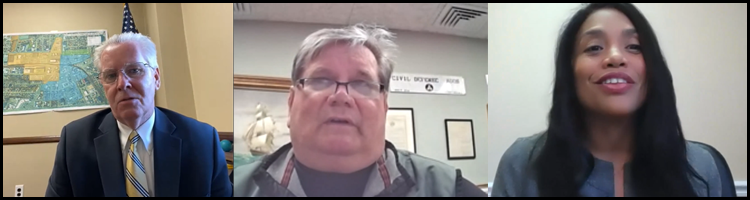
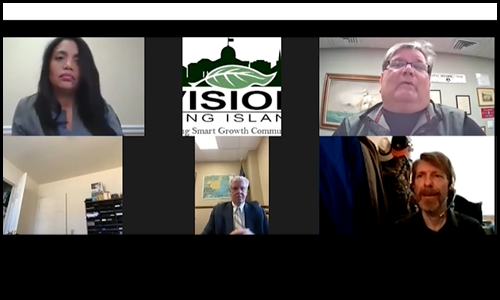
Participating in the Oyster Bay Downtowns panel was James McCaffrey, Town of Oyster Bay, Hicksville; Brian Harty, Village of Farmingdale; and Patricia Holman, Glen Cove BID.
Regarding Hicksville redevelopment, Deputy Commissioner of Economic Development at the Town of Oyster Bay, James McCaffrey, noted the town continues to get proposals for multi-family development. “We have five under review now and they are a good mix and there are more on the horizon. We think it will turn around downtown.” Mr. McCaffrey also remarked, he has seen local civics, throughout the township, embracing these types of development.
Brian Harty, Administrator, Village of Farmingdale, stated “We have become a destination village, rather than a village no one particularly heard of.” It all started, he said, from a streetscape grant ten years ago. “We are very proud of our accomplishments here with transit-oriented development by the train station. We have about 300 units of housing within walking distance of the train, which spurred the redevelopment and rebirth of Main Street as well.”
From Glen Cove BID, Patricia Holman presented the many good things happening in Glen Cove. “Since the start of 2021, Glen Cove has welcomed five new businesses, three new businesses are on the horizon, and with the completion of Village Square, we are expecting many more to join oud BID.” Annually, Glen Cove BID invests in capital improvements, maintain the streetscapes, and makes sure sidewalks remain clean. Ms. Holman noted they have gotten their fair share of investment on the development side in Glen Cove, citing such examples of The Metropolitan and YouOffice investing in the community.
You can view the Oyster Bay Downtowns panel here.
Hempstead Downtown Part 1
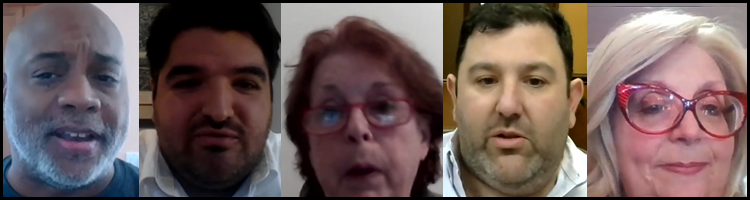
Participating in the Hempstead Downtown Part 1 panel was Darien Ward, Baldwin Civic Association; David Sabatino, Village of Valley Stream; Lois Howes, Freeport Chamber of Commerce; Cory Hirsch, Lynbrook Chamber of Commerce; and Julie Marchesella, Elmont Chamber of Commerce.
President of the Baldwin Civic Association, Darien Ward, kicked off the panel by discussing Baldwin’s new overlay zone. “It has been a tremendous help in trying to offer a promise of a revitalization in Baldwin,” Mr. Ward stated. “The aim for us is to have a much more transparent and cooperative approach with the Town of Hempstead.” The association is presently working with businesses with regard to facades. There are conversations with the county regarding bicycle trails, and they working on complete streets in order to create a more cohesive downtown feel.
David Sabatino, Deputy Village Treasurer for Development, Village of Valley Stream, shared a presentation focusing on downtown Valley Stream. Historically, Valley Stream knew what was needed to attract people to its community, Mr. Sabatino explained. This eventually changed. Some reasons included public services moving to less walkable lots and the discontinuance of developing a variety of housing types. The Village is working on ways to address this through use of its parks, connectivity, placemaking, parking and bringing back housing variety.
Lois Howes, from the Freeport Chamber of Commerce, began, “Freeport is still based on the waterfront and entertainment.” Some projects in the hopper include an Amazon distribution center and the reappropriation of Cow Meadow Park. The Arts Council is very active, as is a local theatre group. Restaurants are very busy and a new hotel is being built. “Things are really picking up in the Village,” Ms. Howes concluded.
Cory Hirsch, President of the Lynbrook Chamber of Commerce, stated, “The Chamber really has started listening to the businesses, especially during the pandemic. Lately, things have started to come back to normal.” Mr. Hirsch advised there are two transit-oriented developments under construction, one at the site of an old decrepit motel and one at the site of an old feather factory, the latter steps from downtown. “A lot of vacant store fronts are starting to get filled now,” Mr. Hirsch explained.
President of the Elmont Chamber of Commerce, Julie Marchesella, stated, “We have wonderful things happening in Elmont.” This includes the opening of the USB Arena and a high-end mall on the way. “Our restaurants have all weathered the storm,” she noted. “Elmont is now on the map.”
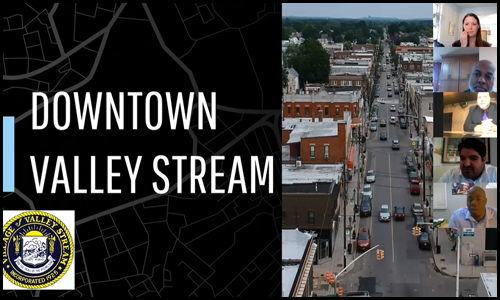
You can view the Hempstead Downtowns Part 1 panel here.
Hempstead Downtown Part 2

The Hempstead Downtown Part 2 panel featured Clariona Griffith, Village of Hempstead; Liz Treston, City of Long Beach; and Lisa Dellipizzi, Franklin Square Chamber of Commerce.
Clariona Griffith, Hempstead Village Trustee, started off by stating, “Our goal is to build a better and stronger HUB. Hempstead Village Business comeback will be better than our set back.” Hempstead’s stores were hit very hard by the pandemic. “We lost about 85% of our business,” Ms. Griffith advised. “Our goal is to find opportunities and partners to strengthen our Village.” The Hempstead Chamber is working hard to make sure its businesses get what they need, it is being done by collaboration with a lot of different organizations.
Liz Treston, City of Long Beach Councilperson, listed some recent projects. These include continuing FEMA projects. “Many of our businesses are thriving, they learned to adapt during COVID.” Long Beach has a lively arts community and a farmers’ market.
Lisa Dellipizzi, President of the Franklin Square Chamber of Commerce, noted that the Chamber has a brand-new website, social media pages, collaborates with local groups, organizes an expo to bring businesses togethers, and a fall fair to bring residents together.
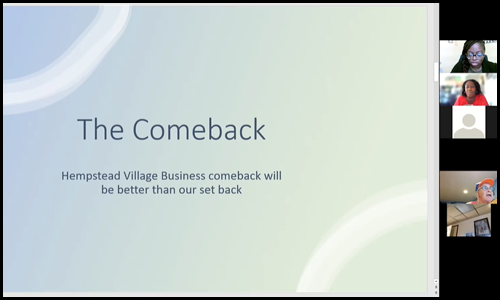
You can view the Hempstead Downtowns Part 2 panel here.
Islip Downtowns
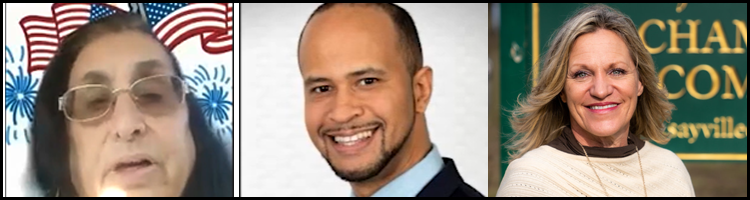
Islip Downtowns panelists included Debbie Cavanaugh, Central Islip Coalition of Good Neighbors; Marcos Maldonado, Brentwood; and Eileen Tyznar, Sayville Chamber of Commerce.
Debbie Cavanaugh, President of the Central Islip Coalition of Good Neighbors, advised, “Islip is finalizing our DRI plan, with sewers hopefully going in in June. We are hoping to bring Amazon into the community.” The Coalition works hard to educate the community about all projects, take the community’s input and bring it back to the developer and the town.
“We have some pretty nice things going on both from a building perspective and a community arts perspective,” Brentwood’s Marcos Maldonado stated. “There are a lot of green space where development is occurring to add color and vibrancy where people are walking around.” Additionally, Ross Park is undergoing a major rehabilitation. “The culture and the music and the food in the Brentwood downtown is vibrant,” Mr. Maldonado remarked. He added, “We have very low vacancy rates in the Brentwood downtown.”
Eileen Tyznar, President of the Sayville Chamber of Commerce, stated, “We have filled up almost all vacancies due to COVID. We raised over $40,000 during COVID to save our business owners and pay their rent, negotiated with landlords, pay utilities, whatever it took to save them. We are doing pretty well.” Sayville Cinemas, the hamlet's independent movie theater, reopened after a nearly 20-month closure, which is very important to the community.
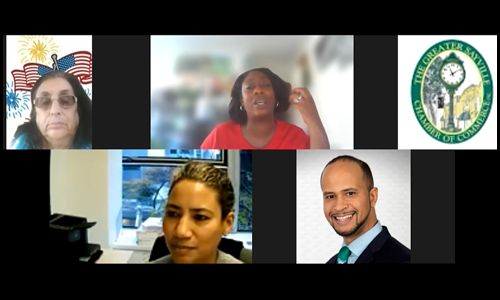
You can view the Islip Downtowns panel here.
Smithtown Downtowns
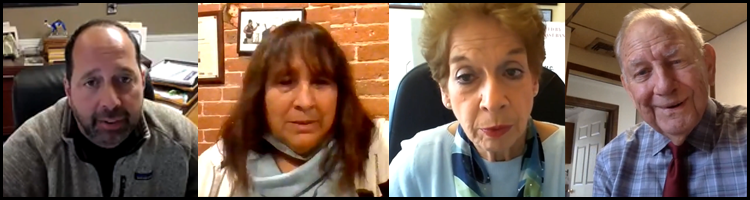
Smithtown Downtowns panelists included Tony Tanzi, Kings Park Chamber of Commerce; Linda Henninger, Kings Park Civic Association; Barbara Franco, Smithtown Chamber of Commerce; and Bill Garthe, St. James Chamber of Commerce.
President of the Kings Park Chamber of Commerce, Tony Tanzi, started off the panel discussing the goal of bringing sewers to downtown Kings Park. “This journey started five or six years ago, when we had a meeting with the Kings Park Civic Association where we determined that, while Chambers and Civics don’t always have their initiatives aligned, we had the conversation that on things we can agree on, we should align because the easiest way to get things done is to have more people involved.” A series of community meetings were held with the help of Vision, a road map was created, and delivered to a receptive town board. This community up approach led to needed funding. Sewers are expected to go online in 2025.
Linda Henninger, President of the Kings Park Civic Association, discussing the collaboration with the Chamber, stated, “It was almost a leap of faith that we could all do this. We were very careful to focus on only the issues we agreed upon. A revitalized Main Street was one of them. The word is consensus, and it is so much easier to achieve when you are sitting down face to face with people.” Ms. Henninger concluded, “It wasn’t always easy, but constantly keeping in touch, transparency between the groups, and bringing the entire community in was the key to making this work. When you know this is what the community wants, not just a small group, it is easy to stand up to fight for it, and to continue to fight for it.”
Barbara Franco, Smithtown Chamber of Commerce President, spoke about Chamber activities. “We are hosting an ice-skating ring for the first time,” Ms. Franco stated. Regarding sewers for Smithtown, Ms. Franco noted, “We are on our way.”
St. James Chamber of Commerce Board Member, Bill Garthe, discussing recent momentum in St. James, stated, “There are a number of civic associations that have been created. Obviously, the pandemic hurt us economically, but what I see is a good turnaround. There has been a complete remake of St. James, Lake Avenue. We have at least five projects with private investment coming in on Lake Avenue.”
You can view the Smithtown Downtowns panel here.
Brookhaven Downtowns
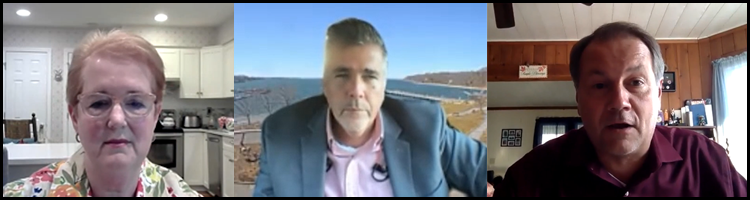
Participating in the Brookhaven Downtowns panel was David Kennedy, Greater Patchogue Chamber of Commerce; Gail Bailey, Middle Island Civic Association; and Kevin Wood, Village of Port Jefferson.
Starting off the panel was Gail Bailey, President of the Middle Island Civic Association, discussing its downtown, which had a visioning almost twenty years ago. “In 2002, a community visioning identified our crossroads at Rts 25 and 21 where most future growth should be centered. Almost 20 years later, our Hamlet Center is still a work in progress The Middle Country Land Use Plan has been guiding us, slowly but surely.”
Kevin Wood, Village of Port Jefferson Parking & Mobility Administrator, stated, “The big thing on our mind is flood mitigation. Some good news, the Dickens festival is going to be held. It is the 25th Anniversary of the Dickens Festival.” He added, “The uptown and downtown of Port Jeff are starting to get married. You have the Conifer project, a brand new LIRR, and the Gitto Organization project. This is all leading to a vibrant downtown.”
David Kennedy, Executive Director of the Greater Patchogue Chamber of Commerce, stated, “For us, it’s the downtown and the east Patchogue corridor. We are happy the town did an overlay district for the east Patchogue corridor, allowing for mixed-use residential commercial/retail spaces.” Mr. Kennedy added, “We are now an entertainment/restaurant district, and Blue Point Brewery serves as our flagship.”
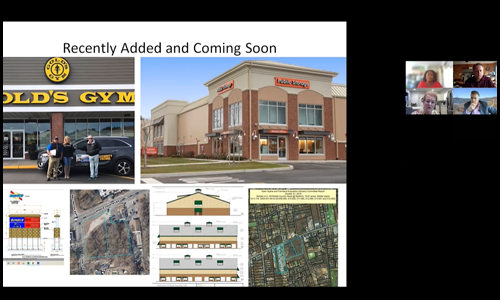
You can view the Brookhaven Downtowns panel here.
East End Downtowns
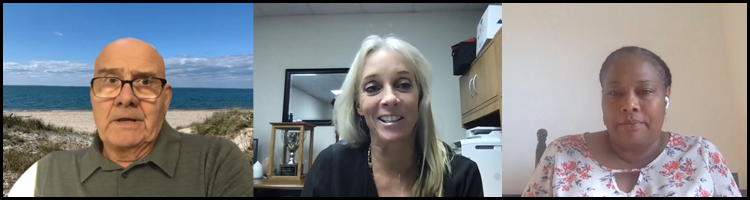
Participating in the East End Downtowns panel was Liz O’Shaughnessy, Riverhead Chamber of Commerce; Lauryn Randall, Shinnecock Tribal Nation; and Steve Haweeli, East Hampton Chamber of Commerce.
Steve Haweeli of the East Hampton Chamber of Commerce started off the panel stating, “Things are looking up in East Hampton Village. The mayor is working on getting people into the village. We have an eight-acre park right in the center of town and ends up being the centerpiece of a lot of activities that are open to all. The overall tenor of things in East Hampton could not be better.”
Executive Director of the Riverhead Chamber of Commerce, Liz O’Shaughnessy, stated, “It is a very exciting time to be involved in Riverhead. In the Town Square, demolition has commenced on two of the buildings. As those come down, there will be a nice Town Square which opens up the riverfront to the Suffolk Theatre.” Ms. O’Shaughnessy advised, “The market rate apartments at 3312 E Main are nearing completion. The TOD project, next to the Riverhead Library, is moving forward. This will also be market rate apartments. There are three new restaurants opening.”
Lauryn Randall, Transportation Coordinator for the Shinnecock Tribal Nation, shared that the Nation is preparing for their harvest time. It will include ceremonies, meals and gatherings. “In terms of economic development, we have the Monuments on Sunrise Highway. We are working hard to establish a dialogue with New York State to work with them to achieve some our goals,” Ms. Randall noted.
You can view the East End Downtowns panel here.
Babylon Downtowns
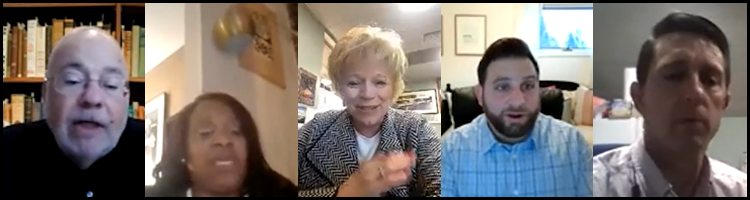
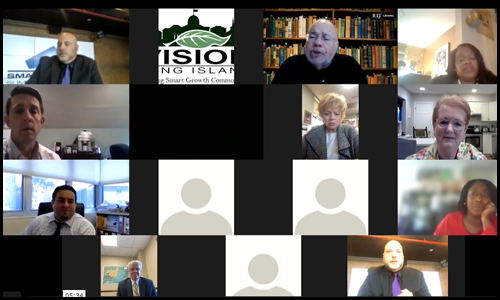
Participating in the Babylon Downtowns panel was Mary Adams, Village of Babylon; Ghenya Grant, Wyandanch Chamber of Commerce; RJ Renna, Village of Lindenhurst; John DiLiberto, Village of Amityville; and Michael Shanahan, Deer Park Community Association.
President of the Amityville Chamber of Commerce John DiLiberto kicked off the panel discussing how Amityville achieved its recent successes. “Some of the success we have enjoyed recently has been as a result of the closer cooperation between village officials, the chamber and the civic association, which has allowed us to define the common ground and do the kind of development the community really needed.”
Mayor Mary Adams of the Village of Babylon advised, “Our downtown in Babylon Village is alive and well and doing great. Over the summer we hosted plenty of events for residents and guests to come to. We closed down the streets, there were activities for children and outdoor dining, all which encouraged people to come into our downtown.” Mayor Adams noted their storefront vacancies are a little less that 1%. Importantly, Mayor Adams stated, “The Village of Babylon is working with a master planner to come up with a vision for the village for the next five to ten years, what we would like our downtown to look like.”
Ghenya Grant, Wyandanch Chamber of Commerce, advised, “Wyandanch has undergone a revitalization on the north side of the track with Wyandanch Rising. We are still looking to fill some of the commercial space. Recently, there was the groundbreaking for the Carlls River sewer district extension project, which will allow some residential housing to tap into the sewer district line.” Ms. Grant stated, “The most important thing I can say about Wyandanch is that we are rebuilding our downtown."
Village of Lindenhurst Trustee RJ Renna spoke about the great things going on in and around Lindenhurst. “When we talk about downtown revitalization, it is really important to understand your environment, what’s going on around us. We have been lucky, we had the 100-million-dollar investment in the Tritec project, bringing about 260 apartments to the village, coupled with infrastructure improvements, county and state grants and the addition of about thirty new businesses.” Mr. Renna stressed, “In order to be successful, you need everybody to work together, including the BID, the chamber, and the village.”
Mike Shanahan, Deer Park Community Association, stated, “Our goal right now is to get the residents’ input [on potential redevelopment by Long Island Avenue]. We are taking the cue and a lesson from the rest of the speakers as to working with the other groups, the chamber and elected officials. The feedback is what we really need. Deer Park residents are excited about this.”
You can view the Babylon Downtowns panel here.
Huntington Downtowns
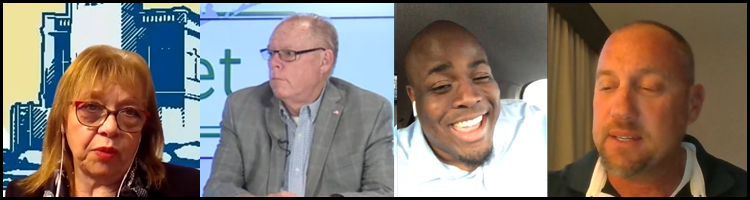
The Huntington Downtowns panel consisted of Vita Scaturro, Huntington Township Chamber of Commerce; Jim McGoldrick, Huntington Station; Ken Johnson, Greenlawn Civic Association; and Dave Weber, Village of Northport.
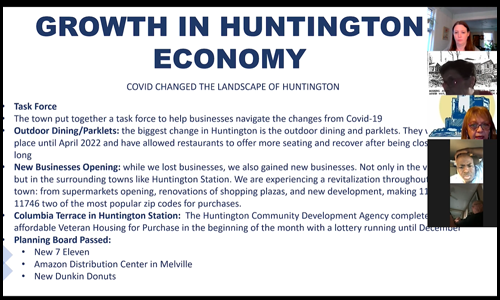
Vita Scaturro, from the Huntington Township Chamber of Commerce, kicked off the panel with the notion COVID changed the landscape of Huntington. In response to COVID, “The town put together a task force to help businesses navigate the changes from COVID,” Ms. Scaturro explained. This included outdoor dining and parklets. During the pandemic, the Chamber created webinars, had boots on the ground, offered tangible resources and scaled up community partnerships. “While we lost businesses, we also gained new businesses. We are experiencing a revitalization throughout the town,” Ms. Scaturro concluded.
Huntington Station’s Jim McGoldrick remarked, “Nothing is going to happen in Huntington Station until sewers are done. You can sit here, you can talk all you want about this and that, nothing is getting done for sewers. People should focus on getting sewers done. Huntington Station has been forgotten about for 50 years. Now we have an opportunity, hopefully with the new council people in place, to move ahead.”
Ken Johnson, Greenlawn Civic Association, advised that a lot of businesses are struggling in Greenlawn. “There have been two businesses that have closed up shop. The renovation of Greenlawn Park is very nice. Businesses are doing what they have to do. They are struggling post COVID to retain customers and are doing what they can to stay afloat.”
Dave Weber, Trustee in the Village of Northport, discussed recent developments on Main Street, including the 26-room boutique hotel being developed by the theatre.” The Village is flush with businesses coming in,” Mr. Weber stated. The basketball court in one of the parks is being renovated by Northport 1995 graduates. There are two relatively new non-profits in town that are doing work with the community, Not In Our Town and the Northport Native Garden Initiative.
You can view the Huntington Downtowns panel here.
Day 3 - Live Program
State of the Towns and Villages Plenary Session
The summit’s traditional State of the Towns and Villages Plenary Session brought to the dais, at the Crest Hollow Country Club on day three, elected officials from all across Long Island. “The Summit has always been about collaboration,” opened Eric Alexander, Director of Vision Long Island and the Long Island Main Street Alliance. “It is more important now more than ever. We have to listen - a lot.”
Newsday’s Joye Brown quickly drilled down on arguably one of the most important issues facing local towns and villages right now. “The pandemic has left a lot of people scrambling for rent, and a lot of people scrambling for mortgage payments. What, if anything, can our elected officials do to make things smoother for those in the market for affordable housing?”
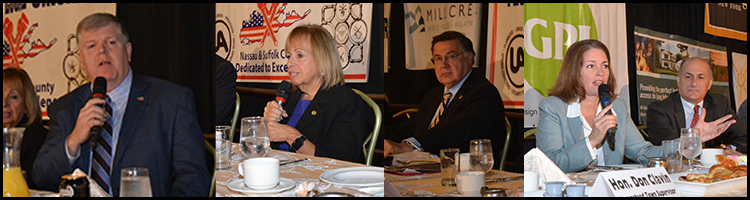
Babylon Town Supervisor Rich Schaffer responded that towns need to take the lead. “In the Town of Babylon, we welcome the opportunity to have redevelopment. Our goal is to take existing properties and turn them into more productive properties… including affordable rental housing.”
Islip Town Supervisor Angie Carpenter commented, “In terms of affordable housing, in Central Islip we were the recipient of the third round of the Governor’s DRI funding… At the north end of the project, we did an RFP and that is going to be 100% affordable housing, mixed use, with retail. There are other such projects moving forward as well.”
Brookhaven Town Supervisor Ed Romaine stated, “We are moving to change the face of Brookhaven and renew it. We have overlay districts where we are talking about and creating affordable housing,” such as in East Patchogue, Yaphank, Ronkonkoma, Port Jefferson Station, Setauket, Farmingville, Middle Island, and Coram.
North Hempstead Town Supervisor-Elect Jennifer DeSena noted, “We definitely need affordable housing in North Hempstead. We are on the side where we don’t have new space to develop. We are going to have to redevelop old spaces.”
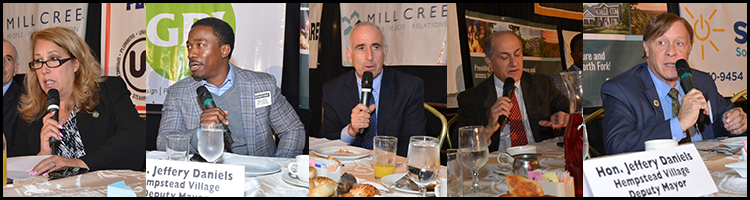
Riverhead Town Supervisor Yvette Aguiar stated, “Riverhead is being regentrified at the current time. We do have plenty of affordable housing. We are also focusing on moderately priced homes.”
Village of Hempstead Deputy Mayor Jeffrey Daniels responded, “We believe in affordable housing, but we have a lot of affordable housing. We have a lot of workforce housing existing in the Village of Hempstead. We need market rate housing. We are a picture of a TOD already. We have a financially structural problem in the Village.”
Southampton Town Supervisor Jay Schneiderman retorted, “The Hamptons have never been synonymous with affordable housing. During the pandemic, [housing] prices went through the roof. When you talk about creating affordability, it is a very complex situation. It is always met with litigation; it is always a challenge. We do try to power through it. We are trying to make more affordability happen. We changed our zoning, passed local laws, and are working on an affordable housing plan.”
Village of Westbury Mayor Peter Cavallaro detailed, “The only governments that can incentivize or encourage affordable housing are villages and towns. It will not just happen on its own, you have to incentivize it. Municipalities can create zoning that incentivizes it. Westbury has done just that. We encourage housing at every price point.”
Village of Lindenhurst Deputy Mayor Michael Lavorata explained, “We are trying to cater to the young folks. We are trying to keep our kids here. We don’t want them moving out of state.”
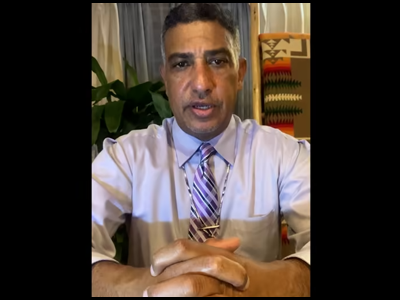
In a video message, Randy King, Vice Chairman, Shinnecock Indian Nation Council of Trustees, focused on the Shinnecock point of view of the COVID response, smart community planning and economic growth. Regarding the latter, Mr. King keyed in on the benefits of creating a modest gaming facility on Montauk Highway in Southampton, emphasizing it would act as an economic engine for the area. “It is time for equity,” Mr. King concluded.
You can view Mr. King’s video here.
The panelists also discussed their priorities for the bipartisan $1 trillion infrastructure funds coming from the federal government, which included sewers and roads, and what strategies the panelists use to instill trust with the community, which included communication and transparency.
You can view the entire State of the Towns and Villages Plenary Session here.
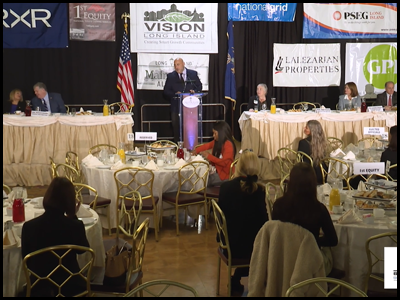
Featured Speakers and Special Messages
Featured Speakers, focusing on Bringing Resources to Our Communities, included Matthew Cohen, president of the Long Island Association, Suffolk County Legislator Presiding Officer- Elect Kevin McCaffrey, Nassau County Legislator Presiding Officer Richard Nicolello, Nassau County Comptroller-Elect Elaine Phillips New York State Senator Mario Mattera, New York State Senator Phil Boyle, and New York State Senator Alexis Weik. Each speaker discussed the need to rise above party politics and engage whole communities in order to really make positive changes on the local level.
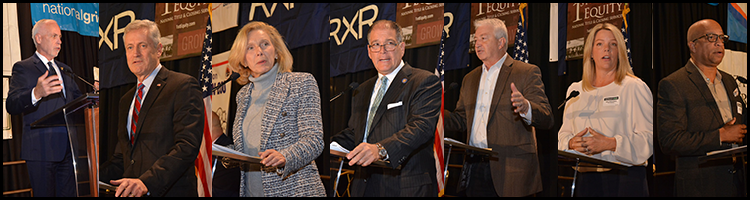
LIA’s Matt Cohen stated, “We want to be inclusive. The more we do together, the better things will be. We have to collaborate” especially in terms of affordability, small businesses, and diversity, equity and inclusion.
Presiding Officer-Elect Kevin McCaffrey opined that we must use everything learned in local government to “benefit everyone in the county from a bottom-up perspective as opposed to edicts coming from high above.” Legislator Presiding Officer Richard Nicolello added, “The boundaries between Nassau County and Suffolk County are really artificial. For the most part, we have regional issues.” Nassau County Comptroller-Elect Elaine Phillips noted the best way of understanding government is by being in local government, “you just can’t hide.”
Senator Mario Mattera stated,“It is important to reach out to your civics, your chambers, your fire departments. You must get the community involved in local projects.” Senator Phil Boyle, discussing the success of communities such as Patchogue, encouraged the attendees “to get together and work with our communities.” Finally, Senator Alexis Weik concurred, “It is so important for everyone to have conversations together, in the same place, at the same time. This is how you get everyone on the same track.”
You can view the entire Featured Speakers panel video here.
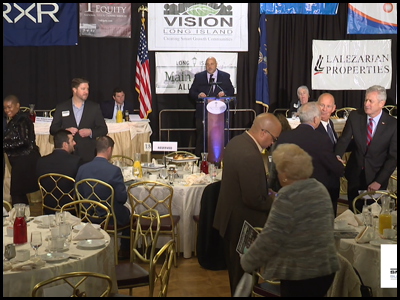
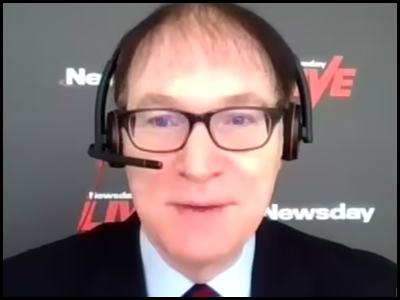
A recent Long Island Main Street News interview, featuring Newsday’s business and economic journalist James Madore, served as the opening keynote address. Focusing on the recent plight of Long Island’s small business community and the role and effectiveness of government aid programs connecting to and aiding local downtowns, Mr. Madore shared what he sees and hears each day. “Small businesses are still struggling, the pandemic is still with us,” Mr. Madore advised. “Although things are better, we still have a long way to go.” Referring to the trouble in finding employees and the rising prices of goods, Mr. Madore explained, it will take several years for small businesses to fully recover.
You can view Mr. Madore’s full interview here.
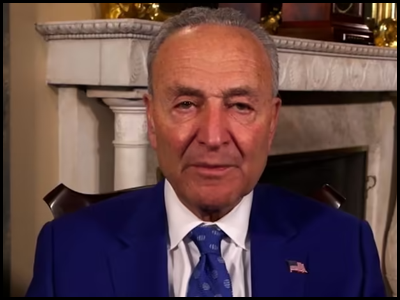
U.S. Senator Chuck Schumer, in a video message to attendees, spoke about the difficulties Long Island communities and businesses have faced these past twenty months. Citing the Payroll Protection Program, the Save Our Stages Program, the procurement of 265 million dollars in restaurant relief, 320 million dollars to Long Island school districts, and nearly a billion dollars of direct flexible aid to Nassau and Suffolk Counties, Senator Schumer noted these steps have and will continue to improve our communities. Referring to the recently passed $1 trillion bipartisan infrastructure bill, Senator Schumer stated, “We must continue to make big and bold investments to power Long Island’s recovery.”
You can view Senator Schumer’s message here.
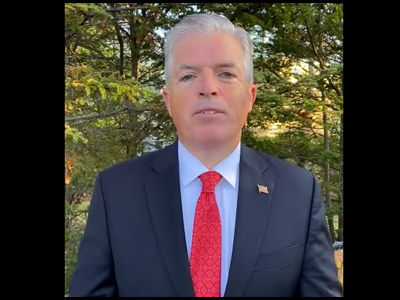
Suffolk County Executive Steve Bellone, joining the summit virtually, discussed the County’s efforts to combat issues that have long plagued the region. “We have prioritized issues like affordable housing, water quality, transportation and infrastructure,” the County Executive stated. By investing in communities, economic growth and the future, we are building back stronger than ever before, the County Executive noted.
You can view County Executive Bellone’s message here.
Major Development Projects
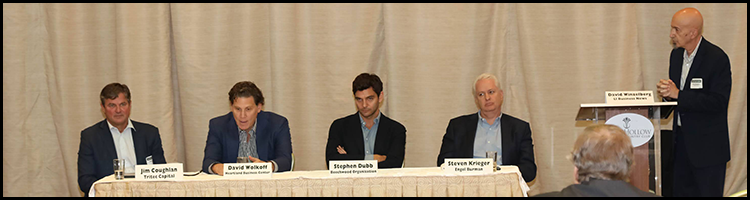
Speaking on the Major Development Projects panel on day 3 were Jim Coughlan, Tritec Capital; Stephen Dubb, Beechwood Organization; Steven Krieger, Engel Burman; and David Wolkoff, Heartland Industrial Properties. David Winzelberg, Long Island Business News, moderated. Each panelist provided an overview of their projects, and more importantly, reason for projects’ success. The one common thread running through all these successes, the need for housing options on Long Island.
Jim Coughlan recounted that Tritec has been involved in transformative projects in places such as Village of Patchogue, Port Jefferson, Lindenhurst, and Bay Shore. Currently, Tritec is focusing primarily on its 800-million-dollar investment project, the Ronkonkoma Hub. Noting the former projects acted as a shot in the arm for existing downtowns, “In Ronkonkoma, there is no downtown,” Mr. Coughlan explained. “As the population came flooding through Central Suffolk, the use of the LIRR got heavier. The train stations became a front door to communities, which started saying we don’t like our front door.” As employees move into the Ronkonkoma Hub area, Mr. Coughlan predicts, “They are going to start demanding they have access to a better quality of life.”
Heartland’s David Wolkoff emphasized, “The industrial market on Long Island is booming, to say the least.” Regarding Heartland Town Square, Mr. Wolkoff noted, “We did not partner with the civics or the town, however, Islip is very much for this project.”
Stephen Dubb, Beechwood Organization discussed several projects, including Country Pointe Plainview, which is cited on 44 acres and was the largest undeveloped piece of land in Nassau County. It consists of 750 homes, primarily age restricted, with 120 thousand square feet of retail space. Other projects are located in Smithtown, Yaphank, East Meadow and Westbury. Discussing the need for hosing diversity, Mr. Dubb said, “For the first time in our lives, I don’t worry about sales, I worry about cost increases and weather I can pass them off to buyers.”
Steven Krieger aggreed, “There are not a lot of new housing options on Long Island. Demand is off the charts.” Engel Burman’s housing developments, include Mt. Sinai, Dix Hills, Uniondale, East Meadow, and its biggest project, the Superblock in Long Beach. Pointing to the importance of receiving a PILOT from the Nassau County IDA for the Superblock, Mr. Krieger explained, “When you do get a PILOT, there is still going to be an increase in the tax base. A PILOT only gives the developer the ability to build a project, especially with construction costs today. It delays taxes. If the IDA had not given us a PILOT, the land will likely have remained vacant. In the next 20 years, it will provide tens and tens of millions of dollars in taxes.”
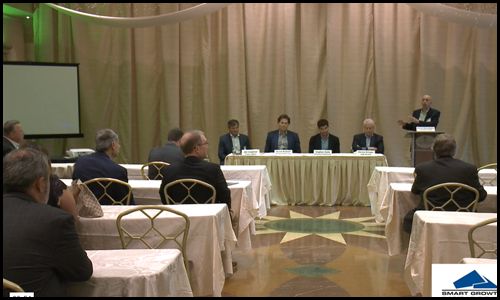
You can view the Major Development Projects panel here.
IDAs and PILOTs
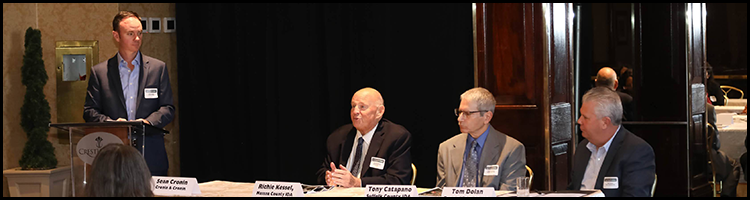
Presenting on the IDA’s and PILOT’s panel was Richie Kessel, Nassau County IDA; Tony Catapano, Suffolk County IDA; Tom Dolan, Town of Babylon IDA; and Sean Cronin, Cronin & Cronin, Moderator.
Nassau County IDA’s Richie Kessel stated, “We really cover the whole gamut of the county. Our main goal is to create jobs, bring new companies in, keep companies here and help them expand. Our role also has included encouraging affordable housing. When you want companies to move in, you have to have affordable housing. If you want to have people work here, we want to have them live here too.”
The Town of Babylon IDA operates in three villages, Lindenhurst, Amityville and Babylon Village and reaches into North Amityville, Deer Park and North Babylon. “We are the first defense in helping attract new businesses to the town and retain employment in the town,” Tom Dolan stated. Discussing the correlation between business and housing, Mr. Dolan agreed the latter is necessary and identified The Wel apartment complex in Lindenhurst as an example. “We are seeing young professionals moving in.”
“In Suffolk County there are five IDA’s,” panelist Tony Catapano explained. “The Town of Huntington and the Town of Smithtown do not have IDA’s, so that is the primary area in which the county IDA functions.” With respect to the nexus between business and affordable housing, Mr. Catapano pointed to the successful effect The Shipyard at Port Jefferson had on local businesses.
Regarding payment in lieu of taxes (PILOTS), the panel impressed upon attendees, PILOTS are not giving businesses money. The tax base is building. Incentive packages are put together, taxes are not being lowered. “Taxes are not being subsidized by tax-payers,” Mr. Kessel stated. “In most instances, developers are subsidizing the tax-payers. Helping to grow the tax base. Educating the population is paramount.”
Mr. Kessel, putting his finger on a very important topic, stated, “Potentially over the next few years, getting the state, the legislature, to look at ways to expand the IDA’s ability to help small businesses and downtowns is going to be very important to our future. We don’t want to lose the jewels of what we have in our downtowns and I think IDA’s can be instrumental in that.”
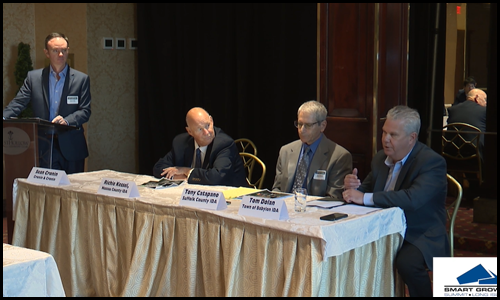
You can view the IDAs and PILOTs panel here.
Regional Transportation Projects
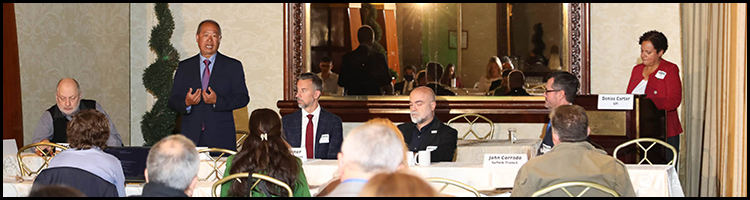
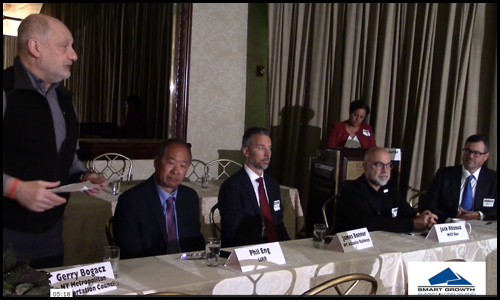
Speakers on the Regional Transportation Projects panel included Phil Eng, LIRR; Jack Khzouz, NICE Bus; John Corrado, Suffolk Transit; James Bonner, NY Atlantic Railway; Gerry Bogacz, NY Metropolitan Transportation Council; and Denise Carter, GPI, Moderator.
Gerry Bogacz, Planning Director for NY Metropolitan Transportation Council (NYMTC), started off the panel noting he works for a council that decides how money comes in and is used. Mr. Bogacz focused his remarks on the newly passed Infrastructure Investment and Jobs Act (IIJA), calling it a real step forward for funding available for transportation. “This will filter down to these folks [on the panel] to help them improve and maintain the facilities and services they provide.” Regarding new discretionary funds available, Mr. Bogacz stated, “Our region has to be competitive to get these funds. We have to work together.”
President of the MTA Long Island Rail Road, Phil Eng stated, “It is important how we are going to use these federal dollars. We are going to have to figure out how to prioritize work and continue to build off of the success we have had at the MTA.” Discussing the large picture, Mr. Eng noted, “Transportation is vital to the economy, vital to the quality of life. I am talking about multi-modal transportation. We all have to be successful for one of us to be successful. We need to be cost effective, on schedule and on budget when delivering capital projects.”
James Bonner, President of New York & Atlantic Railway, noted this local private company began operation in May 1997. “Our success is measured by how infrequently you hear about us,” Mr. Bonner explained. Its goal is to move freight in and out of Long Island without intervening with passenger rails. Discussing the recent federal funding, Mr. Bonner stated, “We don’t necessarily expect to receive any lump sums. We will largely follow along with what the LIRR does. There may be tangential benefits.”
CEO of NICE Bus, Jack Khzouz, noted NICE Bus is one of the largest suburban bus systems in the country, delivering 1.2 million miles a month. “Currently, we are at 75% pre-COVID ridership,” Mr. Khzouz advised. “Our ridership is transit dependent. They cannot work from home.” Mr. Khzouz stressed, “There is an interconnectivity between the economy and transportation.” NICE Bus is customer driven as a transit system, striving to find ways all systems can be connected and the infrastructure bill will be a help in getting there, Mr. Khzouz concluded.
John Corrado, President at Suffolk Transportation Services, noted that Suffolk Transit is a private company, running about 1500 school buses and about 300 transit and para-transit vehicles. “There are challenges,” Mr. Corrado acknowledged, “such as lack of density. We move about twenty-five thousand people a day.” Important to the company is understanding how folks in Suffolk County get around, Mr. Corrado stated. Relying on technology, Suffolk Transit is able to collect important data. “This data helps us reimagine and rethink our transit system,” Mr. Corrado explained.
You can view the Regional Transportation Projects panel here.
Downtown TODs, Part One

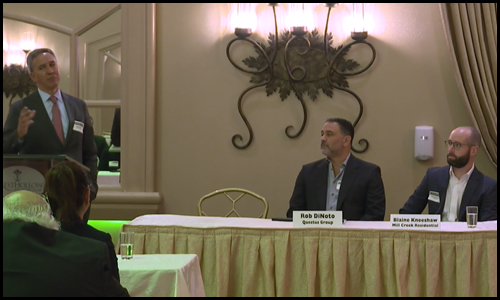
Speaking on the Downtown TOD’s, Part One panel on day 3 were Blaine Kneeshaw, Mill Creek Residential; Rob DiNoto, Questus Group; and Jack Martins, Harris Beech, Moderator.
Mr. Martins opened the panel by painting a picture of the status of development on Long Island. “Transit-oriented development on Long Island is a topic we have been talking about for the better part of the last 30 or 40 years. I think we have come a long way. More and more communities today are open to multi-family, mixed-use, transit-oriented development than ever before. Yet, we still have challenges.”
Rob DiNoto of Questus Group discussed several of his companies’ projects, which focus recently has been on multi-family, including Floral Park and Hicksville. Speaking to challenges, Mr. DiNoto stated, “In Suffolk County, these types of developments are difficult because you have problems with parking, people and sewage. Our biggest challenge, where we have administrations willing to see a multi-family development, is how do we solve the problem of sewers when we only have so much space.”
Blaine Kneeshaw identified some of Mill Creek’s transit-focused, multi-family projects, including Mineola, Hempstead, and West Hempstead. Discussing challenges, Mr. Kneeshaw explained, “Density is a challenge in all sites near transit, with parking being one of the biggest challenges you face. You need to get creative with your design and work with villages and town that already have frameworks in place.” Mr. Kneeshaw described an issue he sees, “NIMBYISM is still very much prevalent on Long Island, which is ironic because of how the requirement and the need for multi-family housing and housing in general far exceeds northern New Jersey, Westchester County, Connecticut. It’s needed here more than ever.”
Mr. Martins shed light on one crucial way to meet transit-oriented development challenges, “The idea of a community deciding for itself, through either a masterplan or a visioning process, what they want to see in their downtown, I find to be the difference these days. Developers are seeking out those communities. It’s all about the dialogue, the education, the outreach and making the community feel like they are part of that discussion and that you are not coming in there cold.”
You can view the Downtown TODs, Part One panel here.
Water and Sewer Infrastructure
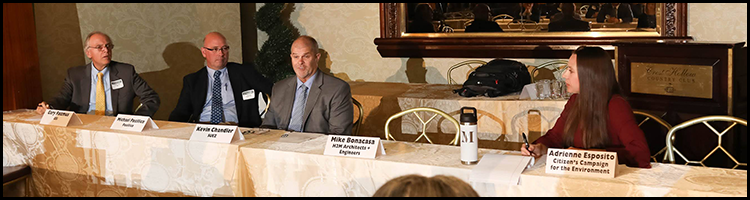
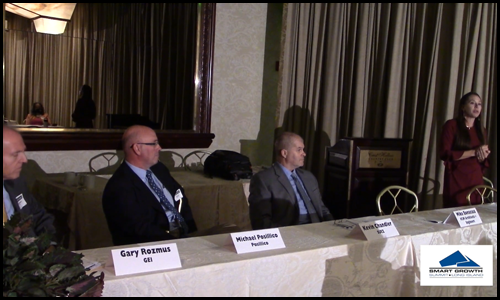
Participating in the Water and Sewer Infrastructure panel on day 3 was Kevin Chandler, SUEZ Water Long Island; James Gray, Posillico; Gary Rozmus, GEI; and Maureen Dolan Murphy, CCE, Moderator. The panel focused on what has been done in this area, “Progress is being made,” CCE Executive Programs Manager Maureen Dolan Murphy stated. Positive measures include the creation of the Clean Water Coalition and the federal infrastructure bill.
Kevin Chandler, Vice President of SUEZ, which operated three waste water plants in Nassau County, focused his remarks on nitrogen projects SUEZ has embarked on. These include a biological nutrient removal project, which is designed to remove about 40% of the nitrogen load that was once going into Reynolds Channel; and a site screen project, which takes the nitrogen rich recycle flow from the dewatering operation at its treatment plant to further reduce nitrogen by another 12%. “These are nitrogen projects we are pleased to be part of that will clearly have a positive impact on the western bays and the quality of life here,” Mr. Chandler stated. SUEZ is also engaged in water re-use projects.
Posillico’s James Gray, Wastewater Operations Manager, discussed projects such as adding 10 million gallons of capacity to the Bergen Point Wastewater Treatment Plant and building a new outfall project for this plant. Projects such as these, Mr. Gray noted, “Will impact Long Island’s environment and coastal resiliency and help the overall health of the Great South Bay and the ocean.”
Gary Rozmus, Senior Consultant at GEI, added, “There are a number of technical tools available to us as engineers to implement infrastructure projects.” Discussing soil, the tools that need to be built into projects include New York State’s revised Part 360 Solid Waste Management Regulations and Brownfields Clean-Up Program. “You want to make sure funding is used in a way that allows projects to really get done,” Mr. Rozmus stated. “These tools are in place and we just have to make sure we incorporate them into the project designs.”
You can view the Water and Sewer Infrastructure panel here.
Affordable Housing Needs and Availability
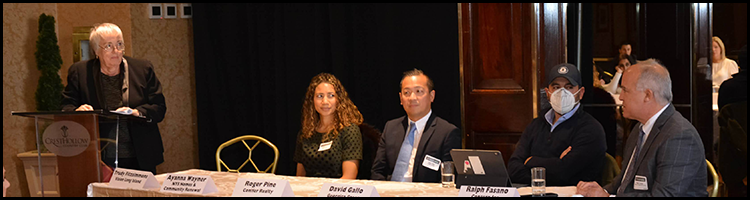
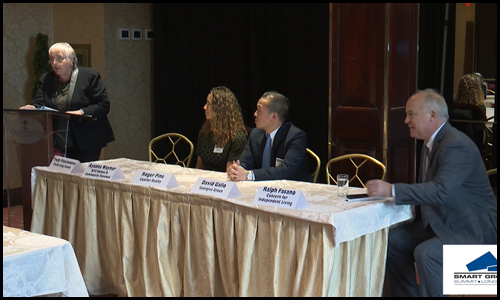
Participants on the Affordable Housing Needs and Availability panel on day 3 included Ralph Fasano, Concern for Independent Living; David Gallo, Georgica Green; Ayanna Wayner, NYS Homes & Community Renewal; Roger Prime, Conifer Realty; Trudy Fitzsimmons, Vision LI, Moderator. Ms. Fitzsimmons opened the panel with an important question: “What can Albany do to help you in what you are doing and what do you wish Albany would not do?”
Ayanna Wayner, Downstate Development Director of HCR stated, “Governor Hockul is very supportive of affordable housing and we hope it continues.” Roger Pine, Vice President of Development at Conifer Realty, stated, “Two key factors are resources available and timing - the ability to execute projects in a time frame that makes them feasible.” David Gallo, President of Georgica Green, added, “Recognizing the need for affordable housing at the state level and supporting developers with funding to see projects come to fruition is important.” Ralph Fasano, Executive Director of Concern, expanded the discussion, “The state needs to work together not just on a silo on housing and a silo on education. When we want to do affordable housing, we need to address other areas, such as education, and come up with a package. We need to add to the school district, we need to add to infrastructure.”
Ms. Wayner stated, “It’s important for her team to spend time in communities to really understand what is happening in those communities.” By doing so, she can understand the needs and challenges of non-profits and developers working in this area.
“It is a really important part of my role,” Mr. Prime explained, “is to engage stakeholders that are involved in our developments, including reaching out to the community and identifying challenges and working with the community.”
Mr. Fasano noted, when it comes to these types of projects, “You have to persevere in this field.” Sometimes you have to wait for those friendly to your project, he explained. “It can take so long, and it should not have to.”
Regarding the use of IDA’s, Mr. Gallo noted, “We have had success with PILOT’s on Long Island,” referring to the Glen Cove IDA and the Town of Riverhead IDA. “It’s stipulated, it’s known, you know how to move forward. It takes the guess work out of it.”
You can view the Affordable Housing Needs and Availability panel here.
Long Island’s Energy Future
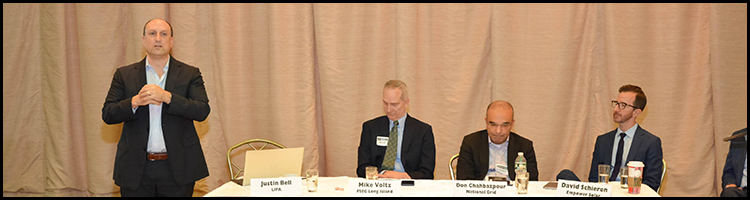
Day 3 Long Island’s Energy Future panel included Justin Bell, LIPA; Mike Voltz, PSEG-LI; Don Chahbazpour, National Grid; David Schieren, EmPower Solar; and Mike Deering, LIPA, Moderator.
Don Chahbazpour, Director of Regulatory Strategy at National Grid, “A little over one year ago, National Grid expanded its net zero ambition to include our customers’ emissions. That makes it a lot more ambitious. That means the gas and electricity we sell, we pick up as part of our new net zero announcement. It includes aggressive energy efficiency, solar, large scale off-shore wind, electrifying the transportation sector, innovative technologies and decarbonising the gas network.” A mosaic portfolio is necessary, he concluded
Justin Bell, Vice President of Public Policy & Regulatory Affairs at LIPA, noted, “We are going to have a 100% carbon-free electric grid by 2040. That is important because it drives interim goals, including a 9,000-megawatt offshore wind goal by 2035.” Mr. Bell added that we are not just discussing the future, a lot of clean energy projects are happening now, including off-shore wind.
EmPower Solar’s David Schieren summarily noted, “To fix our energy infrastructure, we have to bring the community together. The important idea of planning resurfaced during Mr. Schieren’s presentation. “With regarding to the planning of our grid infrastructure, the electrification of our transportation is so transformative, it will be a massive part of our grid planning moving forward,” he stated. Looking ahead, Mr. Schieren advised, “We need to add batteries to systems. This will not be without challenges.”
Mike Voltz, Director, Energy Efficiency and Renewables of PSEG-LI, discussed the Climate Leadership and Community Protection Act (CLCPA), more specifically laying out the statewide goals of the CLCPA and drilling down on Long Island’s share of those goals, how Long Island is doing, and some initiatives PSEG-LI is undertaking in order to meet those goals. PSEG-LI goals include working towards meeting NYS standards in the areas of electric vehicles, energy storage, energy efficiency, electric heat pumps, and solar.
Click here to view the complete panel video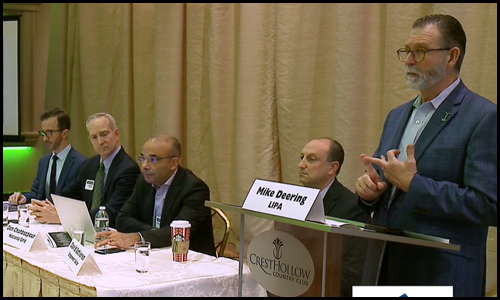
You can view Long Island's Energy Future panel here.
Downtown TODs, Part Two
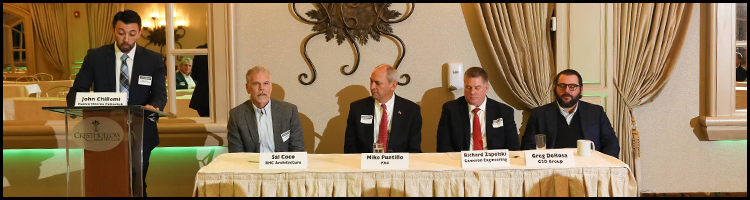
Downtown TOD’s, Part Two panel included Greg DeRosa, G2D Group; Mike Puntillo, PX4; Sal Coco, BHC Architecture; Richard Zapolski, Cameron Engineering; and John Chilemi, Ruskin Moscou Faltischek, Moderator. Mr. Chilemi inquired of the panelists, “What draws you to a TOD site. What are you looking for?”
Greg DeRosa, CEO of G2D Development, responded, “One of the major things we look for in analyzing a location is demand drivers that are around the site. Public transportation is an important part of that and anything else that would provide a quality-of-life experience to the residents that would be living in the building that we created.” He added, “Walkability is important. Proximity to restaurants and other amenities are important. Employment is critically important.” Mr. DeRosa noted after a site is identified they go in and meet with the municipality or village. It is pretty clear, as a result of that meeting, if you should pursue the project.
Mike Puntillo, Vice President at PX4 Development, agreed with Mr. DeRosa, adding, “I want to go where I’m wanted. We look for communities whose philosophy is growth oriented, and interested in adding to their downtown.”
“We are in the business of finding out what is wanted in an area,” Richard Zapolski of Cameron Engineering explained. “We work with electeds, civics and chambers of commerce to put together maybe a zoning solution that then welcomes a developer to come in and see what the rules are for developing a piece of property.”
Sal Coco, of BHC Architecture, noted, “You are seeing four and five story buildings by train stations on Long Island, which eight to ten years ago was a terrible thing.”
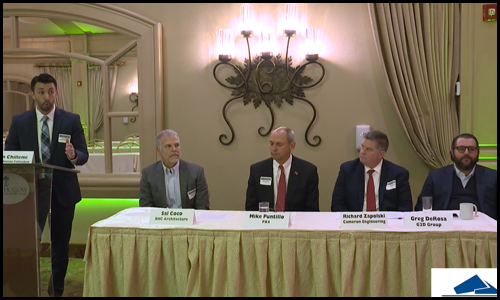
You can view the Downtown TODs, Part Two panel here.

We are now accepting nominations for
the 2022 Long Island Smart Growth Awards!
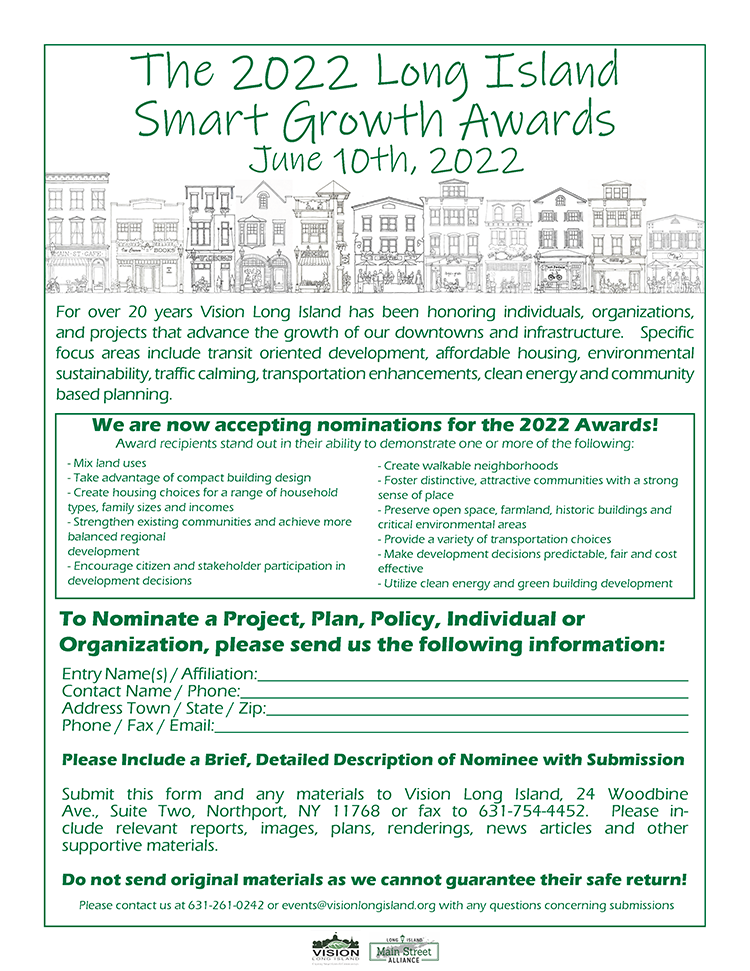
You can download a PDF version of this flyer here.
Save the Date for the upcoming
Long Island Complete Streets Summit
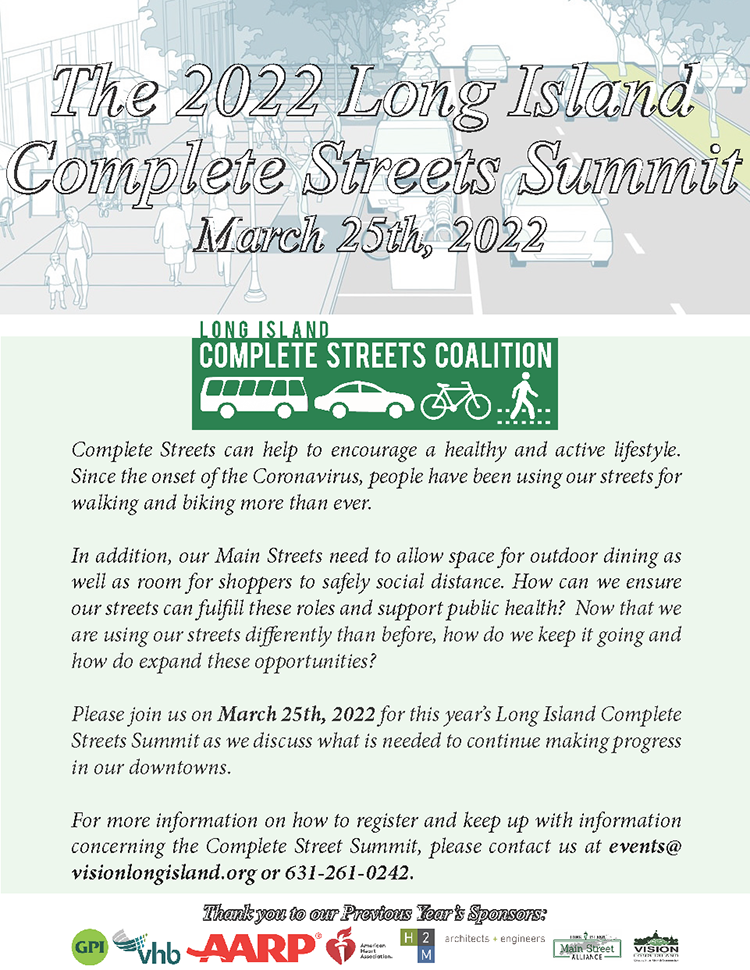
You can download a PDF version of this flyer here.
Please join us for the upcoming
Long Island Youth Summit!
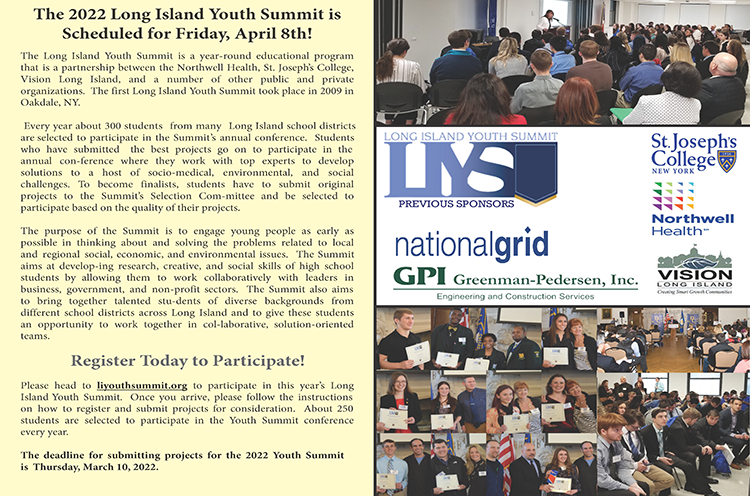
You can download a PDF version of this flyer here.
Keep up to date with our local downtowns
through the Main Street News program!
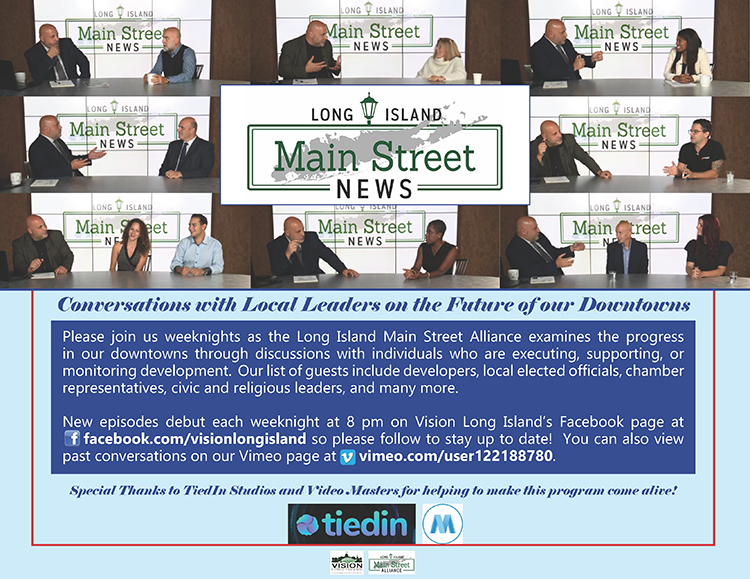
You can download a PDF version of this flyer here.
Join us for events centered on
improving our local downtowns!
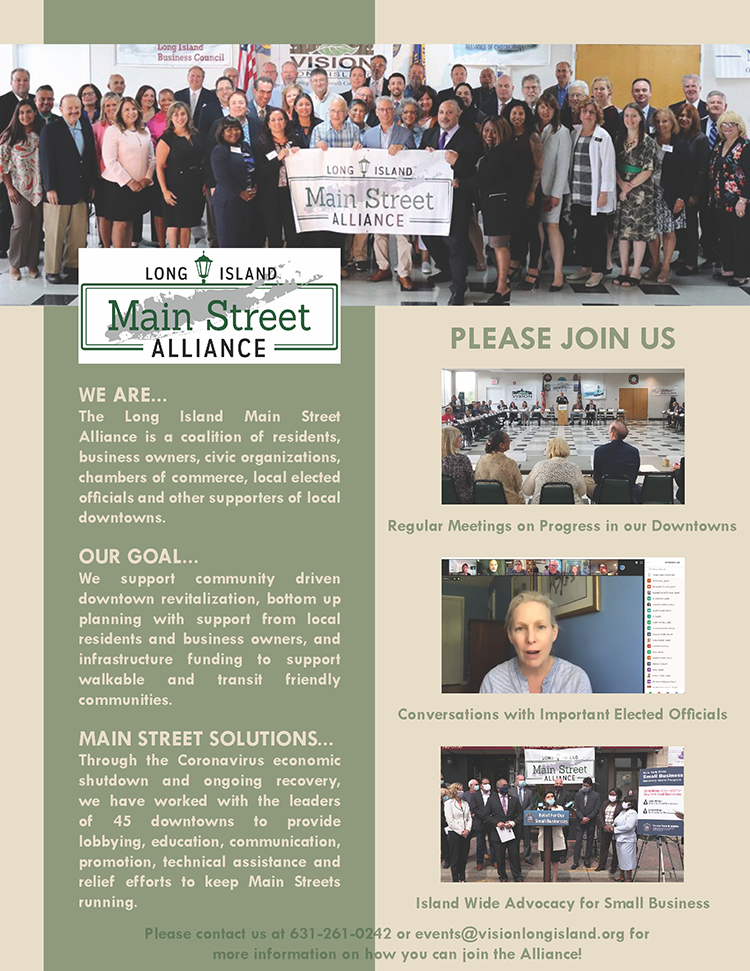
You can download a PDF version of this flyer here.
Special thanks to our Board members!
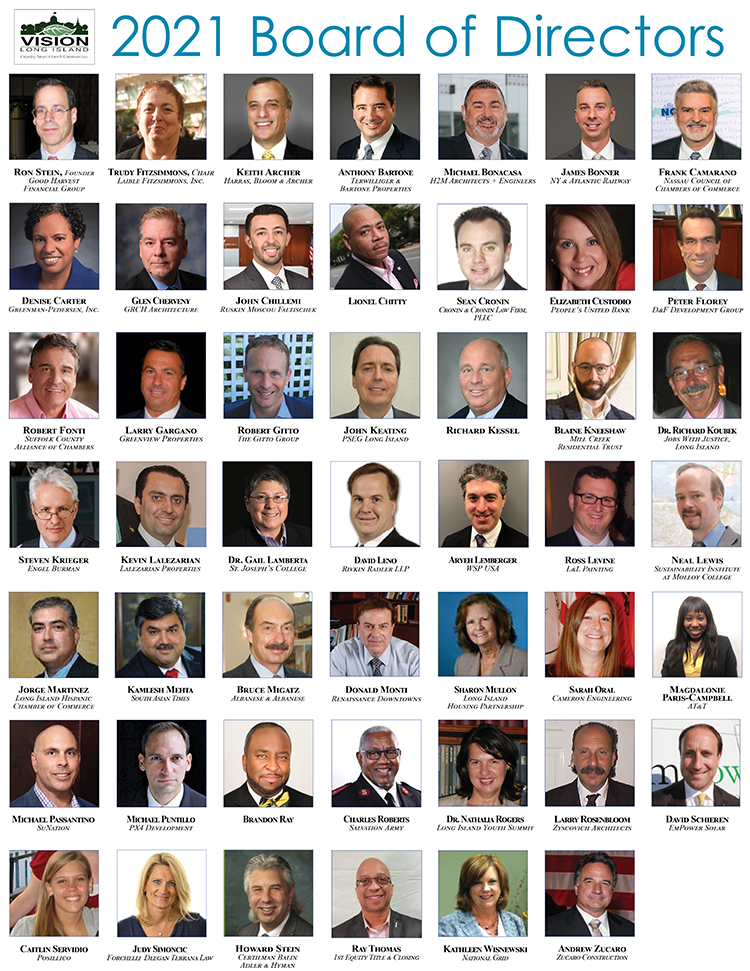
Vision Long Island
24 Woodbine Ave., Suite Two
Northport, NY 11768
Phone: 631-261-0242. Fax: 631-754-4452.
Email: info@visionlongisland.org
Website: www.visionlongisland.org
 Facebook | Facebook |  YouTube YouTube |
 |


Home | Contact Us | Newsletter Archive | Donate | About Us
