A Message from Vision……
Vision Long Island wants to thank you for being a support to the Smart Growth movement over the last year.
Something happened this year at our recent Smart Growth Summit – a call to action for all of the local municipalities to come forward and assist Long Beach and other hard hit communities. That call was answered and then a call for volunteers was made and hundreds of Long Islanders have stepped forward to assist Long Island’s hard hit communities over the last six weeks.
That is the spirit of the Smart Growth movement – people helping people, businesses helping other businesses and municipal governments working collaboratively advancing new ideas to redesign and strengthen our downtown communities and infrastructure. The incredible response to our region’s call to action reminded me how meaningful the work and the people shaping this movement really are in improving our communities.
As you know our Board and staff have acted as a catalyst and have provided support for Smart Growth projects and policies for many years.
This year had many bright spots highlights some of which include:
1) Progress on Transit Oriented Developments:
Approval of 600 more transit oriented development units to bring a total of nearly 7,000 units over the last six years. Notable successes include projects in Farmingdale, Central Islip and Patchogue.
2) Changing regulations and road designs to make our streets safer for all users:
Progress on this issue included the passage of Complete Streets legislation in Suffolk County and the Town of Hempstead. Vision successfully pushed for New York State to change high-accident roadways in Main Street Smithtown and Hempstead Turnpike in Nassau County towards safer roadway designs.
3) Investments in infrastructure pre and post Sandy:
Vision has been a leader in expanding public and private support for wastewater, transportation and energy infrastructure for our region.
4) New constituencies and expanded public support for Smart Growth:
Vision has been successful in expanding the movement to include our regions youth, seniors and small business in support for Smart Growth solutions. Local polls show an increase in support for Smart Growth projects thanks to all of our efforts.
5) Expanded presence in Albany:
Vision is a founder and principal leader of the LI Lobby Coalition which brings over 50 organizations to Albany each year to ensure a Long Island voice for a joint small business, civic, environmental and transportation, human service and smart growth agenda. Once again we impacted the state budget and were also able to get the Sewage Right to Know Act passed – our fourth major bill passed in less than three years.
6) Premier leadership and events:
The LI Smart Growth Summit and Smart Growth Awards continue to be LI’s premier planning events that bring our leaders together. This year was another one of record turnouts, excellent honorees, speakers and the development of new ideas and projects for our region. For more on this important event please read the full write up below!
For 2013 we have much more work to do –
1) Priority Infrastructure investments:
Federal and State resources that will come to LI for infrastructure and rebuilding need to reach the communities they are intended with an emphasis on redesigning our neighborhoods to be more resilient.
2) Many of the downtown projects that can grow our economy are still awaiting approval:
Despite many victories in recent years, over 14,000 units of housing are being considered in nearly 20 pending Smart Growth projects across Long Island. Work will be needed to achieve local consensus toward approval and implementation.
3) Coordinated bottom up planning:
Local officials, small business leaders and community organizations need to continue to shape the decisions of our neighborhoods while planning collaboratively with the numerous regional authorities and plans forming. Vision has to continue to work in this area and bridge the gap between our communities and these varying regional plans.
And as most folks know we have to end this message with a standard pitch for your continued support:
Vision operates very lean with hardly any overhead – no highly paid consultants, nice offices, or layers and layers of bureaucracy. Support for Vision has and will always go directly to our mission which advances the Smart Growth movement each day to better our downtowns and grow our regions infrastructure.
The folks who have supported us throughout the years know our work and collective accomplishments. For friends that are new to us – and have questions on our goals and activities please call us directly at 631-804-9128 and we would be glad to bring you up to date.
So in short in order to grow the Smart Growth movement we need both your guidance and financial support as we wrap up this year and plan our next steps into 2013.
We are privileged and humbled to serve the Smart Growth movement during these challenging times for Long Island. Thanks to all of our friends and colleagues and we hope you have a wonderful holiday season at home and in your community.
Best,

Eric Alexander
Vision Long Island
Please donate today online here or email or mail in the donation form below.
If you have any questions, feel free to contact Vision Long Island at 631-261-0242 or info@visionlongisland.org.
Sincerely,
The Board and staff of Vision Long Island
Thank you for supporting Smart Growth this holiday season!
__________________________________________________________________________________________________________
*Please note donation amount: ___$50 | ___ $100 | ___ $250 | ___ $500 | ___ $1,000 | ___ Other Amount: _____________
Name: _____________________________________________________________________________________________________
Affiliation: __________________________________________________________________________________________________
Address: ___________________________________________________________________________________________________
City: ______________________________________________________ State: ___________________ Zip: ___________________
Phone: ____________________________ Fax: ______________________ Email: _______________________________________
*Payment Options: ___ Check __ Credit Card
Online credit card registration is available here
(Make checks out to Vision Long Island and mail to 24 Woodbine Avenue, Suite 2, Northport, NY 11768)
Return to: 24 Woodbine Ave., Suite Two - Northport, NY 11768
Phone 631.261.0242 Fax 631.754.4452 Email info@visionlongisland.org
The 11th Annual Smart Growth Summit
1,000 Long Islanders join together to rebuild our region's infrastructure!
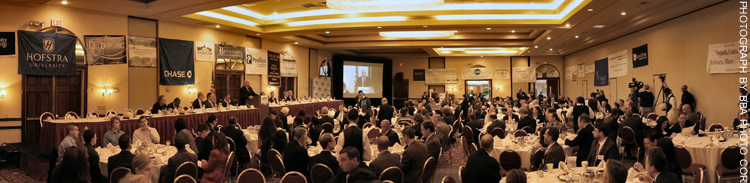
The 11th Annual Smart Growth Summit focused on "Rebuilding Long Island: Climate Change, Infrastructure and Our Downtowns" in response to Sandy. The world has changed and the Summit drew together a thousand representatives from across Long Island and the region to move forward together.
Breakfast Plenary Session
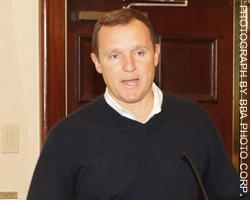 500 people attended the breakfast plenary session. Ken Daly, of National Grid, was originally slated to speak at the Summit about energy partnerships. The focus now is on helping those in the hardest hit areas and restoring and rebuilding communities. Mr. Daly explained his employees are working 16-hour days, some of whom are also living in the impacted areas. He explained that in an 8-hour window during the worst of the storm, there was more damage than in the previous century combined. There were crews out during the storm to mitigate damage and there were only limited issues to a very small percent of the gas system.
Restoration, he explained, is far more complex in this storm, as homes were severely damaged and need to be repaired before it is safe to do so. Now that power and gas has been restored to all of their customers, the problem now lies in serving gas to customers with extensive basement and salt water damage. There are a number of programs in place to assist in damage assessment and restoration. Inspectors and plumbers have been funded and boilers, electric heaters, and furnaces are being donated. Moving forward, National Grid wants to collaborate with organizations like Vision in rebuilding our communities.
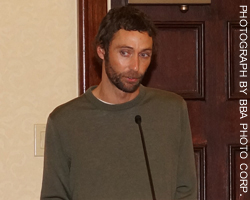 Following Mr. Daly's opening remarks, Rauch Foundation's John McNally made an empassioned and emotional plea for Long Islanders to come together to help in long-term restoration efforts. McNally, a resident of Long Beach, was one of the many who were directly affected by the storm. The City is overwhelmed by clothing, food, and water donations and are now facing more immediate issues of removing trash and debris, demolition, renovation, and electrical inspections. Anyone who could offer help was encouraged to reach out to John.
Vision Long Island announced that they would be organizing a volunteer cleanup the following day.
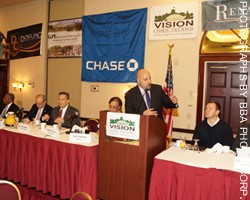
Current State of the Towns and Villages
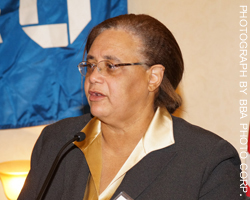 Newsday's Joye Brown led a lively breakfast panel, Current State of the Towns and Villages, featuring Hon. Jon Kaiman, Supervisor from the Town of North Hempstead; Hon. Frank Petrone, Supervisor of the Town of Huntington; Hon. Ed Romaine, Supervisor-elect from the Town of Brookhaven; Hon. Scott Russell, Supervisor from the Town of Southold; Hon. Steve Flotteron, Councilman from the Town of Islip; Hon. Jim Dunleavy, Councilman from the Town of Riverhead; Hon. Paul Pontieri, Mayor of the Village of Patchogue; Hon. Ralph Suozzi, Mayor of the City of Glen Cove; Hon. Wayne Hall, Mayor of the Village of Westbury; Jack Schnirman, City Manager of Long Beach; and Warren Tackenberg, Nassau County Village Offficials Association.
Brown first thanked the elected officials for being the first line of communication and the glue for us. Everyone on the panel had been extremely attentive to their communities.
When questioned about who should be the next head of LIPA, North Hempstead Town Supervisor Jon Kaiman said that there needs to be a complete reconsideration of how we do utilities and that we should focus on smart re-growth. The whole notion of what we do as a community has changed and time will tell how we handle it.
The panel was asked about the current state of their municipalities.



Hon. Paul Pontieri, Mayor of the Village of Patchogue, said that his community was very lucky. They escaped the storm with some flooding, but an in-tact substation that restored power to most residents within 48 hours. Once the infrastructure was secured, they went through the neighborhood to help those residents paralysed by the damage and trauma of the storm. He encouraged everyone who could help to do so.
Jack Schnirman, City Manager from Long Beach, said that his community was in ruins, having lost all of their critical infrastructure - the beach, bay, and boardwalk. The power was out. The ocean met the bay in the middle of the city and there is catastrophic destruction. Today, they have clean water, sewage systems are pumping again, the power is on, trains are running, and schools are open. There has been an incredible amount of progress but so much more still needs to be done: there is so-called Mt. Sandy, a huge pile of sand that was removed from the streets and piles of trash and remains of gutted homes lining the streets that sanitation works just cannot keep up with. Cleanup efforts are expected to cost $100 million. Schnirman thanked everyone for the overwhelming support they have showed Long Beach and the surrounding communities. They are going to rebulid "smarter, safter, stronger" than before, with everyone's help. There is a huge opportunity to redo downtown along the waterfront with master developers and the army corp of engineers and FEMA. It's now uplifiting to think about rebuilding and supporting local businesses again.
Schnirman went on to admit lessons learned from the storm: people shouldn't have generators on their first floors. LIPA shouldn't have substations or critical infrastructure on the waterfront. We need to invest in elevtating those things; FEMA regulations about putting homes on stilts helped, though the ruling was controversial.
Councilman John Dunleavy explained that in Riverhead, residents were also lucky. The storm left them discomforted, most without power for 1-6 days but sustaining minimal damage. The worst damage was from storm surge at the mouth of the Peconic River, where all waterfront homes sustained water damage. 15 feet of cliffs washed away and cannot be restored, leaving houses closer to the edge.


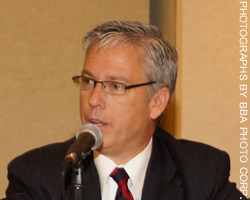
Warren Tackenberg, of the Nassau County Village Officials Association which represents 64 villages in Nassau County, said that some villages were decimated and it will take a long time to recover. Emergency management organizations were spectacular in the wake of the storm. He worked for 2 days in the Bethpage emergency management office and could walk across the room to talk to all agencies and involved parties.
Glen Cove Mayor Ralph Suozzi said that his city got off easy and were more inconvenienced than devestated. There were some people who were without power for two weeks and there were spots with significant water damage, but he and his city are thankful for the assistance they got. They were proactive and reinforced some of their power grid ahead of the storm and those lines are still standing. Grid maintenence needs to be more aggressive moving forward.
Islip Town Councilman Steve Flotteron spoke on the destruction seen both on the mainland and Great South Bay, particularly on Fire Island, where major services such as electric, water, and septic were all destroyed. The fear was that after washoever, septic tanks without covers pose a risk for people walking on them. Within 3 days of the storm, all homes were quickly inspected with safety ratings. LIPA had trouble restoring power. Tides are higher now and there are bigger storms. People's complaints about blocking views because of tall houses are moot now.


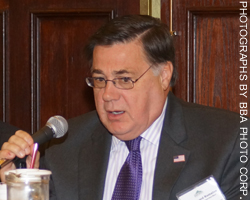
Rich Schaffer, Supervisor of the Town of Southold, said that his community really dodged a bullet, considering they are surrounded by water on three sides. They had some damage, but what came out of it was an open dialogue on wind code allocations for farms and talk on renewable energy. Once our neighbors are all safe, we need to have a serious discussion on infrastructure on Long Island. Some houses that were washed away cannot be rebulit due to water zoning codes and there are ecosystem hazards with fuel tanks having been swept away into the water during the storm.
Village of Hempstead Mayor Wayne Hall said the worst of the damage in his community came from downed trees on houses and roadways. He and his residents were frustrated by LIPA's lack of communication following the storm - contact numbers led nowhere and residents started calling his personal cell phone trying to get information. Everyone now has power and trees are finally being removed. He does not think that people should be charged right now for rebuilding permits. Now that the Village is up and running, he is offering their resources, such as sanitation trucks, to places like Long Beach.
Brookhaven Supervisor-elect Ed Romaine said that the majority of Fire Island lies in the Town of Brookhaven and along with that, Mastic Beach was devestated. The North Shore has flooding in Port Jeff and there is coastal erosion and many trees down. Most of the oil tanks were not buried and floated during the storm, spilling oil everywhere. The smell from that and overflowing cesspools was overwhelming. The highway department and LIPA did not properly coordinate on downed lines and he felt that the wires could have been cleared sooner if they knew if they were live or not. It was obvious that infrastructure played a major role in the storm's aftermath - those who lived in condos with buried power lines did not lose power. “There will never be a development built in Brookhaven Town without a requirement to bury utilities.” Major concerns right now are treatment plants, coastal erosion, and drainage system with pollutants into the bays.


Huntington Town Supervisor Frank Petrone said that it would cost several billions of dollars to bury power lines, which is a minimal impact compared to neighbors. Right now, debris is a big concern. There are many lessons learned after Sandy that we should have learned in storms past: did we really have a coordinated emergency plan? Were all of our resources together, including local, state, federal, National Grid and LIPA, schools, and hospitals? In storms past, no one could imagine 'the big one,' a storm where communication would break down and plans would not work. Social media was the best and most effective way of reaching residents following the storm. As a former regional director of FEMA, Petrone managed the aftermath of Hurricane Gloria. There was talk then about mitigation and not rebuilding in an area that you know will get hit again. $30 billion has been spent on this storm already. LIPA estimated that it would cost $33 billion to bury the wires. We have to change, especially after millions more dollars were spent after Irene to repair poles and lines that came down again. If we believe in Smart Growth and the strategies that we talk about, he said that we need to take care of the basics, especially in terms of infrastructure. Most Long Islanders would gladly contribute $100-200 additionally a year to bury the lines and avoid another situation like the one from which we're finally emerging. We have to keep the momentum going before people get lost in the holidays and forget that this happened.
North Hempstead Supervisor Jon Kaiman added that there are consequences to everything we do. When we require people to build underground wires, increase building costs, and density, it increases opposition and there runs the risk of getting nothing done. There were a lot of power outages in North Hempstead, but he thought there was good intragovernmental communication, though there was a definite disconnect with residents. There needs to be an investment in a better regional approach; we cannot just put it all into the private sector. We still need to approve building permits and the like, but we can't say 'don't rebuild along the coast anymore' or 'don't chop down any more trees.' The aftermath of this storm is full of contradictions and there's no one outlet on which to place all the blame and responsibility. We need a master plan and organizations such as Vision Long Island and the decision makers on Long Island to stay ahead of the curve, working with unions and all levels of government. There is great potential to see major improvements over the next few years.
Supervisor Petrone added that both county executives showed that they are capable of leading. They can be a gateway to begin to rebuild. Let them be the "canopy of the region," as he put it by helping and working with them.
Councilman Flotteron said that before the storm, we were talking about sewering and this gives us a great opportunity to push sewer problems along with electric issues to the forefront. We have the attention of the President and the NYS Governor. Let's show them why we need the investment in infrastructure improvements beyond the immediate needs of the marinas and ferry terminals.
Supervisor Kaiman added that transportation is a key problem. When they shut down bridges and tunnels, we really were an island. No one could come and help. When it came to transportation, sewering, sheltering the displaced, and water, Nassau's resources broke down on the South Shore.
When questioned about doing an infrastructure bond, many of the officials were hesitant because of roadblocks and questions about where the funding is actually going or how much red tape would be involved. In all, there needs to be better communication and coordination between municipalities, state, and federal governments, along with utilities and other service providers.
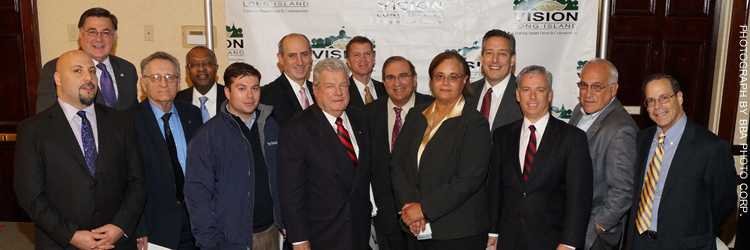
The storm has left almost everyone with a crippling deficit. Suggested solutions include shifting the way tax dollars are distributed, revamping budgets, asking FEMA for further assistance, and rebuilding infrastructure to ensure that this kind of disaster is more preventable in the future, without overburdening residents.
Education & Infrastructure
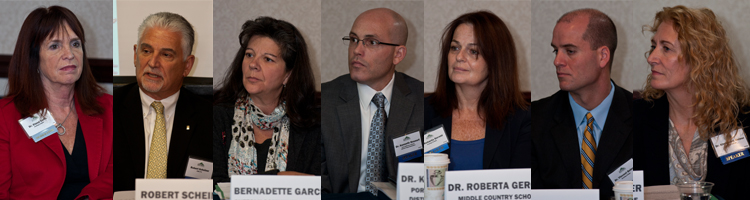
Education & Infrastructure panel featured Dr. Kenneth Bossert of the Port Jefferson School District, Dr. Vincent Butera of the Bayport-Blue Point School District, Dr. Roberta Gerold of the Middle Country School District, Dr. Kimberley Reiser of the Nassau Community College, M. Bernadette Garcia of the Suffolk Community College, and moderator Dr. Elana Zolfo discussed strategies and provide incentives to help students and young professionals stay on the Island.
Long Island’s students and young professionals have a major stake in the future of the region’s development and economy, but they are leaving Long Island because they are not being offered enough opportunities; many of them would rather move to the city or other areas in the country. The panel discussed scholarships and awards in order to help bring in students to Long Island schools and give them an affordable education, especially since enrollment in many Long Island schools has been down. Considering the long lines for gas and traffic congestion post-Sandy, the panel discussed the region’s need to look at affordable and accessible transportation and investment in infrastructure that allows easy access to campuses on Long Island. The panel stressed the importance of forward thinking facilities and creating vibrant, sustainable spaces that will attract the youth and give them a reason to live and work on the Island.
Future of Clean Energy on Long Island
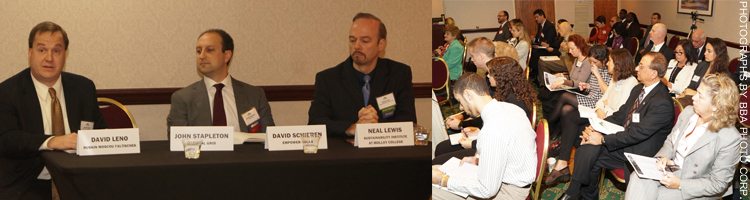
The panel began with an emphasis on Long Island’s heavy dependence on an unsustainable energy infrastructure. It was noted that even with a national top-ten solar program Long Island faces challenges in making a majority of its energy renewable. This is especially true with a general sense of uneasiness concerning energy needs following Sandy.
Neal Lewis from the Sustainability Institute at Molloy College spoke next on the fact that LIPA’s greatest failure has been communication with its customers. In spite of promises made after Irene the Authority has changed little, opening the door to possible dismantling of LIPA and restructuring into a whole new company. This would give solar energy the opportunity to take a larger role in any new utility that takes LIPA’s place. David Schieren, president of EmPower Solar, spoke on how the federal government can incentivize local municipalities to switch to solar power including competitions to build solar homes. He also noted that solar can help to lock in lower prices for businesses that can lead to a reallocation of resources in order to increase productivity. The panel also featured Mr. David Leno from Ruskin, Moscou, and Faltischek who spoke on third party solar leases programs as well as possible commercial feed-in tariff programs. He noted that third party owners who lease roof or ground space to solar manufacturers could play a factor in transforming an aging grid to incorporate more clean energy. All in all, the audience believed that LIPA displayed a lack of communication with its customers during the recent crisis, which should lead to some major reforms by 2014. With solar energy on the rise this presents a perfect time to begin updating our grid to better handle renewable energy as well as showing statewide leadership on the subject.
Emergency Planning and Main Street
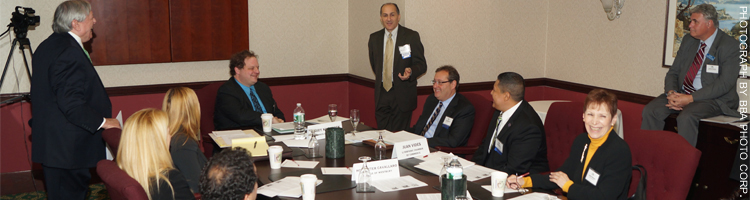
The Emergency Planning & Main Street panel featured Mayor Peter Cavallaro from the Village of Westbury, Larry Kushnick of Huntington Chamber of Commerce, and Juan Vides of the Long Island Hispanic Chamber of Commerce which was moderated by John O’Connell of the Long Island Herald.
This panel focused on the challenges and obstacles before, during, and after an emergency situation and what can be done to create a better system. Hurricane Sandy was an unfortunate lesson for the Island; we need to rethink and reevaluate our current infrastructure and system of evacuation and repair and find ways to organize the chaos. Amongst the solutions were to create small business recovery plan. Small, local businesses, the lifeblood of local economies and downtown areas, were deeply affected by the storm and the rebuilding process is going too slow. Though there are grants, loans, tax exemptions, and other financial aid available to these businesses, many of them are unaware. It is important that local governments get the word to business owners and help expedite the recovery process. They criticized the failures of LIPA in the wake of one of the worst storms and the possibility of creating a new system for energy on the Island. Most importantly, the panel highlighted some of the things that did work and urged areas to take note of them for future and unpredictable disasters. The panelists agreed that there is a need to look at our current infrastructure, which includes sewage, power, roads, etc., and begin to figure out solutions to improve it and finance it.
New Federal Transportation Funding Opportunities
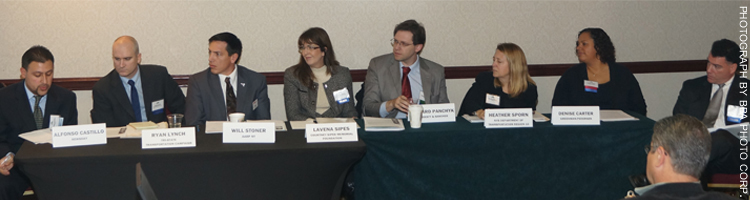
The New Federal Transportation Funding Opportunities panel, moderated by Alfonso Castillo, began with a discussion of the importance of investing federal funds in safe and sustainable transit options. Denise Carter of Greenman-Pedersen, opened up with a brief overview of Moving Ahead for Progress in the 21st Century Act (MAP-21) commending the bipartisan effort streamlined and performance-based surface transportation program. However, the bill provides states and communities with only two years of steady funding which is problematic. Heather Sporn of the NYSDOT, discussed some of the important provisions of the bill, such as the conversion of some highways in boulevards and the importance of investing the funds wisely, not just in regular maintenance but in capital projects that will create jobs and strengthen our transportation systems and economy. In light of Hurricane Sandy, Richard Panchyk of Hardesty & Hanover, emphasized the vulnerability of our current transit system and discussed some steps we should take to not only secure our current infrastructure but also invest in new infrastructure that can withstand unpredictable weather patterns and provide communities with different transit and mobility options in the event of a disaster. Will Stoner of AARP expressed concerns for pedestrian safety, especially the baby boomers, and the lack of infrastructure that will handle the shift from cars to mass transit, bikes, and walking. For Lavena Sipes of The Courtney Sipes Memorial Foundation, pedestrians should always be a priority and that any new projects applied must keep the safety of pedestrian in mind. Ryan Lynch of the Tri-State Transportation Campaign painted an image of the thousands of people waiting in gas lines because they had to rely on cars to get around; if people had different transportation options and infrastructure that was safe for people to walk or bike, people wouldn’t have to wait in lines for gas especially after a natural disaster. The region needs to prioritize and rethink the way we look at mobility and invest funding into creating new and sustainable transportation options.
Smart Codes: Case Examples on Long Island
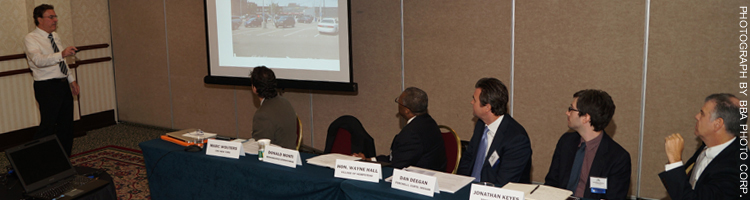
In Smart Codes: Case Examples on Long Island, the panel included speakers Jonathan Keyes of the Town of Babylon, Mayor Wayne Hall of the Village of Hempstead, Don Monti of Renaissance Downtowns, Dan Deegan of Forchelli Curto Deegan, Salvatore Coco of Beatty Harvey Coco. The panel moderator, Marc Wouters of CNU New York, framed the session in the context of Hurricane Sandy. He talked about a plan he worked on in the Gulf Coast of Florida and how it was designed for hurricanes; it included protective dunes, wetland systems, ways for lower level areas to vacate quickly. In some areas, houses were built on stilts, in order to reinforce the dune systems. He stated that all of this is coded in form-based codes, that you can code multiple parts of site in different ways to adapt to issues. The panel agreed that we must start with a public private partnership. When it comes to form based coding, it is important for everyone to be on same page. Don Monti discussed a new code which mandates and incentivizes green building and sustainability. It mandates a certain percentage of zipcars, bike spaces, pedestrian friendly infrastructure.
The panel discussed the fact that young people and people who are looking for affordable housing are asking for inexpensive rentals and low income housing, but since communities are pushing back they go to other places and other cities. Communities need to allow and be open to mixed use and different height densities and rethink the way we design housing and communities. Long Island needs colleges, hospitals, stores, restaurants, trains--things that will attract diverse groups of people to the villages and revitalize local communities.
Transit Oriented Development
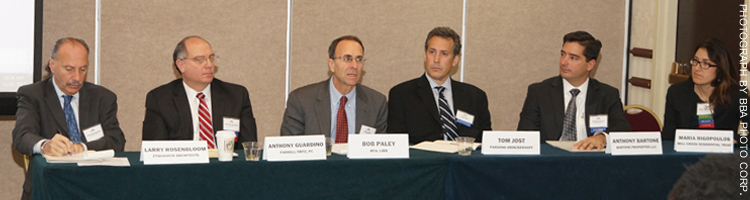
The Transit Oriented Development panel, moderated by Larry Rosenbloom of Zyscovich Architects, featured several examples of ongoing and successful TOD projects on Long Island and beyond, and drew those examples into a broader discussion on Long Island’s housing and infrastructure needs. Anthony Bartone of Bartone Properties spoke about his project next to the downtown Farmingdale LIRR station, which should begin construction in the spring. This “TOD-plus” project features 115 residential units, retail and office space, underground parking, excellent amenities, and easy walkability, plus a hotel coming soon across the street. Maria Rigopoulos of Mill Creek Residential Trust introduced several projects that her company is working on, including the 166-unit Metro 303 development in the Village of Hempstead and the redevelopment of the former Courtesy Hotel in West Hempstead. She explained some cases in New Jersey and Northern Virginia where successful partnerships allowed projects to be tied into broader transportation management plans, and noted that many developers now look to build near mass transit. Tom Jost of Parsons Brinckerhoff noted three points about Long Island: the world is changing, we can adapt, and TOD is one way to think about adaptation. He continued to debunk several TOD myths and noted some broader statistics on the need for TOD: it reduces dependence on automobiles but you can still own a car; young people are not using cars as much or even getting as many drivers licenses; and there is a real benefit for the tax base in that property values near transit increase. Bob Paley, TOD Director for the MTA, gave updates on the East Side Access project and the Second Track between Farmingdale and Ronkonkoma. Construction is underway for East Side Access which will significantly improve travel time and job access for Long Island, while the Second Track’s first phase is funded and underway. Other efforts will tie into these projects such as the Nassau Hub and Connect Long Island’s focus on the Route 110 corridor.
Anthony Guardino of Farrell Fritz discussed infrastructure funding. Towns and villages are cashapped and such investments are very costly. There are ways to incentivize new TOD development and link those investments to additional infrastructure investments. For example, a municipality can use zoning density bonuses, where a developer can build more units than zoning allows in exchange for some community benefit (such as spending on sewer or road improvements). The panel noted that knowing total cost and involving all stakeholders upfront (especially the community, the developer, and the transit agency) is critical. They also discussed Sandy: Paley noted that the MTA has been thinking about climate adaptation and threats to the system for many years, but there is a lot of planning and capital funding needed to get reliability in place. Rosenbloom concluded by encouraging people to be active and show up at board meetings to promote TOD on Long Island.
The Housing Market in an Era of Uncertainty
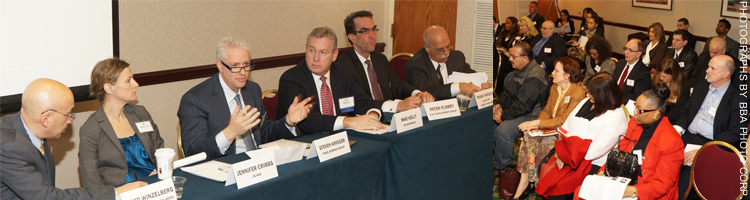
The Housing in an Era of Uncertainty panel, moderated by David Winzelberg of the Long Island Business News, highlighted some of Long Island’s most immediate housing needs. Panelists included Steven Krieger of Engel Burman Group, Peter Florey of D&F Development, Mike Kelly of The Riverwalk, Frank Paroulo of the Long Island Board of Realtors, and Jennifer Cribbs of US HUD.
The panel raised one major question: how do we accommodate everyone's housing needs? Panelists discussed the changing market and the need to shift the mentality of the Long Island residents and to change the way we look at development and housing. Some communities believe that they need to live in the past and have the attitude that we do not need urban development; that it helps keep certain people out and keeps from devaluing the area, so they resist housing and transportation changes. In terms of demographics, we need to concentrate on accommodating seniors and the younger generation. Our youth leave Long Island in part because there is no affordable housing. If they are forced to pay such high prices, many would rather move to the city. It is important to be open to new lifestyles and housing because people’s needs are changing; affordable housing is an essential factor in order to attract people to the Island.
Financing Smart Growth & Redevelopment
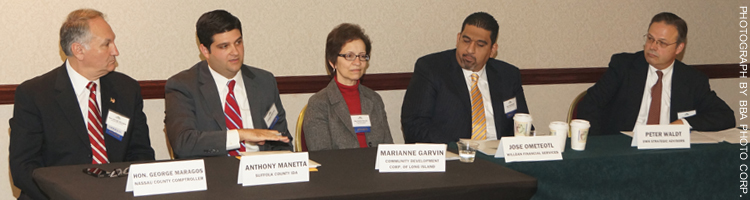
The Financing Smart Growth and Redevelopment panel was moderated by Peter Waldt from DWH Strategic Advisors. The Nassau County Comptroller George Maragos, opened with a message for Hurricane Sandy victims: The historic storm caused serious damage and the great loss goes beyond physical and economic damage, but the county is doing its best and will be implementing various programs and receiving funds from different sources in order to speed up recovery and restoration to local communities and small businesses. Marianne Garvin of CDC Long Island discussed the importance of helping small businesses grow, providing affordable housing for LIers, and redeveloping areas to create walkable mixed use areas that connect to the wider community. Anthony Manetta of the Suffolk County IDA outlined a series of service programs in Suffolk that will provide emergency relief to the local businesses that suffered severe loss and damage from the storm. Jose Ometeotl of Wildan Financial Services discusses his own community center project and urges the region to look into and invest in new forms of architecture and power sources, especially after LIPA’s unpreparedness during and post Sandy, and the need to strengthen the public opinion on Smart Growth.
Retaining Long Island's Major Employers
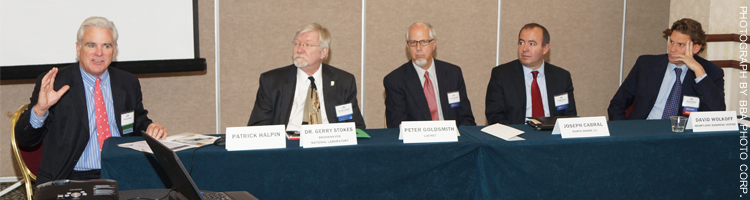
The panel Retaining Long Island’s Major Employers was moderated by Patrick Halpin. The speakers included Joseph Cabral of the North Shore LIJ, Dr. Gerry Stokes of the Brookhaven National Lab, David Wolkoff of the Heartland Business Center, Peter Goldsmith of the LISTnet. Some of the issues discussed was the inability to retain and attract business and people to the Island; there is very little rental housing, and the rentals that do exist are expensive, and walkable and bikeable communities are scarce. A good public transportation system is also an essential factor that brings in business. It is important to figure out ways to move people out on Long Island, not just for living but for recreation; reverse commute, that is commuters coming into Long Island, is vital to local economies. There are so many opportunities here on Long Island and yet it’s become very difficult to attract talent and business. Discussion also included the education here on Long Island and whether or not schools were doing enough for students.
Smart Sewering: Opportunities for Infrastructure
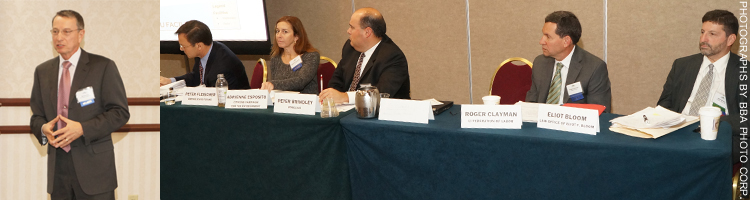
In Smart Sewering: Opportunities for Infrastructure, panelists discussed the great needs for sewer infrastructure on Long Island and how to balance that against limited funding sources, especially in light of Sandy. Peter Fleischer of Empire State Future moderated the panel and opened with his “top three” of what is needed to build Smart Growth in New York State: TOD, fixing sewer systems, and agricultural infrastructure. He added that, unfortunately, we will never have enough money to fix what’s already broken and build what is needed. Eliot Bloom, an attorney, spoke about the deteriorating problem on LI of sewer laterals, which are sewer pipes that come from residences and connect to municipal sewers. He noted that homeowners are unaware of the problems of these laterals leaking, which leads to overloading of sewage treatment plants and groundwater contamination, while municipalities have not been focusing on this critical need.
Roger Clayman of Long Island Federation of Labor spoke about policy issues. As evidenced through work with the LI Lobby Coalition, there is a lot of “room for harmony” between labor and environmental groups when it comes to sewer infrastructure. He explained that the NYS DEC estimates the state’s infrastructure repairs to cost $36 billion over the next 20 years, while federal support has dropped 70% over the last two decades. We need to get money at the state and federal level, and we need to ensure that LI gets its fair share – we have 15% of the state’s population but under 4% of the sewer infrastructure funding. Ed Clerico from Natural Systems Utilities talked about his company’s approach to building and operating small, independent sewer systems for projects, all which include a natural element. These “distributed infrastructure” systems have a different resilience: when something goes wrong; problems are isolated. As a result there was no significant impact on their systems during Sandy. These systems have been around for a while but are now starting to become popular, and they mesh well with Smart Growth projects. Peter Brindley of Posillico noted two major issues. First, we must rebuild and repair current infrastructure that is out there, and many solutions today are band-aids that repair small pieces rather than full systems. Second, there are immense needs to sewer areas of Long Island with dense populations that are seeking to grow, while overflowing septic systems are causing environmental problems in these communities. One approach to consider is “design-build,” which consolidates and streamlines the bidding process.
Adrienne Esposito of Citizens Campaign for the Environment spoke on how we have a great opportunity now, post-Sandy, to transition away from archaic sewage infrastructure and technologies. The bottom line is that our local elected officials understand these needs, but state and federal levels don’t get it. Esposito also spoke about the failings of the Bay Park plant during the storm and the specific needs to repair that area; failing cesspools and septic tanks that are discharging into our sole source aquifer; elevating levels of nitrogen and pesticides in our water; and the terrifyingly toxic levels of red tides in Northport Harbor caused by the sewage treatment plant which requires $7 million to repair. Remember that it’s all connected in one system, and we must upgrade to higher standards and become storm resistant.
Climate Change & Sustainability Planning
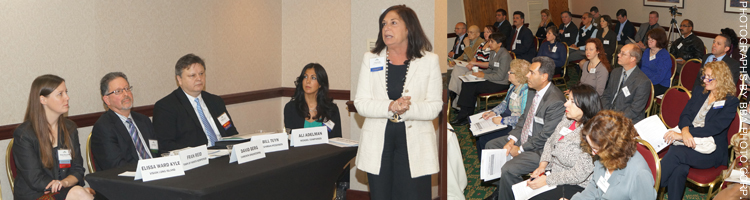
The Climate Change and Sustainability panel began with Fran Reid from the Town of North Hempstead speaking on the various award winning programs promoting sustainability including efforts aimed at increasing pharmaceutical and school recycling among others. The Cleaner Greener Communities initiative was also mentioned coupled with NY State grants and funding for the creation of a regional sustainability plan. David Berg of Cameron Engineering then spoke on the critical need for infrastructure mapping to help address numerous sewage issues that low lying communities on Long Island face. Part of this included recommendations for smaller, community-based sewering.
Bill Tuyn of Greenman Pedersen spoke on the evolving pattern of how we build our communities, including the idea of further separating uses and how they connect everything. He noted that plans often start with infrastructure that tapers off, leaving us unable to deal with intense peaks of usage during climate events, calling this method of usage inefficient. By assembling these plans separately we could avoid sprawl and focus more on an inclusive design as opposed to a single, unyielding vision of current practices. Ali Adelman from Wendel Companies also sat on the panel, speaking on how western New York has been dealing with climate change in the region. She noted that HUD has been helping to forge a path for these efforts with their grant programs, however, the program is woefully underfunded keeping it from being truly effective. In spite of this the EPA has been working with local communities to implement climate smart programs.
Municipalities like Town of Hempstead are constantly seeking federal funding to move along efforts in planning for climate change and improved sustainability. Once they receive the funding, with grants such as the Cleaner, Greener Communities from the state, it still takes a long time to make changes incrementally. Comprehensive and incremental being the key words, we will see change over the next 30-40 years. Ideas need to be developed, turned into new regulations and codes, and then the building process can begin.
Youth Vision for Long Island's Future
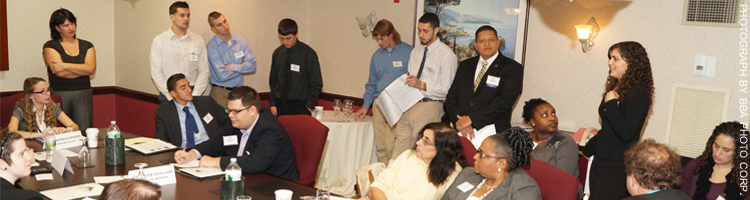
Youth Vision for Long Island’s Future panel featured Dr. Robert Brinkman of Hofstra University, Joshua Lafazan of the Syosset School Board, Dr. Nathalia Rogers of Dowling College as the moderator, and several local students.
The panel discussed on the needs and wants of the younger generation in a region that won’t seem to change or provide opportunity despite the major stake they hold in the future of Long Island. What are the factors that are driving our youth out of Long Island? What could be done to keep them here? The students voiced their concerns about the lack of employment opportunities and affordable housing on Long Island. Rentals are ideal for students and young professionals, but there is a lot of stigma surrounding affordable housing and rental housing. Even if they did want to buy homes, the property taxes on Long Island are some of the highest in the country.
They focused on solutions and ways to invest in Long Island’s youth and give them a reason to stay. Students and young professionals go through a lot of stress. Besides leaving to other cities, many of the panelists were concerned about these issues about finances and employment would affect the mental health of students and young professionals. The panel stressed the importance of getting groups and organizations involved in helping youth through internships or pointing them toward career-minded fields, including chambers of commerce, businesses, local colleges and high schools. The cost of living is too high and the region is not providing enough jobs or incentives to keep young talent here on the Island. In a changing economy and a shift in job trends, it is important that young people get a say in their communities in order to secure their future and the future of Long Island.
Plenery Luncheon Session
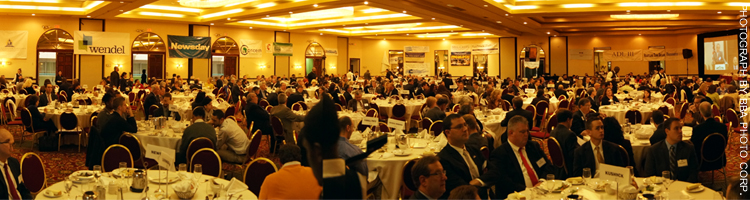
During the plenary lunch session, the event kicked off with Angela Powers singing the Star Spangled Banner and Reverend Shirley Saunders blessing the food.
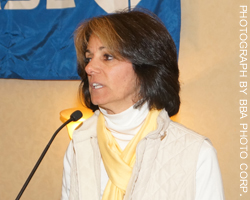 Randi Dresner of Long Island Harvest spoke first, explaining her organization's efforts after the storm. They have been on the ground every day since the hurricane, even though all of their staff was also affected by the storm and have seen incredibly inspirational people from across the country coming to help Long Island. Right now, they are distributing food door-to-door to those in need and to first responders, many of whom were long-time donors to the organization. 1.5 million pounds of food has been moved so far. For more information on the company, Ms. Dresner directed attendees to Island Harvest's website and to the new text-to-donate program by having people text "hunger" to 266266. They were also accepting donations at the Summit.
Vision Long Island, in coordination with Citizens Campaign for the Environment and the Neighborhood Network, organized the first in a series of cleanup efforts the day after the Summit in four locations: Mastic Beach, Long Beach, Island Park, and Lindenhurst.
Eric Alexander, Vision's Executive Director, announced the results of a new poll done in conjuction with Stony Brook. 43% of Long Islanders now would prefer to live in some kind of mixed-use area over sprawl. Baby boomers and liberals are more likely to want this kind of development as well. Looking at these results as compared to the same poll conducted five years ago, the desire to live in mixed-use is growing.
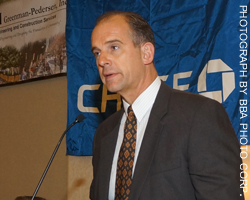 Speaking on behalf of Nassau County Executive Ed Mangano, Hempstead Town Councilman Ed Ambrosino apologized for Executive Mangano not being able to make it, as he and the rest of county officials have been working day and night on storm restoration. It's hard to believe the destruction out there. He echoed something Ms. Dresner had said, that out of the ashes rises the phoenix. He commended Long Islanders for coming together, donating time and money to help each other, but reminded them that we are looking at full recovery in as long as 3 to 5 years. There is an opportunity, he said, to reinvent Long Island to make it stronger and more durable. Smart Growth ideas are needed. Businesses that need help were encouraged to visit nassaubackinbusiness.org, set up in conjunction with the IDA. So far, over 1,100 businesses have reached out for assistance.
Councilman Ambrosino also revealed that the Master Developer for the Nassau Hub would be revealed the following Tuesday at noon.
Mr. Alexander spoke next on local officials coming together to make a unified decision about infrastructure and how to work together for funding. The market wants change.
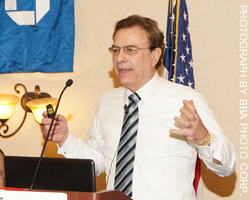
Don Monti, of Renaissance Downtowns, made his featured presentation about bringing Smart Growth development decisions down to the local level to real people and communities. He began by thanking our county executives for getting going when the going got tough in an unprecidented situation. Mr. Monti said that he was there to address climate change and infrastructure. Downtowns are a great part of the solution. Before we move forward, we must look back at our roots, such as the Village of Hempstead from 100 years ago and 50 years of disinvestment leading to the run-down situation in which we find many of our downtowns.
Long Island's problems are multifaceted. Sprawl was a 'great idea' when William Levitt proposed it, he said, but today it is out of balance. We are not happy sitting in traffic and congestion every day. Adding to the problems are the changing weather patterns. The storm of the century has now become the storm of the year. Beyond that, our young people are continuing to leave the Island in droves. Unemployment and housing prices are not keeping pace nationally. He said we must preserve the suburban dream, but added that we must bring it back into balance.
As, what Mr. Monti called himself, a "recovered developer,"he admitted that he contributed to some of these problems. During the Glen Isle project, he had an epiphany and realized that development had to be about open space, transit-oriented development, mixed-use, and market development. "This is what people want today. It is the new norm. We have to get used to that. It's OK," he said. His company is now working on projects of regional significance in Glen Cove and Hempstead, with the hopes of Huntington Station soon joining those ranks. There needs to be bipartisan support, along with form-based codes, public-private partnerships, and community stakeholders who want to get things done.
He spoke of smart transit-oriented development design, noting that simply because someone builds apartments near a train station does not mean that young people are going to want to live there. We must entice businesses to come back and set up shop in our downtowns, Everyone needs to get on board in a unified development approach. Process has to be put before the plan to engage people early on by using tools like crowdsourcing and grassroots social media campaigns.
As the country grows, suburban downtowns stand to gain. Rentals are going to become more prevalent, as the average in the region is nearly double what it is on Long Island today, which is more populated than 16 states. Look to places like Great Neck, Garden City, and Rockville Centre, where there are higher concentrations of rentals established before NIMBYism took hold. We are also making progress, he said, thanks to projects started in the Village of Patchogue, Glen Cove, Hempstead, Ronkonkoma, and Huntington Station.
A single downtown can create 3,500 permanent jobs, 10,000 construction jobs, millions of dollars in state and federal infrastructure grants, millions of dollars in positive tax impacts, and a billion dollars in revenue.
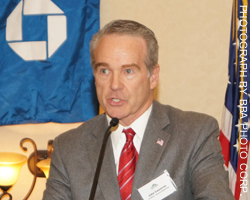 He concluded by saying that the Summit should be a call to action to stop blaming political leaders and to start working with them, using the power of the private sector to convert apathy to energy and activate the silent majority. He wants everyone to take charge after the Summit and continue it, kicking off a regional effort instead of letting it fizzle out that is more of a co-opetition rather than a competition. Change is an opportunity to do things better and we need to embrace that.
After Don Monti's empassioned presentation, John Cameron of Cameron Engineering, Long Island Regional Planning Council, and NY Works spoke briefly on New York Works, where he is the sole Long Island appointee. He works to ensure Long Island gets its fair share, as the Island is a major economic engine for the entire state. He then said that the Governor looked at how the state spent infrastructure dollars. There were 47 agencies and authorities involved at various levels and Gov. Cuomo was concerned that the money was not being spent optimally or entirely wisely. NY Works is working with consultants to find best management practices on spending money and coordination between entities. Agencies do not talk to each other and there needs to be a plan to coordinate spending or else we will never reach a goal.
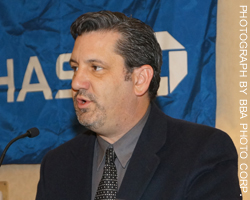 With growing needs across the state, we need to look at alternate financing structures. New York currently has a 4% cap on debt and a statutory limit on borrowing and we are rapidly approaching that limit. The infrastructure bank did not pass at the federal level. We must optimize how the state does capital planning and how local municipalities do it. With FEMAdollars coming in, NY Works hopes to coordinate those funds between agencies and localities to focus on infrastructure.
Mark Nickita, member of the CNU and Mayor of Birmingham, MI spoke briefly about his experiences in the Detroit area working with placemaking initiatives, the built environment, mixed-use and pedestrian development as a path to prosperity. He came at all of this from his background as an urban designer and architect.
The luncheon ended with a call to action to work together to get focused on smart infrastructure improvements.
Redesigning Main Street: Resilience, Adaptation & Mitigation
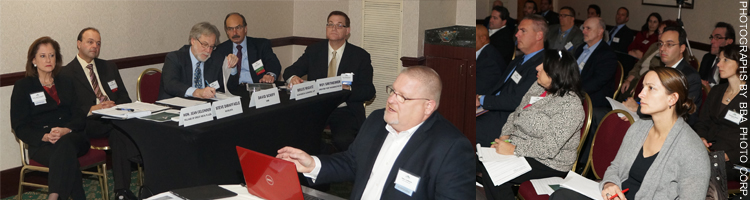
The panel for Redesigning Main Street: Resilience, Adaptation, & Mitigation included Mayor Jean Celender from the Village of Great Neck Plaza, Steve DiRaffaele of Nicolock, Bruce Migatz from Albanese & Albanese, David Schiff of VHB, Roy Smitheimer from the Greater Port Washington BID, and Alex Latham of ADL III Architecture as the panel moderator.
This panel focused on rethinking the way we are currently designing infrastructure and housing, specifically for rain preparation. It’s getting hotter and hurricanes our reaching our region and as our seasons and weather patterns change, our architecture should too. In the event of a disaster we need real, not temporary, solutions such as permeable pavements, public charging facilities or info kiosks, public restrooms. It’s no longer enough to board up windows. The panel also discussed artful solutions such as rain gardens, which would not only be aesthetically pleasing but can be used to filter sediments, pollutants have a slow runoff, it can reduce urban heat, utilize native plants, and would work well with the permeable paving solutions discussed previously.
Requiring new downtown developments to have underground wiring, such as Great Neck, would be a great stimulus in severe weather like Sandy and would ultimately be worth the costs. They never lost power and after seeing the failures and disorganization of LIPA, that is significant. During the storm, elderly residents of Great Neck were evacuated quickly, door to door, out of dense apartment buildings. The developing processes in municipalities needs to be more streamlined, so that community members resistant to change are not able to stop a project that is truly beneficial for the community from happening. The panel also agreed that there needs to be support from the people on community designs. You try to transform an empty street into a thriving space and all you get is resistance from community members afraid of the words mixed use development. There needs to be a culture of community and economic viability and support for sustainable redesigning.
Cutting Red Tape through the Building Process

On the Cutting the Red Tape Through the Building Process panel, moderated by Keith Archer of Harras, Bloom, & Archer, speakers Councilman Edward Ambrosino of the Town of Hempstead, Councilman Steve Flotteron of the Town of Islip, Councilwoman Connie Kepert of the Town of Brookhaven, Larry Kushnick of Kushnick Pallaci, PLLC, David Calone of the Suffolk Planning Housing Commission, Peter Scully of NYS DEC spoke about the need to eliminate red tape in order to rebuild communities in the aftermath of Hurricane Sandy and the need to change the public’s perspective on Smart Growth, density and compact buildings. Local governments and communities need to support rebuilding and development for strong and sustainable infrastructure and housing developers should look to and address local civic groups for support. Considering the extensive storm damage, the panel discussed the possibility of providing extension for applications for permits and expediting the permit and building process, especially to those who need it. The panel urged the Counties to reevaluated their priorities and consider the “cutting the red tape” as part of the emergency preparedness and rebuilding process in the wake of a natural disaster. The hurricane left a great deal of infrastructure damage, but also an opportunity to address the the issues concerning our current infrastructure and how to rebuild for the future.
Redevelopment Lessons off Long Island
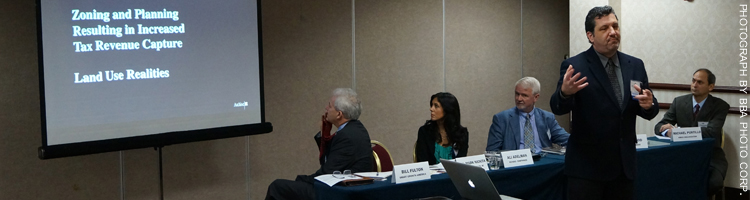
The Redevelopment Lessons Off Long Island panel included Mark Nickita Mayor of the City of Birmingham, MI, Ali Adelman of Wendel Companies, Todd Harvey of Beatty Harvey Coco, Roger Wood of Duany Plater Zyberk, and Bill Fulton of Smart Growth America as the panel moderator.
The panel discussed some of the shifts occurring over the years; technology is advancing but is usually restricted by economics and affects both private and public development. Many believe that building green is too expensive, but often it can cost just as much or less than non-green infrastructure. Building for the future is important, so they begged the question: how do we engage leaders in a manner to move things forward? Green oriented development and efficiency. It is important to learn from other places off Long Island and figure out why are young people leaving and moving to certain places. The panelists discussed examples from Brazil to Baltimore and everyone agreed that it is important to build in accordance to the environment. There are places where mixed use is not only visible but viable; cities where pedestrian orientation, natural assets, public transit emphasis, and sustainable infrastructure all work together to create great public spaces. We should see more of this happening on Long Island. Here, the challenge is that land use process happens in villages and need county level approval, as opposed to other places which get approval on grand scale. Despite the damage left by Hurricane Sandy and regardless of the weather patterns, we can rebuild but we have to build smarter.
The Arts & Downtown Revitalization
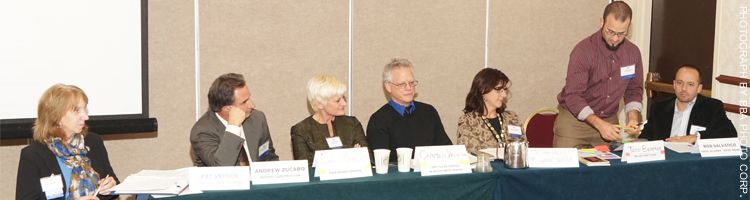
The Arts & Downtown Revitalization panel was an uplifting assembling of artists, developers, and other downtown arts enthusiasts. Panelists included: Todd Berman of The Art Don’t Stop (a Long Island community-inspired artist based in San Francisco), Campbell Dalglish of The Plaza Cinema & Media Arts Center in Patchogue (a new facility for the community that recently opened in the Artspace development); Rob Salvatico of Allegria Hotel/Hotel Indigo (whose hotels, especially the Indigo in Riverhead, have tied in live entertainment and are supportive of local arts festivals including in the winter season); Andrew Zucaro of Zucaro Construction (who is building the downtown Westbury Theatre which will open in February and is generating an exciting buzz around the community); Susan Gentile Hackett of the soon-to-be-reopened Suffolk Theatre in Riverhead, Jaci Clement of Fair Media Council (who tied in issues of local news marketability) and moderator Pat Snyder of the East Ends Arts Council. The panel featured a vibrant discussion amongst the panelists and the audience. Todd Berman led the audience in a creative activity where people wrote or drew something they loved about Long Island on colored post-it notes and stuck them on the wall in the shape of the Island. This was a smaller scale version of the type of work he does, which brings people deeper into their communities. Another topic was the proven role of the arts in revitalizing a downtown: for every $1 spent on a theater ticket, $2.38 is infused into the local economy through community engagement and visiting local businesses (and some panelists argued that this statistic was far too low in their experiences). Adding an arts theme to a downtown can multiply individual successes, as seen in Patchogue which has the new Cinema Arts Center, the Performing Arts Center, the Artspace housing, and much more new housing that draws in people who are excited by the arts culture. Panelists encouraged thinking about “creative place-making” when developing Long Island, concentrating on making LI a “more awesome place.”
Development of Freight Rail
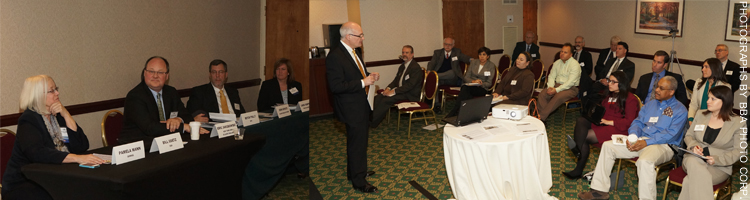
The Development of Freight Rail panel was moderated by Pamela Mann of GoRail, who opened up discussion with a brief presentation of the benefits of freight rail. She noted that railroads provide 43% of the nation’s intercity transportation, creates jobs, and provides a cleaner and more fuel efficient to transport freight. John Schatz of Twinco Manufacturing discussed the revenue that freight rail brings to many businesses in the region and how rail is the reason why his own company exists. Bill Goetz of CSX stated that freight rails provide long term solutions to issues such as infrastructure damage, since freight rail takes the load off of roads, and that asphalt only strategies will only continue to cause pollution and congestion. Eric Jakubowski of New York and Atlantic Railway discussed freight operations here on Long Island and how freight rail is necessary to transport certain materials, such as liquified petroleum gas; materials that if carried by trucks can cause serious accidents on the road. Laura Schabe of the Port Authority of NYS & NJ suggested that in order to improve the movement of goods in the greater New York/New Jersey region, we need to enhance the transportation of freight across NY Harbor. She outlined some research for a potential project for the revival of the Cross Harbor Freight Network, a rail car float system which can take some heavy trucks off the road and lessen the price on bridge maintenance. Mitch Pally of the MTA suggested that part of the problem for developing freight rail tracks is that Long Island was not designed for rail freight but now it wants to be. Chris Kempner of the Town of Riverhead talked about the success of the Calverton Enterprise Park Rail Access Rehabilitation, an adaptive reuse of a former navy weapons industrial reserve plant, and that Long Island and its local businesses could only stand to gain from the development of freight rail.
Summit 2012 wrap-up
Hurricane Sandy was a wake up call for Long Island and the region is seeing the vulnerability in our infrastructure from our power to our transit systems. Smart Growth communities are not only ideal but essential in the event of a mass transit shutdown. Long Island needs to continue helping and investing in small businesses, mixed use development, and Long Island’s youth, all of which are vital to local and regional economies. Finding ways to fund solutions is a first step, but more importantly the region needs to rethink and redevelop current infrastructure and transportation systems. This year’s Summit highlighted the failures and successes of our infrastructure, transit, and recovery system and what we can do in the future to provide the region with real, sustainable solutions on local, state, and federal levels.
 Pictured (L-R): Bert Patterson - Town of Hempstead, Village of Hempstead Mayor Wayne Hall, Irwin Krasnow - Area Real Estate Associates, Jon Keating - National Grid, Trudy Fitzsimmons - Leadership Huntington / Vision Long Island, Pamela Mann - GoRail

Pictured (L-R): Dr. Nathalia Rogers - American Communities Institute at Dowling College, Joye Brown - Newsday, Cindy Mardenfeld - Infinity Relations, Debra Scala-Giokas - Certilman Balin Adler & Hyman, David Stonehill - Old Lindenmere Civic Association
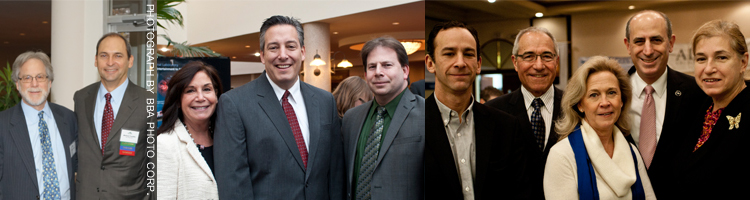
Pictured (L-R): David Schiff - VHB, Michael Puntillo - Jobco, Fran Reid - Town of North Hempstead, North Hempstead Town Supervisor Jon Kaiman, Michael Levine - Town of North Hempstead, Matt Frank - MDF Development, Ellis Koch - Posillico, Kelly Morris - City of Glen Cove, Glen Cove Mayor Ralph Suozzi,
Fran Koehler - Glen Cove BID

Pictured: Dr. Nathalia Rogers - American Communities Institute at Dowling College and Dr. Elana Zolfo - Dowling College President with Dowling College students
Pictured (L-R): Eric Alexander - Vision Long Island, North Hempstead Town Councilwoman Dina Degiorgio, Marilyn Urso - Long Island Board of Realtors, Oyster Bay Town Clerk Steve Labriola, Mark Lyon - Harras Bloom & Archer
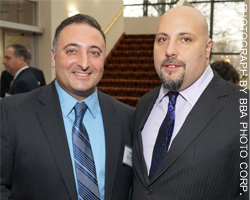

Pictured (L-R): Marc Alessi - Jaspan Schlesinger, Larry Rosenbloom - Zyscovich Architects, Nassau County Legislator Wayne Wink, Eric Alexander - Vision Long Island, Rabia Aziz - Long Island Minority AIDS Coalition
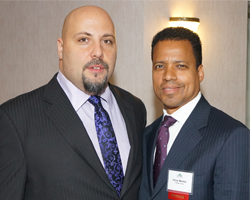
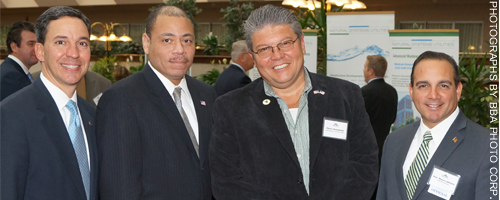
Pictured (L-R): Eric Alexander - Vision Long Island, Vinny Mentar - JP Morgan Chase, NYS Senator Jack Martins, Lionel Chitty- Hicksville Chamber of Commerce, Henry Goessman - Hicksville Gardens Civic Association, Oyster Bay Town Clerk Steve Labriola





Vision Long Island
24 Woodbine Ave., Suite Two
Northport, NY 11768
Phone: 631-261-0242. Fax: 631-754-4452.
Email: info@visionlongisland.org
Website: www.visionlongisland.org
 Facebook | Facebook |  YouTube YouTube |
 |
 Twitter | Twitter |  iPhone app iPhone app |
Home | Contact Us | Newsletter Archive | Donate | About Us
